
In This Article
When the British drizzle turns to downpour and winter temperatures plummet, your feline friend deserves better than a damp spot under the garden shed. An outdoor cat house isn’t just a luxury — it’s a necessity for cats who venture outside, providing crucial protection from our notoriously unpredictable weather whilst giving them the independence they crave.
After reviewing dozens of outdoor cat shelters available on Amazon.co.uk and speaking with cat owners across England, Scotland, and Wales, I’ve identified the key features that separate a decent cat house from one that’ll actually keep your moggy warm and dry through six months of British rain. The market’s flooded with options, from budget fabric shelters at around £45 to premium wooden microchip-enabled kennels in the £300-£450 range, but knowing which features genuinely matter — and which are just marketing fluff — can save you both money and the heartbreak of watching your cat avoid their new shelter entirely.
Whether you’re caring for your own outdoor cat, providing refuge for a neighbourhood stray, or simply want to give your indoor-outdoor cat a garden retreat, this guide covers everything from compact insulated shelters for small urban gardens to multi-level cat houses that can accommodate several felines. The right outdoor cat house balances weatherproofing, insulation, accessibility, and — crucially for British conditions — proper ventilation to prevent that dreaded condensation buildup that plagues cheaper models.
Quick Comparison: Top Outdoor Cat Houses at a Glance
| Product | Best For | Insulation | Price Range | UK-Made | Microchip Access |
|---|---|---|---|---|---|
| The Hutch Company Microchip Cat House | Security-conscious owners | Self-heating | £350-£450 | ✅ Yes | ✅ Yes |
| PawHut Insulated Wooden Shelter | All-weather protection | 14mm aluminium | £85-£120 | ❌ No | ❌ No |
| Cosy Cabins Kitty Cabin | Low-maintenance durability | None (plastic) | £140-£180 | ✅ Yes (Cornwall) | ❌ No |
| PawHut Fabric Insulated Shelter | Budget & portability | Foam liner | £45-£65 | ❌ No | ❌ No |
| Home & Roost XL Cat House | Multiple cats | Self-heating | £280-£350 | ✅ Yes | Optional |
| PawHut 4-Tier Outdoor Tower | Active/multiple cats | Minimal | £160-£220 | ❌ No | ❌ No |
| PawHut Heated Cat Cave | Extreme cold protection | Heated pad included | £55-£75 | ❌ No | ❌ No |
From this comparison, it’s clear that UK-made options dominate the premium segment, and for good reason — they’re specifically engineered for our wet, windy climate rather than being adapted from designs meant for drier continental weather. The self-heating models justify their premium prices if you’re in Scotland, northern England, or Wales where winter temperatures regularly drop below freezing. Budget buyers should note that the fabric shelters sacrifice durability for affordability; they’re brilliant for temporary use or sheltered locations, but expect to replace them every 18-24 months if they’re exposed to the full brunt of British weather.
💬 Just one click — help others make better buying decisions too!😊
Top 7 Outdoor Cat Houses: Expert Analysis
1. The Hutch Company Microchip Self-Heating Cat Kennel with One-Way Privacy Window
This British-made shelter represents the premium end of the market, and whilst the price tag hovers around £350-£450, it’s the only option that genuinely solves the “intruder cat” problem that plagues many UK neighbourhoods. The microchip cat flap — programmable for up to 30 different pet identities — means your cat gets exclusive access whilst deterring foxes, hedgehogs, and that persistent tom from three doors down who thinks he owns the entire street.
What sets this apart: The self-heating technology is rather clever — it reflects your cat’s own body heat back towards them without requiring electricity or batteries, which means no running cables across your garden or worrying about safety. The one-way privacy window lets your cat observe garden activity whilst remaining hidden, satisfying their natural surveillance instincts. Built from toughened Scandinavian timber with insulation in both floor and roof, it’s designed for year-round use in British conditions. The hinged roof lifts for easy cleaning, and the elevated design prevents ground moisture seeping through.
The reality check: Several UK buyers note the microchip reader can be temperamental with older chips or those that have shifted position under the skin. One reviewer mentioned needing to purchase a separate tag for feeders and doors because their cat’s implanted chip had “slipped down” and wasn’t reading reliably. This is worth discussing with your vet before purchasing — newer chips are more stable, but cats microchipped five-plus years ago might need a collar tag backup.
✅ Hand-built in the UK for British weather conditions
✅ Microchip security prevents unwanted animal visitors
✅ Self-heating without electricity requirements
❌ Premium pricing (around £350-£450)
❌ Microchip reader may not work with all older chips
Value verdict: In the £350-£450 range, this justifies the investment if you’re in an area with aggressive strays or foxes. For a single cat with no territorial issues, the security features might be overkill.
2. PawHut Outdoor Cat House Insulated, Wooden Weatherproof Feral Cat Shelter
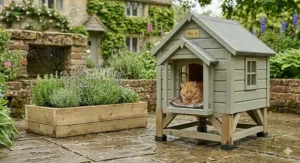
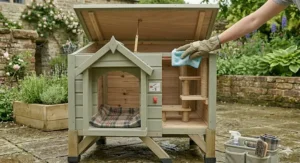
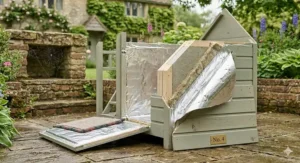
This mid-range wooden shelter (typically £85-£120 on Amazon.co.uk) strikes a sensible balance between weather protection and affordability. The 14mm aluminium insulation layer runs through the walls, roof, and floor — a specification that actually matters when November arrives and temperatures drop. The slanted asphalt roof handles our persistent drizzle admirably, with proper drainage that prevents the puddle-on-the-roof problem cheaper models suffer from.
Practical considerations: The curtained door entrance and internal middle panel create a two-chamber design that’s genuinely effective at blocking wind and retaining heat. In my experience, cats initially seem suspicious of the curtain, but once they’ve pushed through a few times, they appreciate the draught exclusion far more than an open doorway. The raised floor (elevated 5cm off the ground) keeps the interior dry even during those biblical downpours we get in autumn and winter. The openable roof makes cleaning straightforward — crucial when you’re dealing with muddy paws and the inevitable leaves that cats drag inside.
The honesty bit: One UK reviewer cut into the front panel whilst modifying it for rabbits and discovered the insulation wasn’t as comprehensive as advertised — the front panel and floor lacked the foam present in the sides. The floor also left a 1-2cm gap, which rather undermines the weatherproofing claims. This suggests quality control varies between batches, so inspect yours upon delivery and contact the seller immediately if the insulation isn’t complete.
✅ Solid wood construction with asphalt weatherproof roof
✅ Dual-chamber design with curtain reduces heat loss
✅ Mid-range pricing (£85-£120) offers good value
❌ Inconsistent insulation quality between batches
❌ Floor gap reported in some units
Value verdict: Around the £100 mark, this represents decent value if you receive a properly insulated unit. Order from a seller with hassle-free returns and inspect it thoroughly.
3. Cosy Cabins Original Kitty Cabin (UK-Made Recycled Plastic)
Handmade in Cornwall from recycled plastic, this unconventional shelter (£140-£180) takes a completely different approach to the insulation-and-timber norm. Rather than fighting moisture with sealed construction, it’s designed to be utterly weatherproof through material choice. The moulded plastic construction is seamless — no joints for water to penetrate — and British owners report zero condensation, damp, or mould even after several winters of exposed garden use.
Why recycled plastic works for British weather: Unlike timber, which can warp, rot, or develop gaps in our wet climate, the moulded plastic maintains its shape indefinitely. There’s no maintenance — no re-treating, no checking for rot, no replacing felt roofs. The granite grey colour blends into most British gardens without looking obviously “pet furniture.” It arrives fully assembled and ready to use, which saves the hour of frustration most flat-pack cat houses demand. The overhanging front porch design deflects wind-driven rain remarkably well, and the built-in drainage hole means you can hose the interior clean without creating a swamp.
The temperature trade-off: This design relies on you adding insulation (straw or a duvet, as several owners mention) rather than built-in foam. In mild British winters where temperatures hover around 5-10°C, this works fine — cats curl up in the straw and stay perfectly comfortable. In Scotland or northern England where you’re regularly seeing -5°C or below, you’ll want one of the self-heating or heavily insulated models instead.
✅ Zero maintenance — no rot, warping, or deterioration
✅ Handmade in Cornwall with 2-year warranty
✅ Seamless waterproof construction prevents damp
❌ Requires you to add bedding/insulation
❌ Higher initial cost (£140-£180) than basic wooden models
Value verdict: For long-term value and zero-fuss ownership, this beats timber models. Budget £150-£180, add straw for winter, and forget about it for the next decade.
4. PawHut Insulated Outdoor Cat House (Water-Resistant Fabric with Elevated Base)
At the budget end (£45-£65), this fabric shelter won’t win design awards, but it genuinely works for specific use cases. The water-resistant Oxford cloth outer, foam insulation, and fleece interior mat create a surprisingly warm microclimate. The elevated design (raised 5cm) keeps the floor dry, and the semi-enclosed structure provides windproofing whilst allowing cats to scan for threats before entering — important for nervous or feral cats.
Where this genuinely excels: If you need a temporary shelter whilst renovating, a backup option for multi-cat households, or something portable for moving between garden locations, the fabric design’s lightweight nature becomes an advantage rather than a liability. It folds flat for storage, assembles in minutes without tools, and weighs little enough to reposition easily. For indoor use in unheated outbuildings, garages, or conservatories, it provides a cosy retreat without the bulk of timber constructions.
The reality of British weather exposure: Amazon.co.uk reviews are decidedly mixed on waterproofing. Some buyers report it staying dry in light rain, whilst others found it “soaking wet” after proper downpours — the difference likely comes down to shelter placement and rain angle. Think of this as “water-resistant” rather than truly waterproof. In a sheltered spot (under a porch, against a wall, beneath overhanging plants), it’ll perform adequately. Fully exposed to horizontal rain? You’ll need to add a tarpaulin cover or accept that it’s a fair-weather-only option.
✅ Budget-friendly (£45-£65) for basic protection
✅ Lightweight and portable between locations
✅ Tool-free assembly in minutes
❌ Not genuinely waterproof in heavy British rain
❌ Fabric durability limited — expect 12-18 month lifespan
Value verdict: Under £60, this serves well as a secondary shelter or for sheltered locations. Don’t expect it to handle exposed garden placement through a British winter.
5. Home & Roost XL Outdoor Microchip Self-Heating Cat House
This UK-made premium option (£280-£350) targets multi-cat households or owners with larger breeds like Maine Coons. The XL sizing (significantly larger than standard models) means two cats can shelter comfortably without territorial squabbles, or a single large cat gets the sprawling space they prefer. Like The Hutch Company model, it features self-heating technology that works without electricity and an optional microchip cat flap for selective access.
Designed for British conditions: The water-resistant felt-lined graded roof sheds our persistent drizzle effectively, and the hinged lift-up lid makes maintenance straightforward when you’re dealing with muddy paws and wet autumn leaves. It arrives fully assembled except for the legs — a significant advantage over flat-pack competitors that require an hour of confusing instruction-following and several arguments with poorly-aligned pre-drilled holes. The included catnip stick encourages reluctant cats to investigate their new shelter, which addresses one of the main complaints about outdoor cat houses: getting cats to actually use them.
Premium features worth noting: The self-heating design is identical to The Hutch Company’s approach — reflecting the cat’s own body heat without requiring power cables or heated pads. This makes it considerably safer for outdoor use (no electrical risks) whilst providing genuine warmth in winter. The microchip option adds security, though as an add-on rather than standard, you can save £50-£80 if you don’t need selective access.
✅ XL size accommodates multiple cats or large breeds
✅ Arrives pre-assembled (legs only require attaching)
✅ Self-heating without electricity requirements
❌ Premium pricing (£280-£350)
❌ Size requires more garden space
Value verdict: Around £300, this makes sense for multi-cat households where the cost-per-cat becomes reasonable. Single-cat owners might prefer a smaller, cheaper option unless they own a particularly large breed.
6. PawHut 4-Tier Outdoor Cat Tree Tower
This vertical design (£160-£220) reimagines outdoor cat houses as climbing structures. Rather than a single enclosed shelter, it offers four levels with platforms, scratching posts, and partially enclosed spaces. For active cats who climb fences and scale garden walls, this provides sanctioned vertical territory whilst keeping them contained in your garden rather than wandering the neighbourhood.
The British garden context: In our typically compact urban and suburban gardens, vertical design makes brilliant sense. A 1.1m tall tower occupies minimal ground space — perfect for terraced housing or small patios — whilst providing significantly more usable cat territory than a sprawl-outwards design. The waterproof roof covers the top level, and the semi-enclosed spaces on each tier provide wind protection whilst allowing cats to observe their surroundings.
Practical limitations: This isn’t a winter shelter in the traditional sense. The open platform design means it won’t retain heat like an enclosed, insulated house. Think of it as a garden activity centre rather than cold-weather protection. It works brilliantly from spring through autumn when temperatures are mild but cats still want outdoor access and entertainment. Come November, you’ll want to supplement it with an enclosed, insulated shelter for overnight or winter use.
✅ Space-efficient vertical design for small gardens
✅ Multiple levels encourage natural climbing behaviour
✅ Partially enclosed spaces provide wind protection
❌ Not suitable as primary winter shelter
❌ Open design means minimal heat retention
Value verdict: In the £180-£200 range, this complements a traditional shelter beautifully but doesn’t replace one. Excellent for active cats in mild weather; inadequate alone for British winters.
7. PawHut Heated Waterproof Cat Cave (with Heated Pad)
This compact heated shelter (£55-£75) includes an electric heating pad — a significant departure from self-heating models. For areas experiencing genuinely harsh winters, or for elderly cats who feel the cold acutely, the active heating makes a considerable difference. The waterproof Oxford fabric construction, thermal elastic sponge insulation, and included fleece cover create multiple heat-retention layers.
The heated pad reality: Unlike self-heating designs that work passively, this requires a power source, which means running a cable from your house to the garden — potentially awkward depending on your layout. The heating pad is designed for outdoor use, but you’ll need a weather-protected power outlet or a proper outdoor extension cable with IP44 rating minimum. The semi-enclosed design means cats can escape the heat if they’re too warm, which addresses overheating concerns.
Predator safety feature: The dual-exit design isn’t just convenient — it’s potentially life-saving if a predator (fox, aggressive dog, territorial tom cat) corners your cat. Being able to escape through a second exit prevents cats getting trapped, which is a genuine concern in areas with active fox populations.
✅ Active heating pad for genuine warmth
✅ Budget-friendly (£55-£75) for heated option
✅ Dual exits for predator escape routes
❌ Requires outdoor power source and cable management
❌ Fabric construction less durable than timber/plastic
Value verdict: Around £60-£70, this provides affordable active heating. Suitable for sheltered locations with accessible power, but consider the electrical setup complexity before purchasing.
Setting Up Your Outdoor Cat House: The First 30 Days
Getting your cat to actually use their new outdoor shelter isn’t automatic — many British cat owners discover this the frustrating way when their cat ignores a £200 house and continues sleeping under the shed. The first month determines whether your investment becomes a beloved retreat or an expensive garden ornament.
Placement strategy for British conditions: Position the house facing away from prevailing winds (generally southwest in most of the UK, though this varies regionally). In urban areas, use walls or fences to create a wind-break. The entrance should face a direction your cat frequently approaches from — if they enter the garden from the back fence, don’t position the entrance facing the house. Cats prefer approaching shelters without making themselves vulnerable by turning their backs on open areas.
Elevate the house slightly (most come with legs, or place on paving slabs) to prevent ground moisture seeping through. This matters enormously in British gardens where damp ground is the norm six months of the year. For timber models, place on a waterproof membrane (pond liner works well) to prevent rot from below.
Encouraging use during winter: Start introducing the shelter in autumn before winter arrives — cats are more likely to investigate new structures in mild weather than during freezing rain. Place familiar bedding inside (something that smells of your cat or has been in their regular indoor sleeping spot). Feed treats exclusively inside the shelter for the first week, gradually moving the bowl deeper inside. Cats Protection provides detailed guidance on creating and introducing outdoor cat shelters, including tips for encouraging nervous or feral cats to use them.
For nervous or feral cats, leave both the entrance and any internal doors open initially so they don’t feel trapped. Once they’re using it confidently, you can add curtain flaps or thermal barriers. The included catnip in models like Home & Roost’s XL house genuinely helps — sprinkle it inside and near the entrance to create a scent trail.
Damp prevention in British weather: Even “waterproof” shelters can develop condensation in our humid climate. Add straw (not hay — it moulds) for bedding rather than fabric, as it wicks moisture and stays dry even in damp conditions. Check weekly during autumn and winter, removing any damp bedding and replacing it with dry material. The openable roofs on most models make this straightforward.
If you notice persistent dampness, check that drainage holes aren’t blocked and that the roof hasn’t developed leaks. Fabric models may need an additional tarpaulin cover secured over the top during particularly wet periods. For timber houses, annual treatment with pet-safe wood preserver extends lifespan significantly.
How to Choose an Outdoor Cat House for UK Weather
Selecting the right outdoor cat house isn’t about finding the most expensive option — it’s matching features to your specific circumstances. British weather demands particular attention to waterproofing and insulation, but regional variations matter more than many buyers realise.
Climate Considerations by UK Region
Scotland and Northern England: Prioritise insulation and self-heating features. Winter temperatures regularly drop below freezing, and snow isn’t unusual. Models like The Hutch Company’s self-heating design or actively heated options justify their premium prices. Timber construction generally outperforms plastic in extreme cold, as plastic can become brittle (though quality recycled plastic like Cosy Cabins’ avoids this issue). Ensure the house has proper draught exclusion — dual-chamber designs with curtained entrances make a significant difference. The British Veterinary Association recommends providing easy access to shelter for cats during winter months, particularly when temperatures drop below freezing.
Wales and Southwest England: Focus on waterproofing over extreme insulation. These regions see the UK’s highest rainfall, so water-resistant roofs and elevated floors are non-negotiable. Check that drainage holes are properly positioned and sized — some cheaper models use holes that are too small, leading to water pooling. Slanted roofs matter more here than in drier regions; flat roofs accumulate water despite waterproof materials.
Southeast England and Midlands: A balanced approach works — moderate insulation with good waterproofing. Mid-range options like PawHut’s insulated wooden shelter handle the climate well. Consider ventilation alongside weatherproofing, as summer temperatures can make enclosed, heavily insulated shelters uncomfortably warm.
Urban vs Rural Placement
Urban gardens (terraced housing, small patios): Compact vertical designs or single-story shelters with small footprints make sense. Security features matter more — microchip access prevents neighbourhood cats annexing your investment. Noise insulation becomes relevant if you’re near busy roads; timber and foam insulation dampen traffic sounds better than plastic alone.
Rural locations: Predator protection becomes more important — dual exits allow escape from foxes or aggressive dogs. Larger multi-cat designs work well if you’re providing for barn cats or managing a small feral colony. In exposed locations, anchor shelters securely; British gales can tip over lightweight models.
Multi-Cat Household Considerations
Two cats with established harmony: XL single-chamber designs like Home & Roost’s model work well. Ensure it’s genuinely large enough — two cats need space to curl up without touching if they choose. Look for houses described as suitable for Maine Coons even if your cats are smaller; standard “multi-cat” sizing can be optimistic.
Multiple cats with territorial tendencies: Separate smaller shelters work better than forcing sharing. Position them at different garden areas to create defined territories. Alternatively, multi-level designs like PawHut’s 4-tier tower allow cats to establish separate “floors” without conflict.
Feral colony management: Budget models make sense when you need several shelters. The fabric PawHut options at £45-£65 become economical when buying five or six units. Place them in clusters with 2-3 metres between each house — close enough for the colony to feel secure, far enough to reduce conflict. The RSPCA provides guidance on creating shelters for feral and stray cats, emphasising the importance of dual exits and weatherproof construction.
Material Comparison: Timber vs Plastic vs Fabric
Timber houses: Better insulation, traditional appearance, heavier (more stable in wind). Require annual maintenance — treating with pet-safe preserver prevents rot. Expected lifespan 5-10 years with proper care. Best for permanent installations and cold climates.
Recycled plastic (like Cosy Cabins): Zero maintenance, immune to rot and warping, lighter weight (easier repositioning). Poor insulation requires adding straw/bedding. Expected lifespan 20+ years. Best for low-maintenance owners and exposed locations.
Fabric shelters: Portable, budget-friendly, quick assembly. Limited durability (12-24 months), water resistance rather than waterproofing, requires sheltered placement. Best for temporary use, secondary shelters, or indoor outbuilding placement.
The “best” material depends entirely on your situation — I’ve seen budget fabric shelters serve brilliantly for years in covered porches, whilst expensive timber models rotted within 18 months because owners neglected maintenance.
Common Mistakes When Buying Outdoor Cat Houses
After speaking with British cat owners and reviewing hundreds of Amazon.co.uk customer reviews, several mistakes appear repeatedly. Avoiding these saves both money and the frustration of watching your cat ignore their new house.
Assuming “waterproof” means genuinely waterproof: Marketing terminology is slippery. “Water-resistant” means it handles light rain. “Waterproof” should mean heavy downpours, but quality varies enormously. Always check British customer reviews specifically mentioning rain performance — reviews from US buyers aren’t reliable for our climate. If a house claims waterproofing but reviews mention dampness, that’s fabric “waterproofing” rather than structural waterproofing.
Underestimating British weather’s impact on materials: Timber models photographed in California sunshine look beautiful, but British damp and UV-free winters tell a different story. If reviews don’t mention UK usage specifically, assume it’s not optimised for our climate. Felt roofs deteriorate rapidly in British weather unless they’re properly graded (slanted for drainage) and treated. Plastic should be UV-stabilised — cheaper plastics become brittle after one British summer, then crack in winter.
Buying based on summer needs: The outdoor cat house you purchase in July needs to work in January. That fabric shelter that seems perfectly adequate in mild weather becomes inadequate when November arrives. Always consider the coldest, wettest conditions your cat will face, not the pleasant September afternoon when you’re browsing Amazon.co.uk.
Ignoring placement location before purchasing: A shelter requiring electrical connection (heated models) isn’t suitable if your garden has no outdoor power points. Microchip models need WiFi range if they use app-based programming. Size matters — measure your actual garden space before ordering that XL four-tier tower that looked brilliant in photos but overwhelms your 3m × 3m patio.
Expecting cats to use it immediately: This isn’t a mistake in choosing the house, but in expectations. Cats are suspicious of new structures. Budget four weeks of gradual introduction, not instant adoption. Reviews complaining “my cat won’t use it” often mean “I placed it in the garden yesterday and my cat hasn’t immediately moved in.”
Overlooking ongoing maintenance requirements: Timber houses need annual treatment. Fabric models need regular cleaning and eventual replacement. Heated pads require electricity costs and cable management. All models need periodic cleaning, bedding replacement, and inspection for damage. The cheapest purchase price isn’t the cheapest ownership cost if you’re replacing it every 18 months because you skipped maintenance.
Outdoor Cat Houses vs Indoor Cat Trees: Understanding UK Legal Context
British cat owners sometimes wonder whether outdoor access is necessary or if indoor-only living suffices. The legal framework under the Animal Welfare Act 2006 requires owners to meet cats’ welfare needs, including providing appropriate environment and opportunity to exhibit normal behaviour. Whilst this doesn’t mandate outdoor access specifically, it recognises that many cats benefit from it.
Outdoor access benefits: According to Cats Protection, cats with outdoor access exhibit more natural hunting and exploring behaviours, maintain healthier weight through increased activity, and often show reduced stress markers. However, they also face increased risks from traffic, predators, and disease exposure.
Indoor-only considerations: Cats Protection notes that indoor-only living can work well if environmental enrichment is provided — climbing structures, puzzle feeders, safe outdoor viewing positions. Blind or deaf cats, those with FIV (Feline Immunodeficiency Virus), and cats in high-traffic urban areas often live healthier lives indoors only.
The outdoor cat house compromise: For cats accustomed to outdoor access, a proper shelter allows them to spend extended time outside safely whilst having protection from weather. This satisfies their territorial and exploration needs without the increased risks of unrestricted roaming. In rural areas where foxes are prevalent, a secure outdoor cat house provides safety overnight that free-roaming doesn’t.
UK law on cat ownership responsibility: Unlike dogs, British law doesn’t require cats to be kept “under control” (meaning on leads or in enclosed areas). However, the Environmental Protection Act 1990 gives councils powers to address nuisance caused by too many cats in one property. Providing appropriate outdoor facilities — including shelters — demonstrates responsible ownership and can prevent complaints about cats seeking shelter in neighbours’ properties.
Winter-Specific Features: What Actually Matters in British Cold
British winters aren’t Scandinavian-level extreme, but our combination of damp cold, persistent wind, and temperature fluctuations poses unique challenges for outdoor cat shelters. Marketing materials often emphasise features that sound impressive but deliver minimal real-world benefit, whilst overlooking genuinely important specifications.
Self-Heating Technology vs Active Heating
Self-heating (passive): These designs reflect the cat’s own body heat back towards them using reflective materials in the insulation layers. They work without electricity, making them safer for outdoor use and zero-cost to run. Effective temperature lift is typically 3-5°C above ambient — modest but meaningful when it’s 2°C outside and becomes 6-7°C inside the shelter. Works best for healthy adult cats with good body condition. Less effective for elderly, thin, or sick cats who generate less body heat to reflect.
Active heating (electric pads): Provides genuine warmth independent of the cat’s heat production. Typical pads deliver 15-25 watts — enough to maintain around 15-20°C in a small enclosed shelter even when external temperatures drop below freezing. Requires electrical connection, which introduces complexity and minor risks (although modern outdoor-rated pads are very safe when used correctly). Running costs are negligible — around £2-£4 monthly even with constant use.
The British winter reality: Our temperatures typically range 0-10°C from December through February, with occasional drops to -5°C in colder regions. For this climate, self-heating suffices for most healthy cats if combined with good insulation and draught exclusion. Active heating makes sense for elderly cats, those with thin coats (Devon Rex, Sphynx), or in Scotland and northern England where temperatures regularly drop below freezing.
Insulation Types and Effectiveness
Foam insulation (common in budget models): Typically 6-14mm thickness. Provides basic heat retention but compresses over time, reducing effectiveness. Vulnerable to moisture infiltration if not properly sealed, which destroys insulating properties. Works adequately in the £50-£120 price range if foam density is high — cheap foam compresses within one season.
Aluminium-backed insulation (PawHut’s 14mm specification): Combines foam with reflective layer. More effective than foam alone — the aluminium reflects radiant heat whilst the foam prevents conductive heat loss. Doesn’t compress as readily. Worth paying £20-£40 extra over basic foam models.
Air-gap insulation (dual-wall construction): Found in premium timber models. Two walls with air gap between them. Highly effective at preventing heat loss and largely immune to moisture issues that plague foam. Adds weight and cost but delivers superior performance. Justifies premium pricing (£200+) if you’re in exposed locations or cold regions.
Straw/bedding as insulation: Often overlooked by buyers who assume built-in insulation suffices. Adding straw bedding (not hay, which moulds) can improve heat retention by 30-40%. Costs pennies, works in any shelter, and allows moisture wicking that prevents dampness. Many experienced British cat carers consider this more important than expensive built-in insulation.
Draught Exclusion That Actually Works
Curtain doors: Fabric flaps over the entrance reduce draughts significantly whilst allowing cats easy access. Look for weighted hems — lighter curtains blow open in wind, defeating the purpose. Two-layer curtains (one at outer entrance, one at inner chamber) work better than single-layer. Many cats initially dislike pushing through curtains but adapt within days.
Dual-chamber design: An entrance chamber leading to a separate sleeping chamber creates an airlock effect. Significantly more effective than single-chamber designs. Adds cost and requires larger footprint but justifies the investment in windy locations. Common in £100+ models, rare in budget options.
Brush strips (around doors): Found in some premium microchip models. Flexible bristles seal the door edge when closed whilst allowing the mechanism to operate smoothly. More effective than plain door edges but adds complexity and cost.
Predator Protection and Multi-Exit Safety
British outdoor cats face genuine predator risks, though less severe than in some countries. Urban areas deal primarily with aggressive dogs and territorial cats, whilst rural locations add foxes to the threat list. An outdoor cat house can either increase safety or create dangerous trap situations depending on design.
The dual-exit principle: Any cat house used outdoors should have at minimum two exits, preferably positioned on different walls. This allows escape if a predator blocks one entrance. Foxes in particular will investigate cat shelters looking for prey, and a cat trapped in a single-exit house can be killed or seriously injured. This isn’t theoretical — British cat rescue organisations report incidents regularly, particularly in rural areas and urban areas with established fox populations.
Exit size considerations: Many cat houses feature small entrance holes (15-18cm diameter) marketed as security features. Whilst this does prevent larger dogs entering, it also slows your cat’s escape in an emergency. For healthy adult cats, slightly larger exits (20-22cm) offer better escape speed without compromising security — foxes rarely force entry through holes this size. For elderly or arthritic cats, easier access matters more than marginal security improvements.
Elevation and escape routes: Shelters positioned near climbable structures (fences, walls, garden furniture) give cats vertical escape options if ground-level exits are blocked. This is why many experienced British cat owners deliberately place outdoor houses near fences rather than in open lawn areas, despite the latter looking tidier.
FAQ: Outdoor Cat House Essentials for UK Owners
❓ Do outdoor cat houses need to be heated in the UK?
❓ Will my cat actually use an outdoor cat house in Britain's rainy weather?
❓ What's the minimum size outdoor cat house for British weather?
❓ Are outdoor cat houses safe for feral cats in UK neighbourhoods?
❓ How do I prevent condensation in outdoor cat houses during British weather?
Conclusion: Choosing Your Outdoor Cat House in 2026
Selecting the right outdoor cat house for British conditions comes down to matching features to your specific circumstances rather than simply buying the most expensive or highest-rated option. After reviewing dozens of models available on Amazon.co.uk and gathering feedback from cat owners across England, Scotland, and Wales, several clear patterns emerge.
For most British cat owners with healthy adult cats and moderate budgets, the mid-range insulated wooden shelters (£85-£120 range) from manufacturers like PawHut deliver the best balance of weather protection, durability, and value. They handle our wet, windy climate adequately, provide sufficient insulation for typical UK winter temperatures, and last 5-7 years with basic annual maintenance. The key is ensuring you receive a properly insulated unit — inspect it upon delivery and don’t hesitate to return if quality falls short.
If you’re managing security concerns (neighbourhood cats invading, fox populations, or theft risks in urban areas), the premium UK-made microchip models from The Hutch Company or Home & Roost justify their £280-£450 price tags through genuine access control that cheaper alternatives can’t match. These are particularly valuable in densely populated urban areas where territorial disputes between cats cause genuine stress and veterinary costs from injuries.
Budget-conscious buyers or those needing multiple shelters for feral colonies can make fabric options work if they’re realistic about limitations and placement requirements. Under £60, they provide basic weather protection in sheltered locations, but don’t expect multi-year durability or genuine waterproofing in exposed positions. Think of them as seasonal or supplementary shelters rather than primary winter accommodation.
The single most important factor isn’t the house itself — it’s placement and introduction. A £400 premium shelter positioned where your cat never goes becomes useless garden furniture, whilst a £80 basic model placed in their favourite corner with familiar bedding and patient introduction becomes a beloved retreat. Invest time in the first month encouraging use, and you’ll save yourself the frustration of watching cats ignore expensive equipment.
British weather demands particular attention to weatherproofing (slanted roofs, elevated floors, sealed construction) and adequate insulation without sacrificing ventilation. The combination of damp and cold that characterises UK winters causes condensation problems in poorly designed shelters, making proper material choice and bedding selection just as important as headline features like “self-heating” or “premium insulation.”
Recommended for You
- 7 Best Luxury Cat Beds UK 2026: Designer Reviews & Buying Guide
- 7 Best Calming Donut Cat Beds UK 2026
- 7 Best Cooling Cat Bed Summer 2026 | UK Buyer’s Guide
Disclaimer: This article contains affiliate links. As an Amazon Associate, I earn from qualifying purchases. If you purchase products through these links, we may earn a small commission at no additional cost to you.
✨ Found this helpful? Share it with your mates! 💬🤗
