
In This Article
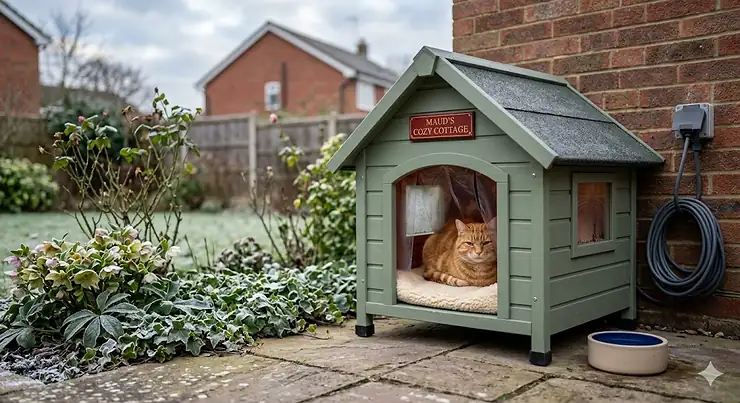
If you’ve ever watched your outdoor cat shivering on a damp November evening or found them huddled under the garden shed during a February downpour, you’ll know that Britain’s weather poses unique challenges for feline friends. Unlike countries with crisp, dry winters, the UK’s combination of persistent drizzle, bone-chilling damp, and unpredictable temperature swings creates conditions where a heated outdoor cat house isn’t merely a luxury—it’s often essential for your cat’s health and wellbeing. According to the UK Government’s Code of Practice for Cat Welfare, cats living outdoors need access to a safe shelter, as living in cold or wet conditions without adequate protection can cause suffering.
The British climate rarely delivers the extreme cold seen in Canada or Scandinavia, but what we lack in Arctic temperatures, we more than compensate for with relentless moisture. A wet cat loses body heat up to five times faster than a dry one, and that persistent dampness can lead to hypothermia even at temperatures well above freezing. According to Cats Protection, the UK’s leading cat welfare charity, temperatures below 7°C can start to become unsafe for cats outdoors, particularly for extended periods. Respiratory infections, arthritis flare-ups, and general immune suppression all become more likely when cats lack proper shelter from our famously grim weather.
What most cat owners don’t realise is that a heated outdoor cat house designed for the UK market needs different features than American or Continental models. British outdoor cat shelters must prioritise waterproofing over extreme insulation, manage ground moisture from saturated soil, and ideally run on 230V UK electrics with proper safety certification. Throughout this guide, I’ll walk you through exactly what to look for, which products actually deliver in British conditions, and how to avoid the common pitfalls that catch out first-time buyers.
Quick Comparison: Top Heated Cat Houses at a Glance
| Product | Type | Price Range | Best For | UK Plug/Voltage |
|---|---|---|---|---|
| K&H Outdoor Heated Kitty House | Fabric heated | £80-£110 | Covered porches | ❌ US plug (requires adapter) |
| Pecute Pet Heat Pad (standalone) | Heating pad only | £25-£40 | Adding to existing shelter | ✅ UK plug, 230V |
| Home & Roost Insulated House | Self-heating (no power) | £90-£140 | Remote locations | ✅ No electricity needed |
| CozyPaws Outdoor Cat House Set | Self-heating elevated | £70-£95 | Wet ground conditions | ✅ No electricity needed |
| K&H Extreme Weather Kitty Pad | Heating pad only | £35-£50 | DIY shelters | ❌ US plug (requires adapter) |
| Generic Insulated Heated Shelter | Fabric heated | £60-£90 | Budget-conscious | ⚠️ Variable (check listing) |
| DIY with Separate Heating Pad | Custom build | £40-£70 | Handy cat owners | ✅ If using UK pad |
From this comparison, you’ll notice a critical UK-specific issue: many popular heated cat houses sold on Amazon.co.uk actually ship with American-style plugs and 120V electrics, requiring either a voltage converter or a complete replacement of the heating element with a UK-compatible alternative. The K&H range, whilst excellent quality and widely reviewed, has generated numerous complaints from British buyers who discovered too late that the included heating pad won’t work safely with UK mains electricity. Before purchasing any heated model, verify whether it includes a proper UK three-pin plug and 230V compatibility—or budget an extra £25-£40 for a separate UK heating pad like the Pecute models that are specifically designed for British sockets.
💬 Just one click — help others make better buying decisions too!😊
✨ Don’t Miss These Exclusive Deals!
🔍 Take your outdoor cat care to the next level with these carefully selected products. Click on any highlighted item to check current pricing and availability on Amazon.co.uk. These picks will help you find exactly what your feline needs!
Top 7 Heated Outdoor Cat Houses: Expert Analysis for UK Conditions
1. K&H Pet Products Outdoor Heated Kitty House
The K&H Outdoor Heated Kitty House represents the gold standard in heated cat shelters—provided you sort out the voltage issue first. This American-designed shelter features heavy-duty 600-denier nylon construction with vinyl backing, creating a genuinely waterproof outer shell that handles British rain rather well. The 20-watt heated floor pad uses dual thermostats to automatically warm to approximately 38°C (roughly your cat’s natural body temperature) when occupied, then cools when empty to save energy.
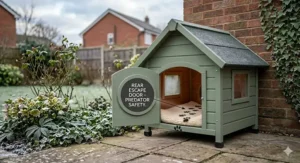
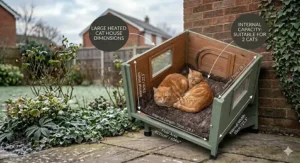
Here’s what UK buyers need to know: the heating pad supplied with this model runs on 120V American electricity and ships with a two-pin US plug. You have three options—buy a voltage converter (adds £15-£25 and introduces potential safety issues), replace the heating element entirely with a UK model like the Pecute Pet Heat Pad (£25-£40), or simply use the well-insulated house without heating and rely on your cat’s body warmth. The house itself assembles via hook-and-loop fasteners requiring no tools, features two exits with removable clear door flaps for predator escape routes, and measures approximately 36 cm × 53 cm × 33 cm internally—comfortable for one large cat or two smaller moggies who get along.
The waterproofing genuinely works; British customers report the interior staying bone-dry even during prolonged downpours when positioned under a porch or shed overhang. The insulated walls and roof retain heat remarkably well, though you’ll want to elevate it slightly off wet paving using bricks or a pallet section to prevent ground moisture seeping up through the vinyl base. At around £80-£110 on Amazon.co.uk, it’s not cheap, but the build quality justifies the cost if you’re prepared to address the electrical compatibility separately.
Pros:
✅ Genuinely waterproof construction handles British weather
✅ Dual escape doors reduce feral cat anxiety
✅ Insulated walls retain warmth effectively
Cons:
❌ Heating pad is 120V US voltage (requires replacement or adapter for UK)
❌ Vinyl base can feel cold without elevation
Best for: Cat owners with covered outdoor areas (porches, sheds, garages) who are willing to source a separate UK heating pad or use it as an insulated-only shelter.
2. Pecute Pet Heat Pad with 6 Adjustable Temperatures
Rather than purchasing an all-in-one heated shelter that may not suit UK electrics, many British cat owners are opting for a modular approach: buy a quality insulated shelter separately, then add the Pecute Pet Heat Pad which is specifically designed for UK mains voltage. This rectangular heating pad comes in multiple sizes (the 40 cm × 50 cm Medium works brilliantly for most cat houses), features six temperature settings ranging from gentle warmth to proper winter heating, and includes a timer function allowing 1-9 hour automatic shut-off.
The truly clever bit is the dual-layer safety system. The pad uses flame-retardant cotton internally, sports a waterproof PVC coating (essential for outdoor use in damp Britain), and includes chew-resistant cabling—critical when dealing with bored outdoor cats. British buyers particularly appreciate that it ships with a proper UK three-pin plug and runs on 230V, eliminating the voltage conversion hassle that plagues many American imports. The removable flannel cover pops into the washing machine, which you’ll want to do monthly if the pad lives in a shelter used by feral or community cats.
Temperature control is surprisingly sophisticated for the £25-£40 price point. Set it to level 2 or 3 for autumn damp (maintains around 25-30°C), or crank it to level 5-6 during January cold snaps when you want a toasty 35-40°C surface temperature. The timer prevents energy waste; set it to activate during the coldest overnight hours rather than running continuously. At 50 watts maximum power draw, running costs are negligible—roughly £2-£3 monthly even with overnight use throughout winter, based on current UK electricity prices of approximately 25p per kWh.
Pros:
✅ UK voltage and plug—no adaptation needed
✅ Six temperature levels suit different weather
✅ Waterproof and chew-resistant for outdoor reliability
Cons:
❌ Requires separate shelter structure
❌ Cats may avoid it initially (gradual introduction recommended)
Best for: DIY enthusiasts building custom cat shelters, or buyers adding heating to existing structures like wooden cat houses or large storage boxes.
3. Home & Roost Insulated Self-Heating Cat House XL
For cat owners in rural areas without convenient outdoor electricity access—or those concerned about energy bills and cable safety—the Home & Roost Insulated Self-Heating Cat House XL offers a compelling electricity-free alternative. This British-designed wooden shelter uses reflective insulation panels in the roof and floor that bounce your cat’s natural body heat back toward them, creating a surprisingly warm microclimate without any power source. The pitched roof sheds rain efficiently (crucial in British conditions), and the hinged lid provides easy access for cleaning or bedding changes.
The self-heating technology relies on basic physics rather than marketing hype. Cats generate significant body heat, and within an enclosed, well-insulated space, this warmth accumulates rather than dissipating. The reflective panels amplify the effect, potentially keeping the interior 5-10°C warmer than ambient temperature on still nights—enough to make a meaningful comfort difference during British autumn and mild winters, though perhaps insufficient during genuine cold snaps below freezing. Home & Roost recommends adding straw bedding (never blankets, which absorb moisture and stay damp) for additional insulation.
British buyers appreciate the UKCA-compliant construction, the use of sustainably sourced timber, and the fact that it simply works without monthly electricity costs or cable management concerns. The XL version measures approximately 50 cm × 40 cm × 36 cm externally, providing ample space for larger cats or two smaller ones who tolerate each other. At £90-£140 depending on retailer and any ongoing promotions, it sits at the premium end for a non-heated option, but the five-year manufacturer warranty and customer service from a UK company add value beyond the physical product.
Pros:
✅ Zero running costs—no electricity required
✅ UK-designed for British weather patterns
✅ Wooden construction outlasts fabric shelters
Cons:
❌ Limited warming in extreme cold (below 0°C)
❌ Heavier and less portable than fabric options
Best for: Rural properties, allotments, or gardens without outdoor power, plus environmentally conscious owners preferring zero-energy solutions.
4. CozyPaws Outdoor Cat House with Elevated Metal Frame Set
The CozyPaws Outdoor Cat House Set tackles one of the most overlooked issues with outdoor cat shelters in Britain: ground moisture. British soil stays saturated for months during autumn and winter, and any shelter sitting directly on damp ground loses heat rapidly through the base whilst potentially allowing moisture to wick up into the bedding. CozyPaws addresses this with a clever elevated metal frame that raises the waterproof plush house 7 cm off the ground, creating an air gap that dramatically improves thermal performance.
The house itself uses a self-warming design similar to Home & Roost—dense plush interior material traps your cat’s body heat within the enclosed arch-shaped structure, gradually building a warm microclimate without requiring electrical input. The 100% waterproof outer shell (genuinely waterproof, not just water-resistant) features a pitched roof design that sheds British rain more effectively than dome-shaped alternatives. The arch entrance includes a protective flap that blocks wind and draughts whilst remaining easy for cats to push through.
What makes this particularly suitable for British gardens is the foldable design. When spring arrives and outdoor heating becomes unnecessary, the entire shelter collapses flat in under two minutes for compact storage in a shed or garage—rather important when you’re working with limited space in a typical terraced house or semi-detached property. The plush cover is fully machine-washable, which you’ll appreciate if multiple neighbourhood cats decide to share the facility. At £70-£95 depending on size variant, it offers excellent value for a well-thought-out British-market product with no electrical complications.
Pros:
✅ Elevated design prevents ground moisture problems
✅ Genuinely waterproof in sustained British rain
✅ Folds flat for seasonal storage
Cons:
❌ Self-heating only (no active warmth in extreme cold)
❌ Metal frame requires outdoor space for setup
Best for: Cat owners with wet or poorly-drained gardens, those wanting seasonal storage flexibility, or buyers seeking maximum warmth without electricity.
5. K&H Extreme Weather Kitty Pad (Standalone Heating Element)
The K&H Extreme Weather Kitty Pad functions as a standalone heating element designed to slip inside existing cat houses, cardboard box shelters, or DIY constructions. The hard ABS plastic shell protects the heating element from moisture and cat claws, whilst the steel-wrapped 1.7-metre cord deters chewing—essential for outdoor installations where cables face exposure to weather and bored felines. At 40 watts power draw, it generates enough heat to maintain approximately 38°C surface temperature when a cat is lying on it, then cools when unoccupied to conserve energy.
British buyers face the same voltage issue as the K&H heated house: this pad runs on 120V American electricity and ships with a US-style plug. You’ll need either a step-down voltage converter (around £15-£25) or, more sensibly, to consider the Pecute alternative mentioned earlier which offers similar functionality with proper UK electrical compliance. If you do opt for this K&H model despite the voltage hassle—perhaps because you’ve already got a converter from other American electronics—you’re getting a remarkably robust heating pad that consistently receives positive reviews for reliability and safety certification (MET Labs tested, exceeding UL standards, though note these are American safety certifications rather than UK/UKCA equivalents).
The included fleece cover provides some cushioning and washes easily in a machine, though it’s rather thin and benefits from additional bedding placed on top. Positioned on a sheltered porch, inside a garage, or within a shed, this pad provides reliable warmth for outdoor cats throughout British winters without costing a fortune to run—roughly £2-£3 monthly in electricity at current UK rates, assuming overnight use through the cold season. The one-year warranty offers some reassurance, though UK buyers should note that warranty service may involve international shipping hassles.
Pros:
✅ Robust ABS plastic construction withstands outdoor use
✅ Steel-wrapped cord resists chewing
✅ Low running costs (around £2-£3 monthly)
Cons:
❌ 120V US voltage—requires converter for UK use
❌ Fleece cover is thin (benefits from additional bedding)
Best for: DIY shelter builders who already own voltage converters, or those specifically wanting K&H brand quality despite electrical adaptation requirements.
6. Generic Insulated Heated Outdoor Cat Shelter
Amazon.co.uk hosts numerous generic heated cat shelters, typically priced in the £60-£90 range, often shipped from Chinese manufacturers via UK warehouses. These universally feature similar construction: oxford fabric outer shell with waterproof coating, internal insulation layers (usually foam or polypropylene), an included heating pad of variable quality, and collapsible frame assembly requiring no tools. Build quality varies significantly between sellers, making this category rather hit-or-miss.
The critical variable is electrical compatibility. Some generic models include UK-compliant 230V heating pads with proper three-pin plugs; others ship US-voltage components despite being sold on the UK site. Always check the product specifications carefully and read recent British buyer reviews before purchasing. When you do find a properly UK-spec version, you’re getting reasonable value—a functional heated shelter that handles light rain (though rarely prolonged downpours as effectively as premium options) and provides active warmth during cold snaps.
Expect the heating pad to offer basic temperature control, usually via a simple dial or button system rather than the sophisticated multi-level options seen in premium models. Durability tends toward 1-2 winter seasons rather than the multi-year lifespan of K&H or Home & Roost products. The fabric degrades faster, zips jam more readily, and the frame sometimes warps. That said, if you’re testing whether your outdoor cat will actually use a heated shelter, or you’re providing temporary accommodation whilst waiting for a premium model to arrive, these budget options serve a purpose.
Pros:
✅ Budget-friendly entry point
✅ Some models include UK-compatible electrics
✅ Tool-free assembly suits first-time buyers
Cons:
❌ Variable quality between sellers
❌ Shorter lifespan (1-2 seasons typically)
Best for: Budget-conscious buyers, those testing cat acceptance before investing in premium options, or temporary/emergency shelter needs.
7. DIY Heated Cat Shelter with Separate Components
Building your own heated cat shelter offers maximum customisation and can be remarkably cost-effective, particularly if you’re handy with basic tools. The classic British approach uses a large storage container (around 60 litres capacity, £12-£18 from B&Q or Wickes), thick polystyrene insulation sheets (£15-£25), a UK-spec heating pad like the Pecute model (£25-£40), and straw bedding for additional warmth. Total cost: £40-£70, delivering a customised shelter perfectly suited to your cat’s size and your garden conditions.
Cut an entrance approximately 15 cm diameter (large enough for your cat, small enough to retain heat), line all interior surfaces with 3-5 cm thick polystyrene to create proper insulation, then position the heating pad on the floor with straw bedding piled around the edges. Elevate the entire container on bricks to prevent ground moisture transfer, and ensure it’s positioned somewhere sheltered from prevailing winds—against a south-facing wall is ideal for British gardens. The storage container approach provides excellent waterproofing, costs a fraction of commercial options, and takes perhaps an hour to construct even for absolute beginners.
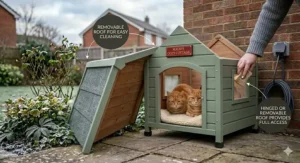
Advanced DIYers might opt for wooden construction using external-grade plywood, creating a more permanent structure that blends better with garden aesthetics. Add a hinged roof for easy cleaning access, properly weatherproof all seams with outdoor wood sealant, and insulate with expanding foam around the edges. This approach costs £50-£90 depending on materials quality but delivers a shelter that’ll last five or more years with minimal maintenance. Either way, sourcing a proper UK-voltage heating pad separately gives you complete control over power consumption and heating intensity.
Pros:
✅ Most cost-effective option overall
✅ Complete customisation to your cat’s needs
✅ Uses UK-spec components from the start
Cons:
❌ Requires time and basic DIY skills
❌ Aesthetic may not suit all gardens
Best for: Budget-conscious owners, those with specific size requirements, DIY enthusiasts, or people wanting maximum control over specifications.
Understanding Running Costs: What Heated Cat Houses Actually Cost in the UK
One of the most common concerns British cat owners raise about heated outdoor shelters is the impact on their electricity bill—particularly relevant given that UK energy costs have fluctuated considerably over recent years. The reassuring news is that even with sustained winter use, a heated cat house costs remarkably little to operate, assuming you’re using a low-wattage pet-specific heating pad rather than a general-purpose space heater.
A typical pet heating pad draws 20-50 watts of power. Let’s calculate the monthly running cost using current UK electricity prices of approximately 25p per kWh (based on the April 2026 Ofgem price cap). A 40-watt pad running continuously for 30 days consumes 28.8 kWh monthly (40 watts × 24 hours × 30 days ÷ 1,000), costing about £7.20 at full-time operation. However, thermostatic pads don’t actually run continuously—they cycle on and off, typically operating at perhaps 30-40% duty cycle once the shelter reaches target temperature. This reduces real-world monthly costs to roughly £2.50-£3.50, less than a single overpriced coffee from a high street chain.
You can optimise costs further by using a timer plug (£8-£12 from Argos or Screwfix) to restrict heating to overnight hours when temperatures drop lowest—say, 10pm to 7am. This nine-hour window costs approximately £1.10 monthly even without thermostatic cycling, making it genuinely negligible compared to your overall household electricity consumption. For context, leaving a single 60-watt traditional lightbulb burning continuously costs more than running a heated cat pad on a timer schedule.
The environmental impact is similarly modest. That 28.8 kWh monthly consumption (worst case, no timer) generates approximately 6 kg of CO₂ equivalent based on the UK’s current electricity grid mix—less than a quarter of the emissions from driving 40 miles in an average petrol car. If your electricity comes from a renewable tariff like Octopus Energy’s green plans or Bulb’s renewable options, the carbon impact drops to near zero. Compared to the health costs (both emotional and financial) of treating a cat who’s developed hypothermia or a respiratory infection from inadequate winter shelter, the environmental and financial costs of running a heated outdoor cat house are entirely justifiable.
British Weather vs Heated Cat Shelters: What Actually Works
Britain’s climate presents unique challenges that differ markedly from the continental or Arctic conditions that many heated cat shelter designs originally targeted. American products assume cold but dry air; Scandinavian designs expect snow that insulates; even Continental European models presume crisper, less persistently damp conditions. British cats face something rather more insidious: months of continuous moisture, moderate but bone-chilling cold (typically 0-8°C overnight during deep winter), and the infamous damp that penetrates everything it touches.
A wet cat loses body heat catastrophically quickly. Whilst fur provides excellent insulation when dry, saturated fur collapses and conducts heat away from the body at roughly five times the rate of dry fur. This means that a cat caught in a February downpour without adequate waterproof shelter faces genuine hypothermia risk even when the thermometer reads a seemingly mild 4°C. The RSPCA warns that cats at risk of hypothermia include kittens, elderly cats, and those who get wet in cold conditions—emphasising the critical importance of keeping outdoor cats dry, not just warm. Consequently, the single most critical feature in any British outdoor cat shelter isn’t the heating element—it’s the waterproofing quality and the shelter’s ability to shed rain effectively whilst preventing ground moisture ingress.
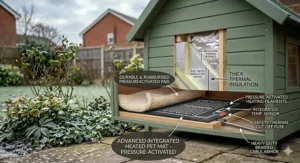
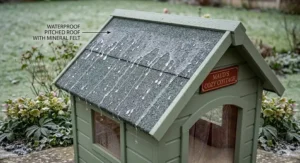
This is why I consistently recommend elevated designs (whether the CozyPaws metal frame system or simple brick elevation for DIY builds) and proper pitched roofs rather than dome shapes. A dome or igloo design might handle dry snow admirably, but British rain runs down curved surfaces and pools at the base, eventually saturating the floor and making the entire shelter useless. A pitched roof with an overhang sheds water away from the entrance, keeping the interior genuinely dry even during the prolonged downpours that characterise October through March across most of the UK. Position your shelter against a south-facing wall if possible—this captures maximum winter sun exposure whilst providing additional wind protection from northerly blasts.
Insulation matters, but differently than in extreme cold climates. You need enough to prevent heat loss through walls and roof (hence why polystyrene-lined DIY builds work brilliantly), but you’re not trying to maintain a 20°C differential as you might in Canada or Norway. British outdoor cat shelters realistically aim to stay 8-12°C warmer than ambient temperature—warm enough to prevent hypothermia and keep cats comfortable, whilst remaining energy-efficient and avoiding overheating during milder spells. This is why thermostatic heating pads that cycle on and off suit British conditions far better than constant-output heaters designed for Arctic deployment.
How to Choose the Right Heated Cat House for Your Situation
Selecting the optimal heated cat house requires matching the product’s characteristics to your specific circumstances—your outdoor space configuration, whether you’re caring for your own pet or a feral colony, your budget constraints, and importantly, your access to outdoor electricity. Let me walk you through a decision framework that simplifies the selection process.
If you have convenient outdoor electricity (a garage, shed, or covered porch with accessible sockets): Consider a powered heating pad option, either as part of an integrated shelter like the K&H Outdoor Heated Kitty House (with appropriate voltage solutions) or as a separate element added to a well-insulated structure. The £2-£3 monthly running cost is negligible, and you’re providing maximum comfort during genuine cold snaps. Ensure any electrical installation uses a proper outdoor-rated RCD-protected socket—don’t run extension cables through windows or rely on indoor sockets for permanent outdoor installations, as this violates UK electrical safety regulations and could void your home insurance.
If outdoor electricity isn’t available or desirable: Focus on self-heating designs like the Home & Roost or CozyPaws models that use reflective insulation and your cat’s natural body heat. These work surprisingly well in British conditions where overnight lows rarely drop below -5°C, though you’ll want to monitor your cat during unusually cold snaps and perhaps provide emergency indoor access if temperatures plummet. Add generous straw bedding (available from farm supplies, garden centres, or even some larger Pets at Home stores) for additional insulation—a 15 kg bale costs £8-£12 and lasts an entire season.
For feral or community cat colonies: Prioritise durability and multiple-cat capacity over aesthetics. The K&H Multi-Kitty A-Frame (available on Amazon.co.uk, same voltage caveats apply) accommodates 3-4 cats simultaneously, or you could deploy multiple individual shelters spaced around your property. Feral cats feel safer with two exits, reducing anxiety about being trapped by predators or rival cats—any shelter you select must include dual access points. Position shelters in quiet areas away from busy paths or roads, ideally against walls or fences that provide additional wind protection and a sense of security.
Budget considerations: If funds are tight, a well-executed DIY shelter using a storage container, polystyrene insulation, and straw bedding provides functional protection for £15-£25 (no heating), or £40-£70 if you add a UK heating pad. This genuinely works as effectively as mid-priced commercial options, sacrificing only aesthetics and convenience. Save the £90-£140 for premium options once you’re confident your cat will actually use outdoor shelter—some cats remain resolutely indoor-focused regardless of how much you invest in garden facilities.
Common Mistakes When Buying Heated Outdoor Cat Houses in the UK
After reviewing hundreds of British customer experiences and chatting with cat shelter volunteers, several recurring pitfalls emerge that you can easily avoid with advance awareness.
Mistake 1: Ignoring voltage compatibility. As I’ve emphasised throughout this guide, many heated cat houses sold on Amazon.co.uk ship with American 120V electrics despite being listed on the UK site. Always verify electrical specifications before purchasing, and budget for a proper UK replacement heating pad (£25-£40) if the product includes non-compatible components. Never use step-down voltage converters for permanent outdoor installations—they introduce additional failure points and potential fire hazards, especially in damp British conditions.
Mistake 2: Prioritising size over snugness. Inexperienced buyers often select oversized shelters, reasoning that more space equals more comfort. Actually, cats retain body heat far more effectively in snug enclosures where their warmth can’t dissipate into excess volume. An XL shelter suitable for three cats simultaneously will be miserably cold for a single cat using it alone. Size the shelter to your actual cat count, erring slightly small rather than large—your cat should be able to stand, turn around, and curl up comfortably, but no more.
Mistake 3: Using blankets or fabric bedding outdoors. Soft bedding seems intuitive but actively undermines outdoor shelter performance in British damp. Blankets, towels, and fleece absorb moisture from rain, cat paws, or humidity, then stay persistently wet for days—creating a cold, potentially mouldy environment that’s worse than no bedding at all. Use straw instead, which remains dry, provides excellent insulation, and can be easily replaced when it gets compressed or soiled. Self-heating pet pads designed for outdoor use work well too, but conventional bedding is counterproductive.
Mistake 4: Ground-level placement on saturated soil. Positioning a cat shelter directly on damp British lawn or paving creates a thermal bridge that sucks heat straight into the ground whilst allowing moisture to wick upward into the shelter floor. Always elevate shelters at least 5-10 cm using bricks, paving slabs, or proper purpose-built legs. This simple intervention dramatically improves thermal performance and prevents the soggy-floor problem that makes many otherwise decent shelters unusable during wet seasons.
Mistake 5: Expecting instant adoption. Cats are naturally suspicious of unfamiliar structures, and even your own well-loved pet may need several days to accept a new outdoor shelter. Place familiar-smelling bedding inside, sprinkle catnip around the entrance, or leave treats just inside the doorway to encourage exploration. For feral cats, position the shelter in their established territory near existing feeding stations, and give them weeks rather than days to become comfortable. Don’t assume the shelter has “failed” if your cat ignores it initially—persistence usually wins.
Setting Up Your Heated Cat House: A British Garden Guide
Proper installation maximises your heated cat house’s effectiveness whilst minimising maintenance hassles throughout the season. Here’s how to set up a shelter that’ll genuinely serve your outdoor cat rather than becoming an expensive garden ornament.
Location selection: Choose a spot that balances shelter from the elements against your cat’s territorial preferences. Against a south-facing wall (capturing maximum winter sun) or under a deep roof overhang (staying dry during sideways rain) are ideal. Avoid completely exposed positions where prevailing westerly winds will chill the shelter mercilessly. If your cat already has favourite outdoor resting spots, position the heated house nearby—cats are creatures of habit who prefer familiar territory over objectively superior but unfamiliar locations.
Elevation and drainage: Place the shelter on a platform elevated 5-10 cm off the ground. For quick setup, use standard house bricks (two stacks of two bricks create a stable platform for most shelters), ensuring they’re on level, firm ground rather than soft turf that’ll subside over winter. For permanent installations, paving slabs create a stable base, potentially with a slight gradient to encourage water runoff away from the shelter. Check that water doesn’t pool around your chosen location during heavy rain—a puddle-prone spot will undermine even the best-elevated setup.
Electrical safety (if using powered heating): Outdoor electrical installations in the UK must comply with BS 7671 wiring regulations. The safest approach is a dedicated outdoor socket installed by a qualified electrician (£80-£150 typically), protected by an RCD and properly weatherproofed. If you’re using an existing garage or shed socket, verify it’s RCD-protected before connecting any outdoor heating equipment. Never run extension cables permanently through windows, under doors, or across paths where they present trip hazards and weather exposure risks. If proper outdoor electrical access isn’t feasible, non-powered self-heating designs are genuinely safer than bodged wiring jobs.
Bedding and accessories: Line the floor with generous straw bedding, creating a nest-like depression in the centre where your cat naturally curls. If using a heating pad, position it flat on the floor, then cover it with a layer of straw—never place straw directly between a heating element and your cat’s body, as this can cause localised overheating. Replace bedding monthly during active use, or whenever it becomes compressed, wet, or starts smelling musty. Some owners add a covered hot water bottle during extreme cold snaps as a supplementary heat source, though ensure your cat can move away from it if it becomes uncomfortably warm.
Maintenance schedule: Check the shelter weekly during the wet season, verifying that waterproofing remains intact, door flaps haven’t blown askew, and bedding stays dry. Wipe down heated pads monthly with a damp cloth (unplugged, obviously), and machine-wash any fabric covers according to manufacturer instructions. Before storing the shelter for summer, thoroughly clean all components, dry completely to prevent mould formation, and inspect for any damage requiring repair before next winter. A well-maintained heated cat house easily lasts 3-5 seasons, whilst neglected units often fail within two winters.
FAQ: Your Heated Cat House Questions Answered
❓ Are heated cat houses safe to leave on overnight in the UK?
❓ How much does it cost to run a heated outdoor cat house throughout a British winter?
❓ Will my outdoor cat actually use a heated shelter, or just ignore it like they do expensive cat beds?
❓ Do heated cat houses work during British damp and rain, or only in dry cold?
❓ Can I use a heated cat house on my balcony or in a flat without a garden?
Conclusion: Keeping British Cats Warm Through Winter
Selecting the right heated outdoor cat house for UK conditions requires balancing waterproofing quality, thermal insulation, electrical compatibility, and cost—all whilst navigating the frustrating reality that many products sold on Amazon.co.uk weren’t actually designed for British voltage or weather patterns. The safest approach combines a well-insulated, waterproof structure (either commercial or DIY) with a UK-specification heating pad from brands like Pecute that ship with proper 230V electrics and three-pin plugs.
For most British cat owners, I’d recommend starting with either the Home & Roost self-heating wooden house (if you prefer zero electricity dependency and have the budget) or a DIY storage-container shelter paired with a Pecute heating pad (if you want maximum value and don’t mind basic construction work). Both approaches deliver reliable warmth through British winters without the voltage conversion headaches that plague American imports, whilst costing under £100 total—less than many single vet visits, and dramatically less than treating cold-weather health complications in inadequately sheltered cats.
The monthly running cost of £2-£3 for heated options is genuinely negligible compared to the health benefits and peace of mind from knowing your outdoor cat has safe, warm refuge during those miserable damp November nights or icy February mornings. Whether you’re caring for your own beloved pet, managing a feral colony, or simply providing backup shelter for a neighbourhood wanderer, a properly specified heated outdoor cat house represents one of the most cost-effective welfare interventions available to British cat lovers.
Recommended for You
- Best Outdoor Cat Houses UK 2026: Expert Reviews & Winter Guide
- 7 Best Luxury Cat Beds UK 2026: Designer Reviews & Buying Guide
- 7 Best Calming Donut Cat Beds UK 2026
Disclaimer: This article contains affiliate links. As an Amazon Associate, I earn from qualifying purchases. If you purchase products through these links, we may earn a small commission at no additional cost to you.
✨ Found this helpful? Share it with your mates! 💬🤗
