
In This Article
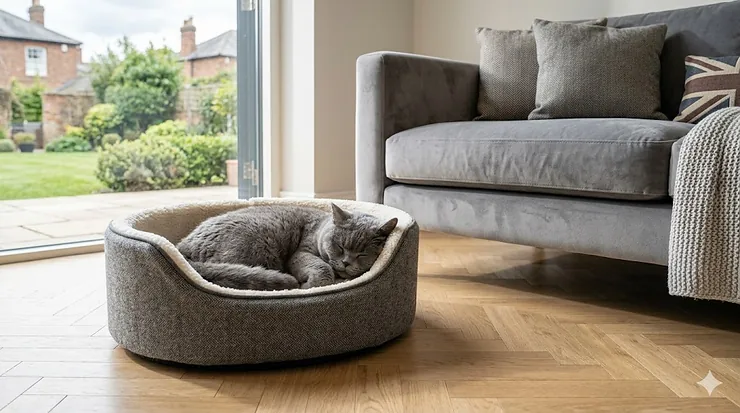
Your British Shorthair isn’t just any cat—they’re a substantial, muscular feline who deserves sleeping quarters that properly accommodate their impressive build. Males can tip the scales at 7.7 kg, whilst females reach around 5.4 kg, and both possess that characteristic cobby, stocky frame that makes them one of Britain’s most beloved breeds—in fact, they’ve been the UK’s most popular pedigree cat for over two decades. What most owners overlook when shopping for a cat bed for British shorthair is that these cats don’t just need space; they need proper support for their dense bone structure and a design that accommodates their preference for both security and visibility.
The challenge with finding the right bed lies in understanding that British Shorthairs take 3-5 years to reach full maturity, meaning your fluffy kitten will gradually transform into a solid, heavyweight companion. A bed that fits at 12 months may feel cramped by year three. According to the RSPCA, cats need “a comfortable, dry, draught-free, clean and quiet place” to rest—and for British Shorthairs specifically, that means choosing dimensions and materials that support their unique needs without forcing them into awkward positions.
In this comprehensive guide, I’ve researched the best cat beds available on Amazon.co.uk in 2026, focusing specifically on options that work brilliantly for large, muscular breeds. You’ll discover not just product names, but practical insights on why certain designs suit British Shorthairs better than others, how British weather affects bed choice, and real-world tips from someone who understands that these aren’t your average moggies.
Quick Comparison: Top Cat Beds for British Shorthairs
| Bed Type | Best For | Size Range | Price Range | Key Feature |
|---|---|---|---|---|
| Bedsure Round Plush Bed | Budget-conscious | 63×53 cm | £15-£25 | Machine washable, non-slip |
| CheerPals Cat Cave | Privacy seekers | Large (60+ cm) | £30-£45 | Scratch-resistant, enclosed |
| Ferplast Plastic Bed | Year-round use | 93.5×68 cm | £25-£35 | Ventilated, durable |
| Petlicity Radiator Bed | Cold weather | Adjustable | £18-£28 | British climate perfect |
| K&H Thermo-Kitty Heated | Senior cats | 51 cm round | £45-£60 | Orthopedic with heating |
| COZY KISS Sofa Bed | Maximum comfort | 65×44 cm | £35-£50 | Head/neck support, plush |
| Trovie Donut Bed | Anxious cats | 51×51 cm | £12-£20 | Calming design, fluffy |
From this comparison, the Ferplast plastic bed offers the best dimensions for a fully-grown male British Shorthair at 93.5×68 cm—far more generous than typical cat beds. However, if you’re dealing with the damp British climate and your cat gravitates towards radiators during our perpetually grey autumn months, the Petlicity radiator bed solves a uniquely UK problem: providing warmth without taking up precious floor space in compact British homes. Budget buyers should note that the Trovie donut bed’s £12-£20 range seems tempting, but at 51×51 cm, it may feel snug for a 7 kg male—fine for females or younger cats still growing into their frame.
💬 Just one click — help others make better buying decisions too! 😊
✨ Don’t Miss These Exclusive Deals!
🔍 Take your cat bed shopping to the next level with these carefully selected products. Click on any highlighted item to check current pricing and availability on Amazon.co.uk. These picks will help you find exactly what your British Shorthair needs!
Top 7 Cat Beds for British Shorthair: Expert Analysis
1. Bedsure Large Round Cat Bed
The Bedsure Large Round Cat Bed sits firmly in that sweet spot between affordability and proper sizing, measuring 63×53×20 cm—adequate for most British Shorthairs, though males approaching the 7.7 kg mark might appreciate the next size up if available. The raised corduroy fleece sides provide that chin-rest support British Shorthairs adore, whilst the reversible cushion means you can flip it when one side needs refreshing between washes.
What makes this particularly suited to UK homes is the machine-washable design at 30°C—crucial when you’re dealing with the muddy paw prints that come with our reliably damp climate. The non-slip rubber base prevents the bed from sliding across laminate or tile floors, which matters more than you’d think when a 6 kg cat launches itself from the windowsill. UK reviewers consistently mention the bed maintains its shape through multiple washes, unlike cheaper alternatives that flatten after a month.
Expert take: This works brilliantly for female British Shorthairs and younger males (under 18 months), but if you’ve got a substantial adult male who likes to really spread out, you might find him draped over the edges. The price range of £17-£23 makes it excellent value for money, particularly as a second bed for another room.
Pros:
✅ Machine washable maintains hygiene without hassle
✅ Non-slip base stays put on hard British flooring
✅ Reversible cushion extends lifespan
Cons:
❌ May feel cramped for large adult males
❌ Raised sides limit stretching-out space
Value verdict: Around £17-£23 represents solid value for a well-made bed that’ll serve you well for 2-3 years.
2. CheerPals Cat Cave Bed & Igloo
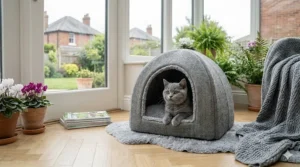
The CheerPals Cat Cave Bed addresses a uniquely British Shorthair characteristic: their contradictory desire for security whilst maintaining visual surveillance of their domain. This large woven yarn cave features a scratch-resistant hard shell that withstands the enthusiastic kneading these muscular cats inflict on softer materials, paired with a detachable cushion you can wash separately—a godsend during the muddy British spring.
Measuring in the large category, it accommodates cats up to 18 kg, which gives your British Shorthair ample room without feeling lost in oversized quarters. The covered sleeping hut appeals to their instinct for enclosed spaces, particularly useful if you live in a bustling household where quiet refuge matters. What distinguishes this from generic cave beds is the durability of the woven construction, which UK buyers report holds up remarkably well against daily scratching, unlike felt alternatives that shred within months.
Expert take: This excels for British Shorthairs who exhibit nervous tendencies or live in homes with dogs or young children. The hard shell provides genuine security rather than just a psychological sense of it. However, cats who prefer open observation points (common in confident British Shorthairs) may ignore it in favour of windowsills. For British conditions, the enclosed design helps retain warmth during our lengthy heating season without trapping moisture, which can be an issue with fully enclosed fabric caves.
Pros:
✅ Scratch-resistant shell survives enthusiastic British Shorthair kneading
✅ Large opening accommodates substantial frames
✅ Washable cushion simplifies maintenance
Cons:
❌ Confident cats may prefer open beds
❌ Takes up more floor space than flat beds
Value verdict: At £30-£45, it’s pricier than basic options but delivers excellent longevity—expect 4-5 years of solid use.
3. Ferplast Large Plastic Cat Bed
The Ferplast Cat Bed might seem rather utilitarian at first glance, but this Italian-made plastic bed (widely available on Amazon.co.uk) solves multiple problems for British Shorthair owners. Measuring a generous 93.5×68×28.5 cm, it’s one of the few beds that genuinely accommodates a fully-stretched adult male without forcing him into a cramped curl. The ventilation holes prevent that stuffy atmosphere that develops in enclosed beds during warmer months, whilst the non-slip rubber feet mean it stays anchored even when your cat performs their characteristic leap-and-land routine.
What British owners particularly appreciate is the year-round versatility. In summer, the hard base with just a light blanket keeps cats cool; come autumn, you layer in plush bedding for warmth. The plastic construction withstands the test of British Shorthair weight without cracking—important when you’re dealing with a breed that doesn’t delicately perch but rather commits their full mass. It’s also blissfully easy to clean: remove bedding, spray with pet-safe cleaner, wipe down, done.
Expert take: This is the sensible choice for practical owners who want one bed that works across seasons rather than rotating options. The size genuinely suits large breeds, unlike products labelled “large” that only accommodate average cats. However, it lacks the plush luxury factor, so it won’t photograph beautifully for Instagram—but your British Shorthair won’t care about aesthetics. For UK homes with limited storage, having one adaptable bed beats juggling seasonal alternatives.
Pros:
✅ Exceptional size accommodates fully-grown males
✅ Versatile across British seasons
✅ Virtually indestructible plastic construction
Cons:
❌ Requires separate bedding purchase
❌ Not the most visually appealing option
Value verdict: £25-£35 delivers outstanding longevity—this bed will outlast your cat’s lifetime with proper care.
4. Petlicity Snuggle Padded Radiator Bed
The Petlicity Radiator Bed is quintessentially British in concept—making use of central heating radiators that dominate our homes from October through April. British Shorthairs are notorious heat-seekers, and this padded hammock-style bed attaches to radiators with foldable arms, creating a toasty perch that takes advantage of rising warm air without sacrificing floor space in compact British housing.
The machine-washable fleece cover withstands the inevitable grime that accumulates during our muddy season, whilst the sturdy metal frame supports cats up to 18 kg—well beyond what most British Shorthairs will ever weigh. What makes this particularly clever for British conditions is how it addresses the perpetual dampness problem: cats dry off faster when elevated on a warm surface compared to floor-level beds that stay chilly despite central heating.
Expert take: This works brilliantly for British Shorthairs in flats and terraced houses where floor space comes at a premium. However, check your radiator dimensions carefully—older British properties may have slimmer radiators that don’t accommodate the bracket width. Also worth noting: not all British Shorthairs take to elevated sleeping; some prefer ground-level security. You’ll know within the first week whether your cat is a radiator-bed convert or will steadfastly ignore it in favour of traditional beds.
Pros:
✅ Maximises British central heating efficiency
✅ Saves precious floor space in smaller homes
✅ Machine-washable cover suits UK climate
Cons:
❌ Not compatible with all radiator types
❌ Some cats reject elevated sleeping spots
Value verdict: At £18-£28, it’s excellent value if your cat adopts it—but it’s potentially wasted money if they don’t, so consider your cat’s existing preferences first.
5. K&H Thermo-Kitty Heated Orthopedic Bed
The K&H Thermo-Kitty Bed represents the premium end of cat bedding, featuring a low-wattage heating element that warms to just below your cat’s natural body temperature (around 38°C) combined with orthopedic foam that provides joint support—increasingly important as British Shorthairs age. The 51 cm round design works well for cats up to about 6 kg, meaning it suits most females and smaller males perfectly, though larger specimens may find it a touch snug.
For British conditions, the automatic temperature adjustment means the bed stays energy-efficient despite our lengthy heating season—it only warms when your cat is present, reverting to room temperature when empty. The removable, machine-washable cover accommodates our wet climate, whilst the MET safety listing provides peace of mind that it won’t overheat. UK buyers on Amazon.co.uk report the heating element lasts 3-4 years with constant use, making it worthwhile for senior cats with arthritis or those recovering from illness.
Expert take: This shines for British Shorthairs over 8 years old, particularly during British winters when arthritic joints stiffen in the cold. The orthopedic foam genuinely makes a difference for cats with joint issues—you’ll notice they spend longer in the bed and wake with less stiffness. However, the £45-£60 price point makes this an investment piece rather than a casual purchase. Also consider: some cats dislike the sensation of heated beds, so this isn’t universally appealing despite the premium features.
Pros:
✅ Orthopedic support benefits ageing joints
✅ Auto-warming technology stays energy-efficient
✅ MET safety certified for UK use
Cons:
❌ Premium price point
❌ 51 cm diameter may feel small for large males
Value verdict: £45-£60 is considerable, but for senior cats or those with health issues, the quality of life improvement justifies the cost.
6. COZY KISS Orthopedic Cat Sofa Bed
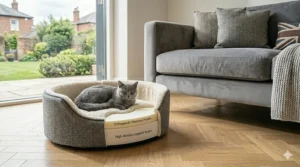
The COZY KISS Sofa Bed brings a bit of luxury to cat bedding with its 65×44×30 cm dimensions that genuinely accommodate large breeds without forcing them into awkward positions. The raised head and neck support mimics the way British Shorthairs naturally rest with their chin propped on something, whilst the faux fur rope design adds a plush factor that appeals to their preference for soft textures.
The anti-slip bottom keeps it stable on both carpet and hard flooring—important in British homes with their mix of surface types—and the removable, washable cover means you can maintain hygiene through our muddy months without replacing the entire bed. UK reviewers particularly appreciate how the structured sides maintain their shape rather than collapsing inward after a few months, a common problem with cheaper plush beds.
Expert take: This hits that sweet spot between proper sizing for British Shorthairs and aesthetic appeal for owners who care about home décor. The cream colour shown in most listings looks elegant but shows dirt faster than darker options—worth considering given British weather. The head support genuinely benefits cats who suffer from respiratory issues, a not-uncommon problem in brachycephalic-influenced breeds. However, at 65 cm length, this works best for cats up to about 6-7 kg; truly massive males approaching 8 kg may still feel cramped.
Pros:
✅ Head/neck support aids respiratory comfort
✅ Maintains shape through extended use
✅ Removable cover simplifies cleaning
Cons:
❌ Light colours show British mud and grime
❌ May feel snug for the largest males
Value verdict: £35-£50 represents fair pricing for a well-constructed bed with orthopedic features—expect 3-4 years of use.
7. Trovie Calming Donut Bed
The Trovie Donut Bed at 51×51 cm and a price range of £12-£20 delivers remarkable value, though it’s crucial to manage expectations about sizing for British Shorthairs. This fluffy, raised-edge design works brilliantly for females and younger males still growing into their adult weight, providing that nest-like security anxious cats crave. The non-slip base keeps it anchored, whilst the machine-washable construction (a must for British conditions) means you can keep it fresh without difficulty.
What makes this particularly useful is as a second or third bed—British Shorthairs often claim multiple sleeping spots throughout the home, and at this price point, you can afford to place them strategically. The calming, enclosed feel works well during fireworks season or when you’ve got builders doing work, providing a retreat when household chaos peaks.
Expert take: This serves a specific niche rather than being a primary bed for fully-grown British Shorthairs. At 51 cm diameter, a 7 kg male will drape over the edges, which some cats don’t mind but others find uncomfortable. However, for female British Shorthairs (typically 3-5 kg) or as a secondary napping spot, it’s genuinely excellent value. UK buyers report the fluffy material flattens somewhat after 6-8 months of constant use, so consider this more of a 1-2 year bed rather than a decade-long investment. For British homes with multiple cats, buying several of these for different rooms makes more financial sense than one expensive premium bed.
Pros:
✅ Budget-friendly allows multiple bed placement
✅ Machine washable suits UK climate
✅ Calming design benefits anxious cats
Cons:
❌ Too small for large adult males
❌ Material flattens with extended use
Value verdict: £12-£20 is outstanding value for a secondary bed or for smaller British Shorthairs, though don’t expect premium durability.
Real-World Scenarios: Matching Beds to British Shorthair Lifestyles
The London Flat Dweller
Profile: Sarah lives in a 60 m² flat in Zone 3 with her 5-year-old male British Shorthair, Winston, who weighs 7.2 kg. Floor space is limited, and the flat runs cold despite central heating.
Best choice: Combination of Petlicity Radiator Bed (£18-£28) for winter warmth and space-saving, plus Ferplast Plastic Bed (£25-£35) positioned in the main living area with seasonal bedding. Total investment: £43-£63.
Why it works: The radiator bed utilises existing heating infrastructure without consuming precious floor space—critical in compact London flats. Winston can perch there during the day when radiators blast heat, then retreat to the more spacious Ferplast bed at night. The plastic bed’s versatility means Sarah swaps light cotton bedding in summer for plush fleece in winter, giving Winston year-round comfort without needing multiple permanent beds cluttering the flat.
The Rural Family Home
Profile: The Johnsons live in a four-bedroom detached house in the Cotswolds with two British Shorthairs—Luna (female, 4.8 kg) and Magnus (male, 7 kg). The house has both carpeted and tiled areas, and the cats have access to a secure garden.
Best choice: COZY KISS Sofa Bed (£35-£50) in the main living room for Magnus, Bedsure Round Bed (£17-£23) in the master bedroom for Luna, and a Trovie Donut Bed (£12-£20) in the conservatory as a shared spot.
Why it works: The Johnsons have space and budget for multiple beds tailored to each cat’s size and preferences. Magnus gets the larger sofa bed that accommodates his frame, whilst Luna prefers the cosier round bed. The budget donut bed in the conservatory provides a sunny spot both cats share during rare British sunshine. With muddy paws from garden access being inevitable, having machine-washable options across all beds means maintaining hygiene doesn’t become a chore.
The Senior Cat Specialist
Profile: Margaret in Edinburgh cares for Bertie, a 12-year-old British Shorthair male (6.5 kg) with early-stage arthritis, particularly noticeable during Scotland’s harsh winters.
Best choice: K&H Thermo-Kitty Heated Bed (£45-£60) as the primary bed, positioned in a draught-free corner.
Why it works: The heated orthopedic foam provides genuine therapeutic benefit for Bertie’s stiff joints, particularly during cold Scottish mornings when he struggles to move fluidly. Margaret notices he sleeps longer and moves with less hesitation after waking. The automatic temperature control means it’s safe to leave on continuously without worrying about overheating or excessive electricity costs. Whilst expensive, the quality of life improvement for a senior cat justifies the investment—Bertie spends 16+ hours daily in this bed compared to the 8-10 hours he spent in his previous non-heated option.
How to Choose the Right Cat Bed for Your British Shorthair
Selecting the proper bed requires understanding what makes British Shorthairs different from average domestic cats. Their substantial build, slow maturation rate, and specific behavioural traits mean standard “medium” or even “large” cat beds often fall short.
1. Size Matters More Than You Think
British Shorthairs need room to fully extend—not just curl up. Measure your cat from nose to tail base when stretched, then add 15-20 cm. For a typical adult male (body length around 50-55 cm), you’re looking at beds with minimum 65-70 cm length or diameter. The weight capacity should comfortably exceed 8 kg even if your cat currently weighs less, accounting for their slow growth trajectory. Cats Protection, the UK’s largest cat welfare charity, emphasises that cats need appropriately sized resting areas to feel secure and comfortable.
What UK owners often miss is accounting for British homes’ typically smaller room sizes. A bed that’s technically large enough might overwhelm a compact bedroom, creating a choice between proper sizing and practical floor space management. This is where vertical solutions like radiator beds or elevated perches earn their keep.
2. Material Durability in British Climate
Our persistently damp climate demands washable fabrics that dry quickly. Plush materials photograph beautifully but trap moisture and take ages to dry on British radiators. Look for synthetic fabrics labelled “quick-dry” or consider plastic/wicker bases you can wipe clean with separate washable cushions.
British Shorthairs are enthusiastic kneaders, particularly when settling down. Delicate fabrics shred within weeks under their substantial paw pressure. Scratch-resistant materials like tightly-woven yarn, durable felt, or hard plastic bases withstand this treatment far better than loose weaves or standard fleece.
3. Temperature Regulation
British Shorthairs developed their dense coat to survive British weather, but central heating complicates matters. They overheat easily in warm homes yet seek warmth during our lengthy cold seasons. Beds with removable layers let you adjust: use just the base layer May-September, add plush inserts October-April.
Heated beds make sense for senior cats or homes with inconsistent heating (common in older British properties). However, ensure any heated option has British electrical certification (UKCA marking) and automatic shutoff features—important for safety-conscious UK buyers. Which?, the UK’s consumer champion, recommends checking safety certifications on all pet electrical products to ensure they meet UK standards.
4. Support for Growing and Ageing Bodies
Kittens and young British Shorthairs prioritise softness and enclosed security. As they mature, proper joint support becomes crucial—particularly given their heavy build places stress on hips and elbows. Orthopedic foam isn’t just for senior cats; it benefits adults from age 4-5 onwards.
Watch for beds that maintain structural integrity. Cheap foam compresses into a pancake within months, forcing cats to essentially sleep on hard flooring. Memory foam or high-density polyester fill holds shape far better, though it costs more upfront.
5. Placement Flexibility
British Shorthairs are surprisingly particular about bed location. They want quiet spots with good visibility—often corners where they can observe two room sides simultaneously. Avoid high-traffic areas or positions where they’ll be stepped over constantly.
Consider your home’s heating pattern. In British houses, radiators create warm zones whilst corners stay chilly. Beds near radiators (but not directly underneath—too hot) or in south-facing rooms capture precious British sunlight during winter months.
Common Mistakes When Buying Cat Beds for British Shorthairs
1. Assuming “Large” Means Large Enough
UK pet retailers frequently label beds “large” based on average domestic cat dimensions—which don’t account for British Shorthairs’ substantial frames. A bed marked “large” might measure 50 cm diameter, barely accommodating a 4 kg average cat stretched out. Your 7 kg British Shorthair needs 60+ cm minimum.
Solution: Ignore size labels; check actual measurements. Compare bed dimensions to your cat’s body length when stretched plus 15-20 cm buffer.
2. Overlooking British Weather Impact
Beds that work brilliantly in centrally-heated American homes or Mediterranean villas don’t necessarily suit British conditions. Our damp climate means enclosed fabric beds can develop that musty smell within weeks if they don’t dry properly between uses.
Solution: Prioritise machine-washable covers and quick-dry materials. Consider plastic or wicker bases with separate cushions you can rotate whilst one’s drying.
3. Buying for Aesthetic Over Function
That Instagram-worthy cream-coloured plush bed looks stunning in photos but shows every muddy paw print—rather problematic during British autumn and winter when outdoor access means perpetual grime. Similarly, elaborate designs with multiple cushions create cleaning headaches.
Solution: Choose colours and materials that hide dirt or clean easily. Dark grey, brown, and black fabrics forgive British weather’s inevitable mess far better than pastels.
4. Ignoring Your Cat’s Temperature Preferences
Not all British Shorthairs are heat-seekers, despite the breed stereotype. Some prefer cooler sleeping spots even in winter, rejecting heated beds or radiator perches in favour of tiled floors or unheated rooms.
Solution: Observe where your cat currently sleeps before investing in heated options. If they avoid radiators and prefer cool spots, a heated bed will be money wasted.
5. Forgetting to Account for Growth
British Shorthair kittens seem reasonably sized at 6 months, tempting owners to buy “medium” beds that’ll be outgrown within a year. Given these cats don’t reach full size until age 3-5, you’ll end up buying multiple replacement beds—more expensive long-term than investing in proper sizing initially.
Solution: Buy for your cat’s eventual adult size (check parental dimensions if purchasing from a breeder) rather than current measurements.
British Shorthair vs Other Large Breeds: Bed Requirements Comparison
| Factor | British Shorthair | Maine Coon | Ragdoll |
|---|---|---|---|
| Adult Weight | 4-8 kg | 5.5-11 kg | 4.5-9 kg |
| Body Type | Compact, muscular | Long, rectangular | Medium, fluffy |
| Minimum Bed Size | 60 cm diameter/length | 70 cm+ length | 65 cm diameter |
| Temperature Needs | Heat-seeking | Moderate | Moderate |
| Support Priority | Joint support (heavy build) | Length accommodation | Soft cushioning |
| Ideal Bed Style | Donut, sofa, heated | Rectangular, elevated | Plush, deep cushion |
British Shorthairs differ from Maine Coons primarily in body proportion—whilst both are heavy breeds, British Shorthairs are compact and cobby compared to Maine Coons’ elongated frames. This means British Shorthairs fit well in round or square beds where a Maine Coon would need rectangular dimensions to stretch their longer bodies. Ragdolls, despite similar weight ranges, have fluffier coats and less dense muscle, so they don’t require the same supportive base materials—a plush bed that would flatten under a British Shorthair’s weight maintains its loft under a Ragdoll’s lighter body density.
For UK buyers, this matters when reading product reviews—a bed that works “perfectly” for a Maine Coon owner may have different strengths than what your British Shorthair needs. Look specifically for reviews from British Shorthair or similarly compact, heavy breed owners.
Setting Up Your British Shorthair’s Sleeping Area: A Practical Guide
Step 1: Choose Strategic Locations
Place the primary bed in a quiet corner with good room visibility—British Shorthairs like observing their territory whilst feeling secure. Avoid high-traffic hallways or positions where they’ll be stepped over. If possible, position near a radiator (not directly underneath—that’s too warm) to take advantage of British central heating.
For multi-cat households, ensure each cat has their own primary bed in different rooms. British Shorthairs can be territorial about sleeping spots, and forcing sharing creates stress that manifests as inappropriate sleeping locations (like your clothes or kitchen counters).
Step 2: Add Comfort Layers Seasonally
May-September: Use just the bed base with a light cotton or breathable fabric layer. British Shorthairs overheat easily in warm homes, and excess plush bedding during summer leaves them panting and uncomfortable.
October-April: Layer in fleece blankets, faux sheepskin, or thermal pads. Our lengthy British heating season means cats acclimatise to indoor warmth, then struggle when you turn heating down overnight or during milder spells.
Step 3: Maintain Hygiene
Wash bed covers fortnightly during dry months, weekly during British autumn/winter when muddy paws and damp fur transfer grime faster. Use pet-safe, fragrance-free detergents—British Shorthairs have sensitive noses and may reject strongly-scented clean beds in favour of their “properly aged” alternatives.
Vacuum or wipe plastic/wicker bases weekly to remove accumulated fur and dander. British Shorthairs shed year-round but increase shedding during spring (March-May) when their winter coat drops.
Step 4: Create Backup Options
Place a secondary bed in another favoured location—British Shorthairs enjoy variety and will rotate between 2-3 preferred spots depending on time of day, temperature, and household activity levels. Budget options like the Trovie Donut Bed work brilliantly as supplementary spots without breaking the bank.
During British summer’s occasional heatwaves, provide a cooler alternative like a raised hammock or plastic base without plush bedding. Cats will naturally migrate to the most comfortable temperature option available.
Long-Term Value: Cat Bed Costs Over Your British Shorthair’s Lifetime
British Shorthairs live 12-17 years on average, meaning your bed choice has lasting financial implications beyond the initial purchase. Here’s a realistic breakdown of lifetime bed costs:
Budget Approach:
Replace beds every 1-2 years: £15-£25 × 8 replacements = £120-£200 over cat’s lifetime
Pros: Lower upfront cost, ability to update as cat’s needs change
Cons: More frequent shopping, environmental waste, interruption to cat’s routine
Mid-Range Approach:
Purchase quality beds lasting 3-5 years: £30-£50 × 3-4 replacements = £90-£200 over lifetime
Pros: Better materials, less frequent replacement, adequate durability
Cons: Mid-range doesn’t always guarantee longevity—research crucial
Premium Approach:
Invest in top-tier beds lasting 5+ years: £45-£60 × 2-3 replacements = £90-£180 over lifetime
Pros: Superior materials, orthopedic benefits, longest lifespan
Cons: Higher upfront cost may not suit all budgets
Interestingly, the premium approach often costs less over your cat’s lifetime than continuously replacing budget beds, whilst providing better support for joints and bones—particularly important for British Shorthairs’ heavy build. However, this assumes proper maintenance (regular washing, keeping claws trimmed to prevent snagging) and that your cat actually uses the bed rather than rejecting it for the sofa.
UK-specific consideration: Factor in delivery costs when buying from Amazon.co.uk. Prime membership (currently £8.99/month or £95/year as of 2026) provides free next-day delivery on eligible items, offsetting costs if you purchase multiple pet products throughout the year. For non-Prime members, ensure orders exceed £25 to qualify for free delivery.
FAQ
❓ Do British Shorthairs need special large-sized cat beds?
❓ Are heated cat beds safe for British Shorthairs in UK homes?
❓ How often should I replace my British Shorthair's cat bed?
❓ Can British Shorthairs use radiator beds during UK winter?
❓ What's the best cat bed material for Britain's damp climate?
Conclusion
Finding the right cat bed for British shorthair cats requires looking beyond generic “cat bed” labels to focus on what these substantial, muscular felines genuinely need: adequate space for their impressive frames, proper support for their heavy builds, and materials that withstand both enthusiastic kneading and Britain’s persistently damp climate. The seven beds reviewed here each serve specific niches—from the budget-friendly Trovie Donut Bed for secondary sleeping spots to the premium K&H Thermo-Kitty for senior cats with arthritis.
What matters most isn’t finding the single “perfect” bed but rather matching your choice to your British Shorthair’s size, age, personality, and your home’s layout. A radiator bed solves space constraints in London flats whilst providing warmth during our lengthy heating season. A large plastic bed with seasonal bedding adapts to British weather fluctuations without requiring multiple purchases. For senior cats, investing in orthopedic or heated options delivers genuine quality-of-life improvements that justify the higher price point.
As you browse options on Amazon.co.uk, measure your cat when stretched rather than curled, check actual dimensions instead of trusting size labels, and consider where the bed will live in your home. British Shorthairs take years to reach full maturity and decades to share your life—choosing wisely now means fewer replacement purchases later and a happier, better-rested companion throughout their lifetime.
Recommended for You
- Best Insulated Cat House UK: 7 Top Choices for Winter 2026
- 7 Best Weatherproof Cat Shelters UK 2026
- 7 Best Cat House for 2 Cats UK (2026)
Disclaimer: This article contains affiliate links. As an Amazon Associate, I earn from qualifying purchases. If you purchase products through these links, we may earn a small commission at no additional cost to you.
✨ Found this helpful? Share it with your mates! 💬🤗
