
In This Article
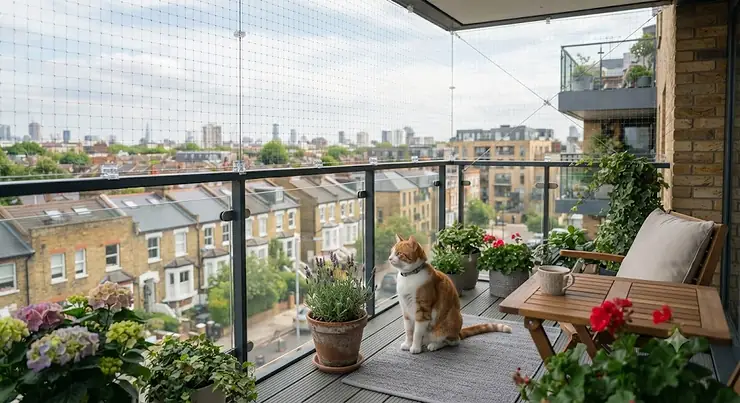
If you live above ground floor and share your flat with a cat, you already know the particular flavour of dread that comes with an open balcony door. balcony cat nets exist for exactly this reason — they turn a genuinely dangerous ledge into a spot your cat can actually enjoy without you standing guard like an anxious lifeguard. This isn’t a niche worry either. Vets across the UK see a predictable spike in fall-related injuries every summer, precisely because warm weather means more open doors and more distracted cats balancing on railings that were never designed with paws in mind.
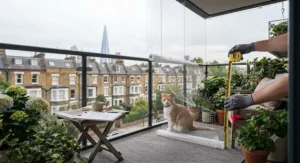
What follows is a properly researched, no-nonsense look at seven real balcony cat nets currently sold in the UK, what the specs actually mean once they’re installed on a real balcony, and where each one genuinely earns its price tag. We’ve dug into aggregated review sentiment rather than inventing glowing testimonials, because a net that looks great in a product photo but sags after one rainy month isn’t doing your cat any favours. Whether you’re renting a fourth-floor flat with wrought-iron railings or you own a ground-floor maisonette with a modest terrace, there’s a sensible option here — and a few honest warnings about the ones that overpromise.
We’ll also cover the practical side that Amazon listings never mention: how to actually fit a net without damaging a rental property, what happens when your local pigeon population meets transparent nylon, and how to weigh a simple net against a full catio setup. By the end, you should know exactly which of these seven suits your balcony, your budget and your particular cat’s talent for finding gaps.
Quick Comparison Table
Before we get into the detail, here’s the shape of the market at a glance. Prices below are ranges only, since exact figures shift constantly on Amazon — always check the current price before buying.
| Product | Type | Price Range | Best For |
|---|---|---|---|
| Trixie Protective Net for Balconies | Standard nylon mesh | £10-£30 | Budget-friendly first-time buyers |
| Trixie Protective Net Woven in Wire | Wire-reinforced mesh | £15-£48 | Strong or determined climbers |
| vidaXL Cat Net Transparent Nylon | Adjustable nylon mesh | £15-£35 | Irregularly shaped balconies |
| PAWISE Cat Safety Net | Transparent nylon mesh | £15-£25 | First-time balcony netting buyers |
| HOMYPOWER Cat Netting Balcony | Stainless-steel reinforced | £20-£40 | Large balconies, heavy weather exposure |
| Lewondr Cat Netting Balcony | Steel-wire reinforced | £18-£35 | Best-selling all-rounder |
| ProtectaPet Cat Fence Barrier Kit | Rigid containment system | £90-£250+ | Long-term, professional-grade containment |
Looking at this spread, the pattern is fairly clear: standard nylon nets from Trixie, vidaXL and PAWISE sit at the accessible end and suit cats who respect a barrier rather than actively assault it, while wire-reinforced options from HOMYPOWER and Lewondr trade a slightly steeper price for genuine bite and claw resistance. The ProtectaPet system is in a different category entirely — it’s less a net and more a semi-permanent containment structure, and the price reflects that it’s built to be a fit-once, forget-about-it solution rather than a seasonal purchase.
💬 Just one click — help others make better buying decisions too!😊
Top 7 Balcony Cat Nets: Expert Analysis
1. Trixie Protective Net for Balconies — the classic budget entry point
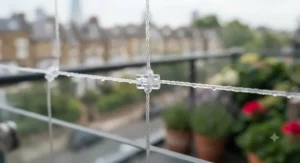
The Trixie Protective Net for Balconies is the net most UK cat owners encounter first, and there’s a reason it’s been a staple for over a decade. It expands on the idea that safety netting doesn’t need to be complicated: this is a transparent nylon mesh with a 3x3cm hole size, small enough to stop kittens squeezing through without turning your view into a blur.
The kit ships with hooks, anchors and fastening rope, and is rated for both indoor and outdoor use across sizes from 2×1.5m right up to 8x3m panels that can be joined for wraparound coverage. In practice, that mesh size means birds occasionally clip it (more on that later), but it comfortably holds the weight of an adult cat leaning or batting at it, since it’s designed to flex rather than snap under sudden pressure.
Based on the spec comparison with pricier alternatives, this is the net to buy if your cat treats the balcony as a lookout post rather than an escape route — it’s not built to survive determined chewing, but most cats never test it that hard. Reviewers consistently note that the transparent finish genuinely does disappear against most railings once tensioned properly, and that the fixing kit is enough for a standard single-door balcony without extra purchases.
A common complaint in user reviews is that the standard nylon can sag slightly after prolonged rain unless re-tensioned every month or so, and a handful of buyers with particularly strong cats reported small tears near the fixing points after a year or two of use.
Pros:
- ✅ Transparent finish barely affects the view
- ✅ Complete fixing kit included, no extra hardware needed
- ✅ Wide range of panel sizes for different balcony shapes
Cons:
- ❌ Not rated for persistent chewing or clawing
- ❌ Needs periodic re-tensioning after wet weather
Priced in the £10-£30 range depending on panel size, this remains the sensible starting point for calm cats and cautious first-time balcony-netting buyers.
2. Trixie Protective Net Woven in Wire — best for strong or determined cats
Where the standard version above plays it safe, the Trixie Protective Net Woven in Wire (sold in an olive-green bite-resistant finish) is Trixie’s answer for households with a cat that treats every barrier as a personal challenge. The wire-reinforced weave runs through the same nylon base, giving the mesh a stiffness that resists both scratching and sustained bite pressure far better than plain nylon.
Specs-wise, it uses the same hooks-and-rope fixing system as the standard net, and comes in matching size options, so upgrading from one to the other doesn’t mean rethinking your whole install. What most buyers overlook about this model is that the wire reinforcement also helps the net hold its tension in windier, more exposed balconies, where plain nylon tends to billow and slacken.
This is the net for cats who’ve already proven they’ll test a boundary — rescue cats with an outdoor history, younger cats still learning limits, or anyone whose previous net came home with suspicious holes in it. On paper this means paying roughly 30-50% more than the standard version, but for a determined cat that premium buys genuine peace of mind rather than a repeat purchase in six months.
Aggregated reviewer feedback describes the wire-reinforced version as noticeably tougher against scratching, with several buyers specifically mentioning it as their second Trixie purchase after the standard net didn’t hold up. A few reviewers do note the olive colour is more visible than the transparent option, which is a fair trade-off for durability but worth knowing before you buy.
Pros:
- ✅ Wire reinforcement resists sustained scratching and biting
- ✅ Holds tension better in exposed or windy balconies
- ✅ Compatible fixing kit with the standard Trixie net
Cons:
- ❌ Olive colour is more visible than transparent nets
- ❌ Costs noticeably more than the standard version
Expect to pay in the £15-£48 range depending on panel size — a fair premium for households who’ve already learned the hard way that a determined cat needs reinforced mesh.
3. vidaXL Cat Net Transparent Nylon — most adjustable fit for awkward balconies
The vidaXL Cat Net Transparent Nylon is built around a genuinely useful idea: not every balcony is a neat rectangle, and this net is explicitly designed to be adjusted in both length and width to fit oddly shaped or angled spaces. For flats with an L-shaped balcony, a Juliet balcony with an awkward overhang, or a terrace with built-in planters interrupting the railing line, that flexibility solves a real problem the standard rectangular nets don’t.
The material itself is tough nylon with UV protection, and the package includes ropes, ties and hooks for a self-install without hiring anyone. Here’s what the spec sheet won’t tell you, but the design implies: because the panel is cut to size rather than sold as a fixed rectangle, you’ll want fairly generous measurements before ordering, since trimming excess is far easier than discovering you’re 30cm short.
This one suits practical, DIY-minded owners more than anyone chasing the cheapest possible option — it’s mid-priced for a reason, and the adjustability genuinely earns that position when your balcony doesn’t match a standard template. Reviewers consistently report that the ability to trim and reshape the net made it the only option that actually fit their balcony without stitching two smaller nets together.
A recurring theme in feedback is that first-time installers underestimate how long proper measuring and fitting takes, with several buyers recommending a full afternoon rather than a rushed hour before letting the cat back onto the balcony.
Pros:
- ✅ Adjustable length and width for irregular balcony shapes
- ✅ UV-resistant nylon built for year-round outdoor use
- ✅ Complete DIY fixing kit included
Cons:
- ❌ Installation takes noticeably longer than pre-cut nets
- ❌ Best value only realised on non-standard balcony shapes
Sitting in the £15-£35 range, this is the pick for anyone who’s already measured their balcony and realised none of the “standard” panel sizes quite fit.
4. PAWISE Cat Safety Net for Balcony, Window & Stairs — the reliable all-rounder
The PAWISE Cat Safety Net has become one of the most consistently bought balcony nets on Amazon, and the reason is fairly simple: it does the fundamentals well without asking buyers to think too hard about which variant they need. It’s a transparent nylon mesh sold in a handful of practical dimensions, marketed explicitly for balconies, windows and stairwells rather than balconies alone.
That triple-purpose framing matters in practice — the same panel that secures your balcony can be repurposed for a stairwell gap or an upstairs window if you move flats, which is a genuinely useful bit of flexibility most single-purpose balcony nets don’t offer. The mesh is fine enough to stop a kitten squeezing through while staying close to invisible from a normal viewing distance.
Based on the spec comparison with the Trixie standard net above, PAWISE sits in almost the same performance bracket, but tends to be priced slightly more competitively, which likely explains its bestseller status. This is a sound default choice if you don’t have a particularly destructive cat and just want a proven, no-surprises net without extensive research.
Reviewers consistently report straightforward installation and a genuinely unobtrusive appearance once fitted, with the netting described as “almost invisible” from inside the flat. A common complaint, shared with most standard nylon nets in this bracket, is that mesh tension loosens over time and benefits from an occasional retighten.
Pros:
- ✅ Multi-purpose design works for balconies, stairs and windows
- ✅ Competitively priced against similar transparent nets
- ✅ Consistently high purchase volume suggests reliable stock
Cons:
- ❌ Standard nylon, not chew- or claw-reinforced
- ❌ Mesh tension needs occasional adjustment
Typically priced around £15-£25, this is a safe, well-reviewed default for owners who want a dependable net without extensive comparison shopping.
5. HOMYPOWER Cat Netting Balcony — heavy-duty coverage for large or exposed balconies
The HOMYPOWER Cat Netting Balcony targets a specific gap in the market: larger balconies that need substantial coverage, sold in generous panel sizes designed for wraparound installation on bigger terraces. It’s built with stainless-steel wire reinforcement running through the mesh, marketed specifically as bite-, tear-, UV- and weather-resistant.
In practical terms, stainless steel (rather than the coated wire used in some competitors) resists the rust that can develop on cheaper reinforced nets after a couple of British winters of rain. What this means for buyers with a genuinely large balcony — a wraparound corner terrace, for instance — is that you’re less likely to need multiple product purchases stitched together, since the larger panel dimensions are designed with bigger spaces in mind.
This is the net for owners who’ve already tried a standard nylon option and watched it fail against determined weather or a persistent cat, or who are covering enough balcony space that reinforcement stops being optional and starts being sensible risk management. The trade-off is a firmer, less flexible mesh that takes a bit more effort to tension neatly around corners.
Aggregated review sentiment describes the stainless-steel reinforcement as a genuine step up in durability compared with plain nylon nets, particularly for buyers in coastal or high-wind areas. Several reviewers flagged that the larger panels are heavier and benefit from a second pair of hands during installation.
Pros:
- ✅ Stainless steel resists rust better than coated wire alternatives
- ✅ Larger panel sizes suit wraparound or corner balconies
- ✅ Rated for sustained weather exposure
Cons:
- ❌ Heavier and stiffer, trickier for solo installation
- ❌ Overkill for small, sheltered balconies
Priced in the £20-£40 bracket depending on size, this earns its place for larger or more exposed balconies where a lighter net would be under-specified for the job.
6. Lewondr Cat Netting Balcony — the best-selling steel-reinforced option
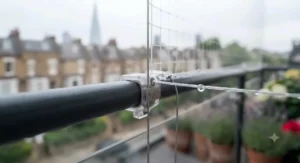
The Lewondr Cat Netting Balcony is one of the most frequently purchased steel-reinforced nets on Amazon, typically sold in a 10x13ft panel with steel-wire reinforcement woven through the mesh. It occupies a similar niche to HOMYPOWER above, but tends to sell in a slightly smaller standard size, making it a better match for a single average-sized balcony rather than an oversized wraparound terrace.
The wire core gives the mesh real structural rigidity, which in practice means it holds a taut, flat profile even in windier conditions rather than billowing like unreinforced nylon does. Here’s what most buyers overlook: that rigidity also makes it noticeably easier to fit neatly around awkward corner posts, since the mesh doesn’t collapse inward the way soft nylon can when you’re trying to pull it tight.
This is a genuinely strong middle-ground pick — reinforced enough for cats who scratch or lean heavily on barriers, but sized and priced for the standard flat balcony rather than a premium large-terrace budget. Its consistently high sales volume on Amazon suggests it’s become something of a default recommendation among UK cat owners researching this exact purchase.
Reviewers consistently praise the balance of price and durability, describing it as sturdier than basic nylon nets without the cost jump of premium containment systems. A recurring theme in feedback is that the black colour, while less visible against dark railings, is more noticeable against light stone or render than the transparent alternatives.
Pros:
- ✅ Steel-wire core holds a taut, professional-looking finish
- ✅ Strong sales volume suggests dependable stock and support
- ✅ Sized well for standard single-balcony installs
Cons:
- ❌ Black colour more visible on light-coloured buildings
- ❌ Standard panel size may not suit very large balconies
Sitting around £18-£35, this is a strong middle-ground pick between basic nylon and full containment systems, and arguably the safest single recommendation on this list for a typical UK flat.
7. ProtectaPet Cat Fence Barrier Kit — the premium containment system
The ProtectaPet Cat Fence Barrier Kit is a genuinely different product category from everything else on this list. Rather than a flexible mesh you tension by hand, it’s a rigid containment system built by a UK-based specialist brand, designed to create a semi-permanent barrier along a balcony or garden boundary that a cat physically cannot climb or leap over.
The system typically combines angled fence extensions or free-standing posts with a fine mesh barrier engineered specifically around feline climbing mechanics, rather than being a generic pet net repurposed for cats. What most buyers overlook about this category of product is that it’s designed for durability measured in years rather than seasons — the components are weatherproof structural fittings, not a roll of nylon mesh.
This is squarely a premium option, and it’s the right call for owners who’ve already decided a balcony net is a temporary fix and want the closer-to-permanent solution instead — particularly homeowners rather than renters, since installation is more involved than a simple hook-and-rope net. It’s also the natural bridge product for anyone considering a full catio setup but starting with just the balcony.
Because it’s a specialist installed system rather than a mass-market Amazon net, verified customer review volume is smaller than the mass-market nylon nets above, but the available feedback consistently highlights the professional finish and the confidence that comes from a barrier engineered specifically to defeat a cat’s climbing ability, rather than simply hoping mesh tension holds.
Pros:
- ✅ Purpose-engineered against feline climbing, not just a generic net
- ✅ Built for multi-year durability rather than seasonal replacement
- ✅ UK-based specialist brand with dedicated cat-containment focus
Cons:
- ❌ Significantly higher upfront cost than any net on this list
- ❌ Installation is more involved, better suited to homeowners
Priced from around £90 upwards depending on the length of barrier needed, this is the considered choice for owners treating balcony safety as a long-term investment rather than a quick fix.
Practical Usage Guide: Fitting and Maintaining Your Balcony Cat Net
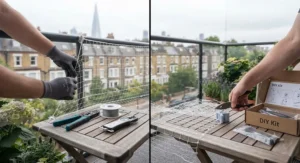
Getting a net home is the easy part — fitting it properly is what actually keeps your cat safe, and this is exactly the sort of detail an Amazon listing never covers. Start by measuring your balcony at its widest and tallest points, then add roughly 10-15% extra to whatever size the packaging suggests; cats find the one loose corner you didn’t account for. Fix the top edge first, working along the full width before pulling the bottom taut, since starting at a single corner tends to leave the mesh twisted by the time you reach the far end.
For rented properties, avoid drilling into brick or render wherever possible — look at clamp-style fixings, tension rods between floor and ceiling, or adhesive anchor points rated for outdoor use, all of which sidestep landlord permission issues entirely (more on the legal side shortly). Once installed, build a simple maintenance habit: check tension monthly, since UV exposure and rain genuinely do loosen nylon over time, and inspect corners and fixing points every few weeks for the small tears that, left alone, become the gaps a determined cat eventually finds. The most common first-30-days mistake isn’t the netting at all — it’s owners assuming the job is done and stopping the supervised introduction period too early, before the cat has actually tested (and respected) the boundary with a human present.
Real-World Scenarios: Which Balcony Cat Net Suits Your Flat?
Picture three fairly typical UK cat owners, because the “best” net genuinely depends on who’s asking. First, there’s a student in a rented third-floor flat with a compact Juliet balcony and a single, fairly chilled rescue cat — budget matters, drilling isn’t an option, and a standard Trixie Protective Net for Balconies fitted with clamp fixings solves the problem for under £20 without touching the landlord’s walls. Second, imagine a family with a large L-shaped terrace and a boisterous young cat who treats every houseplant as prey — here, the adjustable vidaXL Cat Net Transparent Nylon handles the awkward shape, while the household’s budget and long-term plans might eventually stretch to a ProtectaPet Cat Fence Barrier Kit once they own rather than rent.
Third, consider a homeowner in a ground-floor maisonette with an exposed, wind-battered terrace and two indoor cats who scratch at anything reachable — this is precisely the scenario where the steel-reinforced HOMYPOWER Cat Netting Balcony or Lewondr Cat Netting Balcony earns its higher price tag over a basic nylon net that would likely need replacing within a year. In each case, the deciding factors are the same three questions: can you drill or not, how determined is the cat, and how exposed is the balcony to weather.
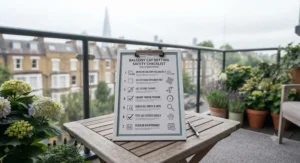
Problem → Solution: Common Balcony Netting Issues Solved
Even a well-chosen net runs into predictable snags, so here are the fixes worth knowing before they catch you out. If birds keep colliding with transparent mesh like the Trixie Protective Net for Balconies or PAWISE Cat Safety Net, tie a few strips of fabric or hang a small wind chime along the top edge — the movement is usually enough to break up the illusion of open air. If the net sags noticeably after rain, it’s almost always a tension issue rather than a faulty product; retighten the fixing rope monthly rather than waiting for visible slack. If your cat is scratching persistently at one corner, that’s usually a sign the mesh is loose enough to move under paw pressure — reinforced options like the Lewondr Cat Netting Balcony resist this far better than standard nylon simply by staying rigid.
For renters worried about wall damage, swap drilled hooks for balcony-rail clamps or tension poles wedged between floor and ceiling — most of the nets above are compatible with either fixing method. And if you’re finding gaps around door frames or awkward angles that a single rectangular panel won’t cover, that’s the exact problem the vidaXL Cat Net Transparent Nylon is designed to solve through its adjustable cut-to-fit sizing.
✨ Ready to Cat-Proof Your Balcony Today?
🔒 Take the guesswork out of balcony safety with a net matched to your cat’s personality and your building’s rules. Click through to check current pricing and availability on any of the options above — a small purchase now beats an emergency vet trip later.
How to Choose Balcony Cat Nets: 7 Expert Criteria
Picking the right net comes down to a handful of genuinely load-bearing decisions, so here’s the shortlist worth working through in order.
- Measure twice, including height. Balconies are rarely perfectly rectangular, so measure at the widest and tallest points, not just one corner, and always round up.
- Match mesh strength to your cat’s personality. A calm, older cat rarely needs wire reinforcement; a young or previously outdoor cat almost always benefits from it.
- Check your tenancy agreement before drilling anything. Most standard tenancy agreements require written landlord permission for wall alterations, so confirm what’s allowed before you buy fixings.
- Consider exposure to weather. Coastal, high-rise or south-facing balconies see more UV and wind stress, which pushes the case toward stainless-steel reinforced options.
- Decide between transparent and coloured mesh. Transparent nets preserve your view but show dirt more visibly over time; darker mesh hides grime but is more visually obvious from outside.
- Factor in installation effort honestly. A quick hook-and-rope net can go up in under an hour; adjustable or rigid containment systems may need a full afternoon or professional fitting.
- Budget for the whole first year, not just the net. Factor in occasional retensioning, potential replacement fixings, and — for renters — any refundable deposit implications of your chosen fixing method.
Common Mistakes When Buying Cat Proof Balcony Netting
The single most common mistake is buying based on price alone without matching the mesh strength to the actual cat. A calm indoor cat with no outdoor history rarely needs premium steel reinforcement, so overspending there just wastes budget that could go toward a longer panel or better fixings. The flip side is equally common: buying the cheapest standard nylon net for a cat with a known history of scratching or escaping, then being surprised when it fails within weeks.
A second frequent error is skipping the measurement stage and trusting the “standard size fits most balconies” marketing line — balcony dimensions in UK flats vary wildly, and an undersized panel leaves exactly the kind of gap a cat will eventually find. Renters in particular also tend to overlook the permission question entirely, drilling first and asking questions later, which risks deposit deductions that easily outweigh what a clamp-based fixing kit would have cost. Finally, plenty of buyers install a net once and never check it again — tension genuinely does loosen with weather exposure, and a “set and forget” mindset is how small tears become real escape routes.
Balcony Cat Nets vs Full Catio Enclosures
A balcony net and a full catio enclosure solve the same underlying problem — safe outdoor access — but they’re not really competing products so much as different points on the same spectrum. A net, like the Trixie Protective Net for Balconies or PAWISE Cat Safety Net, is a barrier retrofitted onto an existing balcony: cheaper, faster to install, and easily removed if you move flats. A catio, by contrast, is a purpose-built structure — sometimes incorporating a rigid system like the ProtectaPet Cat Fence Barrier Kit — that typically adds shelving, tunnels or enclosed run space rather than simply blocking off an existing platform.
For renters, the choice is often made for you: a net is reversible and rarely needs anything beyond basic permission, while a catio-style build usually counts as a more substantial alteration under most tenancy agreements. For homeowners with the budget and a longer time horizon, a catio delivers considerably more enrichment — climbing routes, sunning platforms, varied textures — whereas a net only ever secures the space you already have. As a rule of thumb: start with a well-fitted net, and treat a catio as the upgrade path once you’ve confirmed how much your cat actually uses balcony access.
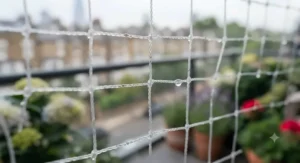
What to Expect: Real-World Performance of Cat Enclosure Netting
Specs on a packaging label rarely translate directly into daily experience, so here’s what actually changes once cat enclosure netting is fitted. Most owners report their cat investigates the boundary intensely for the first few days — pawing at the mesh, testing corners, occasionally looking mildly betrayed — before settling into treating the netted balcony as simply “outside.” Transparent nets genuinely do fade into the background from a normal seated position indoors, though they remain faintly visible up close, which is a fair trade for the safety they provide.
Weather is the biggest real-world variable that specs alone don’t capture: standard nylon nets noticeably slacken after heavy rain and need retensioning, while wire-reinforced options hold their shape through most UK weather with far less intervention. Wind is the other factor worth expecting — a loosely fitted net on a high-rise balcony can develop an audible flap in strong gusts, which is more a fixing issue than a product flaw, and is usually solved by adding extra tension points along exposed edges rather than replacing the net entirely.
Balcony Safety Regulations for Cat Owners in the UK
There’s no dedicated UK law that specifically mandates balcony cat nets, but two separate legal threads matter here. The first is the Animal Welfare Act 2006, which places a legal duty on owners to provide for an animal’s welfare needs, including a suitable environment — while this doesn’t name balcony netting specifically, the RSPCA’s own guidance on the Act makes clear that owners carry a genuine legal responsibility for the environments they expose their pets to, and an unsecured high balcony sits uncomfortably against that duty of care.
The second thread is tenancy law, and this is the one that trips up most renters. Fixing a net with hooks, drilled anchors or permanent brackets typically counts as an alteration to the property, and Shelter England’s guidance on making improvements to a rented home is unambiguous that tenants should get written landlord permission before altering fixtures, since unauthorised work can risk deposit deductions or disputes at the end of a tenancy. The practical takeaway: email your landlord or letting agent before buying anything, ask specifically about drilling versus clamp-based fixings, and keep that written permission on file — it takes five minutes and avoids a genuinely common source of deposit disputes.
Outdoor Access for Indoor Cats: Why It Matters
Indoor cats miss out on a lot of natural stimulation — sunlight, fresh air, the changing sounds and smells of the outside world — and a safely netted balcony is one of the more effective ways to close that gap without the risks of unsupervised roaming. Cats Protection and Blue Cross have both specifically flagged the seasonal spike in what vets call “high-rise syndrome,” where indoor cats fall from open windows or unsecured balconies as warmer weather draws them toward open doors and passing birds — a risk that’s entirely preventable with proper netting rather than relying on a cat’s instinct to know its limits.
The behavioural upside is genuinely significant too: supervised or netted outdoor access gives an indoor cat opportunities to exhibit natural behaviours like watching birds, feeling a breeze, and sunbathing on their own terms, all of which contribute to the kind of enriched environment welfare guidance consistently recommends. For cats who’ve never had outdoor access at all, introduce the netted balcony gradually and under supervision at first — not because the net is unreliable, but because a cat unfamiliar with real height and open air genuinely doesn’t have an instinctive sense of the risk, and confidence should build slowly rather than all at once.
Cat Catio Ideas: Building on Your Balcony Netting
Once your balcony is safely netted, it’s worth treating it as a blank canvas rather than just a secured empty space — this is where balcony cat nets start overlapping with proper catio ideas. A simple wall-mounted shelf or two at different heights gives a cat vertical territory to patrol, which matters enormously for how much they actually use the space rather than just tolerating it. Weatherproof cushioned platforms positioned in a sunny corner turn the balcony into a genuine sunbathing spot, while a scratching post secured near the doorway redirects any exploratory clawing away from your net’s fixing points.
If you’re leaning toward the more permanent end of the spectrum — pairing a system like the ProtectaPet Cat Fence Barrier Kit with built-in shelving or a small tunnel run — plan the layout around your cat’s actual habits rather than generic catio inspiration photos: a cat who mostly watches birds needs a stable perch near the railing line, while a cat who mostly naps needs a sheltered, shaded spot away from direct wind. Keep any plants strictly cat-safe (lilies and their relatives are genuinely toxic and worth double-checking before adding greenery), and resist the urge to overfill a small balcony — one or two well-placed features usually get more use than a cluttered miniature jungle gym.
Long-Term Cost & Maintenance
Thinking beyond the initial purchase price gives a clearer picture of real value. A standard nylon net like the Trixie Protective Net for Balconies or PAWISE Cat Safety Net costs less upfront but typically needs replacement fixing rope or occasional patch repairs within two to three years of consistent outdoor exposure, particularly in wetter or windier parts of the UK. Wire-reinforced options like the HOMYPOWER Cat Netting Balcony and Lewondr Cat Netting Balcony cost more initially but tend to hold their structural integrity for considerably longer, which narrows the effective cost-per-year gap once you account for a standard net’s likely replacement cycle.
At the far end, the ProtectaPet Cat Fence Barrier Kit represents the highest upfront cost but the lowest ongoing maintenance burden — a rigid, purpose-built system simply doesn’t degrade the way flexible nylon mesh does under UV and weather stress. For a renter likely to move within a couple of years, a mid-priced reinforced net usually represents the best total value, since it survives the tenancy without needing the long-term investment a permanent system is built to justify. For homeowners planning to stay put, the maths shifts meaningfully toward the premium containment option once you factor in a decade of avoided replacements.
Frequently Asked Questions
❓ Do balcony cat nets need drilling into the wall?
❓ Will a balcony cat net block my view?
❓ Can birds get caught in balcony cat netting?
❓ How often should I check or retighten my cat's balcony net?
❓ Is a balcony net enough, or do I need a full catio?
Conclusion
Balcony cat nets aren’t a luxury purchase — they’re a genuinely preventable-injury solution for one of the more common accidents indoor cats face in UK flats. The right choice depends less on finding the single “best” product and more on being honest about your cat’s personality, your balcony’s exposure to weather, and whether you’re renting or own the property outright. A calm cat on a sheltered, small balcony is well served by something straightforward like the Trixie Protective Net for Balconies or PAWISE Cat Safety Net, while a determined climber on a larger or more exposed terrace genuinely benefits from the reinforcement in the HOMYPOWER Cat Netting Balcony or Lewondr Cat Netting Balcony.
For irregular balcony shapes, the adjustable vidaXL Cat Net Transparent Nylon solves a problem the rectangular options can’t, and for owners thinking in decades rather than seasons, the ProtectaPet Cat Fence Barrier Kit is a serious long-term investment worth its premium. Whichever you choose, measure carefully, check your tenancy agreement before drilling anything, and build a habit of checking the tension every month or so — a properly maintained net turns a genuinely risky balcony into one of the better spots in the flat, for both of you.
✨ Don’t Miss These Exclusive Deals!
🔍 Take your balcony from off-limits to your cat’s favourite spot with these carefully researched, genuinely reinforced picks. Click through to check current pricing and availability, and give your cat safe outdoor access this week rather than next.
Recommended for You
- Cat Proof Plant Protectors UK: 7 Best Picks That Actually Work 2026
- Cord Protectors for Cats: 7 Genuinely Chew-Proof Picks (2026)
- Cat Window Guards UK: 7 Top Picks to Stop Escapes in 2026
Disclaimer: This article contains affiliate links. As an Amazon Associate, I earn from qualifying purchases. If you purchase products through these links, we may earn a small commission at no additional cost to you.
✨ Found this helpful? Share it with your friends! 💬🤗
