
In This Article
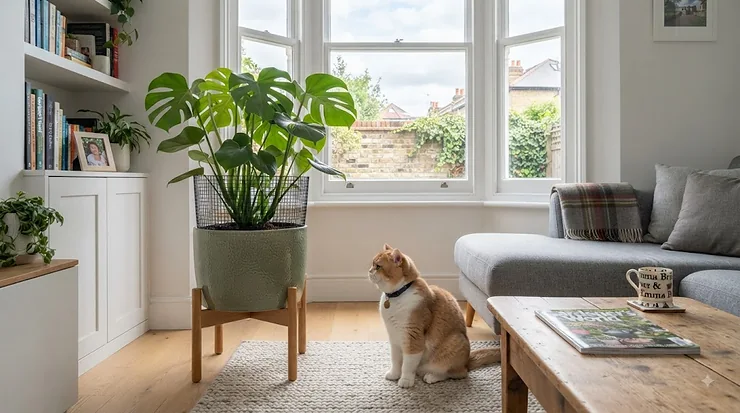
Somewhere between “lovely new monstera” and “soil all over the windowsill” is the exact moment every cat owner discovers their houseplants have become a toy, a toilet, or a snack. Cat proof plant protectors are physical barriers, deterrent covers and repellent products designed to stop cats digging in pot soil, chewing leaves, or knocking plants over entirely. They range from simple cuttable grids that sit over the compost to fully enclosed cages and citrus-scented sprays cats instinctively avoid.
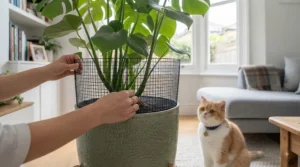
This guide covers seven genuinely available products sold through amazon.co.uk, spanning budget pot-topper grids through to modular cages and pet-safe deterrent sprays. We’ll get into cat proof plant cage options properly, plant pot covers for cats that don’t look like an eyesore on your windowsill, and — because this matters more than any gadget — a straight-talking look at toxic plants for cats, since some houseplant and cat combinations are a genuine emergency, not just an inconvenience. Whether you’re dealing with a determined chewer or a cat who simply loves excavating soil, there’s a workable, honestly-assessed option below.
Quick Comparison: Cat Proof Plant Protectors at a Glance
| Product | Type | Price Range | Best For |
|---|---|---|---|
| GIONAR Plant Pot Grid | Cuttable soil cover | Under £10 | Cheap, quick fix for soil digging |
| QWORK Plant Pot Grid | Cuttable soil cover with anti-skid nails | Under £15 | Slightly larger pots, secure fit |
| Zimoer Plant Pot Cover | Cuttable plastic soil guard | Under £10 | Small to medium pots, discreet black finish |
| IHAYNER Plant Protectors | Modular metal cloche cage | £15-£25 | Full-plant protection from chewing |
| RepellShield Cat Repellent Spray | Citronella deterrent spray | £10-£15 | Training cats away from specific plants |
| GDBadais Cat Educational Spray | Natural deterrent spray | £10-£15 | Multi-surface deterrent beyond plants |
| Mesh Plant Protector with Drawstring | Fabric mesh cover cage | £15-£20 | Whole-plant coverage, indoor or outdoor |
Looking at this spread, the honest split is between deterrent (sprays that teach a cat to avoid an area) and barrier (physical covers that make access impossible). Grids and cages work immediately and don’t rely on the cat cooperating; sprays take repeat application and patience but leave the plant fully visible and undisguised. For a determined chewer rather than a digger, physical barriers like the IHAYNER Plant Protectors or the mesh cover generally outperform sprays on reliability.
💬 Just one click — help others make better buying decisions too!😊
Top 7 Cat Proof Plant Protectors: Expert Analysis
1. GIONAR Plant Pot Grid — cheapest genuine fix for soil digging
The GIONAR Plant Pot Grid is a flat, cuttable plastic disc that sits directly on top of the compost, physically blocking a cat’s paws from reaching the soil while still letting water through to the roots. It comes as a multi-pack of six, sized at roughly 30cm across, and is designed to be trimmed down with scissors to fit smaller pots.
The cuttable design is the standout practical feature here — most pots in a typical houseplant collection aren’t a uniform size, and being able to trim one grid to fit a 15cm pot and another to fit a 25cm pot from the same six-pack is genuinely useful rather than a marketing gimmick. The grid pattern is fine enough to stop a paw pushing through but coarse enough that it doesn’t restrict watering or root growth.
This is the pick for anyone dealing with a digger rather than a chewer — cats that treat pot soil like an extra litter tray. Based on the spec comparison, it’s not going to stop a cat determined to nibble leaves that hang over the pot edge, so pair it with a deterrent spray if chewing is the bigger issue in your home. Aggregated buyer sentiment on this style of grid consistently highlights ease of cutting to size and effectiveness against digging, with occasional notes that very small or lightweight pots can tip if a cat pushes against the grid’s edge.
Pros:
- ✅ Cuttable to fit almost any pot size
- ✅ Water still passes through freely to roots
- ✅ Multi-pack covers several plants at once
Cons:
- ❌ Doesn’t stop cats chewing overhanging leaves
- ❌ Lightweight pots may still tip if pushed
Expect a price under £10 for the six-pack at the time of research; prices may vary, so check current price before ordering. Strong value as a first-line fix for soil diggers.
2. QWORK Plant Pot Grid With Anti-Skid Nails — best for a secure fit on larger pots
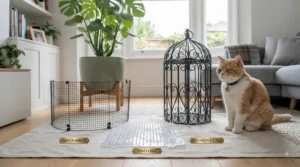
The QWORK Plant Pot Grid takes the same cuttable-disc concept as the GIONAR grid but adds small anti-skid nails moulded into the underside, which press gently into the compost surface to hold the grid in place. That’s a genuinely useful upgrade for larger pots or more determined cats, since a loose-fitting grid is far more likely to get shoved aside than one that’s anchored.
Key specs worth understanding: the grid measures 11.8 inches (30cm) before cutting, made from a rigid but cuttable plastic that holds its shape once trimmed rather than curling at the edges, which is a common complaint with thinner grid covers. The anti-skid nails aren’t sharp enough to harm a curious paw, but they do add real resistance against a cat trying to lever the grid off with a claw.
Who should care about this one: households with larger houseplants in bigger pots, where the extra pot diameter gives a cat more leverage to push a loose grid aside. Reviewers commonly note the nails do genuinely help the grid stay seated, particularly compared with flatter grid designs; a smaller number mention the plastic can crack if bent too sharply when cutting rather than scored and snapped.
Pros:
- ✅ Anti-skid nails keep the grid seated in larger pots
- ✅ Rigid plastic holds shape well after cutting
- ✅ Cuttable to size like standard grid covers
Cons:
- ❌ Can crack if bent rather than scored when cutting
- ❌ Still won’t deter leaf-chewing above the pot rim
At the time of research, expect a price in the £10-£15 range for a multi-pack; check current price for the latest figure. A sensible step up from a basic grid if your pots are on the larger side.
3. Zimoer Plant Pot Cover — discreet option for small to medium pots
The Zimoer Plant Pot Cover follows the same cuttable soil-guard concept in a round black finish that’s noticeably less visible against darker compost or terracotta pots than the bright white grids further up this list. It’s marketed specifically for cats and babies, sized at 30cm and sold as a two-pack, which suits households protecting just one or two key plants rather than an entire windowsill collection.
The black colourway is a genuinely practical detail rather than just aesthetics — a stark white grid sitting on top of dark soil draws the eye immediately, while a black grid all but disappears once fitted, particularly useful if the whole point of a plant is to look decorative rather than protected. Construction-wise it’s the same principle as the other grids on this list: rigid, cuttable plastic that blocks paw access while allowing water through.
This is the pick for anyone protecting a smaller number of statement plants where appearance matters as much as function — a plant stand in a living room rather than a utility windowsill full of cuttings. Aggregated feedback on this style of product tends to praise the discreet look specifically, with the main recurring theme being that the smaller two-pack size means buying multiples for a larger plant collection.
Pros:
- ✅ Black finish blends in far better than white grids
- ✅ Cuttable to fit various pot diameters
- ✅ Doubles as protection against small children reaching soil
Cons:
- ❌ Two-pack only, so multiple plants need extra purchases
- ❌ Same leaf-chewing limitation as all grid-style covers
Typical pricing sits under £10 for the pack at the time of research; check current price, as multi-buy options may offer better per-unit value.
4. IHAYNER Plant Protectors — best cat proof plant cage for full coverage
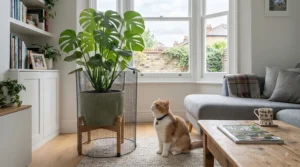
Where the grid covers only block soil access, the IHAYNER Plant Protectors go further with a modular, anti-rust coated wire cage that wraps around the whole plant, not just the pot surface. Sold as a six-pack at roughly 44cm x 29cm per unit, the 3-in-1 modular design lets you combine panels to build a taller or wider enclosure depending on the plant’s size.
This is a genuine step up in protection level, and it’s worth being clear about why: a soil grid stops digging but does nothing about a cat reaching up to chew leaves or knock a taller plant off a shelf, whereas a full cage physically removes both risks at once. The anti-rust coating on the wire is a sensible spec for indoor humidity, since houseplants get watered regularly and a bare metal cage sitting in that environment would corrode within a season.
Here’s what most buyers overlook about cage-style protection: it’s visually more intrusive than a grid, so it suits a plant you’re actively trying to save from chewing damage more than a plant you want on permanent decorative display. Reviewers consistently note the modular panels are genuinely useful for irregularly shaped or larger plants, though a recurring theme in feedback is that assembly takes a bit more effort than a simple flat grid.
Pros:
- ✅ Full-plant coverage, not just soil protection
- ✅ Modular panels adapt to different plant sizes
- ✅ Anti-rust coating suits regular indoor watering
Cons:
- ❌ More visually noticeable than a discreet soil grid
- ❌ Takes longer to assemble than flat pot covers
Price sits around £15-£25 for the six-pack at the time of research; check current price before ordering, particularly if you need to protect several larger plants.
5. RepellShield Cat Repellent Spray — best deterrent for training cats away from specific plants
The RepellShield Cat Repellent Spray uses natural citronella oil as its active deterrent, marketed as pet-safe and non-toxic, in a 250ml bottle suited to both indoor and outdoor use. Unlike physical barriers, this works by making the plant and surrounding surface smell unpleasant to a cat’s far more sensitive nose, without leaving a visible cage or grid in place.
The citronella base is worth understanding on its own terms: it’s the same citrus-derived scent commonly used in outdoor insect repellents, and while it’s broadly considered safe around pets when used as directed, cats are famously more scent-sensitive than most animals, which is exactly why citrus-based deterrents work as reliably as they do. What the spec sheet won’t tell you is that consistency matters more than concentration — a light, repeated application over a couple of weeks trains avoidance far more effectively than one heavy dose.
This is the pick for households wanting to keep the plant fully visible and undisguised, or for spot-treating a specific problem plant rather than caging an entire collection. Aggregated review sentiment on citronella-based cat sprays generally reports good short-term deterrent effect, with the most common caveat being that reapplication is needed after watering or a few days, since the scent fades faster indoors near ventilation.
Pros:
- ✅ Leaves the plant fully visible, no cage or grid needed
- ✅ Natural citronella base, marketed pet-safe
- ✅ Works indoors and outdoors from one bottle
Cons:
- ❌ Needs reapplication every few days for consistent effect
- ❌ Less reliable than physical barriers for a determined chewer
Expect a price in the £10-£15 range at the time of research for a 250ml bottle; check current price, as multipack bundles can improve value.
6. GDBadais Natural Cat Educational Spray — versatile deterrent beyond just plants
The GDBadais Natural Cat Educational Spray is positioned as a broader “educational” deterrent — non-toxic and marketed for use on furniture, sofas, rugs and restricted zones as well as houseplants, which makes it a sensible pick if plant-chewing is one symptom of a cat that generally likes to explore surfaces it shouldn’t.
Functionally it works on the same scent-aversion principle as citronella sprays, using a natural formula designed to be safe around pets and family when used as directed. The “educational” framing in the marketing is honestly just repellent spray by another name, but the multi-surface use case is a genuine practical difference from RepellShield’s plant-and-garden focus — worth choosing this one specifically if the same cat is also scratching furniture or investigating countertops.
Who should care about this: multi-cat households or anyone dealing with more than one unwanted behaviour at once, where buying a single versatile spray is more practical than several specialist products. Aggregated feedback on general-purpose cat deterrent sprays in this category tends to note reasonable short-term effectiveness across surfaces, with reviewers commonly mentioning that results vary noticeably by individual cat — some are far more scent-averse than others, which is worth setting expectations around before buying.
Pros:
- ✅ Works across furniture, rugs and plants, not just pots
- ✅ Natural, non-toxic formula suitable around pets
- ✅ Useful for households with multiple unwanted behaviours
Cons:
- ❌ Effectiveness varies significantly between individual cats
- ❌ Needs regular reapplication like all scent deterrents
Pricing typically falls in the £10-£15 range at the time of research; check current price, and consider a small trial size first given how much results vary cat to cat.
7. Mesh Plant Protector With Drawstring — best all-purpose cat proof plant cage for indoor or outdoor use
This mesh cover uses a durable PE mesh with an adjustable drawstring closure, designed to fully enclose a plant while still letting light, water and air through — genuinely useful for anyone wanting a single product that works on a windowsill houseplant in winter and a patio pot in summer. The drawstring is the standout practical feature, letting you cinch the mesh tight around the pot rim so a cat can’t simply push underneath the edge the way it might with a looser cover.
Constructed with a fine 60-thread mesh, it’s specifically designed to block cat access while remaining breathable enough for healthy plant growth — a real consideration, since anything that blocks airflow too aggressively risks fungal issues on the soil surface. The zipper access point (on some listings in this range) is a thoughtful addition for anyone who wants to water or deadhead without removing the whole cover each time.
This is the strongest all-rounder on this list for anyone wanting genuine cat proof plant cage protection without the visual weight of a rigid wire cage. What most buyers overlook about mesh covers specifically is that the drawstring closure matters more than the mesh density — a fine mesh with a loose fit still leaves a gap a determined paw will find, so cinching properly on first use makes the real difference.
Pros:
- ✅ Adjustable drawstring prevents gaps at the base
- ✅ Breathable mesh doesn’t compromise plant health
- ✅ Works for both indoor houseplants and outdoor pots
Cons:
- ❌ Less rigid than a wire cage, so taller plants may need extra support
- ❌ Mesh can visually soften the plant’s appearance compared with no cover at all
At the time of research, expect a price in the £15-£20 range; check current price, as sizing options affect the final cost. A genuinely versatile pick if you want one solution across seasons and locations.
Practical Usage Guide: Setting Up Cat Proof Plant Protection Properly
Getting any of these products to actually work starts with matching the tool to the actual problem. If your cat is digging in soil but leaving foliage alone, a grid cover (GIONAR, QWORK, Zimoer) solves it outright. If the issue is chewing leaves or knocking pots over, you need something that covers the whole plant — the IHAYNER cage or the mesh cover — because a soil grid genuinely does nothing for a cat reaching up from the floor or a nearby shelf.
For deterrent sprays, the first 30 days matter more than people expect. A single spray application rarely works; the realistic approach is a light coating every 2-3 days for the first two to three weeks, ideally combined with providing the cat an approved alternative — cat grass or catnip planted separately — so the deterrent isn’t just removing an option without offering a replacement outlet for chewing behaviour. Common mistake: spraying once, seeing the cat avoid the plant for a day, then stopping reapplication and being surprised when the behaviour returns within a week.
Maintenance for physical barriers is minimal but not zero. Grid covers should be lifted and the soil checked every few weeks, since trapped moisture under a tightly fitted grid can occasionally encourage mould on the compost surface if watering is heavy. Wire cages and mesh covers benefit from a quick wipe-down monthly, particularly wire cages, where residual moisture near the anti-rust coating is worth checking rather than assuming the coating is permanently maintenance-free.
Real-World Scenarios: Which Protector Fits Your Home and Cat
The soil digger, one or two prized plants, budget under £20: Start with the GIONAR Plant Pot Grid or Zimoer Plant Pot Cover. Both solve the digging behaviour directly and cheaply, and the Zimoer’s black finish keeps things discreet on a living-room plant stand.
The determined chewer, multiple plants, willing to spend a bit more: The IHAYNER Plant Protectors or the mesh cover with drawstring are the honest answer here. Grids won’t touch leaf-chewing, so anyone dealing with a cat that treats foliage as a snack needs full coverage, not a soil topper.
The multi-behaviour household, cat exploring furniture and plants alike: The GDBadais Natural Cat Educational Spray makes more sense than a plant-specific product, since it’s designed to work across surfaces rather than requiring a separate deterrent for every problem area in the home.
How to Choose Cat Proof Plant Protectors
Choosing between the options above comes down to four practical questions, worth working through in this order:
- What’s the actual behaviour? Digging needs a soil grid; chewing or knocking over needs full coverage like a cage or mesh cover.
- How many plants need protection? A handful of statement plants suit individual grids or covers; a larger collection may be more cost-effective with a versatile spray used across the board.
- Does appearance matter? Discreet black grids and mesh covers suit display plants; visible wire cages suit plants you’re actively rehabilitating from chewing damage.
- Is the plant actually toxic if eaten? This changes the calculation entirely — see the toxic plants section below, since some plants need removing regardless of how good the protector is.
Working through these in order avoids the most common buying mistake: reaching for a deterrent spray when the actual problem is digging, which a spray does very little to solve compared with a simple grid cover.
Cat Proof Plant Cage vs Pot Grids vs Deterrent Sprays
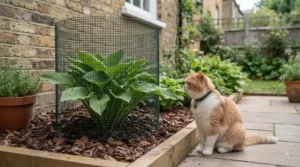
It’s worth being honest about how these three approaches genuinely compare, since marketing tends to blur the distinction. A cat proof plant cage, like the IHAYNER Plant Protectors or the mesh cover, physically removes access to the entire plant — the most reliable option, but also the most visually intrusive and the most effort to set up and maintain.
Pot grids, like the GIONAR and QWORK options, solve exactly one problem — soil digging — extremely well, cheaply, and with almost no visual impact, but do nothing whatsoever for chewing. Deterrent sprays sit at the opposite end from cages: minimal visual impact, works on the cat’s behaviour rather than blocking access, but relies on consistent reapplication and, honestly, on how scent-averse the individual cat happens to be — which varies more than manufacturers tend to admit in their marketing copy.
The practical reality for most households is that these aren’t mutually exclusive. A grid on the soil plus an occasional spray on the foliage covers both digging and casual nibbling for a lot less visual disruption than a full cage, while a determined chewer genuinely needs the cage or mesh regardless of what else is layered on top.
Toxic Plants for Cats: What You Actually Need to Know
This is the part of cat-and-plant ownership that matters more than any physical protector, so it’s worth being direct: some common houseplants are genuinely dangerous, not just messy. According to the RSPCA’s guidance on cat poisoning, lilies are among the most commonly cited severe poisons for cats, alongside household substances like paracetamol, and the charity advises contacting a vet immediately rather than waiting to see if symptoms develop.
True lilies deserve particular attention because the risk isn’t limited to a cat actively chewing the plant. Pollen brushing onto fur during normal contact, then ingested later through grooming, can be enough to trigger the toxicity — which means even a cat that shows no interest in eating the plant is still at risk simply from having one in the house. If you have a cat, the safest approach with true lilies isn’t a protector at all; it’s not keeping the plant, full stop.
Beyond lilies, common UK houseplants worth checking against a verified toxic list before bringing them home include certain dieffenbachia, some ivy varieties, and various bulb plants. Cats Protection maintains a dedicated list of dangerous plants worth checking against your existing houseplant collection, since several popular decorative plants sold in UK garden centres and supermarkets fall into the moderate-to-severe toxicity range without always being labelled as such at point of sale. For plants you’d rather keep than remove, this is exactly where the physical protectors covered above earn their keep — reducing access risk on plants that are toxic but that you’re not willing to part with.
✨ Don’t Miss These Exclusive Deals!
🔍 Take your indoor plant collection to the next level with these carefully selected protectors. Click on any highlighted item to check current pricing and availability. These picks will help you keep both your plants and your cat safe and happy at home.
Common Mistakes When Buying Cat Proof Plant Protectors
The most frequent mistake is buying a deterrent spray for a digging problem, or a soil grid for a chewing problem — as covered above, these solve genuinely different behaviours, and mismatching the product to the behaviour is the single biggest reason people end up disappointed and leaving a negative review for a product that was never going to fix their specific issue.
Second, underestimating pot size variation. Cuttable grids are genuinely flexible, but buying a single-size pack for a windowsill of mismatched pot diameters means either wasted product or an ill-fitting cover that leaves gaps at the edge. Measure your actual pots before ordering rather than guessing from memory.
Third, expecting a one-off spray application to create lasting avoidance. Scent deterrents work through repetition and consistency over several weeks, not a single treatment — and giving up after one or two applications is a common reason people conclude “sprays don’t work” when the issue was under-application rather than product failure.
Finally, not checking plant toxicity before investing time and money in a protector at all. If a plant is genuinely high-risk (true lilies especially), the sensible move is removing it rather than caging it — no barrier is worth relying on 100% of the time when the consequence of a single failure is a veterinary emergency.
Indoor Gardening With Pets: Making the Two Actually Work Together
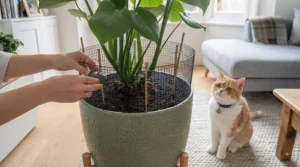
Indoor gardening with pets doesn’t have to mean choosing between houseplants and a cat, but it does mean planning placement and species with a bit more intention than a cat-free household would need. Elevated placement is genuinely the simplest, lowest-effort protection strategy of all — a hanging planter or a high shelf removes access entirely for plants a determined cat could otherwise reach on a windowsill or side table, and it costs nothing beyond a bracket or hook.
For plants that need to stay at accessible height, combining a discreet grid cover with a nearby pot of cat grass or catnip gives a cat a sanctioned outlet rather than just removing every interesting option in the room. This redirection approach tends to work better long-term than pure deterrence, since it addresses the underlying instinct to chew and dig rather than only blocking the specific plants you’ve protected.
Species selection matters too, and it’s worth planning new purchases around pet safety from the start rather than retrofitting protection after the fact. Pet-safe options like spider plants, Boston ferns and most true palms give you genuine greenery without the toxicity risk of lilies or dieffenbachia, meaning a physical protector becomes optional decoration-preservation rather than a genuine safety requirement for those specific plants.
Cats Chewing Plants: Why It Happens and What Actually Helps
Cats chew plants for a handful of genuinely distinct reasons, and understanding which one applies to your cat changes what actually fixes it. Boredom and a lack of environmental stimulation is one of the most common drivers — a cat with limited enrichment elsewhere in the home will often investigate and chew houseplants simply because they’re novel, textured, and move when disturbed.
Nutritional or digestive instinct is another genuine factor; cats in the wild occasionally eat plant matter to aid digestion or induce vomiting of hairballs, which is part of why providing a dedicated, safe alternative like cat grass consistently reduces interest in other houseplants — it satisfies the underlying urge without any of the toxicity risk. Texture preference plays a role too: cats are often drawn to plants with particular leaf textures (soft, fleshy leaves especially), which is worth factoring into which plants you protect most heavily versus which ones your cat mostly ignores.
What most buyers overlook about this behaviour is that physical protectors and deterrent sprays treat the symptom, while addressing boredom and providing a sanctioned chewing outlet treats the actual cause. A household combining a grid cover on prized plants with a dedicated cat grass pot elsewhere in the room typically sees far better long-term results than relying on barriers alone.
Features That Actually Matter (And Those That Don’t)
Product listings in this category lean heavily on words like “premium” and “durable,” which tell you very little. What actually matters: whether the product matches your specific behaviour problem (digging versus chewing versus knocking over), whether a grid is genuinely cuttable to your pot sizes without cracking, and for sprays, whether the active ingredient is one with a track record (citronella, citrus oils) rather than an unnamed “natural formula.”
What doesn’t matter nearly as much as listings imply: exact mesh thread count on fabric covers, within reason. Once a mesh is fine enough to block a paw, further density mostly affects breathability rather than added protection, and overly dense mesh can actually work against plant health by restricting airflow to the soil surface.
What’s worth paying closer attention to that often gets buried in listings: pack size relative to your actual plant count (buying a two-pack when you have six plants is a false economy), and for cages specifically, whether the design is genuinely modular and reusable across different plant sizes, or a fixed size that only fits one specific pot.
Frequently Asked Questions
❓ What is the best way to stop a cat digging in houseplant soil?
❓ Are cat repellent sprays actually safe for houseplants?
❓ Do cat proof plant cages work for chewing as well as digging?
❓ Which common houseplants are toxic to cats?
❓ How long does it take for a deterrent spray to actually work?
Conclusion
Protecting houseplants from a curious or determined cat comes down to matching the right tool to the actual behaviour, rather than reaching for whatever product looks most reassuring on a listing page. Diggers are solved cheaply and quickly with a grid cover like the GIONAR Plant Pot Grid or Zimoer Plant Pot Cover; chewers genuinely need full coverage from something like the IHAYNER Plant Protectors or the mesh cover with drawstring; and households juggling multiple unwanted behaviours often get more value from a versatile spray like GDBadais Natural Cat Educational Spray than a plant-specific product alone.
None of that matters as much as getting toxicity right first. No protector, however well-designed, should be relied on as the only safeguard against a genuinely dangerous plant like a true lily — the sensible move there is removal, not containment. For everything else, a sensible combination of physical barriers, deterrent training, and a bit of redirection through cat grass or elevated placement will keep both your plants and your cat safely coexisting for years.
Whichever approach fits your home, the underlying principle hasn’t changed: know what you’re actually protecting against, choose the product built for that specific problem, and treat toxicity as a separate, non-negotiable safety check rather than something a cage or grid can fully solve.
Recommended for You
- Cord Protectors for Cats: 7 Genuinely Chew-Proof Picks (2026)
- Cat Window Guards UK: 7 Top Picks to Stop Escapes in 2026
- Cat Proof Cabinet Locks: 7 Best Picks to Outsmart Cats (2026)
Disclaimer: This article contains affiliate links. As an Amazon Associate, I earn from qualifying purchases. If you purchase products through these links, we may earn a small commission at no additional cost to you.
✨ Found this helpful? Share it with your friends! 💬🤗
