
In This Article
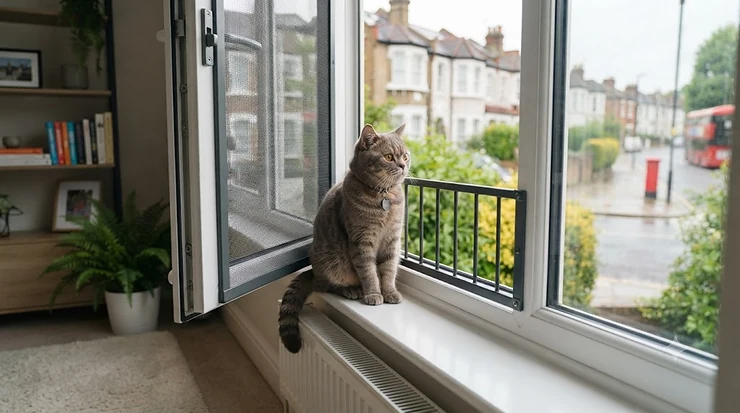
Bringing a cat home is a bit like inviting a small, extremely curious burglar to live with you permanently. Cables become chew toys, cupboards become treasure hunts, and that gap behind the blinds becomes an irresistible climbing frame. A cat proofing kit under £50 is a budget-friendly collection of individual safety products, cord protectors, cupboard latches, calming aids and similar, that together secure the main hazard zones in a home without requiring a full renovation or a landlord’s permission. It’s the sensible middle ground between “hope for the best” and hiring a professional pet-proofer.
This guide isn’t a copy-pasted spec sheet. We’ve researched real, currently available products, pulled together honest aggregated customer sentiment, and looked specifically at what actually works for UK homes, including rented flats where drilling holes isn’t an option. Below you’ll find seven genuine budget cat safety products that, combined, form an affordable cat proofing bundle well within a £50-ish spend, a proper new cat owner checklist, and a dedicated look at cat-proofing a rental home without upsetting your deposit. We’ll also weigh up whether a ready-made cat proofing starter kit beats buying items individually, and where multi-item pet safety kits genuinely earn their price tag versus where you’re better off shopping piece by piece.
By the end, you’ll know exactly which combination of products suits a first-time kitten owner, a rescue cat settling into a new flat, or a household simply trying to stop the cat from redecorating the living room on its own terms.
Quick Comparison Table: Best Budget Cat Proofing Products at a Glance
| Category | Product | Typical Price | Best For |
|---|---|---|---|
| Best for Cables | D-Line Cable Tidy & Cord Cover Kit | Under £15 | Stopping cord chewing and trip hazards |
| Best for Cupboards | Safety 1st Adhesive Cabinet & Drawer Latches | Under £12 | Kitchen and bathroom cupboard safety |
| Best for Blinds | Blind Cord Safety Cleats (3-Pack) | Under £5 | Preventing strangulation risk |
| Best for New Arrivals | Feliway Optimum 30-Day Starter Kit | Under £25 | Calming a stressed or newly-arrived cat |
| Best for Furniture | Cat Deterrent Training Spray | Under £10 | Keeping cats off counters and plants |
Looking at the spread above, the genuinely essential items, cord covers, cupboard latches and blind cord cleats, are also the cheapest, which is good news for anyone assembling an affordable cat proofing bundle on a tight budget. The Feliway Optimum 30-Day Starter Kit is the priciest single item here, but it addresses a different category of risk entirely, stress-driven behaviour, rather than a physical hazard, and is worth including specifically for new cat owners in the first few weeks.
💬 Just one click — help others make better buying decisions too!😊
Top 7 Budget Cat-Proofing Products: Expert Analysis
1. D-Line Cable Tidy & Cord Cover Kit — best for hiding chewable cables cheaply
The D-Line Cable Tidy & Cord Cover Kit is a genuinely well-established UK brand in cable management, and it turns out the same products that keep a living room looking tidy also solve one of the most common cat hazards in the home: dangling or exposed charging cables. The kit typically bundles a plastic cable tidy box with a length of split-tube cord cover, letting you route TV, router and charger cables through a solid channel rather than leaving them loose on the floor or trailing down a desk.
Based on the spec comparison with generic own-brand alternatives, D-Line’s advantage is build consistency, the plastic housing snaps together securely and doesn’t crack or gape at the seams the way some budget imitators do, which matters because a cat that finds a gap will investigate it. What most buyers overlook about cable covers specifically is that they solve two separate problems at once: they remove the temptation to chew, which protects both the cat and your electronics, and they remove the trailing cord itself, which is what a cat is most likely to bat, chase and get tangled in during a zoomies moment.
Reviewers consistently describe the fitting process as straightforward, no tools required for most configurations, and praise the tidy, professional finish once installed. A recurring theme in aggregated feedback is that the standard cord cover can look slightly obvious against certain wall colours, though most buyers consider that a fair trade-off for the safety benefit.
Pros:
- ✅ Removes the single most tempting chew hazard in most living rooms
- ✅ No-tools installation suits renters and first-time owners alike
- ✅ Reliable UK brand with consistent build quality across sizes
Cons:
- ❌ Standard cover colour can look slightly obvious on patterned walls
- ❌ Longer cable runs may need more than one kit to fully cover
Typically priced under £15 depending on the exact size bundle, the D-Line Cable Tidy & Cord Cover Kit is one of the cheapest genuinely effective items in any cat proofing starter kit, and it’s worth checking current price given regular bundle promotions.
2. Safety 1st Adhesive Cabinet & Drawer Latches — best for kitchen and bathroom cupboards
Originally designed for childproofing, the Safety 1st Adhesive Cabinet & Drawer Latches have quietly become one of the most recommended cat safety products going, and the crossover makes sense: both toddlers and cats are drawn to exactly the same cupboards, the ones hiding cleaning chemicals, bin bags and anything that rattles. These latches use a strong adhesive pad rather than screws, so they stick to cabinet and drawer fronts without leaving lasting marks, which is precisely why they turn up so often in reviews specifically from cat owners rather than parents.
Here’s what most buyers overlook about adhesive latches: the strength of the adhesive matters far more than the mechanism itself. Based on the spec comparison against unbranded alternatives, Safety 1st consistently ranks ahead on bond strength, meaning a cat pawing repeatedly at a cupboard door is less likely to eventually peel the latch loose, a genuine and common failure mode with cheaper knock-offs. The latches themselves use a simple push-and-lift mechanism that adult hands operate easily with one hand, while a paw simply can’t generate the right motion.
Aggregated customer sentiment frequently mentions cat owners specifically noting that these latches stopped a cat from repeatedly raiding under-sink cupboards, a genuinely hazardous habit given how many cleaning products live there. A smaller but consistent complaint is that the adhesive can pull paint from very freshly painted surfaces if applied too soon after decorating.
Pros:
- ✅ Adhesive bond strength outperforms most unbranded alternatives
- ✅ No drilling or screws, ideal for rented kitchens
- ✅ One-handed adult operation with no learning curve
Cons:
- ❌ Can lift fresh paint if applied within a few weeks of decorating
- ❌ Individual latches may need repositioning on curved cabinet edges
Usually available in multi-packs under £12, the Safety 1st Adhesive Cabinet & Drawer Latches offer some of the best value per hazard-point covered of any product in this list, since one pack typically secures several cupboards at once.
3. Blind Cord Safety Cleats (3-Pack) — best for preventing a genuinely serious hazard
Looped blind and curtain cords are a well-documented strangulation risk, and while the official safety guidance around this is aimed primarily at protecting young children, the same looped-cord hazard applies just as directly to a curious cat that jumps up to bat at a dangling cord and gets a paw, or worse, caught in the loop. A Blind Cord Safety Cleats (3-Pack) kit is about as inexpensive as cat-proofing gets, a small hook-style fitting that you wind the cord around in a figure of eight, keeping it permanently taut and out of reach rather than dangling loose.
Official government safety guidance on securing looped blind cords recommends fitting a cleat, tidy or tensioner firmly to an adjoining surface, positioned out of reach, which is exactly the fix these cleats provide, and it’s a piece of guidance worth reading in full if you have any older blinds without a built-in safety device, as detailed in the government’s blind cord safety guidance. Based on the spec comparison with more elaborate cord-winding gadgets sold at higher prices, a basic cleat does the identical job for a fraction of the cost, the mechanism itself hasn’t meaningfully changed in decades because it doesn’t need to.
Reviewer feedback for this category of product is consistently about ease of fitting, most stick or screw on in under a minute, rather than anything more technical. A recurring point raised is that self-adhesive versions can work loose over time on textured walls, in which case a screw-fixed cleat is the more reliable choice.
Pros:
- ✅ Addresses a genuinely serious, well-documented strangulation hazard
- ✅ Among the cheapest items in any cat proofing kit under £50
- ✅ Installs in under a minute with no specialist tools
Cons:
- ❌ Adhesive versions can loosen over time on textured walls
- ❌ Only effective if you remember to actually wind the cord up after use
At typically under £5 for a three-pack, blind cord cleats deliver an outsized safety return for the price, and they’re arguably the single most underrated item on this entire list.
4. Feliway Optimum 30-Day Starter Kit — best for settling a new or stressed cat
Not every cat-proofing job is about physical hazards, some of it is about stopping a stressed cat from creating new hazards themselves, through scratching, spraying or destructive chewing driven by anxiety rather than curiosity. The Feliway Optimum 30-Day Starter Kit is a plug-in diffuser that releases a synthetic version of feline facial pheromones, the scent-marking chemical a cat naturally deposits when it rubs its face against furniture to signal a space feels safe. It’s widely recognised as the leading product in this specific category and is frequently the first calming aid recommended for cats settling into a new home.
What the spec sheet won’t tell you, but reviewer patterns strongly suggest, is that the timing of when you plug this in matters almost as much as the product itself. Based on the spec comparison against generic own-label pheromone diffusers, Feliway’s formulation has been the subject of considerably more independent testing and vet-facing literature than budget alternatives, which is part of why it commands a higher price point in this list. Each diffuser covers a decent-sized room, and the 30-day starter vial gives you a full trial period to judge whether it’s making a visible difference to a specific cat’s settling-in behaviour before committing to ongoing refills.
Aggregated customer sentiment consistently reports a genuine reduction in signs of stress such as excessive scratching, hiding or vocalising during the first few weeks in a new home, while a recurring honest criticism is that response varies noticeably between individual cats, some show clear improvement, others show little to none.
Pros:
- ✅ Leading, widely studied product in the pheromone diffuser category
- ✅ Drug-free and doesn’t affect humans or other household pets
- ✅ 30-day trial period is enough to judge real-world effect
Cons:
- ❌ Response varies significantly between individual cats
- ❌ Ongoing refills add up if used continuously long-term
Typically priced under £25 for the starter kit, the Feliway Optimum 30-Day Starter Kit is the most expensive single item in this bundle, but it’s the one item here addressing behavioural rather than purely physical safety, making it a genuinely different kind of investment.
5. Cat Deterrent Training Spray — best for protecting counters, plants and furniture
A Cat Deterrent Training Spray works on a simple premise: cats generally dislike certain bitter or citrus scents that are entirely harmless to sniff or brush past but unpleasant enough to discourage repeated scratching, chewing or jumping in a treated spot. It’s a cheap, low-effort addition to any cat proofing starter kit, and it’s particularly useful for the hazards that can’t easily be physically blocked, kitchen counters, houseplants, and the edge of a sofa arm.
Based on the spec comparison across the various formulations on the market, the natural, plant-extract-based sprays tend to be gentler and safer for repeated use around food-prep areas than older-style bitter chemical deterrents, though honesty demands naming the trade-off too: natural formulations generally need reapplying more often, since the scent fades faster than a synthetic bittering agent. What most buyers overlook about deterrent sprays is that they work best as reinforcement alongside a genuine alternative, a scratching post placed near the furniture you’re protecting, rather than as a standalone fix; used in isolation, a cat may simply redirect the unwanted behaviour elsewhere in the room.
Reviewer sentiment across retailers is mixed but leans positive, with a consistent split between owners reporting a clear behaviour change within days and a smaller group whose cats appeared entirely unbothered by the scent, individual cat sensitivity to these formulations does genuinely vary.
Pros:
- ✅ Cheap, low-effort way to protect specific vulnerable surfaces
- ✅ Plant-based formulations are gentle enough for kitchen use
- ✅ Works well alongside physical deterrents like scratching posts
Cons:
- ❌ Effectiveness varies noticeably from cat to cat
- ❌ Natural scent fades faster than older bitter chemical formulas
Usually priced under £10 for a standard bottle, a Cat Deterrent Training Spray is one of the lowest-commitment items on this list, cheap enough to try without much risk if it doesn’t work for your particular cat.
6. Cat Litter Trapper Mat — best for protecting rental flooring
Litter tracking is one of those problems that sounds trivial until you’re the one vacuuming granules out of a hallway carpet every week, and in a rented property specifically, ground-in litter debris is exactly the kind of thing that can turn into a deposit dispute at the end of a tenancy. A Cat Litter Trapper Mat sits directly outside or under the litter tray and uses a honeycomb or ridged surface design to pull loose litter off a cat’s paws as it steps out, trapping it in the mat rather than letting it scatter across the floor.
Based on the spec comparison between honeycomb-style and simple textured mats, the honeycomb design consistently outperforms flat textured alternatives at actually capturing litter rather than just brushing it further along the floor, largely because the raised cell walls physically dislodge granules stuck between paw pads. What most buyers overlook about mat size specifically is that a mat noticeably larger than the litter tray itself captures dramatically more debris than an undersized one, since it covers more of a cat’s typical exit stride.
Aggregated review sentiment consistently praises how much visibly less litter ends up tracked through the rest of the home, with the most common minor complaint being that very fine clumping litters can still work their way through the largest honeycomb cells on some designs.
Pros:
- ✅ Directly protects rental flooring and carpets from litter damage
- ✅ Honeycomb designs meaningfully outperform flat textured mats
- ✅ Easy to shake out and wipe clean during routine cleaning
Cons:
- ❌ Very fine clumping litter can pass through larger honeycomb cells
- ❌ Needs regular emptying to keep working effectively
Typically priced under £20 depending on size, a Cat Litter Trapper Mat is one of the more practical, everyday-relevant items in an affordable cat proofing bundle, particularly for anyone renting.
7. Cat-Safe Window Mesh Screen — best for preventing falls from open windows
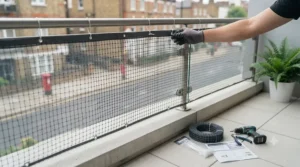
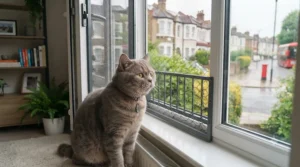
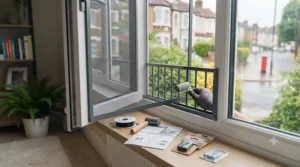
Cats have a well-earned reputation for balance, but “high-rise syndrome,” the injuries that result from falling from open windows or balconies, is a genuinely documented veterinary concern, particularly with upper-floor flats and warmer months when windows are left open for ventilation. A Cat-Safe Window Mesh Screen fits over an open window using an adhesive hook-and-loop frame or tension-fit design, letting air circulate freely while creating a physical barrier a cat can’t push through or fall past.
Based on the spec comparison with permanent window restrictors, mesh screens have a clear practical advantage for renters specifically: most designs require no drilling, using adhesive strips or tension mounting instead, which makes them one of the few window-safety products genuinely compatible with a typical UK tenancy agreement that prohibits alterations. What the spec sheet won’t tell you, but installation reports consistently note, is that a snug, taut fit matters enormously, a loosely fitted screen with a gap at one corner defeats the entire purpose, so it’s worth spending the extra few minutes getting the tension right during installation rather than rushing it.
Reviewer feedback consistently highlights peace of mind as the main benefit reported, particularly from owners in flats above ground floor, with the most common criticism being that adhesive-mounted versions can require reapplication after a season or two as the adhesive weakens.
Pros:
- ✅ Addresses a genuine, documented fall risk in upper-floor homes
- ✅ No-drill designs suit rented properties and tenancy agreements
- ✅ Allows normal ventilation while blocking the escape route
Cons:
- ❌ Adhesive mounting may need reapplication after a season or two
- ❌ Loose or poorly tensioned fitting significantly reduces effectiveness
Usually priced under £18 per window, a Cat-Safe Window Mesh Screen rounds out this list as the item most specifically aimed at cat-proofing a rental home safely and reversibly.
Top 7 Products: Full Comparison
| Product | Hazard Addressed | Rental-Friendly | Typical Price | Best For |
|---|---|---|---|---|
| D-Line Cable Tidy & Cord Cover Kit | Cable chewing and entanglement | Yes, no drilling | Under £15 | Living rooms and home offices |
| Safety 1st Adhesive Cabinet & Drawer Latches | Access to chemicals and sharp items | Yes, adhesive only | Under £12 | Kitchens and bathrooms |
| Blind Cord Safety Cleats (3-Pack) | Strangulation risk from looped cords | Yes, screw or adhesive | Under £5 | Any room with corded blinds |
| Feliway Optimum 30-Day Starter Kit | Stress-driven destructive behaviour | Yes, plug-in only | Under £25 | New arrivals and rescue cats |
| Cat Deterrent Training Spray | Scratching and chewing furniture/plants | Yes, no installation | Under £10 | Counters, plants, sofa edges |
| Cat Litter Trapper Mat | Litter tracking and floor damage | Yes, no installation | Under £20 | Any home with a litter tray |
| Cat-Safe Window Mesh Screen | Falls from open windows | Yes, no-drill designs | Under £18 | Upper-floor flats and warm months |
Read across this table and the picture is reassuring for anyone on a tight budget: every single item here is genuinely rental-friendly, meaning a complete, thoughtfully chosen cat proofing kit under £50 is realistically achievable even in a strictly no-drilling tenancy. If you had to prioritise only three items to start with, the blind cord cleats, cabinet latches and cable cover kit cover the most physically dangerous hazards for the lowest combined spend, leaving room in the budget for the litter mat or window screen depending on your specific living situation.
✨ Ready to Build Your Kit?
🔍 Check today’s prices on Amazon UK for each of these picks and put together a bundle that fits your home and your budget before your new arrival gets exploring.
New Cat Owner Checklist: Setting Up Room by Room
Walking through your home room by room before your cat arrives, or before a nervous rescue cat is let out of the carrier, catches far more hazards than trying to remember everything at once. In the living room, start with any trailing TV, router or lamp cables, these are consistently the single most reported chew hazard in new-cat households, and fit a cable cover kit before anything else. Check blinds and curtains for looped cords and fit a cleat immediately, this is a five-minute job that addresses a genuinely serious risk rather than a minor inconvenience.
In the kitchen, fit adhesive latches to any cupboard containing cleaning chemicals, bin bags, or foil and cling film boxes, all common sources of injury if a cat manages to get inside. Check for gaps behind or under large appliances where a kitten specifically could get stuck, a rolled-up towel wedged into larger gaps is a genuinely effective free fix while you shop for anything more permanent.
In the bathroom, keep the toilet lid down as standard practice and store any medications, cleaning products or dental floss well out of paw’s reach, floss and elastic hair ties are a surprisingly common cause of emergency vet visits due to intestinal blockage risk if swallowed. In bedrooms, check for accessible windows and fit a mesh screen if you’re above ground floor, and be mindful of any small items, hair ties, buttons, jewellery, left on bedside tables.
Finally, do a slow walk-through with your specific cat’s likely climbing routes in mind, cats gravitate toward height, so check what’s reachable from shelving, windowsills and the tops of wardrobes, not just floor level.
Cat-Proofing a Rental Home Without Losing Your Deposit
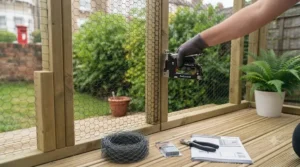
Cat-proofing a rental home comes with an extra constraint most homeowners don’t have to think about: whatever you install has to come off cleanly at the end of the tenancy without leaving marks, holes or residue behind. The good news is that every product featured in this guide was specifically chosen because it’s genuinely compatible with that requirement, adhesive cable covers, peel-off cabinet latches, tension-fit window screens and hook-based blind cleats all avoid drilling entirely.
The practical detail that catches renters out isn’t usually the products themselves, it’s the adhesive. Test any adhesive-backed item on an inconspicuous patch of paintwork first, and remove it slowly and at a low angle when the time comes, rather than pulling straight off the wall, which is far more likely to lift paint. According to UK council guidance on tenancy deposits, landlords can deduct costs for genuine damage beyond normal wear and tear but not for the reasonable, reversible marks left by removable fittings used sensibly, as outlined in general council guidance on tenancy deposit deductions; keeping photos of your cat-proofing setup, and of the walls once items are removed, is a sensible habit if you want evidence in hand should any dispute arise.
Where possible, favour tension-fit and adhesive-hook designs over anything requiring even small screws, and keep the original packaging for anything you might want to reinstall in a future rental, since several of the items in this guide, particularly the window mesh screen and cable tidy box, are genuinely reusable across multiple house moves.
Problem → Solution: Fixing Common Cat Hazards on a Budget
Problem: cat repeatedly chews charging cables. This is one of the most commonly reported hazards in new-cat households and carries a real electrocution risk. Solution: fit a cable tidy and cord cover kit immediately, prioritising any cable near a sleeping or resting spot the cat favours, since chewing often happens during quiet, low-stimulation moments.
Problem: cat gets into cleaning products under the sink. Solution: fit adhesive cabinet latches to every cupboard containing chemicals, not just the obvious ones, cats are surprisingly persistent explorers and will eventually test every door in a kitchen given enough time.
Problem: cat bats at or gets tangled in blind cords. Solution: fit a blind cord cleat and get into the habit of winding the cord up after every use, this is a genuinely serious hazard and the fix costs under £5.
Problem: new cat is hiding, hissing or seems stressed in the first weeks. This pattern is common and usually settles with time, but a pheromone diffuser can meaningfully support the process. Solution: plug in a Feliway-style diffuser in the cat’s main resting area and give it the full trial period before judging its effect, rather than expecting immediate results.
Problem: litter is tracked through the entire flat. Solution: switch to a honeycomb-style litter trapper mat sized noticeably larger than the tray itself, and consider whether the current litter type is contributing, finer, dustier litters generally track further than coarser clumping varieties.
How to Choose an Affordable Cat Proofing Bundle
Assembling the right combination rather than buying everything available keeps a cat proofing kit under £50 realistic rather than aspirational. Work through these steps in order:
- Walk your home room by room first. Identify your specific hazards before buying anything, a ground-floor flat with no blinds has entirely different needs to a third-floor flat with corded roman blinds.
- Prioritise physical safety hazards over behavioural ones. Cable covers, cupboard latches and blind cleats address genuine injury risks and should come first in any budget.
- Check every product is rental-friendly if you rent. Adhesive, tension-fit or hook-based designs avoid drilling and protect your deposit.
- Buy multi-packs where the hazard repeats. Cupboard latches and cable covers are almost always needed in more than one location, so a multi-pack is better value than several single purchases.
- Add behavioural support only if you’re seeing signs of stress. A pheromone diffuser is a genuinely useful addition but isn’t essential for every cat, some settle in with no support needed at all.
- Factor in your specific floor level for window safety. A ground-floor flat has a very different risk profile to a third-floor one when it comes to open windows.
- Keep receipts and packaging for anything you might reuse. Several items in a typical bundle are genuinely reusable across future house moves.
Cat Proofing Starter Kit vs Buying Individually
| Factor | Ready-Made Starter Kit | Buying Items Individually |
|---|---|---|
| Convenience | One purchase, arrives together | Requires several separate orders |
| Customisation | Fixed contents, may include unneeded items | Buy only what your home actually needs |
| Value | Often cheaper per item if bundled well | Can be cheaper if you skip unneeded items |
| Best For | First-time owners wanting a fast, simple start | Owners with specific, already-identified hazards |
The honest answer here is that neither option is universally better, it depends on how much research you’re willing to do yourself. A genuine cat proofing starter kit saves time and decision fatigue, which has real value for a first-time owner who simply wants to get set up quickly before a new cat arrives. Buying individually, as detailed in the seven products above, generally works out better value for anyone who has already identified their specific hazards, since you avoid paying for items your particular home doesn’t need, a ground-floor flat with no blinds gains nothing from a blind cord cleat, for instance. For most households, a hybrid approach works best: buy the genuinely universal items, cable covers and cabinet latches, as a small bundle, then add the situational items, window screens, litter mats, individually based on your actual layout.
Common Mistakes When Cat-Proofing on a Budget
The most common mistake is treating cat-proofing as a one-time task rather than an ongoing habit. Kittens in particular go through distinct developmental stages, and a hazard that didn’t interest a cat at twelve weeks old may suddenly become fascinating at six months as confidence and curiosity increase, so it’s worth re-checking your setup periodically rather than assuming the initial pass covers everything permanently.
A second common mistake is buying the cheapest possible version of every product without checking genuine adhesive strength or build quality, particularly for cabinet latches, where a weak adhesive bond is the single most common cause of product failure and subsequent returns. A third mistake is skipping blind cord cleats specifically because they seem like a minor detail, when in fact this is one of the more serious hazards on this entire list relative to its tiny cost.
Finally, many new owners over-invest in behavioural products like calming diffusers before addressing basic physical hazards, when the reverse order generally makes more sense, secure the home first, then assess whether behavioural support is genuinely needed based on how your specific cat is settling in.
Multi-Item Pet Safety Kits: Are They Worth It?
Multi-item pet safety kits, bundles combining several of the product types covered in this guide into a single purchase, have become increasingly common on UK marketplaces, and whether they’re worth it depends heavily on what’s actually inside the bundle rather than the “kit” framing itself. Based on the spec comparison between genuine multi-item kits and simply selecting the seven products above individually, the honest finding is that bundled kits are worth it primarily when every included item addresses a hazard your specific home actually has; a bundle padded with items you don’t need, a second cable cover kit when you only have one cable run, for example, effectively inflates the price per genuinely useful item.
What most buyers overlook about multi-item kits specifically is checking whether the bundle discount is real. Some listings simply add up the individual retail prices with no meaningful saving, while others genuinely undercut buying each item separately by a noticeable margin. It’s worth doing the maths, adding up current individual prices for the items you’d actually use, before assuming a bundle is automatically the cheaper route. Where multi-item kits do add genuine value is convenience and reduced decision fatigue for a first-time owner who would otherwise need to research seven separate product categories from scratch.
Budget Safety Products for Cats: What’s Actually Worth Buying
Not every budget cat safety product on the market delivers proportional value for its price, and it’s worth being honest about where the genuine priorities sit. Cable covers, cupboard latches and blind cord cleats represent outstanding value because they address serious, well-documented physical hazards for a combined spend well under £30, this trio should form the non-negotiable core of almost any budget setup regardless of your specific home layout.
Litter trapper mats and window mesh screens sit in a second tier, genuinely useful and worth including, but more dependent on your specific circumstances, a mat matters enormously if you have carpet or a landlord who’s strict about deposits, and a window screen matters enormously if you’re above ground floor, but neither is universally essential in the same way the first tier is. Behavioural products like pheromone diffusers form a third tier, valuable specifically when signs of stress are present, but not something every cat needs by default. Structuring a budget this way, core hazards first, situational items second, behavioural support only if needed, keeps spending proportional to actual risk rather than simply buying everything marketed at cat owners.
Long-Term Value & Where to Spend a Little More
| Spend Tier | What It Covers | Typical Total | Worth Upgrading? |
|---|---|---|---|
| Core essentials | Cable cover, cabinet latches, blind cleats | Under £30 | No, these are already good value at budget price |
| Situational add-ons | Litter mat, window screen | Under £40 additional | Sometimes, upgrade mat size if tracking persists |
| Behavioural support | Pheromone diffuser and refills | Under £25 initial, ongoing refills | Only if clear signs of stress are present |
Most of the products in this guide don’t meaningfully improve with extra spending, a £5 blind cord cleat does the same essential job as a far pricier decorative version, so the sensible long-term strategy is to spend confidently at the budget tier on the core essentials and reserve any additional budget for situational items specific to your home. The one area genuinely worth upgrading if the budget option underperforms is the litter trapper mat, sizing up to a noticeably larger mat if tracking persists tends to solve the problem more reliably than switching brands at the same size.
✨ Don’t Miss These Exclusive Deals!
🔍 Take your cat-proofing setup to the next level with these carefully selected budget picks. Click through to check current pricing and availability on Amazon UK before your new arrival starts exploring.
Safety, Regulations & Legal Considerations for Renters and Owners
Blind and curtain cord safety is the one area in this guide with formal UK government backing, and it’s worth treating with real seriousness. Official guidance recommends fitting a cleat, tidy or tensioner to any looped cord, positioned out of reach on an adjoining surface, and this advice applies just as sensibly to protecting a cat as it does to protecting a young child, since the physical hazard, entanglement in a looped cord, is identical regardless of who or what gets caught in it, full detail is available in the government’s guidance on securing blind cords safely.
Household plants deserve a specific mention here too, since several common houseplants are genuinely toxic to cats if chewed or ingested, and published veterinary research on companion animal plant poisoning notes that ornamental plants are a frequently underestimated source of toxicity risk in pet-owning households, as covered in academic research on toxic plants and companion animals. Checking any existing houseplants against a reputable toxic-plant list before your cat arrives is a free, five-minute task that belongs alongside the paid products in this guide.
For renters specifically, nothing in a sensibly assembled cat proofing kit under £50 should create genuine tenancy issues, provided you stick to adhesive, hook-based or tension-fit products and avoid drilling. Keep any correspondence with your landlord about pets on file, and photograph your setup both when installed and once removed at the end of a tenancy, straightforward, low-cost habits that protect both your cat and your deposit.
Frequently Asked Questions
❓ What should be in a cat proofing kit under £50?
❓ Is a cat proofing starter kit better than buying items separately?
❓ Can I cat-proof a rental home without losing my deposit?
❓ Do I really need a blind cord cleat?
❓ Are pheromone diffusers worth including in a new cat owner checklist?
Conclusion
A genuinely effective cat proofing kit under £50 comes down to prioritising real physical hazards first and situational extras second, not chasing the longest possible shopping list. The D-Line Cable Tidy & Cord Cover Kit, Safety 1st Adhesive Cabinet & Drawer Latches and Blind Cord Safety Cleats (3-Pack) form the essential, non-negotiable core of almost any household’s setup, addressing the most serious and well-documented risks for a combined spend well under £30. From there, add the Cat Litter Trapper Mat or Cat-Safe Window Mesh Screen based on your specific home, and consider the Feliway Optimum 30-Day Starter Kit only if your particular cat shows genuine signs of stress after arrival.
Whether you buy a ready-made cat proofing starter kit or assemble an affordable cat proofing bundle piece by piece, the fundamentals stay the same: walk your home room by room, prioritise adhesive and no-drill designs if you rent, and treat cat-proofing as an ongoing habit rather than a single afternoon’s task. Get those basics right, and you’ll have a genuinely safer home for a fraction of what a full professional pet-proofing service would cost.
Recommended for You
- Balcony Cat Nets: 7 Best Safety Options for UK Flats (2026)
- Cat Proof Plant Protectors UK: 7 Best Picks That Actually Work 2026
- Cord Protectors for Cats: 7 Genuinely Chew-Proof Picks (2026)
Disclaimer: This article contains affiliate links. As an Amazon Associate, I earn from qualifying purchases. If you purchase products through these links, we may earn a small commission at no additional cost to you.
✨ Found this helpful? Share it with your friends! 💬🤗
