
In This Article
You wouldn’t eat from a dirty plate, so why should your cat? The question of stainless steel vs ceramic cat bowls might seem trivial, but it’s actually one of the most important decisions you’ll make for your feline’s health and wellbeing. I’ve spent years observing how different bowl materials affect cats, and the differences can be surprising.
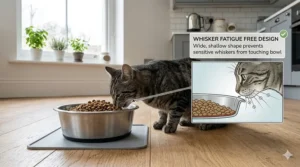
Here’s what many cat owners don’t realise: the material of your cat’s bowl directly impacts bacterial growth, whisker comfort, and even your cat’s willingness to eat and drink properly. A UK study examining bacterial adhesion found that ceramic bowls had the lowest bacterial count over a 14-day period, though stainless steel initially showed higher counts on day seven. But that’s just one factor in this complex decision.
Whether you’re dealing with a finicky eater, concerned about hygiene, or simply want the best for your furry friend, understanding the real differences between stainless steel vs ceramic cat bowls will transform mealtimes. Both materials have passionate advocates, but which one truly deserves a spot in your home? Let’s dive into the evidence, explore seven brilliant products available on Amazon.co.uk, and help you make an informed choice that your cat will thank you for.
Quick Comparison Table: Stainless Steel vs Ceramic Cat Bowls
| Feature | Stainless Steel | Ceramic |
|---|---|---|
| Durability | Virtually indestructible, rust-resistant | Can chip or crack if dropped |
| Weight | Lightweight (may slide) | Heavy and stable |
| Bacteria Resistance | Non-porous surface | Lowest bacterial count in studies |
| Dishwasher Safe | Yes, always | Yes (check glaze quality) |
| Price Range (UK) | £3.50-£28 | £10-£25 |
| Aesthetic Appeal | Utilitarian, modern | Decorative, variety of designs |
| Safety Concerns | Allergies rare, check grade | Lead in cheap glazes |
| Whisker Friendliness | Depends on design | Depends on design |
💬 Just one click – help others make better buying decisions too! 😊
Top 7 Stainless Steel vs Ceramic Cat Bowls: Expert Analysis
1. PEGGY11 Stainless Steel Cat Bowls – Best Budget-Friendly Option
If you’re searching for reliable stainless steel vs ceramic cat bowls without breaking the bank, the PEGGY11 Stainless Steel Cat Bowls offer exceptional value. This 2-pack set features 720ml capacity bowls made from food-grade stainless steel with silicone anti-slip bottoms.
Key Specifications:
- Capacity: 720ml per bowl
- Material: Food-grade stainless steel
- Dimensions: 14cm diameter × 4cm height
UK buyers consistently praise these bowls for their non-slip design and ease of cleaning. One reviewer noted they’re “ideal for mother cats and their kittens” whilst another appreciated that they “don’t slide around like traditional bowls.”
✅ Pros:
- Extremely affordable (£6.99-£12.99)
- Dishwasher safe
- Non-slip silicone bottom prevents spills
❌ Cons:
- Lightweight design may not suit very enthusiastic eaters
- Basic aesthetic appeal
Price Range: £6.99-£12.99
2. PETKIT CyberTail Elevated Stainless Steel Bowl – Best for Whisker Fatigue
The PETKIT CyberTail Elevated Stainless Steel Bowl stands out in the stainless steel vs ceramic cat bowls debate with its innovative 15° tilted design. This premium option addresses whisker fatigue whilst providing ergonomic feeding height.
Key Specifications:
- 304 food-grade stainless steel bowls
- Adjustable 0° and 15° angles
- Stand dimensions: 33cm × 16cm × 7cm
- Capacity: 480ml (15°) / 275ml (0°)
UK customers report their cats eat more comfortably and make less mess. Spanish reviewers particularly appreciated the quality construction and easy-to-clean design. The tilted angle is especially beneficial for flat-faced breeds like Persians and British Shorthairs.
✅ Pros:
- Scientifically calculated feeding angle reduces neck strain
- Premium 304 stainless steel construction
- Adjustable positions for different needs
❌ Cons:
- Higher price point (£22-£28)
- Plastic stand requires careful cleaning
Price Range: £22.00-£27.99
3. Mason Cash Cane Ceramic Cat Bowl – Heritage British Design
When comparing stainless steel vs ceramic cat bowls, the Mason Cash Cane Ceramic Cat Bowl represents over 70 years of British craftsmanship. This 13cm stoneware bowl combines timeless design with practical functionality.
Key Specifications:
- Capacity: 400ml (13cm) or 750ml (15cm)
- Material: Chip-resistant stoneware
- Weight: Heavy for stability
UK buyers love the substantial weight that prevents tipping, with one reviewer stating it’s “wide enough for wet food portions” and accommodates whiskers well. The classic cane design suits traditional British homes beautifully.
✅ Pros:
- Heritage British brand trusted for decades
- Heavy construction prevents sliding
- Dishwasher, microwave, and freezer safe
❌ Cons:
- Can chip if dropped on hard surfaces
- Mason Cash stamp may flake with hand washing
Price Range: £10.00-£13.00
4. Mason Cash Cane & Blue Ceramic Cat Bowl – Best Aesthetic Option
For those who value style alongside function in the stainless steel vs ceramic cat bowls comparison, the Mason Cash Cane & Blue Ceramic Cat Bowl adds a splash of colour to the classic cane design.
Key Specifications:
- 13cm diameter, 400ml capacity
- Food-safe stoneware with lead-free glaze
- Weighted base for stability
This bowl delivers the same quality as the traditional cane version but with contemporary blue accents. UK customers appreciate the easy-clean surface and report their cats prefer the shallow design for comfortable eating.
✅ Pros:
- Stylish blue accent complements modern homes
- Keeps food cooler for longer periods
- Wide, shallow design reduces whisker stress
❌ Cons:
- Stickers can be tricky to remove initially
- Premium pricing for aesthetic appeal
Price Range: £10.50-£13.50
5. Wellbro Stainless Steel Wide Cat Bowls – Best for Whisker Comfort
The Wellbro Stainless Steel Wide Cat Bowls (2-pack, 15cm diameter) directly address whisker fatigue concerns in the stainless steel vs ceramic cat bowls discussion. These extra-wide dishes prevent whisker contact during feeding.
Key Specifications:
- 15cm wide diameter
- Non-slip base design
- Dishwasher safe stainless steel
UK buyers report reduced food spillage and happier cats. The wide, shallow design means whiskers never touch the sides during eating—a crucial factor for sensitive felines.
✅ Pros:
- Extra-wide 15cm diameter ideal for whisker relief
- Affordable 2-pack value (£12-£15)
- Lightweight yet stable with non-slip base
❌ Cons:
- May take up more counter space
- Basic design without elevation
Price Range: £12.00-£15.00
6. TIGOADT Elevated Ceramic Cat Bowls – Best Raised Ceramic Option
When evaluating stainless steel vs ceramic cat bowls, the TIGOADT 15.3cm Wide Raised Ceramic Cat Bowls combine the hygiene benefits of ceramic with ergonomic elevation.
Key Specifications:
- 15.3cm wide ceramic bowls (2-pack)
- 15° tilted elevated stand
- Capacity: 480ml per bowl
- Stand height: 14.5cm
Spanish buyers gave glowing reviews, with one noting their senior cats “no longer vomit” and food spillage reduced dramatically. The ceramic bowls are genuinely dishwasher-safe, unlike the cheaper resin alternatives.
✅ Pros:
- True ceramic construction (not cheap resin)
- Anti-vomit 15° angle reduces regurgitation
- Whisker-friendly wide diameter
❌ Cons:
- Stand is resin, not ceramic
- Higher price than basic bowls
Price Range: £13.99-£17.99
7. Classic Pet Products Stainless Steel Superdish – Best Ultra-Budget Option
For the stainless steel vs ceramic cat bowls comparison on a tight budget, the Classic Pet Products Stainless Steel Superdish 5″ delivers basic functionality at rock-bottom prices.
Key Specifications:
- 5-inch (12.7cm) diameter
- Non-slip rubber base
- Food-grade stainless steel
Available at The Pet Express and various UK retailers, this bowl proves you don’t need to spend a fortune for decent stainless steel. It’s perfect for multi-cat households or as travel bowls.
✅ Pros:
- Incredibly affordable (£3.49-£4.99)
- Non-slip base prevents movement
- Easy to replace if needed
❌ Cons:
- Smaller capacity may not suit large cats
- Basic design without special features
Price Range: £3.49-£4.99
Understanding Bowl Materials: The Science Behind Stainless Steel vs Ceramic Cat Bowls
Why Bowl Material Matters More Than You Think
Your cat’s bowl material isn’t just about aesthetics—it fundamentally affects their health, comfort, and eating behaviour. Research from the United Kingdom examining three bowl materials found significant differences in bacterial adhesion and diversity between plastic, ceramic, and stainless steel over a 14-day period.
The key factors you should consider when choosing between stainless steel vs ceramic cat bowls include bacterial resistance, chemical safety, durability, and your cat’s individual comfort preferences. According to research published by Hemopet, a leading veterinary blood bank, these material differences have measurable impacts on bacterial growth and pet health. Let’s break down exactly what makes each material tick.
Stainless Steel: The Veterinarian’s Choice
Stainless steel bowls have earned their reputation as the gold standard amongst veterinary professionals. The material offers a non-porous surface that bacteria struggles to colonise, though interestingly, stainless steel bowls showed the highest bacterial count on day seven in one study.
The secret lies in stainless steel’s durability and cleanability. Unlike plastic which develops scratches that harbour bacteria, quality stainless steel maintains its smooth surface indefinitely. Look for food-grade 304 stainless steel—the same material used in professional kitchens and hospitals across the UK.
However, not all stainless steel is created equal. Cheap chrome-plated bowls can rust and leach iron oxide into your cat’s food, whilst galvanised steel contains zinc that’s toxic to cats in high concentrations. Always choose bowls explicitly labelled as food-grade or dishwasher-safe.
Ceramic: Natural Beauty With Caveats
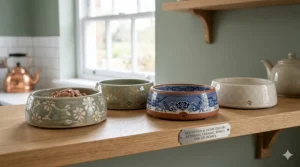
Ceramic bowls bring undeniable charm to your home whilst offering excellent practical benefits. Studies suggest ceramic bowls appear to reduce bacterial proliferation more than stainless steel and plastic bowls, making them an increasingly popular choice amongst health-conscious cat owners.
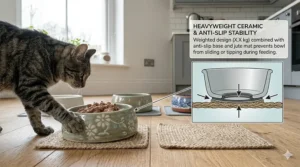
The weight of ceramic bowls provides fantastic stability—no more chasing bowls across the kitchen floor during enthusiastic mealtimes! This heaviness also keeps water cooler for longer periods, encouraging proper hydration in cats who prefer chilled water.
But ceramic comes with important safety considerations. Cheap ceramic bowls, particularly those manufactured in certain countries, may contain dangerous levels of lead in their glazes. The NHS and UK Trading Standards recommend only purchasing ceramic pet bowls explicitly labelled as lead-free and food-safe.
Additionally, ceramic’s brittleness means chips and cracks can develop over time. These imperfections create perfect hiding spots for bacteria, potentially negating ceramic’s hygiene advantages. Always inspect ceramic bowls regularly and replace any that show damage.
Bacterial Resistance: Which Bowl Material Is Actually Safest?
The Surprising Truth About Bacteria in Pet Bowls
When comparing stainless steel vs ceramic cat bowls for hygiene, the research reveals nuances that might surprise you. A UK study found that whilst stainless steel bowls had the highest bacterial count on day seven, by day fourteen, plastic bowls showed the highest remaining count, with ceramic bowls maintaining the lowest bacterial count overall.
This doesn’t mean stainless steel is less hygienic—quite the opposite. The study’s findings suggest that different materials interact with bacteria in complex ways. Stainless steel’s non-porous surface means bacteria sits on top rather than embedding within the material, making it easier to remove with proper washing.
Ceramic’s impressive bacterial resistance likely stems from its hydrophobic (water-repelling) surface properties. Research in pet bowl materials indicates ceramic surfaces have lower bacteria adhesion, possibly due to their hydrophobic nature compared to the hydrophilic (moisture-attracting) properties of stainless steel.
Daily Cleaning: Your Most Important Defence
Regardless of whether you choose stainless steel vs ceramic cat bowls, daily washing is absolutely essential. Biofilm—a slimy layer of bacteria—can develop on any surface if not cleaned regularly. Think of it like the film that forms on your teeth if you don’t brush them!
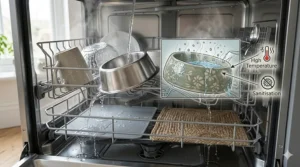
Use hot, soapy water and scrub thoroughly, paying special attention to any grooves or textured areas. Both stainless steel and quality ceramic bowls can go in the dishwasher, which provides superior bacteria-killing heat compared to hand washing.
For stubborn residue on stainless steel, a paste of bicarbonate of soda works brilliantly without scratching. Ceramic bowls benefit from occasional soaking in white vinegar to prevent mineral build-up from hard water—particularly relevant in areas of the UK with high calcium content.
Whisker Fatigue: How Bowl Design Affects Your Cat’s Comfort
What Is Whisker Fatigue and Does It Really Exist?
Whisker fatigue refers to possible stress caused by overstimulation of a cat’s whiskers, though its existence is still debated in the veterinary community. PetMD’s comprehensive guide on whisker fatigue notes that signs may include pacing near the food bowl, pulling food onto the floor, or acting hungry but not eating. Your cat’s whiskers are incredibly sensitive sensory organs, transmitting constant environmental information to their brain.
When whiskers repeatedly touch the sides of food bowls during eating, some experts believe this creates an uncomfortable “information overload” that stresses cats. Signs may include pacing near the food bowl, pulling food onto the floor, or acting hungry but not eating.
However, it’s crucial to approach whisker fatigue claims with appropriate scepticism. A 2020 study published in the Journal of Feline Medicine and Surgery found no significant differences in eating time, amount of food consumed, or food spillage between cats using regular bowls versus whisker-friendly dishes, though some cats did show a preference for whisker-friendly bowls.
Choosing the Right Bowl Width and Depth
Whether you choose stainless steel vs ceramic cat bowls, design matters as much as material. Wide, shallow bowls (at least 12-15cm diameter) allow cats to eat comfortably without whisker contact. Depth should be minimal—around 3-5cm is ideal for most cats.
Elevated bowls add another dimension to comfort, particularly for senior cats, arthritic felines, or flat-faced breeds like Persians and British Shorthairs. A 10-15cm elevation reduces neck strain and can help prevent regurgitation in cats prone to vomiting after meals.
If your cat exhibits behaviours like pulling food from their bowl to eat off the floor or approaching their bowl hesitantly, try switching to a wider, shallower option. Even if whisker fatigue itself remains unproven, providing comfortable eating conditions is never wrong.
Durability and Longevity: Which Bowl Material Lasts Longer?
Stainless Steel: The Indestructible Option
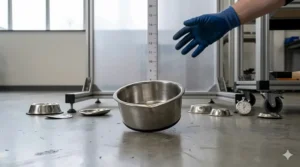
In terms of pure durability, stainless steel wins the stainless steel vs ceramic cat bowls comparison hands down. Quality 304-grade stainless steel bowls can literally last decades without showing wear. They won’t chip, crack, or shatter if dropped, making them ideal for households with children or multiple pets.
Stainless steel resists rust and corrosion beautifully, though you should avoid leaving acidic foods (like fish in tomato sauce) sitting in them for extended periods. The material won’t absorb odours or stains, maintaining its fresh appearance year after year.
The main durability concern with stainless steel is denting. Whilst the bowl remains functional even when dented, deep dents can create grooves where bacteria might accumulate. However, this requires significant force—your average cat can’t damage stainless steel through normal use.
Ceramic: Beautiful But Breakable
Ceramic bowls offer excellent longevity when treated with care, but they’re undeniably more fragile than stainless steel. A single drop onto tile or concrete flooring can spell disaster, creating chips, cracks, or complete shattering.
High-quality stoneware ceramic (like Mason Cash products) is more durable than cheaper earthenware. Stoneware undergoes high-temperature firing that creates a denser, more chip-resistant material. However, even premium ceramic requires careful handling during washing and storage.
The glaze on ceramic bowls can also deteriorate over time, particularly if you use harsh scrubbers or very hot dishwasher cycles. Crazing (fine cracks in the glaze) may develop, creating bacteria-harbouring crevices. Once glaze damage occurs, the bowl should be replaced for hygiene reasons.
Safety Considerations: Hidden Dangers in Cat Bowls
Lead Contamination in Ceramic Bowls
One of the most serious concerns when choosing stainless steel vs ceramic cat bowls is lead contamination in ceramic glazes. Glazes found on ceramics, porcelain, stoneware, or earthenware may contain elevated and unacceptable levels of lead, particularly concerning with goods made in certain countries.
Lead is a cumulative poison that can cause severe health problems in cats, including neurological damage, kidney disease, and gastrointestinal issues. UK regulations are stricter than many countries, but imported ceramics may not meet British safety standards.
Always look for ceramic bowls explicitly labelled “lead-free” and “food-safe.” Reputable UK brands like Mason Cash test their products rigorously, but cheap imports from online marketplaces may not have undergone proper safety testing. When in doubt, stick with established British or European manufacturers.
BPA and Chemical Concerns in Other Materials
Whilst plastic bowls aren’t the focus of our stainless steel vs ceramic cat bowls comparison, it’s worth noting that they pose significant chemical risks. Studies show BPA is an endocrine disruptor that can have serious adverse effects on animals’ brains and cardiovascular systems.
Both stainless steel and ceramic avoid these chemical concerns entirely. Food-grade stainless steel contains no BPA, phthalates, or other hormone-disrupting chemicals. Similarly, properly manufactured ceramic bowls use natural clay and lead-free glazes, eliminating chemical leaching worries.
Metal Allergies in Cats
Although rare, some cats can develop contact allergies to certain metals, including nickel found in lower-grade stainless steel. If your cat develops unexplained chin acne, facial irritation, or reluctance to eat from stainless steel bowls, consider switching to ceramic or having your vet perform allergy testing.
Price Comparison: Getting Value in Stainless Steel vs Ceramic Cat Bowls
Budget-Friendly Options Under £10
For cat owners watching their pennies, excellent options exist in both categories. Basic stainless steel bowls start around £3.50-£7, offering fantastic value for money. The Classic Pet Products Stainless Steel Superdish and PEGGY11 2-Pack both deliver reliable performance without premium pricing.
Ceramic bowls typically start slightly higher at £8-£12, reflecting the more complex manufacturing process. However, brands like Mason Cash offer exceptional quality at reasonable prices, with their 13cm bowls hovering around £10-£13.
At this price point, you’re making trade-offs in aesthetics and special features rather than safety or basic functionality. Budget stainless steel bowls may lack non-slip bases or have thinner gauge metal, whilst budget ceramic might have simpler designs rather than decorative patterns.
Mid-Range Options £12-£20
The sweet spot for most cat owners falls in the £12-£20 range, where you get excellent quality without unnecessary premium pricing. Options like Wellbro Wide Stainless Steel Bowls (around £12-£15) and TIGOADT Elevated Ceramic Bowls (£13.99-£17.99) offer meaningful upgrades.
Mid-range products typically include features like non-slip bases, wider whisker-friendly designs, and better construction quality. Stainless steel bowls in this range use thicker gauge metal that’s more dent-resistant, whilst ceramic bowls feature better glaze quality and more consistent firing.
This price bracket also introduces elevated feeding stations, which combine ergonomic benefits with style. These are particularly worthwhile investments for senior cats or breeds prone to digestive issues.
Premium Options Over £20
Premium pricing brings innovative designs and multi-functional features. The PETKIT CyberTail (£22-£28) exemplifies this category with its adjustable angle system, premium 304 stainless steel, and thoughtful ergonomic design.
Are premium bowls worth the extra cost? That depends on your cat’s specific needs and your budget. For cats with medical conditions, special dietary requirements, or confirmed whisker sensitivity, premium options can genuinely improve quality of life. For healthy cats with no feeding issues, mid-range bowls typically suffice.
Consider that you’ll replace cheap bowls more frequently, potentially spending more over your cat’s lifetime than if you’d invested in quality from the start. A well-made stainless steel or ceramic bowl can serve your cat for their entire life.
Environmental Impact: Sustainability in Pet Products
The Lifecycle of Stainless Steel Bowls
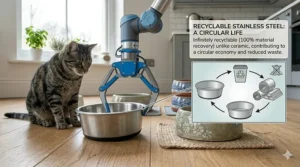
From a sustainability perspective, stainless steel scores brilliantly in the stainless steel vs ceramic cat bowls comparison. Steel is infinitely recyclable without loss of quality—the same steel can be recycled repeatedly to create new products.
Manufacturing stainless steel does require significant energy, but the material’s extreme longevity offsets this initial environmental cost. A single stainless steel bowl lasting 15-20 years has far less environmental impact than cheaper bowls requiring replacement every year or two.
At end-of-life, stainless steel bowls can be recycled through standard metal recycling programmes available across the UK. Simply pop them in your kerbside metal recycling bin or take them to your local recycling centre.
Ceramic Bowl Sustainability
Ceramic production uses natural clay—an abundant, non-toxic resource—but requires high-temperature kiln firing that consumes considerable energy. Quality ceramic manufacturers increasingly use renewable energy sources and efficient firing techniques to reduce their carbon footprint.
Ceramic’s durability means a well-cared-for bowl can last for decades, providing good value from an environmental perspective. However, ceramic isn’t easily recyclable like metal. Broken ceramic typically ends up in landfill, though some UK councils accept small amounts of ceramic in general waste rather than requiring special disposal.
Choosing UK-made ceramic products like Mason Cash reduces transportation emissions compared to importing bowls from overseas. Supporting British manufacturing also maintains local jobs and ensures stricter environmental standards throughout production.
Special Considerations for Different Cat Types
Kittens: Starting Them Right
For young kittens, shallow bowls in either stainless steel or ceramic work beautifully. Their tiny faces need easy access to food without climbing into the bowl. A 12-13cm diameter with 2-3cm depth suits kittens perfectly whilst accommodating growth.
Stainless steel edges up ahead for kittens due to indestructibility—rowdy young cats often knock bowls around during play. You won’t worry about chips or breakage with stainless steel, and the smooth surface prevents little noses getting scratched.
Senior Cats: Comfort First
Older cats benefit enormously from elevated feeders, reducing neck and joint strain. Both stainless steel and ceramic elevated options exist, so choose based on other preferences. The PETKIT CyberTail and TIGOADT Elevated Ceramic Bowls both offer excellent ergonomic positioning.
Senior cats with arthritis particularly appreciate not having to bend down to floor-level bowls. A 10-15cm elevation makes a noticeable difference in comfort, encouraging better food and water intake in cats who might otherwise skip meals due to discomfort.
Flat-Faced Breeds: Persian, British Shorthair, Exotic Shorthair
Brachycephalic breeds with flat faces struggle with deep bowls regardless of material. These cats absolutely need wide, shallow bowls—ideally 15cm+ diameter with minimal depth. Both the Wellbro Wide Bowls (stainless steel) and Mason Cash shallow saucers work excellently.
The slight tilt on elevated bowls can help flat-faced cats access food more easily, compensating for their shortened muzzles. Many owners of Persians and British Shorthairs swear by 15° tilted bowls for reducing food spillage and improving eating comfort.
Multi-Cat Households: Practical Solutions
When feeding multiple cats, stainless steel’s affordability and durability make it the practical choice for most owners. You can purchase several PEGGY11 2-packs (giving you four bowls total) for less than the cost of two premium ceramic bowls.
However, mixing materials can work brilliantly—stainless steel for everyday feeding, with special ceramic bowls for cats with specific needs. This approach balances practicality with individual care whilst keeping costs reasonable.
Cleaning and Maintenance: Daily Care Tips
Daily Cleaning Routines
Regardless of whether you choose stainless steel vs ceramic cat bowls, daily washing is non-negotiable. Cats are fastidious creatures who may refuse to eat from bowls that smell off or have residue from previous meals.
For stainless steel, hot soapy water and a non-abrasive sponge suffice for daily cleaning. Dry thoroughly to prevent water spots, which whilst harmless, can look unsightly. For stuck-on food, a brief soak loosens residue without needing harsh scrubbing.
Ceramic bowls tolerate the same washing routine but require gentle handling to prevent chips. Never twist or wring ceramic bowls, and always check for cracks before use. If you spot any damage, replace the bowl immediately.
Deep Cleaning and Disinfection
Weekly deep cleaning prevents biofilm build-up and keeps bowls truly hygienic. Both stainless steel and ceramic bowls can go in the dishwasher on the hot cycle, which provides superior sanitisation compared to hand washing.
For hand washing, a solution of one part white vinegar to three parts water makes an excellent natural disinfectant. Let bowls soak for 10-15 minutes, then rinse thoroughly. This method works beautifully on both materials without harsh chemicals.
Bicarbonate of soda paste (bicarb mixed with a little water) excels at removing stubborn stains from both stainless steel and ceramic. Apply, let sit for 5-10 minutes, then scrub gently with a soft sponge. Rinse thoroughly before use.
Making Your Decision: Stainless Steel vs Ceramic Cat Bowls
When Stainless Steel Is Your Best Choice
Choose stainless steel if you prioritise durability, affordability, and absolute peace of mind about breakage. It’s the smart choice for multi-cat households, homes with children, or anyone who values low-maintenance pet supplies.
Stainless steel also wins if you’re concerned about chemical safety but don’t want to worry about lead testing and glaze quality in ceramics. Food-grade stainless steel is universally safe, requiring no additional research or verification.
For cats prone to allergies or sensitive skin, high-quality 304 stainless steel provides a hypoallergenic surface that won’t trigger reactions. The non-porous surface means no absorption of food odours that might put off fussy eaters.
When Ceramic Deserves Your Investment
Ceramic shines when aesthetics matter and you want bowls that complement your home décor. The beautiful variety of patterns, colours, and styles available in ceramic simply can’t be matched by utilitarian stainless steel.
The substantial weight of ceramic bowls makes them unbeatable for cats who push their bowls around during feeding. If you’re tired of chasing bowls across the floor or cleaning up spills, ceramic’s stability solves this frustration instantly.
For cats who prefer cooler water, ceramic’s thermal properties keep water refreshingly chilled for longer periods. This can encourage better hydration in cats who turn their noses up at room-temperature water.
The Hybrid Approach: Best of Both Worlds
Many experienced cat owners mix materials strategically. Stainless steel for water (which gets refreshed multiple times daily anyway) and ceramic for food can balance ceramic’s aesthetic appeal with stainless steel’s practicality.
Alternatively, use stainless steel as your everyday workhorse with ceramic bowls for special occasions or as decorative pieces. This approach lets you enjoy ceramic’s beauty without risking breakage during daily use.

Frequently Asked Questions
❓ Are stainless steel or ceramic bowls better for cats with chin acne?
❓ How often should I replace my cat's stainless steel or ceramic bowl?
❓ Can I put stainless steel and ceramic cat bowls in the dishwasher?
❓ Do stainless steel bowls cause whisker fatigue in cats?
❓ Are ceramic cat bowls safe or do they contain lead?
Conclusion: Your Cat Deserves the Best
After examining the evidence, comparing seven brilliant products, and diving deep into the stainless steel vs ceramic cat bowls debate, what’s the verdict? Both materials offer genuine advantages—there’s no universal “best” choice that suits every cat and owner.
Stainless steel delivers unbeatable durability, affordability, and peace of mind about safety. It’s the practical choice for multi-cat homes, budget-conscious owners, and anyone who values low-maintenance pet supplies. Products like the PEGGY11 2-Pack and PETKIT CyberTail prove that stainless steel can be both functional and thoughtfully designed.
Ceramic brings beauty, stability, and impressive bacterial resistance to mealtimes. The substantial weight prevents spills, whilst the variety of designs lets you choose bowls that complement your home. Mason Cash products demonstrate that ceramic can marry British heritage with modern pet care needs brilliantly.
Ultimately, your decision should balance your cat’s specific needs (age, breed, health conditions) with practical considerations (budget, household dynamics, aesthetic preferences). Whichever material you choose, prioritise wide, shallow designs, daily cleaning, and quality construction.
Your cat will spend thousands of meals eating from their bowls over their lifetime. Investing in the right stainless steel vs ceramic cat bowls isn’t just about feeding—it’s about showing your feline friend the care and consideration they deserve. Choose wisely, clean diligently, and watch your cat thrive.
Recommended for You
- 7 Best Value Microchip Cat Feeders UK 2026 | Save £££ on Smart Feeding
- 7 Best Microchip Cat Feeder for Multiple Cats UK 2026
- 7 Best Microchip Cat Feeders UK 2026 (Expert Tested)
Disclaimer: This article contains affiliate links. If you purchase products through these links, we may earn a small commission at no additional cost to you. Prices shown are approximate and may vary. Always consult your veterinarian before making significant changes to your cat’s feeding routine.
✨ Found this helpful? Share it with your mates! 💬🤗
