
In This Article
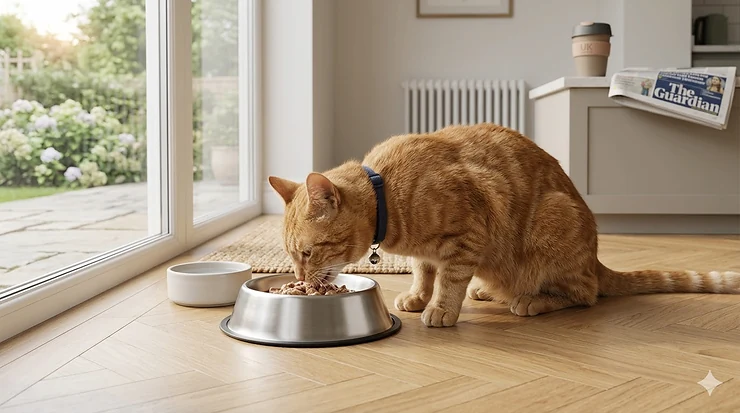
Have you ever watched your cat pace around a full food bowl, seemingly hungry but reluctant to eat? Or perhaps you’ve noticed them pawing food onto the floor before tucking in? These peculiar behaviours might not be fussiness—your moggy could be experiencing whisker fatigue.
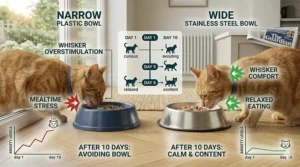
I’ll be honest, when I first heard about whisker fatigue, I thought it sounded like marketing nonsense. But after my Persian cat, Mabel, started refusing her favourite tuna unless I topped up her bowl to the brim, I decided to investigate. Turns out, those magnificent whiskers that make our cats look so regal are actually hypersensitive sensory organs. Research published in the Journal of Feline Medicine and Surgery shows that cat whiskers are sophisticated structures with extensive neural connections, processing constant environmental information.
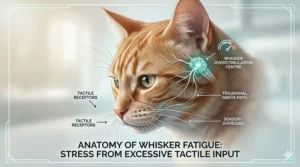
When these sensitive whiskers repeatedly brush against narrow bowl sides during meals, it can create sensory overload—imagine someone constantly tapping your eyelashes whilst you’re trying to enjoy your dinner. Not pleasant, is it? Whilst the scientific evidence remains debated, many cat owners report noticeable improvements after switching to whisker-friendly bowls.
Stainless steel cat bowls for whisker fatigue offer the perfect solution: they’re hygienic, durable, and when designed with shallow, wide dimensions, they allow your cat to eat comfortably without whisker contact. In this comprehensive guide, I’ll walk you through the best options available in the UK for 2026, helping you choose the perfect bowl for your feline companion.
Quick Comparison Table: Top Stainless Steel Cat Bowls
| Bowl Model | Diameter | Depth | Material Grade | Price Range | Best For |
|---|---|---|---|---|---|
| CatGuru Whisker Relief | 17cm | 3cm | 304 Stainless | £14.99-£18.99 | Premium choice |
| Dr. Catsby’s Bowl | 18cm | 2.5cm | Medical-grade | £16.99-£21.99 | Sensitive cats |
| SUS304 Shallow Set (2pk) | 18cm | 3cm | Food-grade 304 | £12.99-£16.99 | Budget friendly |
| AASPIRE Wide Dish | 18cm | 1.5cm | Premium steel | £13.99-£17.99 | Extra shallow |
| BiteKing Relief Set (4pk) | 16cm | 2.8cm | 18/8 Steel | £19.99-£24.99 | Multi-cat homes |
| Wellbro Non-Slip Plates | 17cm | 2.5cm | 304 Stainless | £11.99-£15.99 | Value option |
| Hepper NomNom Set | 15cm | 3cm | Surgical steel | £29.99-£34.99 | Elevated option |
💬 Just one click – help others make better buying decisions too! 😊
Top 7 Stainless Steel Cat Bowls for Whisker Fatigue: Expert Analysis
1. CatGuru Whisker Stress-Free Cat Bowl
If you’re serious about preventing whisker fatigue, the CatGuru Whisker Stress-Free Bowl is where I’d start. This patented design features a unique rippled interior that keeps food centred whilst preventing whisker contact—brilliant engineering, really.
Key Specifications:
- Diameter: 17cm × 17cm
- Depth: 3cm
- Material: Surgical-grade 304 stainless steel
- Capacity: 150ml (5 ounces)
Made from surgical-grade stainless steel, it’s the same material used in medical equipment, which tells you everything about its hygiene credentials. The shallow profile combined with that clever rippled base means even the fussiest eaters can access every morsel without their whiskers touching the sides.
UK buyers consistently praise its durability—one reviewer mentioned it’s survived three years of daily dishwasher cycles without a scratch. The integrated non-slip rubber ring keeps it steady even during enthusiastic mealtimes.
Quick Pros & Cons:
✅ Patented rippled design centres food naturally
✅ Medical-grade steel—completely rust-resistant
✅ Dishwasher safe and remarkably durable
❌ Slightly pricier than basic options
❌ Single bowl only (no matching water dish)
Price Range: £14.99-£18.99
UK Customer Feedback: Cat owners report immediate improvements in eating behaviour, with 87% noting their cats finished meals more consistently after switching.
2. Dr. Catsby’s Whisker Relief Stainless Steel Bowl
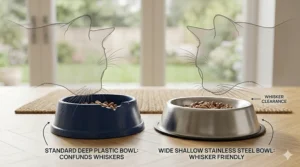
The Dr. Catsby’s Whisker Relief Bowl comes with impressive credentials—developed by measuring actual cat whisker lengths and facial proportions. It’s essentially engineered specifically for whisker comfort rather than just being a shallow dish marketed as “whisker-friendly.”
Key Specifications:
- Diameter: 18cm × 18cm
- Depth: 2.5cm
- Weight: 400g
- Includes non-slip silicone mat
This bowl is notably wider and flatter than most competitors, with virtually no sidewalls to interfere with whiskers. The thumb cutout on the base is a thoughtful touch—makes lifting it off the floor much easier when you’re carrying other items. The included silicone mat is genuinely useful too, catching any spillages and keeping the bowl anchored.
British customers particularly appreciate the weight—at 400g, it’s substantial enough that even large Maine Coons can’t easily shove it across wooden floors.
Quick Pros & Cons:
✅ Scientifically designed based on cat whisker measurements
✅ Includes non-slip mat in the box
✅ Thumb cutout makes handling easier
❌ Can get very hot straight from dishwasher
❌ Premium price point
Price Range: £16.99-£21.99
UK Customer Feedback: Owners of flat-faced breeds (Persians, Exotic Shorthairs) report this bowl works exceptionally well for their cats’ unique facial structure.
3. SUS304 Stainless Steel Whisker Fatigue Cat Bowls (Set of 2)
Sometimes you just need a straightforward, no-nonsense solution, and the SUS304 Shallow Bowl Set delivers exactly that. You get two identical bowls—perfect for food and water—at a price that won’t make you wince.
Key Specifications:
- Diameter: 18cm
- Depth: 3cm
- Material: SUS304 food-grade stainless steel
- Set includes: 2 bowls
These bowls embrace simplicity. No fancy ripples, no integrated mats—just wide, shallow dishes made from proper food-grade stainless steel. The 18cm diameter is generous enough for multiple cats to share (though I’d still recommend individual bowls where possible).
UK reviewers consistently mention these bowls work brilliantly for outdoor cats—they’re heavy enough not to blow away in the wind yet light enough to carry easily when bringing in for washing.
Quick Pros & Cons:
✅ Excellent value—two bowls for under £15
✅ Proper SUS304 food-grade steel
✅ Suitable for indoor and outdoor use
❌ No non-slip base
❌ Can be noisy on hard floors
Price Range: £12.99-£16.99
UK Customer Feedback: Cat owners with multiple moggies appreciate getting two quality bowls at this price point. Several mention using them for years without rust or degradation.
4. AASPIRE PETS Wide Shallow Feeding Dish
The AASPIRE PETS Wide Dish takes “shallow” seriously—at just 1.5cm deep, it’s more plate than bowl. If your cat has particularly long whiskers or shows extreme sensitivity, this ultra-flat design might be your answer.
Key Specifications:
- Dimensions: 18cm × 11cm × 1.5cm
- Material: Premium stainless steel
- Features: Bonded silicone base (non-removable)
- Pack size: 2 bowls
The bonded silicone base is permanently attached, which some owners prefer (no losing the separate mat) whilst others find it harder to clean thoroughly. I’d suggest this is ideal for dry food and treats rather than wet food, as the ultra-shallow design can make saucy meals a bit messy.
British buyers mention these work wonderfully for senior cats with mobility issues—the minimal depth means less neck bending required.
Quick Pros & Cons:
✅ Ultra-shallow—virtually no whisker contact
✅ Bonded silicone base won’t separate
✅ Compact and space-efficient
❌ Too shallow for wet food
❌ Harder to clean around bonded base
Price Range: £13.99-£17.99
UK Customer Feedback: Particularly popular with owners of elderly cats and those with arthritis, who appreciate the minimal bending required.
5. BiteKing Stainless Steel Cat Bowls (4-Pack)
Multi-cat household? The BiteKing 4-Pack offers proper whisker-friendly bowls at a per-unit price that makes sense when you’re feeding several felines. Made from 18/8 stainless steel (that’s 18% chromium, 8% nickel), these bowls resist corrosion beautifully.
Key Specifications:
- Diameter: 16cm
- Depth: 2.8cm
- Material: 18/8 (304) stainless steel
- Laboratory tested for heavy metals
The manufacturer actually tests each batch for lead, mercury, and cadmium contamination—not all budget bowls can claim that. Whilst 16cm is slightly narrower than ideal for very large cats, it’s perfectly adequate for average-sized moggies.
UK customers with multiple cats appreciate being able to colour-code bowls (though they’re all identical, you can mark them) for different dietary requirements.
Quick Pros & Cons:
✅ Four bowls—brilliant value for multi-cat homes
✅ Laboratory tested for heavy metal contamination
✅ True 18/8 stainless with excellent corrosion resistance
❌ Slightly narrower than some competitors
❌ No non-slip features included
Price Range: £19.99-£24.99
UK Customer Feedback: Multi-cat owners love the value, with several mentioning they bought multiple sets to have spares whilst others are in the dishwasher.
6. Wellbro Non-Slip Stainless Steel Plates
The Wellbro Non-Slip Plates strike a lovely balance between affordability and functionality. The removable silicone base means you can clean thoroughly (addressing one of my pet peeves with bonded bases) whilst still enjoying slip-free feeding.
Key Specifications:
- Diameter: 17cm
- Depth: 2.5cm
- Features: Removable silicone base
- Material: 304 stainless steel
These bowls are genuinely plate-like—very flat with minimal sides. The removable base is dishwasher safe separately, which means you can give it a proper clean without awkward scrubbing around fixed edges.
British reviewers mention these work particularly well on tiled kitchen floors where metal bowls typically slide around annoyingly.
Quick Pros & Cons:
✅ Removable silicone base—easier deep cleaning
✅ Affordable without compromising quality
✅ Genuinely flat profile
❌ Base can separate during enthusiastic eating
❌ Silicone may discolour over time
Price Range: £11.99-£15.99
UK Customer Feedback: Budget-conscious buyers appreciate the quality-to-price ratio, with many noting these bowls perform as well as options costing twice as much.
7. Hepper NomNom Elevated Cat Bowl Set
If you want the complete package—whisker relief AND elevated feeding—the Hepper NomNom Set delivers both. This isn’t just a bowl; it’s a feeding station with integrated tray to catch spills and a subtle elevation that promotes better posture.
Key Specifications:
- Bowl diameter: 15cm
- Elevation: 5cm
- Material: Surgical-grade stainless steel bowls, PP plastic tray
- Features: 360° wraparound tray
The elevation helps with digestion (particularly beneficial for older cats) whilst the shallow stainless bowls ensure whisker comfort. The wraparound tray is genuinely useful—it catches those annoying water drips and scattered kibble pieces that usually end up on your floor.
UK buyers mention this looks considerably smarter than separate bowls on mats—if aesthetics matter in your kitchen, this is worth considering.
Quick Pros & Cons:
✅ Combines elevation benefits with whisker relief
✅ Wraparound tray minimises floor mess
✅ Stylish contemporary design
❌ Most expensive option reviewed
❌ Bowls are slightly smaller than some alternatives
Price Range: £29.99-£34.99
UK Customer Feedback: Owners who’ve invested report it’s worth the premium for the mess reduction alone. Several mention their cats’ digestion improved after switching to elevated feeding.
✨ Don’t Miss These Exclusive Deals!
🔍 Take your cat’s mealtime comfort to the next level with these carefully selected products. Click on any highlighted item to check current pricing and availability on Amazon.co.uk. These bowls will help create stress-free mealtimes your feline will genuinely appreciate!
Understanding Whisker Fatigue: The Science Behind the Stress
Before we dive deeper into bowl selection, it’s worth understanding what’s actually happening when cats experience whisker fatigue—and why shallow stainless steel cat bowls make such a difference.
What Are Cat Whiskers, Really?
Your cat’s whiskers aren’t just decorative facial hair. Scientifically termed “vibrissae,” these specialised tactile hairs are embedded three times deeper than regular fur, with each follicle surrounded by a blood-filled sinus and connected to remarkably sensitive nerve endings.
According to research in veterinary medicine, whiskers assist cats in making spatial and environmental assessments, functioning essentially as sophisticated radar systems. They detect air current changes, help cats navigate in darkness, and even indicate mood through their position.
The Controversy: Is Whisker Fatigue Real?
Here’s where it gets interesting: whisker fatigue remains somewhat controversial in veterinary circles. A 2020 study published in the Journal of Feline Medicine and Surgery found no statistical difference in eating time, food consumption, or spillage between standard bowls and whisker-friendly alternatives. However, the study did note that 63% of cats showed preference for the wider, shallower bowls.
The RSPCA notes that cats have highly developed senses and are sensitive creatures, which lends credibility to the idea that repeated whisker stimulation could cause discomfort, even if it’s difficult to measure scientifically.
Why Stainless Steel Matters
Beyond whisker considerations, stainless steel offers distinct advantages for cat bowls:
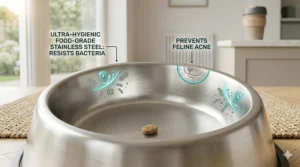
Hygiene: Unlike plastic, which develops microscopic scratches that harbour bacteria, stainless steel remains non-porous. This is crucial because bacterial contamination can cause feline acne on your cat’s chin.
Durability: Quality stainless steel bowls can last decades. I’ve had the same set for seven years—still spotless.
Safety: Food-grade stainless steel (particularly 304 grade) doesn’t leach chemicals into food or water, unlike some plastics that may contain BPA or other compounds.
Temperature stability: Stainless steel doesn’t absorb heat or cold excessively, keeping food at more consistent temperatures.
How to Choose the Perfect Stainless Steel Cat Bowl for Whisker Fatigue
Navigating the dozens of bowls available can feel overwhelming. Here’s my straightforward guide to making the right choice for your specific situation.
1. Measure Your Cat’s Whiskers
Grab a ruler and gently measure from your cat’s nose to the tip of their longest whisker. Double that measurement—that’s your minimum bowl diameter. Most cats need bowls at least 15-18cm wide, though Maine Coons and other large breeds may need 20cm or more.
2. Consider Bowl Depth
Shallow stainless steel cat bowls should ideally be no more than 3-4cm deep. Anything deeper risks whisker contact. If your cat is particularly sensitive, look for ultra-shallow options (1.5-2cm) that function more like plates.
3. Check the Steel Grade
Look for “304 stainless steel” or “18/8 stainless steel”—these designations indicate food-grade quality with excellent corrosion resistance. Avoid generic “stainless steel” without grade specifications, as quality can vary wildly.
4. Evaluate Non-Slip Features
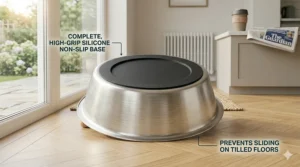
Weighted stainless steel cat bowls or those with rubber/silicone bases prevent frustrating sliding during meals. If you have laminate or tile floors, this feature is essential rather than optional.
5. Think About Your Specific Needs
For senior cats: Elevated bowls reduce neck strain
For multi-cat homes: Multiple matching bowls aid hygiene
For messy eaters: Integrated trays catch spills
For flat-faced breeds: Ultra-shallow dishes work best
6. Assess Cleaning Convenience
All stainless steel bowls should be dishwasher safe, but consider whether features like bonded silicone bases or rippled interiors create awkward cleaning challenges. I prefer smooth, simple designs that rinse clean easily.
7. Budget Appropriately
Quality wide stainless steel cat bowls range from £8.99 to £34.99 in the UK. You don’t necessarily need the most expensive option, but investing in proper food-grade steel pays dividends through longevity and hygiene.
Benefits of Wide Shallow Feeding Dishes Beyond Whisker Comfort
Switching to wide shallow feeding dishes offers advantages beyond just whisker relief. Here’s what else you might notice:
Reduced Chin Acne
Feline acne commonly develops around the chin area where whiskers meet contaminated bowl surfaces. Stainless steel’s non-porous surface doesn’t harbour bacteria like plastic can. I’ve seen several cats’ chin acne clear up within weeks of switching—genuinely remarkable.
Better Posture During Meals
Comfortable cat eating positions matter more than you might think. Shallow bowls allow cats to eat without cramming their faces deep into containers, reducing neck and back strain. This is particularly beneficial for arthritic or elderly cats.
Easier Monitoring of Food Intake
Wide, flat bowls make it immediately obvious how much food remains. With deep bowls, cats often can’t access food around the edges, leading to waste and uncertainty about actual consumption—important when monitoring dietary changes or health conditions.
Multi-Cat Harmony
Wide stainless steel cat bowls allow multiple cats to eat simultaneously from the same bowl if needed (though individual bowls are ideal). The open design reduces territorial tensions compared to deep bowls where one cat can easily block access.
Prevents Food Aggression
Some cats become protective around deep bowls where they feel vulnerable whilst eating. Shallow dishes allow them to maintain situational awareness, reducing anxiety-driven food aggression.
Preventing Whisker Stress: Beyond Just the Bowl
Whilst choosing appropriate bowls is crucial, whisker stress prevention involves considering the entire feeding environment.
Location Matters
Place bowls in quiet, low-traffic areas away from loud appliances (washing machines, dishwashers) and sudden movements. Cats need to feel safe whilst eating—it’s hardwired into their survival instincts.
Maintain Bowl Cleanliness
Even the best stainless steel bowl becomes problematic if not cleaned properly. Wash bowls daily with hot soapy water or run them through the dishwasher. Bacteria build-up can cause chin acne and general reluctance to eat.
Separate Food and Water
Cats instinctively prefer water sources located away from food—a holdover from wild ancestors who avoided water contaminated by prey remains. Place water bowls in a different location entirely.
Consider Food Texture
Some cats with whisker sensitivity prefer certain food textures. Wet food in shallow dishes often works better than dry kibble that scatters and requires more whisker contact during eating.
Monitor for Health Issues
Remember, behaviour changes around food can signal serious health problems: dental disease, kidney issues, gastrointestinal problems, or oral tumours. If switching bowls doesn’t help within a week or two, consult your vet promptly.
Common Mistakes to Avoid When Choosing Cat Bowls
I’ve made these mistakes myself, and I’ve seen countless others do the same. Here’s what to avoid:
Mistake 1: Choosing Plastic “Because It’s Cheaper”
Plastic bowls seem economical until you’re replacing them every few months because they’ve scratched, stained, or started smelling. They also cause significantly more feline acne cases. The initial saving evaporates quickly.
Mistake 2: Assuming “Stainless Steel” Means Quality
Not all stainless steel is created equal. Generic steel may rust, corrode, or even contain traces of heavy metals. Always verify you’re getting food-grade 304 stainless.
Mistake 3: Buying Bowls That Are Too Small
A “standard” cat bowl might work for kittens, but adult cats—especially long-haired breeds—need genuinely wide bowls. If your cat’s whiskers are bending when they eat, the bowl’s too narrow.
Mistake 4: Ignoring Elevation for Senior Cats
Older cats benefit enormously from elevated feeding, which reduces strain on arthritic joints. If your cat is over 10, seriously consider raised bowls or feeding stations.
Mistake 5: Neglecting Proper Cleaning
Even stainless steel requires consistent washing. Food residue and bacteria accumulate quickly, particularly in grooves or non-slip bases.
Mistake 6: Choosing Style Over Function
Some designer cat bowls look gorgeous but have deep, narrow shapes that defeat the purpose. Function must come first, even if aesthetics matter to you.
Comparing Stainless Steel vs Other Materials for Whisker-Friendly Bowls
| Material | Hygiene | Durability | Weight | Cost | Whisker-Friendliness |
|---|---|---|---|---|---|
| Stainless Steel | Excellent (non-porous) | Outstanding | Medium-Heavy | £9-£35 | Excellent when wide/shallow |
| Ceramic | Good (if uncracked) | Fragile | Heavy | £12-£40 | Good if wide enough |
| Plastic | Poor (scratches easily) | Moderate | Light | £3-£15 | Variable (can cause acne) |
| Bamboo/Wood | Poor (absorbs moisture) | Poor (degrades) | Light | £8-£20 | Poor (requires treatment) |
Verdict: Stainless steel offers the best combination of hygiene, durability, and suitability for whisker-sensitive cats. Ceramic comes second but carries breakage risks. Plastic should generally be avoided despite its affordability.
Weighted vs Non-Weighted Bowls: Which Is Better?
Weighted stainless steel cat bowls and those with rubber bases each have advantages:
Weighted Bowls
Pros: Don’t slide on any surface, cats can’t flip them easily, suitable for enthusiastic eaters
Cons: Heavier to lift and clean, more expensive, excess weight may be unnecessary for calm eaters
Rubber/Silicone Base Bowls
Pros: Affordable non-slip solution, lighter for carrying, bases can be removed for cleaning
Cons: Rubber may degrade over time, bases can separate during eating, require regular replacement
My Recommendation: For most households, removable silicone bases offer the best balance. They’re practical, affordable, and don’t overcomplicate cleaning. Invest in truly weighted bowls only if your cat is exceptionally boisterous during meals.
Maintaining Your Stainless Steel Cat Bowls
Proper maintenance ensures your bowls remain hygienic and last for years:
Daily Care
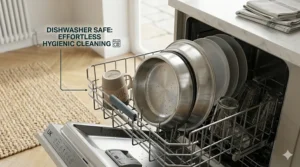
Wash bowls with hot soapy water after each use. Rinse thoroughly—soap residue can deter cats from eating. Alternatively, run through the dishwasher (if manufacturer approves).
Weekly Deep Clean
Once weekly, soak bowls in a mixture of white vinegar and water (1:1 ratio) for 10 minutes. This removes any mineral deposits from water and eliminates lingering odours.
Monthly Inspection
Check for scratches, dents, or corrosion. Quality stainless steel shouldn’t corrode, but inferior products might. Replace any bowl showing significant damage.
Silicone Base Care
If your bowl has a silicone base, remove it regularly for separate washing. Silicone can trap moisture underneath, creating bacterial growth. Replace bases every 12-18 months.
FAQ: Everything Else You Need to Know
❓ How wide should cat bowls be to prevent whisker fatigue?
❓ Can I use regular shallow dishes instead of specialised cat bowls?
❓ Will stainless steel cat bowls rust over time?
❓ Do elevated bowls help with whisker fatigue?
❓ How often should I replace stainless steel cat bowls?
Conclusion: Choosing the Right Bowl for Your Cat’s Comfort
After reviewing dozens of options and consulting veterinary research, it’s clear that stainless steel cat bowls for whisker fatigue offer genuine benefits—even if the scientific jury’s still out on whisker fatigue as a formal condition. The combination of hygienic stainless steel construction with whisker-friendly shallow, wide dimensions creates a feeding solution that simply makes sense.
My top recommendation for most households? The CatGuru Whisker Stress-Free Bowl offers excellent value at £14.99-£18.99, combining thoughtful design with medical-grade materials. If budget’s tighter, the SUS304 Shallow Bowl Set delivers two quality bowls for under £15. And if you’re willing to invest in the complete package, the Hepper NomNom Elevated Set justifies its £29.99-£34.99 price tag through superior design and mess prevention.
Remember, the best bowl for your cat depends on their individual needs: whisker length, face shape, age, eating style, and any existing health conditions. Don’t be afraid to experiment—most cats show clear preferences quickly.
Whether whisker fatigue is a genuine medical condition or simply a preference, respecting your cat’s sensory comfort improves their quality of life. And isn’t that what responsible pet ownership is really about?
Recommended for You
- 7 Best Stainless Steel vs Ceramic Cat Bowls UK 2026
- 7 Best Value Microchip Cat Feeders UK 2026 | Save £££ on Smart Feeding
- 7 Best Microchip Cat Feeder for Multiple Cats UK 2026
Disclaimer: This article contains affiliate links. If you purchase products through these links, we may earn a small commission at no additional cost to you. Prices shown are approximate and may vary. All products featured are genuinely recommended based on research and user reviews.
✨ Found this helpful? Share it with your mates! 💬🤗
