
In This Article
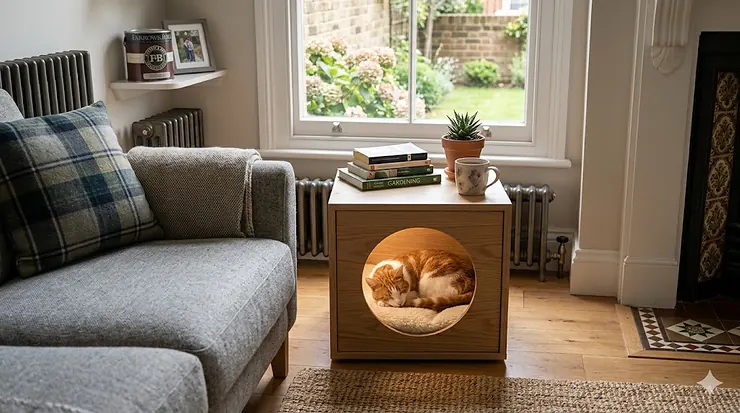
If you’ve ever watched your cat wedge themselves behind the radiator or claim the top of your wardrobe as their territory, you already know the truth: cats crave safe, enclosed spaces. It’s not fussiness—it’s biology. Cats are territorial animals with natural instincts to seek secure hiding spots for rest and safety. In Britain’s compact flats and terraced homes, providing a dedicated indoor cat house isn’t just a luxury; it’s essential for feline wellbeing.
According to the RSPCA, cats need hiding places where they can escape and feel secure, as lacking a safe retreat when frightened may lead to stress and anxiety. What most British cat owners overlook, however, is that not all hideaways are created equal. A cardboard box shoved under the stairs might work temporarily, but it won’t provide the year-round comfort your cat needs through damp British winters and the chaos of everyday life.
Modern indoor cat houses have evolved far beyond basic boxes. Today’s market offers everything from handcrafted felt caves that double as tasteful décor to furniture-style pieces that hide litter trays whilst blending seamlessly into your living room. The challenge? Navigating the overwhelming selection on Amazon.co.uk to find options that actually deliver on their promises—and suit both your cat’s temperament and your home’s aesthetic.
Whether you’re managing a nervous rescue cat who needs a secure den, seeking a stylish hideaway that won’t clash with your minimalist décor, or simply want to give your feline companion their own cosy sanctuary, this guide cuts through the marketing fluff to reveal what actually works in British homes.
Quick Comparison: Top Indoor Cat Houses at a Glance
| Product Type | Best For | Price Range (£) | Key Feature |
|---|---|---|---|
| Felt Cat Cave | Nervous cats, style-conscious homes | £20-£45 | Handmade merino wool, naturally anti-bacterial |
| Two-Tier Felt House | Multi-cat households | £25-£40 | Dual levels, hanging toy included |
| Cardboard Scratcher House | Budget buyers, active scratchers | £15-£30 | Eco-friendly, replaceable scratching surfaces |
| Decorative Plant-Style Cave | Modern décor enthusiasts | £30-£50 | Disguised as potted plant, living room-friendly |
| Foldable Fabric House | Small flats, frequent movers | £20-£35 | Collapsible storage, travel-friendly |
| Wooden Litter Enclosure | Multi-functional furniture seekers | £60-£120 | Doubles as side table, hides litter tray |
| Thermal Winter Cave | Cold British winters | £25-£45 | Arctic fleece lining, enclosed warmth |
What this tells you: The sweet spot for quality indoor cat houses in the UK sits between £25-£45, where you’ll find durable materials without the premium markup. Budget options under £20 tend to sacrifice longevity, whilst anything over £50 should offer genuine furniture-quality construction or multi-functional design. For British homes where space is at a premium, foldable or furniture-style options deliver better value than single-purpose pieces gathering dust in the corner.
💬 Just one click — help others make better buying decisions too!😊
✨ Don’t Miss These Exclusive Deals!
🔍 Take your indoor cat house to the next level with these carefully selected products. Click on any highlighted item to check current pricing and availability on Amazon.co.uk. These picks will help you find exactly what your feline friend needs!
Top 7 Indoor Cat Houses: Expert Analysis for British Homes
1. MEOWFIA Premium Felt Cat Cave – The Handcrafted Classic
The MEOWFIA stands out as the gold standard for felt cat caves available on Amazon.co.uk, and for good reason. Handcrafted from 100% merino wool by artisans in Nepal, this cave offers something most mass-produced options cannot: genuine durability combined with natural antibacterial properties. The thick felt construction (significantly denser than cheaper alternatives) means it holds its shape even after your cat bunny-kicks it across the living room.
What makes this particularly suitable for British homes is the natural moisture-wicking property of merino wool—rather important when you’re dealing with six months of damp weather. Unlike synthetic caves that can develop musty odours, the wool naturally repels dirt and stays fresh. Available in sizes from medium (suitable for cats up to 4.5 kg) to large (accommodating chonkier cats up to 7 kg), it works equally well in compact studio flats or spacious suburban homes.
UK reviewers consistently praise how quickly nervous cats take to it, with several noting their rescue cats claimed it within minutes of unpacking. The cave arrives compressed for shipping but fluffs back to shape within hours—no tools or assembly required.
✅ Pros:
- Naturally antibacterial merino wool resists odours in damp British climate
- Artisan-crafted quality outlasts mass-produced alternatives
- Multiple colour options blend with modern UK home décor
❌ Cons:
- Higher initial cost (though cost-per-use justifies it)
- Hand-wash only (machine washing not recommended despite some claims)
Price range: Around £35-£45 depending on size and colour. Prime delivery typically available, making it a solid mid-range investment for nervous or anxious cats.
2. Two-Tier Felt Cat Cave with Hanging Toy – Multi-Level Hideaway
For households with multiple cats or a particularly active single feline, this two-tier felt structure transforms vertical space into usable territory—crucial in British flats where floor space is limited. The dual-level design provides separate zones: a ground-floor enclosed cave for sleeping and an upper platform for surveying the kingdom. The included hanging toy ball adds interactive value that cardboard alternatives simply cannot match.
Built from thickened double-layer felt, the structure supports cats up to 10 kg without wobbling—a genuine consideration when your British Shorthair decides to launch themselves at the upper level. The detachable design means you can separate the tiers for easier cleaning, addressing one of the main frustrations with felt products in wet British homes where things take longer to air-dry.
What British buyers specifically appreciate is the space efficiency. Rather than sprawling across your living room floor like traditional cat trees, this occupies roughly 40 × 40 cm of floor space whilst providing nearly a metre of vertical enrichment. Perfect for terraced houses and conversion flats where every square metre counts.
✅ Pros:
- Maximises vertical space in compact British homes
- Detachable tiers simplify cleaning and storage
- Hanging toy provides entertainment without additional purchase
❌ Cons:
- Requires more floor-to-ceiling clearance than single-tier options
- Felt can attract hair (regular hoovering recommended)
Price range: In the £30-£40 bracket on Amazon.co.uk, offering decent value for the dual functionality and included toy. Excellent choice for multi-cat households in urban settings.
3. Cardboard Cat Scratcher House – Eco-Friendly Budget Champion
Cardboard cat houses get dismissed as temporary solutions, but the double-layer corrugated designs now available on Amazon.co.uk challenge that assumption. These purpose-built scratcher houses feature reinforced cardboard construction capable of supporting cats up to 36 kg (far more than most cats will ever weigh), with multiple scratching surfaces integrated throughout.
The real genius for British buyers lies in the value proposition: when your cat inevitably shreds the scratching surfaces after 6-12 months of enthusiastic use, you’re replacing a £20-£30 item rather than watching a £60 felt cave slowly disintegrate. The flat-pack design also means compact storage—ideal for those moving between rental properties or relocating for work, situations common amongst British renters.
Environmental credentials matter to UK buyers, and these cardboard houses score well. They’re biodegradable, recyclable, and typically manufactured using sustainable forestry practices. The corrugated structure provides surprisingly good insulation, keeping cats cosy during British winters without requiring additional bedding.
✅ Pros:
- Guilt-free replacement when worn (recyclable materials)
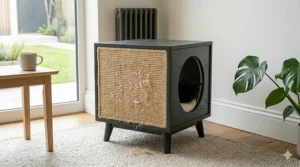
- Integrated scratching surfaces protect your actual furniture
- Tool-free assembly in under 10 minutes
❌ Cons:
- Shorter lifespan than felt or wooden alternatives
- Not suitable for outdoor use or damp areas (sheds, conservatories)
Price range: £15-£30, making it the most budget-friendly option that still delivers quality. Frequently eligible for Prime delivery, with prices occasionally dropping during Amazon’s seasonal sales.
4. Decorative Cat Cave with Artificial Plant – The Stylish Hideaway
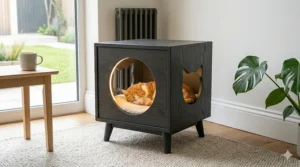
This is where function meets interior design. The plant-topped cat hideaway solves a uniquely British problem: how do you accommodate a cat’s need for privacy without turning your living room into a pet shop display? Disguised as a potted plant complete with realistic artificial greenery, this felt structure blends into modern minimalist and Scandi-inspired décor that’s popular in UK homes.
The sturdy frame supports cats up to 11 kg, with the top platform doubling as an additional lounging spot. UK reviewers particularly value the discrete nature—guests often don’t realise it’s a cat bed until your feline emerges from the base. The felt construction (though not merino wool like the MEOWFIA) provides adequate insulation and scratch resistance whilst maintaining the aesthetic appeal.
What makes this especially suitable for British living is the compact footprint (approximately 40 × 40 cm) that fits comfortably in corners, beside sofas, or in alcoves—those awkward spaces common in Victorian conversions and terraced properties. The neutral colour palette (typically grey, beige, or dark camel) coordinates with the muted tones favoured in British interior design.
✅ Pros:
- Disguises cat furniture as home décor
- Dual-purpose platform provides extra lounging space
- Compact enough for British flats and terraced homes
❌ Cons:
- Artificial plants may not appeal to everyone’s taste
- Not suitable for outdoor or conservatory use
Price range: Around £35-£50 on Amazon.co.uk, positioning it as a mid-range option that justifies the cost through aesthetic value and space efficiency.
5. Foldable Two-Tier Cat House by GEEZY – The Space-Saver’s Choice
For British renters, students, and anyone living in space-constrained accommodation, the GEEZY foldable cat house represents practical brilliance. This structure assembles in seconds without tools, provides two levels of cat accommodation, includes removable fleece cushions, and—here’s the crucial bit—folds completely flat for storage. When you’re moving between flats every 12 months (a reality for many UK renters), furniture that packs down is gold.
The frame construction proves surprisingly robust, supporting multiple cats simultaneously despite weighing less than 2 kg itself. The enclosed lower cave offers nervous cats a secure retreat, whilst the upper platform provides a perch for watching the world. The removable cushions are machine-washable—a genuine advantage in British homes where damp weather means longer drying times for hand-wash items.
What British buyers specifically appreciate is the portability. Take it to your parents’ house for Christmas, fold it for car journeys, or stash it away when showing the flat to your landlord. This flexibility simply isn’t possible with wooden or rigid felt structures.
✅ Pros:
- Folds flat for storage and transport (essential for UK renters)
- Machine-washable cushions simplify maintenance
- No-tool assembly suits those without DIY skills
❌ Cons:
- Fabric construction less durable than felt or wood
- Cats may initially find it less stable than solid structures
Price range: £20-£30 on Amazon.co.uk, representing exceptional value for the flexibility offered. Often available with next-day Prime delivery.
6. Wooden Cat Litter Box Enclosure – Furniture-Style Multitasker
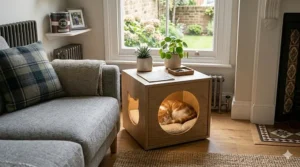
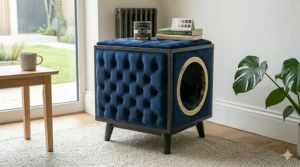
For British homeowners seeking to maximise every piece of furniture, these wooden litter box enclosures deliver genuine multi-functionality. Designed as end tables or nightstands, they discreetly house your cat’s litter tray in the lower cabinet whilst providing surface space for lamps, books, or décor. The upper shelf or drawer typically accommodates cat beds, creating a complete cat station in one compact footprint.
The farmhouse and modern styles popular on Amazon.co.uk coordinate well with British home aesthetics, particularly the rustic oak and white finishes common in renovated terraces and new-build developments. Ventilation holes prevent odour build-up—crucial in British homes where windows stay closed during winter months. The enclosed design also helps contain litter scatter, addressing one of the main frustrations for owners of enthusiastic diggers.
What makes these particularly valuable for British buyers is the dual functionality. Rather than dedicating separate floor space to a litter tray AND a side table, you consolidate both needs. In a compact British semi-detached or terraced house where the living room might measure just 4 × 4 metres, this efficiency genuinely matters.
✅ Pros:
- Genuine furniture piece that earns its floor space
- Conceals litter tray from guests whilst providing cat privacy
- Storage drawers accommodate litter, scoop, and cleaning supplies
❌ Cons:
- Higher price point (£60-£120) requires commitment
- Assembly required (typically 30-60 minutes with included tools)
Price range: £60-£120 depending on size and finish, representing the premium end but justifying cost through multi-functionality. Often available with free delivery on Amazon.co.uk.
7. Winter Thermal Cat Cave – Arctic Fleece Sanctuary
British winters might not match Nordic extremes, but damp cold penetrates worse than dry cold—ask anyone who’s lived through a British January in a poorly insulated Victorian conversion. The thermal winter cat cave addresses this with arctic fleece lining, enclosed design, and premium PP cotton filling that resists compression. The zippered entrance can be opened or closed depending on your cat’s preference and the ambient temperature.
The removable cushion simplifies washing—crucial when your cat tracks in mud from the garden during Britain’s extended rainy season (approximately October through May). The non-slip bottom prevents sliding on wood or tile floors, addressing a common frustration in British homes where carpets are increasingly rare in living areas.
UK reviewers note this works particularly well for senior cats, rescue cats from warmer climates, or breeds with less dense coats (Siamese, Devon Rex, Sphynx). The enclosed tent-like design provides security whilst the fleece interior delivers genuine warmth without requiring electric heating—an energy-efficient choice as British electricity costs remain high.
✅ Pros:
- Arctic fleece lining tackles British damp cold effectively
- Removable, washable cushion suits muddy British weather
- Enclosed design provides anxiety relief for nervous cats
❌ Cons:
- May be too warm during British summer (June-August)
- Bulkier than minimalist felt caves
Price range: £25-£40 on Amazon.co.uk, positioning it as a mid-range seasonal investment. Many buyers report using it autumn through spring, then storing it during summer months.
Creating the Perfect Cat Sanctuary: Practical Setup Guide for British Homes
Buying the right indoor cat house represents only half the equation—placement and setup determine whether your cat actually uses it or ignores it entirely. British homes present unique challenges: limited space, radiators along exterior walls, and the damp that permeates everything from October onwards.
Strategic Placement in Compact Spaces
In British terraced houses and flats, every square metre counts. Position your indoor cat house in quiet corners away from through-traffic zones. The alcove beside your sofa works brilliantly, as does the space under stairs (provided it’s not a storage dumping ground). Cats instinctively seek elevated security, so placing a felt cave atop a low bookshelf or cabinet satisfies this urge whilst keeping floor space clear.
Avoid placing cat houses directly against exterior walls during winter months. British homes lose significant heat through exterior walls, creating cold spots that cats avoid. Instead, position hideaways along interior walls or near (but not directly against) radiators. The warmth differential makes these spots naturally attractive without risking overheating.
Managing British Weather Impact
Damp is the enemy of fabric and felt cat houses. In British homes, condensation accumulates on windows and walls from November through March. Position houses at least 30 cm away from windows and exterior walls to prevent moisture absorption. If you notice dampness developing, increase airflow by slightly opening nearby windows during dry days or running a dehumidifier in the room.
For cardboard cat houses, avoid ground-floor locations in older British properties where rising damp persists. Elevate the house on a low platform or place it on upper floors where condensation is less problematic. Monitor for any softening of the cardboard during particularly wet months—this signals the need for repositioning or replacement.
Multi-Cat Household Considerations
Cats Protection notes that cats aren’t naturally inclined to live with other cats and require careful introductions to get along. In multi-cat British households (particularly common in suburban areas), provide at least one hideaway per cat plus one extra. Space these throughout your home rather than clustering them—this prevents territorial disputes and allows cats to maintain their own zones.
In compact British flats where spacing out multiple hideaways proves challenging, vertical solutions work brilliantly. Stack foldable houses, use two-tier felt structures, or combine floor-level caves with elevated wall-mounted options. This creates territories without consuming excessive floor space.
Real-World Scenarios: Matching Cats to Houses in British Settings
The Nervous Rescue Cat in a Manchester Flat
Sarah adopted a 3-year-old rescue from the RSPCA who spent the first fortnight hiding under the bed. Living in a one-bedroom Manchester flat with limited quiet spaces, she invested in the MEOWFIA felt cave. The thick merino wool provided acoustic dampening from neighbours’ noise, whilst the natural wool scent helped her anxious cat feel secure. She positioned it in the bedroom corner furthest from the door, creating a retreat that her cat could access without crossing the main traffic flow of the flat. Within a week, the cat was sleeping in the cave nightly. Cost: around £40, but worth every penny for the transformation in her cat’s anxiety levels.
The Multi-Cat Household in a Surrey Semi
James and his partner have three cats in a three-bedroom semi-detached in Surrey. Space wasn’t the issue—territorial disputes were. They purchased two two-tier felt houses and one decorative plant-style cave, positioning them in different rooms: living room, spare bedroom, and main bedroom. This gave each cat a preferred territory whilst the extra levels on the two-tier houses provided overflow space. The decorative plant cave in the living room became the communal favourite, likely because it offered a view of the garden through the patio doors. Total investment: approximately £95 for three houses, effectively ending the evening territorial spats.
The Budget-Conscious Student in Leeds
Emma, a university student in Leeds, needed an affordable solution for her kitten. The foldable GEEZY house ticked every box: under £25, folds flat for transport between term-time accommodation and her parents’ house during holidays, and machine-washable cushions suited her limited laundry facilities. She positions it beside her desk, where her kitten naps whilst she studies. When she moves to a different student house next year, the whole setup packs into her suitcase. Perfect for the transient lifestyle of British university students.
How to Choose the Right Indoor Cat House for British Conditions
Navigating Amazon.co.uk’s overwhelming selection requires filtering based on your specific circumstances rather than marketing claims. Here’s the practical framework British cat owners should follow:
1. Assess Your Cat’s Temperament First
Nervous or anxious cats require enclosed designs with single entrances—felt caves or thermal winter houses work best. These provide genuine security without leaving cats feeling exposed. Active, confident cats benefit from structures offering multiple entry/exit points and vertical elements (two-tier designs, cardboard houses with multiple levels). Shy cats need small, fully enclosed spaces, whilst social cats tolerate more open designs.
PDSA veterinarians recommend that cats should have their own space where they can hide when scared, with options including creating dens under furniture or providing cosy beds on wardrobes. The key is matching the hideaway’s design to your cat’s specific fear triggers—whether that’s noise, movement, or unfamiliar people.
2. Consider British Weather Impact
Cardboard houses suit dry British summers but struggle through damp autumn and winter months. If your home suffers from condensation (common in British rentals and older properties), prioritise felt or fabric options with moisture-wicking properties. Merino wool felt naturally regulates humidity, whilst synthetic fleece dries faster after exposure to damp conditions.
For homes with good central heating and modern insulation, material matters less. However, in draughty Victorian conversions or poorly insulated new-builds, thermal options with fleece lining deliver better value because your cat will actually use them rather than seeking warmth elsewhere.
3. Match to Your Living Space
British homes average smaller than European or American equivalents. Measure your available floor space before purchasing—a sprawling cat tree might photograph well but won’t fit your compact living room. For flats under 60 square metres, prioritise foldable or wall-mounted options. For terraced houses with awkward alcoves and under-stairs spaces, rectangular designs fit better than round felt caves.
Consider ceiling height as well. British new-builds often feature 2.4-metre ceilings, making floor-to-ceiling cat furniture impractical. Two-tier freestanding structures work better, providing vertical enrichment without requiring ceiling mounting.
4. Factor in Maintenance Realities
British weather means mud, rain, and general dampness tracked indoors. Removable, machine-washable components save significant time versus hand-wash-only designs. For multi-cat households or outdoor-access cats, prioritise durability over aesthetics—fancy decorative options won’t survive enthusiastic muddy paws.
If you’re time-poor (typical for British workers juggling long commutes and demanding jobs), cardboard houses make sense. When they become too soiled, simply recycle and replace. The lower upfront cost justifies this approach.
5. Budget Appropriately in Pounds Sterling
Quality indoor cat houses in the UK typically cost £25-£45. Below £20, expect compromised materials or construction. Above £50, you’re paying for aesthetics, multi-functionality (like litter box enclosures), or premium brand names. For most British cat owners, the £30-£40 range delivers the best balance of quality and value.
Don’t forget to factor in delivery costs. Amazon Prime’s free next-day delivery often tips the value equation—a £35 house with free Prime delivery beats a £30 option with £6.99 standard shipping.
Common Mistakes British Cat Owners Make When Buying Indoor Houses
Prioritising Aesthetics Over Cat Psychology
That gorgeous minimalist geometric hideaway might photograph beautifully for Instagram, but if your cat refuses to use it because the opening faces a high-traffic area, you’ve wasted £40. Cats care about security, accessibility, and comfort—in that order. Aesthetics matter only after meeting these primary needs. British buyers frequently fall into this trap, purchasing based on how the house looks in their living room rather than whether their cat will actually use it.
Ignoring British Climate Realities
Importing design ideas from Mediterranean or Scandinavian contexts fails in British conditions. An open-sided bamboo house suitable for a Greek island villa becomes a draughty nightmare in a British winter. Similarly, ultra-thick thermal caves designed for Finnish winters prove unnecessarily warm during British summers. Choose designs matched to Britain’s temperate but damp climate, with moderate insulation and moisture resistance.
Underestimating Space Requirements
British marketing photos show cat houses in spacious show homes with square metreage most UK homeowners can only dream about. That adorable three-tier cat castle occupies 80 × 80 cm of floor space—a quarter of the floor area in a typical British box room. Measure your available space realistically, factoring in door swing clearances and human traffic flow. Compact British homes demand compact, efficient cat furniture.
Forgetting About Access During Placement
Positioning a lovely felt cave in the back corner of your bedroom cupboard technically gives your cat privacy, but accessing it requires them to navigate stored shoes, suitcases, and that exercise equipment gathering dust. Cats abandon hideaways requiring obstacle courses to access. Place houses where cats can reach them via clear paths without encountering barriers or having to squeeze past furniture.
Skipping Research on UK Compatibility
Many Amazon.co.uk listings feature products designed for other markets (particularly the US) that don’t account for British home characteristics: narrower doorways, different heating systems, and compact room proportions. Check reviewer photos showing the product in UK homes rather than relying on marketing images. British reviewers often note crucial details like “too large for my Victorian terrace hallway” or “doesn’t fit through standard UK doorframe.”
What to Expect: Real-World Performance in British Conditions
Durability Through British Seasons
Felt cat caves typically last 2-4 years with proper care in British homes, provided you keep them away from direct moisture. The natural wool resists compression better than synthetic alternatives, maintaining shape through multiple seasons. However, felt does attract cat hair like a magnet—weekly hoovering becomes necessary, particularly during spring and autumn shedding seasons.
Cardboard houses last 6-18 months depending on your cat’s enthusiasm for scratching and the humidity levels in your home. In damp British basements or ground-floor flats with poor ventilation, expect the lower end of this range. In well-heated, dry upper-floor flats, they’ll approach the upper limit. When the corrugation starts separating or corners soften, it’s replacement time.
Wooden furniture-style pieces last indefinitely with basic care, though the cushions and fabric components require periodic replacement (every 2-3 years typically). The wood itself handles British humidity well provided you wipe condensation promptly and avoid placing directly against damp exterior walls.
Cleaning Frequency in British Homes
British cats with outdoor access bring mud indoors from October through May—the extended British rainy season. This necessitates weekly spot-cleaning of cat house interiors and fortnightly complete cleaning of removable components. For indoor-only cats, monthly deep cleaning suffices.
Felt and fabric houses benefit from regular airing. On rare dry British days, place houses near (not in) open windows for ventilation. This prevents the musty odour that develops in enclosed fabric items during prolonged damp weather. Machine-washable components simplify this process enormously—hand-washing felt in a British winter means waiting days for it to dry properly.
Energy Efficiency Considerations
With British energy costs remaining stubbornly high, heated cat beds might seem appealing but aren’t necessary. Well-insulated felt or thermal fleece houses retain your cat’s body heat effectively, providing warmth without electricity consumption. Position houses near radiators (but not directly against them) for passive warmth during winter months.
For genuinely cold British properties (poorly insulated rentals, draughty period homes), adding a removable fleece blanket inside the house proves more cost-effective than heated options. Cats generate surprising amounts of body heat—the house simply needs to retain it rather than create it.
Long-Term Value: Cost Analysis for British Cat Owners
Budget Option Investment (£15-£25 Range)
A cardboard cat scratcher house at £20 lasting 12 months costs approximately £1.67 monthly. Over three years, you’ll purchase three units totalling £60. This represents false economy if your cat loves the design, as you’re spending more over time than investing in a single quality felt option. However, for rental situations where you move frequently, the disposable nature actually provides value.
Mid-Range Quality (£30-£45 Range)
A MEOWFIA felt cave at £40 lasting four years costs £0.83 monthly—half the budget option’s long-term cost. The superior durability, better materials, and improved aesthetic appeal justify the higher upfront investment. For British homeowners expecting to remain in their property for years, this proves the sweet spot for value.
Premium Multi-Functional (£60-£120 Range)
Wooden litter box enclosures represent the highest initial outlay but deliver genuine furniture value. A £90 piece that serves as both cat accommodation and end table effectively costs £45 for each function—competitive with buying both items separately. For British homes where space efficiency matters more than initial cost, these justify the premium.
Total Cost of Ownership
Factor in cleaning supplies (enzymatic cleaner for accidents, laundry costs for washable components) at approximately £2-£3 monthly. Replacement cushions or bedding add another £10-£15 annually. Over a cat’s average 15-year lifespan, the total investment in indoor houses ranges from £200-£400 depending on your choices—a modest expense for the stress relief and enrichment provided.
UK Regulations and Safety Standards for Cat Products
Unlike the United States with minimal pet product regulations, the UK maintains stricter standards under post-Brexit frameworks. Cat houses sold on Amazon.co.uk should comply with UK product safety regulations, particularly regarding materials used and potential hazards.
UKCA Marking Considerations
Whilst UKCA marking isn’t mandatory for most cat furniture, any electronic components (heated beds, integrated toys with batteries) require proper certification. Check listings for compliance statements, particularly on products shipped from outside the UK. Post-Brexit, some EU manufacturers still use CE marking—whilst this remains acceptable during the transition period, prioritise UKCA-certified products for long-term compliance.
Material Safety Standards
The UK’s Toy Safety Regulations extend to pet products in terms of chemical safety. Avoid cat houses with strong chemical odours, which suggest unsafe dyes or adhesives. Natural materials (untreated wood, organic wool, plant-based dyes) carry lower risk and suit British buyers’ growing preference for sustainable options.
Fire Safety in British Homes
British building regulations emphasise fire safety more than many countries. Keep cat houses away from open flames (including candles) and avoid placing them directly against radiators where materials could overheat. Fabric and cardboard houses pose greater fire risk than felt or wood—position them accordingly in your home.
Frequently Asked Questions About Indoor Cat Houses in the UK
❓ Do indoor cat houses actually reduce anxiety in nervous cats?
❓ Will my British Shorthair fit in a standard felt cat cave?
❓ Can I use an indoor cat house in my conservatory or unheated room?
❓ How often should I clean my cat's indoor house in the UK's damp climate?
❓ Are decorative cat houses that look like furniture worth the extra cost in UK homes?
Conclusion: Transform Your British Home Into Feline Paradise
Creating a proper sanctuary for your cat doesn’t require converting your living room into a cat café—it simply means providing one well-chosen hideaway that suits both your cat’s temperament and your home’s constraints. British homes present unique challenges: compact spaces, damp weather, and the need for furniture to earn its floor space through multi-functionality. The indoor cat houses that succeed in British conditions share common traits: moisture-resistant materials, space-efficient designs, and aesthetics that complement rather than clash with modern UK décor.
Whether you invest £25 in a foldable fabric house perfect for rental living, or £90 in a wooden furniture piece that serves triple duty, the critical factor remains matching the product to your specific circumstances. A nervous rescue cat in a Manchester flat has different needs than a confident British Shorthair in a Surrey semi-detached. Temperature, humidity, available space, and your cat’s individual personality should drive the decision—not marketing claims or Instagram-worthy aesthetics.
The RSPCA, PDSA, and Cats Protection all emphasise that hiding spaces represent fundamental requirements for feline wellbeing, not optional luxuries. In British homes where space comes at a premium, providing this essential resource requires thoughtful selection rather than simply buying the first cute option that appears on Amazon.co.uk. Take the time to assess your cat’s behaviour, measure your available space accurately, and choose materials suited to British weather conditions. Your cat cannot articulate their need for a secure retreat, but their wellbeing depends on you recognising and meeting it.
Recommended for You
- 7 Best Feral Cat Shelters UK 2026: TNR Colony Housing Guide
- 7 Best Heated Outdoor Cat Houses UK 2026
- Best Outdoor Cat Houses UK 2026: Expert Reviews & Winter Guide
Disclaimer: This article contains affiliate links. As an Amazon Associate, I earn from qualifying purchases. If you purchase products through these links, we may earn a small commission at no additional cost to you.
✨ Found this helpful? Share it with your mates! 💬🤗
