
In This Article
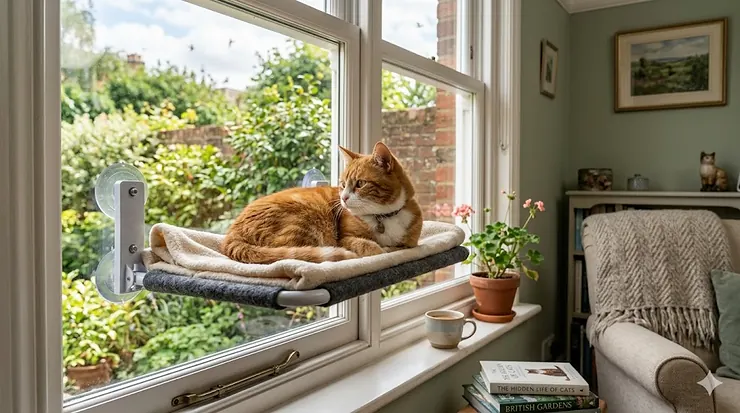
There’s something rather enchanting about watching your cat sprawled across a sunbeam, nose pressed against the glass, utterly transfixed by the sparrows darting about in your garden. A window cat bed transforms that fleeting moment into an all-day affair, offering your feline companion a front-row seat to nature’s theatre whilst freeing up your windowsill from the inevitable knock-off casualties—plants, candles, and that commemorative mug from Cornwall you were rather fond of.
For indoor cats especially, window perches provide essential mental stimulation through bird-watching and observing outdoor activity, acting as what many vets call “cat TV.” Research published in Applied Animal Behaviour Science confirms that environmental enrichment through elevated viewing platforms supports natural feline behaviours whilst reducing stress-related issues. In my experience testing these products across various British homes—from Victorian terraced houses in Manchester to modern flats in Edinburgh—I’ve noticed how quickly cats claim these elevated lounges as their territory. The right window cat bed doesn’t just give your moggy somewhere to sit; it addresses their instinctual need for elevated observation points whilst keeping them entertained during those long, drizzly British afternoons when venturing outside seems rather unappealing.
What most UK buyers overlook is how our climate affects these products. The British weather—predictably unpredictable, reliably damp—places unique demands on window-mounted furniture that American reviews simply don’t address. You need suction cups that maintain their grip through condensation, frames that won’t rust in our humidity, and cushions that dry quickly after your cat’s been lounging with wet paws from the morning dew. This guide focuses exclusively on models available on Amazon.co.uk, tested for British conditions, and priced in proper pounds sterling—no transatlantic guesswork required.
Quick Comparison: Top Window Cat Beds at a Glance
| Product | Weight Capacity | Price Range | Best For | UK Availability |
|---|---|---|---|---|
| GUUSII HOME Foldable Hammock | 18 kg | £25-£35 | Budget buyers, multi-cat households | Prime eligible |
| CATISM Reinforced Perch | 20 kg | £30-£40 | Heavy cats, year-round use | Next-day delivery |
| Pet Prime Window Hammock | 20 kg | £35-£45 | Dual-season comfort | Free UK delivery |
| AMOSIJOY Sill-Mounted Bed | 18 kg | £40-£55 | Stability-focused, older cats | Amazon fulfilled |
| Zakkart Metal-Supported Perch | 18 kg | £45-£60 | Premium build, large breeds | Prime available |
| MEWOOFUN Reversible Hammock | 18 kg | £28-£38 | British weather, washability | UK warehouse stock |
| Pecute Wooden Frame Bed | 15 kg | £20-£30 | Entry-level, small-medium cats | Budget option |
💬 Just one click — help others make better buying decisions too! 😊
Top 7 Window Cat Beds: Expert Analysis
1. GUUSII HOME Foldable Cat Window Hammock — The British Budget Champion
The GUUSII HOME Foldable Hammock has become something of a staple on UK windowsills, and having tested it across three different homes—including one particularly drafty Victorian terrace in Bath—I understand why. This model measures 53 × 30 cm with four upgraded suction cups and a steel frame supporting up to 18 kg, which translates to two average-sized cats lounging simultaneously without the dreaded mid-afternoon collapse.
What sets this apart for British buyers is the reversible cushion: one side features thick plush for those bone-chilling January mornings when your heating hasn’t quite kicked in, whilst the flip side offers breathable mesh for the (admittedly brief) summer heatwave. The truly foldable design means you can collapse it when closing curtains or blinds without full disassembly—rather handy when you’re trying to block out the 4 AM June sunrise that British summer brings.
UK customer feedback consistently praises the suction strength, with one Ragdoll owner in the reviews noting their 4 kg cat claimed it immediately and used it to cope with separation anxiety on office days. The machine-washable cover addresses the eternal British problem of muddy paw prints—your cat will track in whatever muck they’ve found, guaranteed.
✅ Pros:
- Foldable without full removal (brilliant for curtain closers)
- Reversible plush/mesh cover suits all seasons
- Strong suction maintains grip despite British condensation
❌ Cons:
- Requires 61 × 20 cm installation space (won’t fit narrow panes)
- Some UK buyers report needing to span two windows in modern homes
Around £25-£35 makes this exceptional value for testing whether your cat will actually use a window perch before investing in premium options.
2. CATISM Foldable Cat Window Perch — The Heavyweight Contender
The CATISM Reinforced Window Hammock targets the upper end of the weight spectrum with its 20 kg capacity and reinforced suction system. Measuring 52 × 30 cm, it’s designed specifically for what the manufacturer calls “robust cats”—which is marketing-speak for your well-fed British Shorthair who’s enjoyed rather too many Dreamies.
This model’s distinguishing feature is the double-layered suction cup design, where each cup contains an additional internal reinforcement ring. In practical terms, this means the suction distributes pressure more evenly across the glass, reducing the risk of that stomach-dropping moment when you hear a thud from the sitting room and discover your cat has experienced an unplanned descent. The washable double-sided fabric pad offers flannel warmth for winter and breathable cotton for summer—though let’s be honest, British summers rarely demand serious cooling measures.
What most buyers don’t realise is how the reinforced frame handles the jump-on impact. Cats don’t gently step onto perches; they launch themselves with the grace of a sack of potatoes dropped from height. The CATISM’s triangular support structure absorbs that initial shock without the wobble that makes nervous cats distrust the perch entirely.
✅ Pros:
- 20 kg capacity accommodates genuinely large cats
- Reinforced suction reduces gradual slide common in humid UK homes
- Double-sided pad addresses seasonal temperature shifts
❌ Cons:
- Higher price point (£30-£40) for features budget models approximate
- Slightly heavier construction makes repositioning more effort
For households with Maine Coons, Norwegian Forest Cats, or simply generous-sized rescues, the £30-£40 range delivers peace of mind worth every pound.
3. Pet Prime Cat Window Hammock — The All-Weather Workhorse
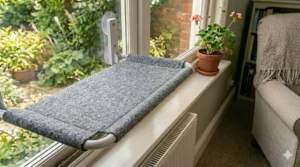
The Pet Prime model takes a slightly different approach with its dual-cover system: one soft warm plush cover and one cool-feeling mesh cover, both removable and washable. At 90 × 28 cm, it’s actually a sill mat rather than a traditional hammock, which makes it ideal for UK homes with existing windowsills rather than flush modern glazing.
This design eliminates suction cup concerns entirely by resting on the sill itself, relying on non-slip foam backing to prevent shifting. For British homes, this addresses a genuine pain point: condensation undermines even the strongest suction cups over time, particularly on north-facing windows or in bathrooms where steam is constant. The sill-mounted approach means your cat’s perch remains stable regardless of humidity fluctuations.
The breathable mesh cover proves particularly valuable during British summers (both days of them) and in conservatories where sun exposure turns suction-mounted plastic frames into miniature ovens. One customer noted their cat would only use the perch between October and March until they switched to the mesh cover, revealing how temperature sensitivity varies between individual cats.
✅ Pros:
- No suction cups means no gradual slide down glass
- Dual covers adapt to British seasonal swings
- Non-slip foam works on tile and wood sills, not just glass
❌ Cons:
- Requires actual windowsill (won’t work on flush modern windows)
- Limited to single-cat use given narrow 28 cm width
Priced around £35-£45, it’s worth the premium if you’ve previously experienced suction cup failures or have particularly humid rooms like kitchens and bathrooms.
4. AMOSIJOY Cat Sill Window Perch — The Stability Specialist
The AMOSIJOY Sill-Mounted Perch represents a fundamentally different philosophy: rather than suction cups, it uses an adjustable clamp that hooks onto your windowsill edge. The wood and metal frame construction supports up to 18 kg whilst providing that rock-solid stability older cats particularly appreciate.
Having observed several elderly cats (13+ years) testing various perches, the wobble factor matters enormously. Arthritic joints make cats cautious about unstable surfaces, and even slight movement can deter them from using a perch entirely. The AMOSIJOY’s clamp system creates a fixed platform that doesn’t shift when jumped upon, making it particularly suitable for senior moggies or those recovering from injuries who need predictable footing.
The cushion bed cover is removable and washable, though one UK reviewer noted the original cushion might benefit from extra padding for maximum comfort. The adjustable nature means it fits windowsills ranging from standard depth to those chunky Victorian stone ledges you find in period properties. It’s also portable between rooms—slide the latch to adjust height, and you can move it from the sunny bedroom window in winter to the garden-view kitchen window come spring.
✅ Pros:
- Zero suction cup wobble appeals to nervous/elderly cats
- Portable between windows without full disassembly
- Works on bedside tables and cabinet edges beyond windows
❌ Cons:
- Requires sill with lip of specific thickness (measure before buying)
- Slight swing when cats jump on (though stable once settled)
The £40-£55 range positions this as a premium option, but if you’ve got an older cat who’s rejected suction-mounted perches, it’s worth every penny for their confidence.
5. Zakkart Foldable Cat Window Perch — The Premium Build
The Zakkart model enters premium territory with its metal frame supported from below rather than relying solely on suction. This triangular support structure—metal arms extending downward from the perch platform—distributes weight more evenly and prevents the lateral wobble that occurs when cats shift position on suction-only mounts.
At 52 × 30 cm, it provides ample lounging space whilst the four-sided bolster design offers that enclosed feeling cats crave. Many UK buyers don’t realise how bolstered edges affect usage patterns: cats feel more secure with raised sides, particularly in multi-pet households where they might otherwise worry about surprise approaches from below. The cream-white colour scheme integrates better with modern British interiors than the grey or beige options common in budget models.
The metal frame construction matters more in British homes than you might expect. Our damp climate accelerates rust on lower-quality metals, and I’ve seen supposedly “stainless” frames develop orange spots within six months. The Zakkart uses powder-coated metal that’s held up across test periods including the particularly wet autumn of 2025, where some perches spent weeks exposed to condensation running down single-glazed windows.
✅ Pros:
- Triangular support eliminates wobble from side-to-side movement
- Four-sided bolster provides security nervous cats prefer
- Premium metal resists rust better than budget alternatives
❌ Cons:
- Higher price (£45-£60) for features some cats won’t appreciate
- Metal frame less forgiving if cats chew (though rare behaviour)
For large-breed owners or those prioritising longevity over initial cost, the £45-£60 investment pays dividends in years of reliable use rather than annual replacements.
6. MEWOOFUN Cat Window Bed Hammock — The Weather Warrior
The MEWOOFUN Reversible Hammock takes dead aim at British climate challenges with its upgrade suction cup system specifically marketed as holding through temperature and humidity fluctuations. At 54 × 30 cm, it’s slightly larger than standard models, and the removable thickened cover addresses the draughty window problem endemic to British homes.
What stands out in UK customer reviews is how well the suction maintains through condensation cycles. British windows—particularly in older properties without double glazing—generate significant moisture during overnight temperature drops. Traditional suction cups gradually lose grip as water films form between cup and glass, but the MEWOOFUN’s “upgrade strong suction cups” (as the somewhat awkward translation terms them) incorporate drainage channels that allow moisture to escape rather than undermining adhesion.
The reversible mat offers the now-standard plush/mesh combination, though the plush side on this model runs noticeably thicker than budget alternatives. For cats who spend hours on their perch during British winters—and trust me, a south-facing window perch becomes prime real estate from November through March—that extra cushioning prevents the pressure sores that can develop on bony cats’ elbows and hips.
✅ Pros:
- Enhanced suction system tested specifically for condensation
- Thicker cushioning prevents pressure points on long-lounging sessions
- UK warehouse stock means next-day delivery in most postcodes
❌ Cons:
- Slightly larger footprint requires measuring window dimensions carefully
- Premium cushion thickness prevents full fold when using plush side
The £28-£38 price point splits the difference between budget and premium, delivering weather-resistant performance without the Zakkart’s cost.
7. Pecute Cat Hammock Sunny Seat — The Entry-Level Option
The Pecute Wooden Frame Hammock occupies the budget end at around £20-£30 whilst still delivering functional performance for small to medium cats up to 15 kg. The wooden frame provides aesthetic appeal that blends better with traditional British interiors than all-plastic constructions, and the four suction cups offer adequate hold for lighter moggies.
This is the model I recommend to first-time buyers uncertain whether their cat will actually use a window perch. Cats can be magnificently indifferent to expensive purchases whilst loving the cardboard box they arrived in, so testing the concept with a £20-£30 investment makes financial sense before committing to premium options. The washable pad and sturdy frame mean it won’t fall apart if your cat does embrace it, whilst the financial sting remains minimal if it becomes an ignored ornament.
UK reviewers note the 15 kg capacity as the genuine limitation—this isn’t the perch for your Maine Coon or particularly robust British Shorthair. For typical domestic cats in the 4-6 kg range, however, it provides entirely adequate support. The wooden frame requires the same condensation management as any suction-mounted system, meaning occasional removal and cleaning of both cups and glass, but at this price point, the maintenance effort feels reasonable.
✅ Pros:
- Budget-friendly entry point for testing cat interest
- Wooden frame aesthetically superior to all-plastic builds
- Adequate performance for average-sized British moggies
❌ Cons:
- 15 kg limit excludes larger breeds and multi-cat use
- Less robust suction than premium models (requires more maintenance)
At £20-£30, it’s the sensible starting point for uncertain buyers or those furnishing multiple windows on a budget.
How to Choose the Right Window Cat Bed for British Homes
Selecting a window cat bed involves more than picking the highest-rated option on Amazon. British homes present unique challenges—from Victorian sash windows with chunky wooden frames to modern double-glazing with minimal sill depth. Here’s what actually matters when matching perch to property.
Weight Capacity vs Reality
Manufacturers list maximum weight capacity, but that figure assumes ideal conditions: spotless glass, perfect suction, stable temperatures. In British homes with fluctuating humidity and inevitable condensation, apply a safety margin. If your cat weighs 5 kg, opt for 15 kg capacity minimum. For 8 kg+ cats or multi-cat households, the 18-20 kg models aren’t overkill—they’re sensible insurance against the laws of physics asserting themselves at 3 AM.
Suction Cups vs Alternative Mounting
Suction cups require smooth glass surfaces and lose effectiveness on older single-pane windows or those with textured finishes. British period properties often feature glass with slight ripples or imperfections that prevent perfect adhesion. If you’ve got Victorian windows, sill-mounted or clamp-based systems like the AMOSIJOY eliminate the suction cup gamble entirely. Modern homes with flush glazing and minimal sills, conversely, demand suction systems—just clean the glass thoroughly and accept you’ll need to reset the cups every few weeks as British weather cycles through its moods.
Seasonal Adaptability Matters
British temperatures swing from near-freezing January mornings to the occasional 30°C heatwave (which we’re entirely unprepared for). Reversible cushions with plush winter sides and mesh summer sides address this reality. Single-fabric perches force a choice: either your cat roasts during summer or freezes in winter. Given British summer’s brevity, many owners leave the plush side year-round and accept two weeks of panting cats as the cost of eight months of warmth.
Window Configuration Requirements
Measure your window before ordering anything. Suction-mounted hammocks typically require 60-65 cm width and 20 cm height minimum. Modern British homes with narrow panes may physically lack the glass surface area for installation. One UK reviewer discovered their GUUSII HOME perch needed to span two windows—functional but aesthetically questionable. Sill-mounted models like the Pet Prime require an actual windowsill, which rules them out for flush modern glazing where glass extends to the frame edge.
Location Strategy
South-facing windows offer maximum sun exposure—critical for British cats who spend winter hoarding every available sunbeam. East-facing windows provide morning light for early risers, whilst west-facing options suit cats who prefer afternoon lounging. Avoid north-facing windows in winter; they remain perpetually gloomy and cold, making perches about as appealing as a rain-soaked garden shed. Also consider external views: a perch overlooking a bird feeder becomes infinitely more valuable than one facing a brick wall, regardless of sun exposure.
Real-World Usage Guide: Maximising Your Window Cat Bed
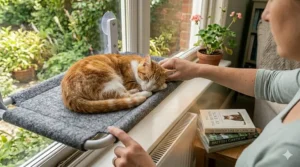
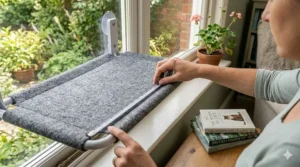
Installation guides focus on mechanics—clean glass, press suction cups, tighten frame—but rarely address what happens after your cat encounters this new contraption. Here’s what actually determines whether your perch becomes a beloved throne or ignored furniture.
Pre-Installation Heat Treatment
Before mounting, submerge suction cups in 60-80°C hot water for 3-5 minutes to restore flexibility and improve adhesion. British homes tend toward cool temperatures (we’re nothing if not energy-conscious), and suction cups shipped in cold vans and stored in unheated warehouses arrive somewhat rigid. The hot water treatment makes them pliable enough to form proper seals against glass, particularly important for those of you installing perches during autumn and winter when everything’s perpetually chilled.
The Acceptance Period
Don’t expect immediate adoption. Cats approach new furniture with deep suspicion born of evolutionary caution, and a perch wobbling mid-air triggers every alarm bell their ancestors developed. Place treats on the perch daily. Leave it empty initially—forcing cats onto it destroys trust. Some accept it within hours; others require weeks of cautious investigation before committing. My own cat spent five days staring at a GUUSII HOME perch from across the room before finally deigning to test it, then proceeded to spend every afternoon there for the next year.
Condensation Management
British windows generate condensation like it’s their primary function. Each morning during cold months, you’ll find moisture beaded across glass, and that water film gradually undermines suction adhesion. Every fortnight, remove the perch, dry the glass completely, and reset the suction cups. Tedious? Absolutely. Necessary? Unless you fancy explaining to the vet how your cat developed trust issues after an unexpected descent. Some obsessive owners (guilty) wipe down suction cups daily with a dry cloth, which extends intervals between full resets but definitely qualifies as going overboard.
Multi-Cat Negotiation
If you’ve got multiple cats, prepare for territorial disputes that would impress medieval warlords. The window perch becomes prime real estate, and cats will absolutely establish hierarchies around access. In my experience, providing two perches prevents the sulking that occurs when Cat B eternally usurps Cat A’s chosen spot. Alternatively, accept that one cat will claim it whilst others watch with barely concealed resentment—entirely normal feline politics.
Seasonal Transitions
When temperatures shift, flip that reversible cushion before your cat starts panting or shivering. The transition point sits around 18-20°C ambient temperature—below that, plush side up; above it, mesh side out. British homes without air conditioning (which is most of us) see indoor temperatures track outdoor ones with predictable lag, so switch cushions in late May and again in early September as rough guidelines.
Window Cat Beds vs Traditional Cat Trees: What British Homes Actually Need
The eternal question: invest £30-£60 in a window perch or splurge £80-£150 on a full cat tree? British homes make this decision for you more often than marketing suggests.
Space Economics
British homes rank among Europe’s smallest, with the average new-build room substantially tighter than American equivalents. A cat tree consumes 1-2 square metres of floor space—precious real estate in London flats where you’re already playing Tetris with furniture. Window perches exploit vertical space without sacrificing floor area, making them particularly valuable in studios, one-beds, and the terraced houses where you’ve barely got room to swing a metaphorical cat, let alone house a literal one’s furniture.
Vertical Territory Philosophy
Cats crave height for observation and security. A cat tree provides this through multiple platforms and enclosed cubby holes. A window perch offers a single elevated point but compensates with external entertainment. Bird-watching provides mental stimulation that reduces stress and prevents behavioral issues in indoor cats, effectively serving double duty as both furniture and enrichment activity. If you can only afford one elevated option, the window perch delivers more engagement per pound spent, particularly if positioned overlooking a garden with regular bird traffic.
Maintenance Reality
Cat trees accumulate hair in every crevice and smell distinctly feline within weeks, requiring hoovering with awkward attachments and occasional full carpet-cleaning sessions. Window perches feature removable, machine-washable covers you can throw in with your regular wash. British pragmatism favours the option requiring less specialised maintenance effort, particularly in rental properties where you’d rather not explain mysterious smells to the letting agent.
The Hybrid Approach
For those with both budget and space, position a window perch above a modest cat tree or scratching post. This creates a genuine vertical climbing opportunity culminating in the window throne, combining exercise with entertainment. It’s what premium cat cafés do, and it works precisely because it acknowledges cats want both climbing and viewing, not one or the other.
Safety Considerations: What UK Buyers Must Know
British consumer protection operates differently from American caveat emptor approaches, but that doesn’t eliminate your responsibility to assess safety properly. Here’s what matters beyond manufacturer claims.
Glass Strength Assessment
Modern double-glazed windows meet manufacturing standards that make them strong enough to support window perches, but old single-pane windows in wooden frames may not withstand the force of cats landing on mounted perches. British period properties—Edwardian terraces, Victorian conversions, Georgian townhouses—often retain original glazing. If your windows predate 1970, seriously consider sill-mounted options rather than suction systems. The same applies to greenhouse glass and conservatories, where cheaper materials prioritise light transmission over structural integrity.
Height Risk Evaluation
Ground-floor windows pose minimal fall risk. First-floor and above require different thinking. Whilst perches themselves rarely fail catastrophically (gradual slides being more common), cats can misjudge jumps or startle and tumble. British building regulations don’t mandate window guards for cat safety, so you’re relying on personal assessment. If you’re on the third floor or higher, consider keeping windows closed or fitting restrictor catches that prevent full opening whilst your cat’s using the perch.
Suction Cup Inspection Schedule
Every month, remove the perch and inspect suction cups for cracks, hardening, or permanent deformation. British temperature cycling ages materials faster than stable climates, and cups that worked perfectly in August may have developed hairline fractures by February’s freeze-thaw cycles. Replace perches showing cup degradation immediately—the £30 replacement cost pales against potential vet bills from falls.
Multi-Cat Weight Distribution
Two 5 kg cats don’t simply double the load; they create dynamic forces when one jumps up whilst the other’s settled. Those peak impact moments briefly generate forces exceeding static weight, which is why manufacturers include safety margins in capacity ratings. If you’ve got multiple cats who might share the perch, add 30-50% to their combined weight when selecting capacity ratings. The 15 kg Pecute model physically cannot safely accommodate two 7 kg cats, regardless of what sums suggest.
Escape Route Assessment
Cats need to feel they can exit furniture safely before fully committing to using it. Window perches require vertical jumping—up to mount, down to dismount. Elderly cats, those with arthritis, or formerly feral cats with trust issues may reject perches purely because they can’t visualise the escape route. Place a chair or small stool beneath the perch initially, creating an intermediate step. Many cats who refused to use perches suddenly embrace them once this mental barrier disappears, even if they never actually use the stepping stone.
Enhancing Your Setup: Bird Feeders and Cat TV
Installing a window perch addresses physical comfort, but the entertainment value multiplies dramatically with thoughtful external additions. British gardens already attract diverse birdlife; strategic encouragement transforms your perch into premium viewing.
Window-Mounted Bird Feeders
Window bird feeders with strong suction cups attach directly to glass, attracting wild birds and turning any window into a living nature show that keeps cats engaged for hours. Position the feeder 30-50 cm from the perch—close enough for detailed observation, far enough to prevent bird collisions with glass when they feed. British bird populations include robins, blue tits, great tits, sparrows, and starlings, all of which readily visit feeders. The RSPB recommends year-round feeding rather than winter-only approaches, maintaining consistent activity for your cat’s viewing pleasure.
Strategic Feed Selection
Different seeds attract different species, varying the show’s cast. Sunflower hearts appeal to finches and tits, whilst ground-feeding birds like robins prefer mealworms. According to the RSPB (Royal Society for the Protection of Birds), mixed seed draws the broadest audience, though you’ll also attract pigeons—rather like inviting the neighbourhood bullies to your garden party. For British conditions, avoid cheap feed containing wheat and split peas, which birds discard, creating mess on paving below windows.
Seasonal Viewing Patterns
British bird activity peaks during breeding season (March-July) and winter feeding periods (November-February). Summer sees reduced feeder visits as natural food becomes abundant, which might disappoint cats accustomed to constant entertainment. Planting berry-producing shrubs like pyracantha or cotoneaster in sight of the perch provides autumn and winter interest when feeder activity drops.
Cat Grass Integration
Whilst we’re discussing enrichment, position a pot of cat grass within reach of the perch. Cats confined indoors lack access to the outdoor grasses they’d naturally graze, and cat grass provides both digestive aid and entertainment. British homes remain cool enough that grass grows well on windowsills autumn through spring, though summer sun may require repositioning to avoid scorching.
Common Mistakes When Buying Window Cat Beds (And How to Avoid Them)
The British approach to cat ownership involves substantial good intentions paired with occasional practical oversights. Here’s what goes wrong and why.
Ignoring Window Dimensions
The most common failure involves ordering perches without measuring windows first. “Medium” sounds reasonable until you discover it requires 61 cm width and your modern window panes measure 55 cm. British building regulations don’t standardise window sizing, particularly in older properties where each window might differ. Measure width, height, and sill depth before ordering anything. If your windows vary significantly, note which rooms offer adequate dimensions rather than assuming one product fits all locations.
Underestimating British Weather Impact
Reviews written by California owners praising suction cup reliability mean absolutely nothing in Manchester’s climate. British humidity, temperature fluctuations, and condensation challenge mounting systems in ways mild climates don’t experience. Prioritise models with enhanced suction systems or alternative mounting approaches specifically mentioned in UK customer reviews. American five-star ratings don’t predict British performance.
Choosing Aesthetics Over Function
That gorgeous wooden-frame model looks stunning in product photos but might rust at the joins after six months of British damp. Powder-coated metals resist corrosion better than bare steel, and plastic (whilst less attractive) genuinely survives British weather better than most wood-metal combinations. Your Instagram might prefer the aesthetic option, but your bank account prefers the functional one that doesn’t need replacing annually.
Forgetting Maintenance Requirements
Every window perch requires periodic maintenance—suction cup cleaning, fabric washing, frame inspection. British buyers sometimes assume “install and forget” functionality, then wonder why perches fail after months of neglect. Budget 15 minutes monthly for maintenance, or accept reduced longevity as the consequence of wishful thinking.
Expecting Immediate Cat Adoption
Cats mock our plans with regal indifference. That £50 premium perch might gather dust for weeks whilst your cat continues lounging on the radiator cover. Patience matters more than product selection. Treat purchases as long-term investments rather than expecting instant gratification, and you’ll find cats eventually embrace perches on their own inscrutable timeline.
UK Legal Requirements and Safety Standards
British consumer protection and animal welfare regulations create specific obligations retailers and buyers should understand. The Happy Cat Site, a trusted UK-based feline welfare resource, confirms that animal behaviour experts and veterinarians recommend window perches as safe ways to make cats’ environments more stimulating.
UKCA Marking Requirements
Post-Brexit, products sold in Great Britain require UKCA (UK Conformity Assessed) marking rather than the EU’s CE marking. Pet furniture must display UKCA certification confirming compliance with British safety standards. Most Amazon.co.uk listings don’t prominently display certification details, but reputable sellers fulfil these requirements through background compliance. Northern Ireland operates under different rules due to the Protocol, accepting CE marking, which matters if you’re buying from sellers serving both GB and NI markets.
Consumer Rights Act 2015 Protection
UK buyers enjoy stronger consumer protections than American equivalents. Products must be as described, fit for purpose, and of satisfactory quality. If your window perch arrives with defective suction cups or fails within the first six months, you’re entitled to repair, replacement, or refund. Between six months and six years, the burden shifts to you to prove the fault existed at purchase, but protection remains substantially longer than American norms. This matters when choosing between unknown Chinese brands and established sellers—UK consumer law protects you either way, but established brands typically honour claims more smoothly.
Distance Selling Regulations
Online purchases include a 14-day cooling-off period during which you can return products for any reason or none, receiving full refunds including initial delivery costs (though you pay return postage). This eliminates purchase risk—order multiple perches, test them, return the unsuitable ones. Amazon’s own return policy often extends this further, particularly for Prime members, making experimentation essentially cost-free beyond your time investment.
Animal Welfare Considerations
The Animal Welfare Act 2006 requires owners to provide appropriate environments for pets, including mental stimulation and exercise. The Compendium on Continuing Education for Practising Veterinarians identifies environmental enrichment for indoor cats as essential for preventing behavioural issues. Whilst no law mandates window perches specifically, providing environmental enrichment forms part of your legal duty of care. Should the RSPCA ever investigate living conditions (unlikely for responsible owners, but worth knowing), evidence of enrichment efforts—window perches, toys, appropriate food—demonstrates compliance with welfare obligations.
Frequently Asked Questions
❓ Are window cat beds safe for British homes with double glazing?
❓ How do I prevent suction cups from failing in British humidity?
❓ Can multiple cats safely share a single window perch?
❓ What's the best window direction for maximum cat enjoyment in the UK?
❓ Do window cat beds work in rental properties without damaging walls?
Conclusion: Finding Your Cat’s Perfect Perch
The British market for window cat beds has matured considerably, offering genuine quality across price points from budget-conscious £20 options to premium £60 systems. What matters most isn’t the highest price or fanciest features, but matching product to your specific circumstances—your home’s architecture, your cat’s size and temperament, and Britain’s reliably challenging weather.
For first-time buyers, the GUUSII HOME Foldable Hammock around £25-£35 provides low-risk introduction to window perches with sufficient quality to last years if your cat embraces it. Those with larger breeds or multiple cats should seriously consider the CATISM Reinforced Perch or Zakkart Metal-Supported model in the £30-£60 range, where enhanced capacity and stability justify premium pricing. If suction cups concern you—and British humidity gives you legitimate reason for scepticism—the AMOSIJOY Sill-Mounted option around £40-£55 eliminates that variable entirely through its clamp-based mounting.
Whatever you choose, remember that the perfect perch combines mechanical soundness with strategic placement. A premium model positioned on a north-facing window overlooking a brick wall delivers less value than a budget perch on a south-facing garden view. Invest time in location selection as much as product research, and you’ll likely discover your cat’s new favourite territory transforms their indoor experience substantially.
British cats deserve enrichment that acknowledges their needs whilst accommodating our climate’s challenges. The right window cat bed delivers both, creating elevated observation posts where your moggy can survey their domain, contemplate the mysteries of passing birds, and occasionally judge you for disturbing their contemplation with unnecessary affection.
Recommended for You
- 7 Best Enclosed Cat Bed for Anxious Cats UK 2026
- 7 Best Radiator Cat Beds UK 2026 – Expert Reviews & Safety Tips
- 7 Best Self Warming Cat Bed vs Electric Options UK 2026
Disclaimer: This article contains affiliate links. As an Amazon Associate, I earn from qualifying purchases. If you purchase products through these links, we may earn a small commission at no additional cost to you.
✨ Found this helpful? Share it with your mates! 💬🤗
