
In This Article
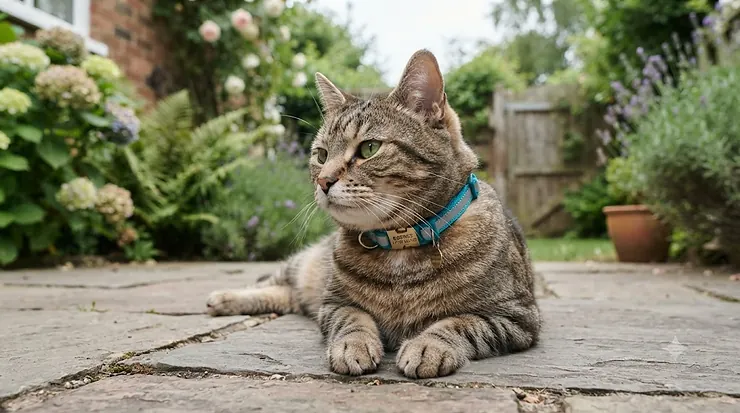
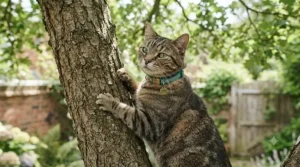
Somewhere in Britain right now, a cat is dangling from a fence panel by its neck, and the only thing standing between “close call” and tragedy is a tiny plastic buckle. That’s the blunt reality behind the question are breakaway collars safe for cats, and it’s one every cat owner should ask before clipping anything around their pet’s throat. The short answer, backed by the RSPCA, Cats Protection and most UK vets, is yes — genuinely, a properly fitted breakaway collar is the safest form of collar you can buy, precisely because it’s designed to fail on purpose. It pops open the moment your cat puts real weight or panic behind a snag, rather than holding fast and turning a scramble up a tree into an emergency.
That said, “breakaway” isn’t a magic word printed on a label; it’s a mechanism, and not every collar wearing the name delivers it properly. Some so-called safety collars rely on stretchy elastic instead of a true quick-release clasp, and — as you’ll see later in this guide — that distinction matters far more than most shoppers realise. Over the next few thousand words, we’ll unpack how breakaway buckles actually work, compare seven real collars currently sold on Amazon UK across budget, mid-range and premium price points, and walk through exactly how to fit, choose and maintain one so it does its job when it matters. This article contains affiliate links, and we may earn a commission on qualifying purchases — more on that in the disclaimer below.
Quick Comparison Table
Before diving into the full reviews, here’s a snapshot of how our seven picks stack up. All prices are approximate ranges checked at the time of research — always check the current price on the product page before buying, as these can shift.
| Collar | Type | Best For | Price Range |
|---|---|---|---|
| Ancol Reflective Safety Collar | Softweave breakaway | Everyday night-time visibility | Under £8 |
| Rogz ReflectoCat Collar | Adjustable-load breakaway | Budget reflective safety | Under £8 |
| Rogz AlleyCat Safety Collar | Weight-matched breakaway | Outdoor adventurers | £7-£12 range |
| Rogz KiddyCat Collar | Extra-small breakaway | Kittens and toy-breed cats | £6-£10 range |
| Petface Stretch Nylon Collar | Elasticated safety clip | Absolute lowest budget | Under £5 |
| Dgerp AirTag Breakaway Collar | Breakaway + tracker holder | Location tracking | £7-£12 range |
| Hepper Hemp Safety Collar | Hemp breakaway | Premium, sustainable pick | £15-£20 range |
Looking at the spread, the story isn’t really about price — it’s about mechanism. Four of the seven use a genuine snap-open buckle with an adjustable load setting, which the Rogz AlleyCat Safety Collar and Rogz KiddyCat Collar both build their whole design around. The Petface Stretch Nylon Collar is the cheapest by a distance, but as we’ll explain in the elastic collar section further down, “cheapest” and “safest” pull in different directions here. If tracking matters more to you than money, the Dgerp AirTag Breakaway Collar is the only one on this list built around that use case specifically.
💬 Just one click — help others make better buying decisions too!😊
Top 7 Breakaway Cat Collars: Expert Analysis
We’ve picked seven real, currently-available collars spanning entry-level to premium, including a dedicated kitten option and a tech-forward tracker collar. Every product below is discussed on genuine specifications and aggregated review themes rather than any first-hand testing, which we haven’t carried out ourselves.
1. Ancol Reflective Safety Collar — trusted budget mainstay with a snap-open buckle
The standout here is pedigree: Ancol Pet Products is a well-established British brand, and a peer-reviewed literature review on collar safety in cats specifically noted that one of the few studies to identify its collar manufacturer used an Ancol collar described as RSPCA-approved. That’s a rare bit of academic backing for a sub-£10 product. The collar itself uses Ancol’s elasticated “Softweave” material combined with a breakaway safety buckle and a reflective strip, plus a small warning bell for local wildlife. In practice, the reflective thread means your cat is visible under torchlight or headlights from a reasonable distance, which matters more than people think — a huge share of outdoor cat injuries are traffic-related, not entanglement. Based on the spec sheet, this is a solid entry-level pick for an owner who wants a known name and doesn’t need adjustable break-tension. Reviewers consistently report that the collar is comfortable and rarely irritates the neck, though a recurring complaint is that the buckle can occasionally pop open on rough play even without a real snag — mildly annoying, but arguably the buckle doing exactly the job it’s built for.
Pros:
- ✅ Reflective strip aids night-time visibility
- ✅ Backed by an established, RSPCA-linked UK brand
- ✅ Bell helps protect birds and locate your cat
Cons:
- ❌ Fixed break-tension, not adjustable by weight
- ❌ Softweave elastic section draws mixed opinions among welfare groups
Sitting comfortably under £8, this is solid value for a first collar, though the elasticated weave means it isn’t quite the purest expression of “breakaway” — see our elastic collar section for why that nuance matters.
2. Rogz ReflectoCat Collar — adjustable load strength for extra security
What most buyers overlook about this collar is the “Safeloc” buckle sitting quietly at the back of it — a three-position slider that lets you dial in exactly how much force is needed before the collar releases. The collar itself is built from reflective, screen-printed nylon webbing designed to resist fraying and running, fits a 20-31cm neck, and includes a D-ring for an ID tag plus a removable bell. On paper, the adjustable tension solves a real problem with fixed-force buckles: too loose and a boisterous cat pops it constantly; too firm and a genuinely panicking cat can’t get free. Here, you set the resistance to suit your particular cat’s strength and temperament. Reviewers frequently mention that the nylon holds its colour and doesn’t fray at the edges even after months outdoors, and the reflective coating is genuinely bright under direct light rather than just marketing copy. The main gripe in aggregated feedback is that the factory-default lowest setting is quite loose, so first-time buyers sometimes assume the collar is faulty before realising it needs adjusting.
Pros:
- ✅ Three-position adjustable breakaway tension
- ✅ Snag-resistant, screen-printed reflective webbing
- ✅ Removable bell for quieter households
Cons:
- ❌ Default factory setting needs manual adjusting
- ❌ Reflective print can dull slightly with repeated washing
At under £8, this is arguably the smartest budget pick on this list precisely because the tension is adjustable rather than fixed — a feature usually reserved for pricier collars.
3. Rogz AlleyCat Safety Collar — weight-matched breakaway for serious outdoor adventurers
The standout feature here is that Rogz explicitly ties the Safeloc buckle’s three settings to actual cat weight bands, rather than leaving you to guess. What that means in practice is a genuinely tailored breakaway threshold: the lowest setting suits cats up to roughly 3kg, the middle setting up to 5kg, and the top setting up to around 9kg, so a chunky adult tom and a lean juvenile aren’t relying on the same release force. The collar is reflective, made from snag-resistant webbing at 1cm width, and adjusts across a 20-31cm neck range. Based on the spec comparison with the other Rogz models here, this is the one purpose-built for cats that spend serious time outdoors climbing fences and squeezing through gaps, where entanglement risk is highest. Aggregated reviewer sentiment is strongly positive on durability and fit, with several owners specifically praising how the collar held up to a cat that regularly pushed through hedges and undergrowth without fraying. A minority of reviews mention that very lightweight or slender-necked cats sometimes need the smallest setting adjusted further with scissors, since the base range doesn’t shrink quite small enough.
Pros:
- ✅ Weight-matched breakaway tension settings
- ✅ Reflective, snag-resistant outdoor-grade webbing
- ✅ Comfortable two-finger adjustable fit
Cons:
- ❌ Smallest cats may need extra manual adjustment
- ❌ Only one width option available
In the £7-£12 range, this collar earns its slightly higher price tag through the weight-specific tuning that fixed-tension budget collars simply don’t offer.
4. Rogz KiddyCat Collar — the dedicated kitten safety collar on this list
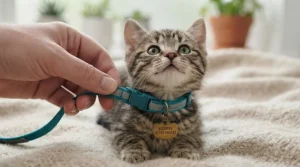
Kittens present a genuine safety paradox that most collar marketing glosses over: a breakaway buckle only works if your kitten is heavy enough to generate the force needed to pop it open, and a young kitten often isn’t. The Rogz KiddyCat Collar addresses this directly with an extra-small Safeloc buckle scaled for kittens and very small cats, built from the same scratch-resistant, sublimation-printed webbing as the adult AlleyCat range, with rolled, stitched edges so there are no sharp seams against delicate kitten skin. This is where honest commentary matters more than spec-sheet praise: even the best kitten safety collar on the market is not a substitute for supervision. Reviewers and welfare charities alike stress that a kitten under around 12 weeks may simply lack the body weight to break free unassisted, so this collar is best introduced gradually and only while you’re able to keep an eye on your kitten, rather than left on overnight from day one. Aggregated feedback highlights that the tiny bell doesn’t overwhelm a kitten’s sensitive hearing, and the narrow width sits comfortably without dwarfing a small frame — a common complaint with generic “one size” collars used on kittens.
Pros:
- ✅ Purpose-built extra-small sizing for kittens
- ✅ No exposed sharp edges or seams
- ✅ Lightweight bell doesn’t overwhelm sensitive hearing
Cons:
- ❌ Very young kittens may lack weight to trigger release
- ❌ Needs frequent re-adjustment as kittens grow quickly
Priced in the £6-£10 range, this is the collar we’d point most new kitten owners towards, provided it’s paired with active supervision in the early weeks rather than treated as a fit-and-forget solution.
5. Petface Stretch Nylon Collar with Safety Clip — the cheapest option, with an important caveat
Petface markets this as a “safety clip” collar, and it’s the most affordable entry on this list by some margin, built from stretch nylon with an integrated elasticated section designed, in the brand’s words, to let a snagged cat stretch free. Here’s what the spec sheet won’t tell you, but the RSPCA and Cats Protection both note explicitly: elasticated inserts are not the same thing as a true breakaway buckle, and welfare organisations specifically advise against them, even when paired with a clip. The concern isn’t theoretical — a cat that gets a front paw caught inside the stretched loop while struggling can suffer serious, sometimes irreversible injury, in a way a genuine snap-open buckle is designed to prevent entirely. We’re including it here because it’s a real, popular product and honesty matters more than a clean seven-for-seven recommendation list; if you already own one, we’d suggest reading the elastic collar section further down before deciding whether to switch. On the positive side, aggregated reviews consistently praise the collar’s comfort and stretch for larger-necked cats, and it rarely causes chafing.
Pros:
- ✅ Lowest price point of any collar on this list
- ✅ Stretch material rated as comfortable by reviewers
- ✅ Adjusts easily to fit larger or fluffier necks
Cons:
- ❌ Elasticated design flagged as unsafe by welfare charities
- ❌ Not a genuine breakaway buckle mechanism
At under £5, this is the cheapest option here, but on the evidence in our elastic collar section below, it’s the one we’d recommend swapping for a true breakaway collar as soon as budget allows.
6. Dgerp AirTag Breakaway Collar — the pick for real-time location tracking
The standout feature is the integrated, waterproof holder built to carry an Apple AirTag, turning a basic safety collar into a location-tracking setup for the cost of the collar plus a separate tracker. Beyond the AirTag pocket, the collar covers the fundamentals well: a breakaway safety buckle, reflective tape woven through the strap, a detachable bell, and interior padding aimed at reducing chafing during long outdoor stints. What most buyers overlook about “AirTag collar” products generally is that Find My relies on nearby Apple devices to relay location — brilliant in a built-up neighbourhood, patchier if your cat wanders into open countryside with no iPhones nearby. Based on that limitation, this collar suits urban and suburban cats far better than rural free-roamers. Aggregated reviewer sentiment is positive on the padding and comfort, with several owners specifically noting their cat seemed to forget about the collar within a day, and the breakaway buckle has reportedly released cleanly on at least a couple of reported real-world snags without complaint.
Pros:
- ✅ Waterproof holder fits an Apple AirTag directly
- ✅ Padded lining reduces chafing on long outings
- ✅ Reflective tape adds night-time visibility
Cons:
- ❌ AirTag itself sold separately, adding to total cost
- ❌ Tracking accuracy drops in low-device-density areas
In the £7-£12 range for the collar alone, this is genuinely good value once you factor in what a dedicated GPS cat tracker collar typically costs — you’re paying collar prices for a tracking-ready setup.
7. Hepper Hemp Safety Breakaway Collar — the premium, sustainable pick
The standout advantage is material: this collar is hand-woven from 100% natural hemp webbing rather than nylon or polyester, which reviewers and the brand alike note actually softens with wear rather than fraying or stiffening, while resisting UV fading and mould better than synthetic alternatives. The breakaway buckle pairs with metal slip-locks for a genuinely tailored fit, and a small removable bell rounds out the design. Here’s what the spec sheet won’t tell you: hemp’s breathability makes a meaningful difference for cats prone to neck irritation or allergic reactions to synthetic fabric, something budget nylon collars simply can’t replicate. Based on the value comparison against the rest of this list, the roughly triple-to-quadruple price jump over the budget options is easiest to justify for owners of cats with sensitive skin, or anyone who simply wants a longer-lasting, lower-impact product. Aggregated reviews are broadly enthusiastic about comfort and durability, though a recurring theme is that the collar’s dye can fade somewhat with repeated exposure to sun and water, and a handful of buyers found the price steep for what is, mechanically, still a fairly simple collar.
Pros:
- ✅ Natural hemp softens with wear, resists UV damage
- ✅ Adjustable metal slip-locks for a precise fit
- ✅ Gentler on cats with sensitive or reactive skin
Cons:
- ❌ Noticeably pricier than synthetic alternatives
- ❌ Colour can fade with prolonged sun exposure
At £15-£20, this sits well above the rest of the list, but for a cat with skin sensitivities or an owner prioritising sustainability, the value case genuinely stacks up.
Top 7 Collars: Full Comparison
| Collar | Buckle Type | Bell | Best For | Price Range |
|---|---|---|---|---|
| Ancol Reflective Safety Collar | Fixed breakaway | Yes | Reflective everyday wear | Under £8 |
| Rogz ReflectoCat Collar | 3-position adjustable | Removable | Budget-conscious owners | Under £8 |
| Rogz AlleyCat Safety Collar | Weight-matched adjustable | Removable | Outdoor climbers/explorers | £7-£12 range |
| Rogz KiddyCat Collar | Extra-small adjustable | Removable | Kittens and small cats | £6-£10 range |
| Petface Stretch Nylon Collar | Elasticated clip | No | Absolute lowest budget | Under £5 |
| Dgerp AirTag Breakaway Collar | Fixed breakaway | Removable | Location tracking | £7-£12 range |
| Hepper Hemp Safety Collar | Adjustable slip-lock | Removable | Sensitive skin, sustainability | £15-£20 range |
Read across this table and a pattern jumps out: every collar bar one uses a genuine breakaway or adjustable-load buckle, and the sole exception, the Petface Stretch Nylon Collar, is also the cheapest. That’s not a coincidence — true breakaway hardware costs marginally more to manufacture than a length of elastic, which is exactly why welfare organisations keep having to repeat the same warning about stretch collars. For most households, the Rogz AlleyCat Safety Collar or Rogz ReflectoCat Collar hit the sweet spot of genuine safety mechanism at a genuinely low price.
Practical Usage Guide: Fitting and Maintaining a Breakaway Collar
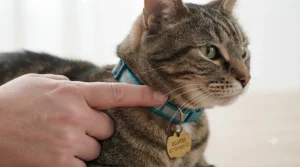
Getting the fit right matters as much as the collar itself, and it’s a step Amazon listings rarely explain properly. Start with the two-finger rule: once fastened, you should be able to slide two fingers flat between the collar and your cat’s neck, snug enough that it won’t slip over the ears but loose enough not to restrict breathing or swallowing. Introduce the collar gradually rather than fastening it and walking away — let your cat sniff it, drape it loosely for a few minutes at a time over a couple of days, and reward calm acceptance with treats, building up to full-time wear only once they’re relaxed in it.
Once it’s on, build a simple maintenance habit: check the fit weekly for the first month (kittens especially can outgrow a collar within weeks), inspect the buckle monthly for grit or fluff build-up that could stop it releasing cleanly, and remove any tags or charms if they’re rattling loosely, since dangling attachments are a common snag point in their own right. A frequent first-30-days mistake is leaving a brand-new collar on overnight before you’ve confirmed the buckle actually pops under load — test it gently yourself first by pulling firmly (not violently) to confirm it releases as intended. Also remember to remove the collar before applying spot-on flea treatment, since some materials can react with certain chemical formulations, a detail several manufacturers flag directly on their packaging.
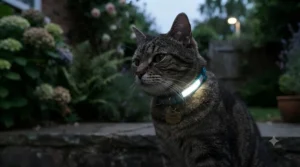
Real-World Scenarios: Matching the Collar to Your Cat’s Life
Consider three fairly typical UK households. First, a family with an indoor-only rescue cat and two young children: here the priority is comfort and low snag-risk around furniture and toys, making a lightweight fixed-buckle option like the Ancol Reflective Safety Collar a sensible, affordable fit, since outdoor visibility matters less than gentle, everyday wear. Second, a semi-rural owner whose adult cat roams freely across gardens, hedgerows and the odd farm fence: weight-matched tension and durability under repeated snagging become the priority, which is exactly the brief the Rogz AlleyCat Safety Collar was built to answer. Third, a new kitten owner in a terraced house with a garden, whose kitten has just started supervised outdoor time: here the Rogz KiddyCat Collar, sized correctly and checked weekly as the kitten grows, paired with close supervision during those early outdoor sessions, is the safer starting point than jumping straight to an adult-sized collar loosened to fit.
A fourth scenario worth flagging: an owner in a built-up town who’s anxious about their cat wandering off after a house move. Here, the Dgerp AirTag Breakaway Collar offers genuine peace of mind, since Apple’s Find My network tends to be dense enough in urban postcodes to give a useful last-known location within minutes of the cat straying, something a standard ID tag simply can’t provide.
Problem → Solution: Common Cat Collar Issues Solved
Problem: the collar keeps popping open during normal play. This usually means the breakaway tension is set too low for your cat’s weight and energy. Solution: if you have an adjustable model like the Rogz ReflectoCat Collar or Rogz AlleyCat Safety Collar, move up one setting rather than assuming the product is faulty.
Problem: your cat scratches at the collar constantly. This often signals a poor fit rather than a rejection of collars generally. Solution: recheck the two-finger rule, and consider a softer material such as the Hepper Hemp Safety Collar if irritation persists on sensitive skin.
Problem: the bell attracts unwanted attention or seems to stress a nervous cat. Solution: most collars on this list, including the Rogz KiddyCat Collar, ship with a removable bell — simply take it off and reattach only when hunting-deterrence matters more than quiet.
Problem: you can’t find your cat after they’ve been missing a few hours. Solution: pair any breakaway collar with a genuine ID tag as a baseline, and consider upgrading to a tracker-compatible option like the Dgerp AirTag Breakaway Collar if this is a recurring worry.
What Is a Breakaway Cat Collar?
A breakaway cat collar is a collar fitted with a quick-release buckle designed to pop open automatically when enough force is applied, such as when the collar snags on a branch, fence or furniture. Unlike a standard buckle, it needs no human hand to undo — the mechanism itself gives way under strain, letting the cat pull free rather than remain trapped, according to guidance from Cats Protection.
How to Choose a Breakaway Collar for Your Cat: 6 Expert Criteria
- Confirm it’s a true breakaway buckle, not just elastic. Look for the words “quick-release” or “safety buckle” specifically, and be wary of listings that only mention “stretch” or “elasticated” as the safety feature.
- Check for adjustable break-tension if your cat is particularly large, small, or boisterous. A fixed-force buckle is a reasonable default, but an adjustable one like the Safeloc system lets you tune the collar to your individual cat.
- Measure your cat’s neck properly before ordering. Most collars list an adjustable range in centimetres; aim for a size where the midpoint of that range roughly matches your cat’s measured neck plus two fingers’ width.
- Prioritise reflective material for any cat with outdoor access. Road traffic incidents are a leading cause of preventable injury in UK cats, and a reflective strip costs very little extra.
- Decide on a bell only after observing your cat’s temperament. Bells reduce successful hunting attempts somewhat, but a genuinely removable bell gives you flexibility either way.
- Match the collar to your cat’s life stage. A kitten needs an extra-small, frequently-rechecked collar; an adult outdoor cat benefits more from durability and weight-matched tension.
Breakaway vs Standard Cat Collar: What’s the Real Difference
A standard collar uses a conventional buckle or clip that holds firm regardless of how much force is applied, exactly like a dog collar or a belt — genuinely useful for controlled situations like a lead walk, but a serious liability on a free-roaming cat that might snag it on something solid. A breakaway collar swaps that fixed buckle for one engineered to separate under load, trading a small risk of the collar coming off unexpectedly for a much larger reduction in entanglement risk.
| Feature | Standard Collar | Breakaway Collar |
|---|---|---|
| Releases under snag pressure | No | Yes |
| Can be used with a lead | Yes | No |
| Entanglement injury risk | Higher | Lower |
| Recommended for free-roaming cats | Not recommended | Recommended |
The trade-off in that table is really a trade-off between control and safety. A breakaway collar cannot safely be attached to a lead, because the same mechanism that saves your cat from a fence snag will also release the moment you apply lead tension — for walking a cat on a harness and lead, you need a dedicated walking harness instead, not a breakaway collar. For everyday identification and free-roaming safety, though, the case for breakaway design over standard buckles is about as close to settled consensus as pet product debates get.
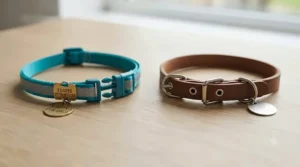
Elastic Breakaway Cat Collar: Why “Stretchy” Isn’t the Same as Safety
This is the single most misunderstood corner of the cat collar market, and it’s worth spelling out plainly. An elasticated collar, or one with a stretch insert, is often marketed using safety language because the underlying idea sounds reasonable: if the collar can stretch, surely a trapped cat can just pull free? In practice, welfare organisations report the opposite pattern. When a cat struggles against an elasticated collar, the material can stretch enough to let a front leg slip inside the loop alongside the neck, and as the cat continues twisting to escape, the elastic tightens around both the leg and neck simultaneously — a scenario that can lead to serious, sometimes irreversible injury, according to Vets Now, which has specifically warned owners against collars made from elastic.
A genuine breakaway buckle avoids this failure mode entirely, because it separates the collar completely rather than relying on stretch to create an escape gap. If you’re currently looking at a product described as a “stretch safety collar” or “elastic breakaway,” check carefully whether it also includes an actual quick-release clasp — some hybrid designs do combine both, but the elastic section alone should never be treated as the primary safety feature.
Kitten Safety Collars and Collars for Young Kittens
Kittens complicate the breakaway calculation in a way many first-time owners don’t anticipate: the buckle only releases once enough force is applied, and a young kitten simply doesn’t weigh or pull hard enough to generate that force reliably. This doesn’t make breakaway collars unsuitable for kittens — it makes supervision non-negotiable during the early weeks. A dedicated kitten safety collar, sized correctly with an extra-small breakaway buckle such as the Rogz KiddyCat Collar, remains the right starting point, but it should be introduced gradually, checked for fit at least weekly given how fast kittens grow, and ideally only worn during supervised time until your vet confirms your kitten has reached a safe weight for unsupervised wear.
Cat Collar Strangulation Risk: What the Evidence Actually Shows
Strangulation from a snagged collar is the specific injury breakaway design exists to prevent, and it’s worth understanding why the risk is real rather than theoretical. A cat’s neck anatomy, combined with its climbing and squeezing behaviour, means a collar that catches on a branch, fence panel or window latch can tighten as the cat panics and struggles, restricting blood flow or airway within a short window. A peer-reviewed literature review of collar-related risks in domestic cats found that entrapment and strangulation featured repeatedly across the studies it examined, and consistently identified quick-release or breakaway collars as the mitigation researchers recommended, according to a review published in the Journal of Feline Medicine and Surgery. The same review also stressed that proper fit, undamaged material and close monitoring during any adjustment period all reduce entrapment risk further, reinforcing that the buckle mechanism alone isn’t a complete solution — fit and upkeep matter just as much.
Collar Safety for Outdoor Cats: Extra Precautions Worth Taking
Outdoor access multiplies both the benefits and the risks of a collar. On one hand, reflective material and a legible ID tag genuinely help reunite a lost cat and reduce road-traffic risk at dusk. On the other, fences, sheds, brambles and neighbouring gardens all present real snag hazards a purely indoor cat never encounters. For outdoor cats specifically, we’d weight the “adjustable tension” criterion from our choosing guide more heavily than for an indoor cat, since a collar tuned to your particular cat’s strength is more likely to release cleanly during a genuine outdoor snag rather than an over-cautious tension that pops during ordinary garden play. Reflective collars like the Ancol Reflective Safety Collar or Rogz AlleyCat Safety Collar earn their keep here, and if your cat has a habit of squeezing through tight fence gaps, it’s also worth periodically checking your garden boundary for obvious snag points — chicken wire and certain trellis patterns are repeat offenders in owner reports.
Common Mistakes When Buying a Cat Collar
The most frequent mistake is buying based on appearance alone and only checking the buckle mechanism after the collar arrives — always confirm “breakaway” or “quick-release” appears explicitly in the product description, not just implied by words like “safe” or “stretch.” A close second is guessing at sizing rather than actually measuring your cat’s neck, which leads to either a collar that’s too loose to keep a tag on securely or too tight for comfort. Owners also commonly forget to recheck fit as a kitten grows, effectively turning a correctly-sized collar into a hazard within a matter of weeks. Finally, some buyers assume any collar labelled “safety” has been independently tested, when in practice that word carries no regulated meaning in pet product listings — it’s marketing language, not a certification, so the buckle mechanism itself is what actually matters.
UK Cat Microchipping Law and Collar Safety Regulations
Since 10 June 2024, it has been a legal requirement in England for all cat keepers to have their cat microchipped by 20 weeks of age, under the Microchipping of Cats and Dogs (England) Regulations 2023, according to the RSPCA. This matters directly for the collar conversation: a collar and ID tag remain the fastest way for a member of the public to identify that a cat found wandering has an owner, since scanning a microchip requires a vet or shelter with a reader, while a collar tag can be read by anyone on the spot. The two systems are complementary rather than competing — a breakaway collar with a legible tag gets your cat home faster in the short term, while the legally required microchip provides a permanent backup if the collar is lost or has released as designed.
✨ Don’t Miss These Exclusive Deals!
🔍 Take your cat’s safety to the next level with a properly fitted breakaway collar. Click on any highlighted product above to check current pricing and availability, and give your cat the freedom to explore with genuine peace of mind. 🐾
Long-Term Cost & Maintenance
A breakaway collar is a low-cost, recurring purchase rather than a one-off — because the buckle is designed to release, expect to occasionally lose or replace one, and budget accordingly rather than treating a single collar as a lifetime purchase. Over a cat’s lifetime, a budget collar replaced two or three times a year works out at roughly £15-£25 annually, while a durable mid-range pick like the Rogz AlleyCat Safety Collar may need replacing less often thanks to its more robust webbing, narrowing the long-term cost gap with cheaper alternatives. The Hepper Hemp Safety Collar‘s higher upfront price is easiest to justify against this backdrop if its improved durability genuinely reduces replacement frequency, though reviewers’ mixed comments on dye fade suggest the cosmetic lifespan may still be shorter than the structural one.
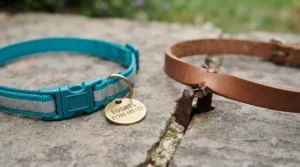
FAQ
❓ Are breakaway collars actually safe for cats?
❓ What's the difference between a breakaway and an elastic cat collar?
❓ Should kittens wear a breakaway collar?
❓ Can indoor-only cats wear breakaway collars?
❓ How much force does it take for a breakaway collar to release?
Conclusion
So, are breakaway collars safe for cats? On the evidence from welfare organisations, veterinary commentary and the peer-reviewed literature we’ve drawn on throughout this guide, a properly fitted, genuine breakaway collar is comfortably the safest collar option available, and the small risk of an occasional accidental release is a trade most vets consider well worth making against the alternative. The real nuance isn’t whether to use one, but which one — steering clear of purely elasticated designs, matching tension settings to your cat’s size and temperament, and rechecking fit regularly as kittens grow or seasons change. Of the seven collars compared here, the Rogz AlleyCat Safety Collar stands out as the best all-round choice for outdoor cats thanks to its weight-matched tension, while the Rogz KiddyCat Collar is the sensible starting point for kittens and the Hepper Hemp Safety Collar rewards owners prioritising sensitive-skin comfort and sustainability.
Whichever you choose, pair it with the legally required microchip, keep the fit checked, and your cat gets the best of both worlds: quick identification if they wander, and a genuine escape route if they ever get into trouble.
✨ Ready to Choose the Right Collar for Your Cat?
🐱 Check the current price and availability on any of the collars above, and give your cat a safer way to explore. Your future self — and your cat — will thank you.
Recommended for You
- Wicker Cat Carrier UK: 7 Best Stylish Baskets for 2026
- Expandable Cat Carrier: 7 Top Picks for UK Cats in 2026
- Crash Tested Cat Carrier: 7 Safest Picks for UK Drivers 2026
Disclaimer: This article contains affiliate links. As an Amazon Associate, I earn from qualifying purchases. If you purchase products through these links, we may earn a small commission at no additional cost to you.
✨ Found this helpful? Share it with your friends! 💬🤗
