
In This Article
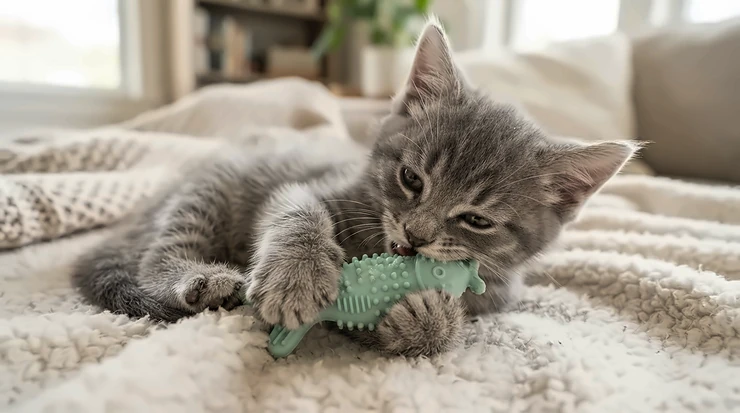
A treat dispensing toy for kittens is a small, kitten-safe toy that releases dry treats or kibble in tiny amounts as your kitten bats, rolls or noses it about. It turns snack time into a hunting game, builds problem-solving skills, and gives a bored young cat something far better to do than ambush your ankles at 3 a.m.
Here’s the thing about kittens: they’re tiny, furry project managers with unlimited energy and zero respect for your furniture. Without an outlet, that drive goes sideways. Toes get stalked, curtains get climbed, cables get chewed. A firmer voice won’t fix it, but somewhere legal for all that hunting instinct to go will.
That’s where a treat dispensing toy for kittens earns its keep. Cats Protection’s behaviour team explains that early experiences shape a cat’s lifelong welfare, and play that rewards curiosity is one of the easiest positive experiences to give.
In this guide you’ll find seven real products compared honestly, from a simple kitten puzzle toy to a proper multi-level challenge. We’ll also cover the easy treat toy for kittens that suits a first week at home, how a kitten training toy supports good habits, why early enrichment matters, and how to handle teething and chewing safely.
A quick note on method: I haven’t handled these toys myself. Everything below comes from manufacturer and retailer specifications, published feline-behaviour guidance, and genuine customer feedback where I could find it. Where review evidence is thin, I’ll say so rather than invent any.
Quick Comparison of the Best Treat Dispensing Toy for Kittens Options
Price bands reflect retailer listings at the time of research. Check current price and availability on amazon.co.uk before buying.
| Product | Style | Difficulty | Price range | Best For |
|---|---|---|---|---|
| Catit Pixi Treat Dispenser | Self-righting wobble toy | Adjustable | Under £10 | First treat toy and slow nibbling |
| KONG Kitty | Natural-rubber bounce toy | Easy | Under £10 | Bat-and-chew play, paste treats |
| Smart Choice Treat Dispensing Cat Toy | Character treat toy | Easy | Budget (check price) | Tight budgets and gifts |
| Kruuse Catrine Catmosphere Dispenser Ball | Weighted rolling ball | Easy to medium | Around £10-£15 | Chasers who love erratic movement |
| Trixie Cat Activity Strategy Game Solitaire | Lift-the-ball puzzle board | Easy to medium | Under £10 | First real kitten puzzle toy |
| Catit Senses 2.0 Food Tree | Tiered food maze | Three levels | Mid-range (check price) | Mealtimes that grow with your kitten |
| Trixie Cat Activity Poker Box | Four-mechanism puzzle | Medium to hard | Mid-range (check price) | Clever kittens who need a challenge |
Looking at the table, the Catit Pixi Treat Dispenser and Trixie Solitaire are the lowest-risk way to start, while the Catit Senses 2.0 Food Tree gives the most room to grow. The Trixie Poker Box is the hardest of the seven, so it suits a confident kitten better than a nervous newcomer. Budget buyers lose little by starting with KONG Kitty or Smart Choice and upgrading once they see what their kitten enjoys.
💬 Just one click — help others make better buying decisions too!😊
Top 7 Treat Dispensing Toy for Kittens Picks: Expert Analysis
1. Catit Pixi Treat Dispenser — adjustable slider that grows with skill
The slider is what makes this one clever. It changes how easily treats escape, so the same toy can stay interesting for months. The weighted base makes it wobble and right itself, which keeps a kitten batting it for just one more nibble.
The listing says it takes treats or dry food up to 9mm across, which suits kitten-sized kibble and small treats well. Scent openings help a kitten find the reward quickly, and the dispenser works as a slow feeder. That’s useful for a youngster who inhales everything in sight.
Based on the specs, this is the one I’d point most first-time owners towards. Open the slider wide on day one so your kitten wins quickly, then narrow it as confidence builds. It’s a built-in difficulty ladder, and many toys at this price lack one.
On reviews, the retailer listings I checked (Jollyes and M&S) carried too little feedback for me to summarise fairly. Treat this as a spec-based recommendation.
Pros:
- ✅ Adjustable slider extends the toy’s useful life
- ✅ Self-righting base encourages repeated batting
- ✅ Scent openings help kittens find treats fast
Cons:
- ❌ Only suits small dry treats up to 9mm
- ❌ Hard body offers nothing for teething gums
Price: under £10 at the time of research, which is excellent value for an adjustable toy.
2. KONG Kitty — soft natural rubber for bat-and-chew play
This is the kitten toy for gummy, mouthy days. It’s made of natural rubber, with a squeezed-in blob of paste, a pinch of catnip or a few kibbles hidden inside. It bounces unpredictably, so even a sleepy kitten tends to wake up and pounce.
At roughly 5.7cm by 3.6cm, it’s sized for small paws and small mouths. Rubber is also gentler than hard plastic, which matters during teething and chewing. The paste route turns it into a lick-and-gnaw reward rather than a rattling puzzle.
My take: KONG Kitty is the best “bridge” between play and treats. It teaches your kitten that toys can pay out, without the frustration of a mechanism. It won’t dispense kibble the way a wobble toy does, so think of it as a low-pressure introduction.
I couldn’t find meaningful verified review data on the retailer pages I checked, so I won’t pretend to summarise sentiment.
Pros:
- ✅ Soft rubber suits gums during teething
- ✅ Bouncy, unpredictable movement sparks play
- ✅ Works with paste, kibble or catnip
Cons:
- ❌ Tiny enough to vanish under furniture
- ❌ Paste fillings need washing out after use
Price: under £10 at the time of research, a very low-risk purchase.
3. Smart Choice Treat Dispensing Cat Toy — cheerful characters on a tight budget
Cute counts for something when you’re gifting a kitten or buying on a shoestring. This toy comes in three characters (a pink mouse, a green chick and a blue cat) and measures about 5.5cm by 5.5cm by 8.5cm. The retailer positions it for kittens and indoor cats alike.
That compact size fits little paws without needing the strength of an adult cat. The mouse and chick shapes also tap into the chase-and-pounce habit kittens practise from a very young age.
The honest caveat is that the listing doesn’t spell out the mechanism, the material, or whether difficulty can be adjusted. Before buying, check the product page for the maximum treat size, and don’t assume it takes anything you’d like to feed. Used with a few kitten kibbles, it’s a sensible, inexpensive first toy.
I found no verified review sample, so this pick rests on specifications alone.
Pros:
- ✅ Three characters make colour-choosing fun
- ✅ Compact size suits small kitten paws
- ✅ Budget-friendly way to test interest
Cons:
- ❌ Listing gives little mechanism or material detail
- ❌ No stated way to adjust difficulty
Price: budget-friendly at the time of research. A fair first trial toy, but check current price.
4. Kruuse Catrine Catmosphere Dispenser Ball — erratic roll keeps chasers hooked
A weight inside the ball creates an unpredictable roll, and that wobble is the whole appeal. A kitten who loves chasing will follow it across the room, with the occasional reward tumbling out as a bonus. The retailer notes it needs little owner involvement, so it’s useful when you’re busy.
Listed at around £11 at a UK vet retailer, it sits in the lower-middle price tier. It comes in black or pink. The listing also reminds buyers to supervise play, which is sensible with any small rolling toy and a curious kitten.
The honest data point: the only review I could find was a single, older four-star one. That reviewer said their cats learned quickly, that the lightness suits small cats, and that some cats guard the ball in multi-cat homes. One review is anecdote, not a trend.
My analysis: this is an ideal choice for athletic chasers, and a poor one for shy kittens who dislike movement.
Pros:
- ✅ Weighted roll creates unpredictable chasing play
- ✅ Needs minimal owner involvement
- ✅ Light enough for smaller cats, per one reviewer
Cons:
- ❌ Single ball invites guarding in multi-cat homes
- ❌ Limited detail on adjusting difficulty
Price: around £10-£15 at the time of research. Reasonable if your kitten loves to chase.
5. Trixie Cat Activity Strategy Game Solitaire — the gentlest first puzzle board
Think of this as a kitten puzzle toy with training wheels. A board of seven cover balls hides treats or liquid snacks underneath, and your kitten has to lift or nudge each one to find the reward. It measures about 15cm wide.
The robust plastic body has a rubber ring underneath, so eager paws don’t send it skidding across the kitchen. Training instructions come with it, which helps you coach a first-timer rather than leaving them to flounder.
Why it works: lifting a ball is a simple cause-and-effect lesson, and each success builds confidence. Starting with treats in the shallow, easy-to-reach spots mirrors the “show your cat how it works” advice behavioural charities give for food puzzles. The seven positions also let you set the difficulty yourself.
I found no verified review sample for this exact product, so this is a spec-led recommendation.
Pros:
- ✅ Seven cover balls give flexible difficulty
- ✅ Rubber base keeps the board steady
- ✅ Included instructions help first-time users
Cons:
- ❌ Needs some paw dexterity from very young kittens
- ❌ Small treats can get lost in the base
Price: under £10 at the time of research, which makes it a bargain puzzle.
6. Catit Senses 2.0 Food Tree — a tiered maze that grows with your kitten
Mealtimes become a foraging game here. Your kitten pushes kibble through side openings and down a tiered maze, rather than hoovering up a bowl. Rotating the middle disc narrows the openings, giving three difficulty settings.
At roughly 37.5cm across and 34cm tall, it’s the biggest toy in this list. That stability is deliberate: the wider base, narrow top opening and tray for stray pieces make it tougher to tip or cheat. The shallow tray is also designed to be gentle on sensitive whiskers. It’s BPA-free, dismantles for hand-washing, and can pair with other Catit Senses 2.0 products.
What reviewers say is genuinely useful. Owners report it taking a day or two for a cat to work out, then slowing a greedy eater noticeably. One reviewer observed that a cheaper older Catit food toy looks similar, and another noted that a third cat in their home ignores every puzzle feeder. Cats differ, even when the toy is good.
Pros:
- ✅ Three difficulty settings from a rotating disc
- ✅ Tray catches stray kibble, reducing mess
- ✅ Dismantles for thorough cleaning
Cons:
- ❌ Bulky footprint for small flats
- ❌ Hand-washing adds a regular chore
Price: mid-range at the time of research. Check current price, and weigh it against its long life.
7. Trixie Cat Activity Poker Box — four different puzzles in one box
This is the problem-solver’s choice. Four compartments each demand a different move: flip the lid, lift the lever, or pull one of two drawers. The maker says it suits playful kittens as well as senior cats, and it’s made of BPA-, phthalate- and lead-free plastic with a non-slip base.
That variety is the real value. Instead of one trick that gets boring, your kitten works through four, and you can fill only the easiest compartments at first. It also functions as a mealtime puzzle for kittens who need more mental stimulation than a ball can give.
My analysis: this is the step-up toy rather than the starter. A very young or nervous kitten may find it frustrating, whereas a confident one will love the challenge. Introduce it after a simpler toy such as the Trixie Solitaire has taught the basic “work for the reward” idea.
I couldn’t find an aggregated review sample for the cat version, so this pick rests on specifications.
Pros:
- ✅ Four distinct mechanisms keep things interesting
- ✅ Non-slip base stays put during play
- ✅ BPA-, phthalate- and lead-free plastic
Cons:
- ❌ Too tricky for the youngest kittens at first
- ❌ Larger footprint needs flat floor space
Price: mid-range at the time of research. Good value if your kitten gets bored easily.
Here’s how the seven compare on the details that matter in daily use.
| Product | Size and material notes | Adjustable? | Treat type | Best For |
|---|---|---|---|---|
| Catit Pixi Treat Dispenser | Weighted self-righting body | Yes, slider | Dry treats up to 9mm | New owners |
| KONG Kitty | About 5.7cm by 3.6cm, natural rubber | No | Paste, kibble, catnip | Teething stage |
| Smart Choice Treat Dispensing Cat Toy | About 5.5cm by 5.5cm by 8.5cm | Not stated | Check listing | Budget gifts |
| Kruuse Catrine Catmosphere Dispenser Ball | Weighted ball, black or pink | Not stated | Treats or food | Active chasers |
| Trixie Cat Activity Strategy Game Solitaire | About 15cm wide, plastic, rubber ring | Via seven positions | Treats or liquid snacks | First puzzle |
| Catit Senses 2.0 Food Tree | About 37.5cm by 34cm, BPA-free | Yes, three levels | Kibble or treats | Mealtimes |
| Trixie Cat Activity Poker Box | Four compartments, non-slip base | Partly, by filling fewer | Treats or food | Problem solvers |
The table shows a clear split. The Catit Pixi Treat Dispenser, Kruuse Catrine Catmosphere Dispenser Ball and KONG Kitty are portable, light and quick to learn. The Catit Senses 2.0 Food Tree and Trixie Poker Box are fixed stations that reward patience, so choose by your kitten’s temperament rather than by price alone.
Your First 30 Days With a Treat Dispensing Toy for Kittens: A Practical Guide
Most people buy a toy, drop it on the floor and wonder why the kitten ignores it. A little structure changes everything.
Days 1-3: make it ridiculously easy. Open the Catit Pixi Treat Dispenser slider to its widest setting, or use only the easiest spots on the Trixie Solitaire. Sprinkle a few kibbles around the base so your kitten connects the toy with food. International Cat Care suggests this exact trick, along with keeping some of the daily food in a bowl at first.
Show, don’t tell. Cats Protection’s behaviour team advises demonstrating how a feeding toy works rather than assuming your cat doesn’t understand. Tap the toy, let a treat fall, and let your kitten discover it. They also suggest placing feeding toys away from water bowls.
Week 2: raise the bar slightly. Narrow the slider a touch, turn the Catit Senses 2.0 Food Tree disc to its middle setting, or fill fewer compartments in the Trixie Poker Box. Stop while your kitten is still keen.
Weeks 3-4: rotate and clean. Swap toys every few days so none become boring. Wash any treat toy regularly, because stale crumbs and saliva build up fast.
Common first-month mistakes:
- Starting on the hardest setting and creating frustration
- Using treats on top of full meals, leading to overfeeding
- Leaving every toy out all day, which kills novelty
- Skipping supervision with small rolling toys
Treat the daily food allowance as a whole. If treats go in the toy, take them out of the bowl.
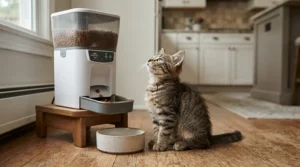
Problem and Solution Guide: When Your Kitten Isn’t Playing Along
Here are five common headaches and what to try.
“My kitten ignores it.” Not every kitten gets it at once. Make the first rewards visible and effortless, perhaps with a smear of paste in KONG Kitty, and try again when they’re a little hungry before a meal, not after one.
“They get frustrated and give up.” The toy is probably too hard. Re-open the Catit Pixi slider or fill only the easiest positions on the Trixie Solitaire. Success first, difficulty later.
“They gulp everything instantly.” Move to a maze such as the Catit Senses 2.0 Food Tree, which is designed to slow fast eaters by making them paw food out gradually.
“One kitten hogs the toy.” Cats can guard a favourite item, as one reviewer of the Kruuse Catrine Catmosphere Dispenser Ball noted. Buy duplicates and place them in different rooms.
“They chew the plastic.” Hard chewing isn’t what these toys are for. Offer KONG Kitty as the chew-friendly option and supervise play. Remove any toy showing cracks or loose pieces.
Real-World Scenarios: Three Kitten Households
The city flat and a ten-week-old. Small space, working days, and a kitten who wakes at dawn. The compact Catit Pixi Treat Dispenser fits anywhere, and the Trixie Solitaire gives a second, quieter option for the evening. Budget: well under £20 for both. Used twice a day for ten minutes, they cover a lot of the boredom gap.
The family home with two kittens and a toddler. Duplicates matter here. A pair of Smart Choice characters or KONG Kitty toys prevents squabbles, and a Catit Senses 2.0 Food Tree on the kitchen floor turns breakfast into a shared game. Supervision rules apply because small toys and small children don’t mix unattended.
The student on a tight budget. One KONG Kitty and one Trixie Solitaire keep spending low, and the student can fill the toys from the kitten’s normal daily kibble rather than buying extra treats. That makes the total cost almost nothing beyond the toys themselves.
How to Choose a Treat Dispensing Toy for Kittens
Follow these steps in order.
- Check the treat size. Many toys accept only small pieces. The Catit Pixi Treat Dispenser lists a 9mm limit, so confirm what you’ll feed.
- Match difficulty to age. Very young kittens need quick wins, so look for adjustable settings like those on the Catit Senses 2.0 Food Tree.
- Consider your kitten’s temperament. Chasers suit rolling toys, while thinkers suit puzzles like the Trixie Poker Box.
- Look at the materials. Soft rubber suits teething, while hard plastic suits supervised batting and pawing.
- Think about cleaning. Toys that dismantle are easier to keep hygienic over months.
- Plan for multiple kittens. Buy duplicates or place toys in separate spaces.
- Check current price and availability. Prices vary, so verify on amazon.co.uk before buying.
Treat Dispensing Toys vs Feeding From a Bowl
A bowl is convenient. A treat toy is rewarding. Here’s how they compare.
| Factor | Bowl | Treat dispensing toy | Best For |
|---|---|---|---|
| Eating pace | Fast, often gulped | Slower, more gradual | Greedy kittens |
| Mental stimulation | Minimal | Problem-solving and hunting practice | Bored or energetic kittens |
| Convenience | Fill and forget | Needs setup and cleaning | Busy owners (bowl) |
| Mess | Low | Some scatter possible | Tidy households (bowl) |
International Cat Care recommends that cats should receive much of their food through puzzle feeders, and that kittens can use them too. A balanced approach works well: keep some meals in a bowl, particularly early on, and use a treat toy for the rest. That gives you convenience without losing the benefits.
Kitten Puzzle Toy: When to Step Up From a Simple Dispenser
A simple dispenser rewards you for nudging. A true kitten puzzle toy rewards you for thinking. The difference matters because it changes how long the toy stays interesting.
Start with a gentle option like the Trixie Solitaire, where one lifted ball means one reward. Once your kitten does that confidently, move on to something with more steps, such as the Trixie Poker Box with its lid, lever and drawers.
Honest caveat: the evidence base is still developing. A published survey of cat owners found that many didn’t know how to choose or introduce a food puzzle, and the authors noted that more research is needed on welfare effects. The practical lesson is to introduce slowly, watch your kitten’s reaction, and step back if they seem stressed.
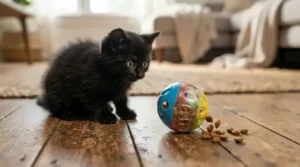
Easy Treat Toy for Kittens: Where Every Kitten Should Start
An easy treat toy for kittens should deliver the reward within seconds. The goal at this stage isn’t challenge, it’s confidence.
The best easy options in this list are KONG Kitty, the Catit Pixi Treat Dispenser on its widest setting, and the Smart Choice characters. Each is small enough for kitten paws and simple enough to understand quickly.
An easy treat toy for kittens also helps nervous arrivals. A kitten in a new home may be wary of everything, but a bouncy rubber toy with a lickable reward gives them a positive first association. Offer it in a quiet room, let your kitten approach in their own time, and never force interaction.
Kitten Training Toy: Turning Snacks Into Lessons
A kitten training toy works because it links effort with a reward, which is the basis of all good kitten training.
Cats Protection’s socialisation chart includes recall for a food treat using the kitten’s name as a simple early activity. A treat toy is a natural companion to that. Say your kitten’s name, reward the response, and let the toy act as a bonus.
Good kitten training also includes teaching what’s appropriate to play with. Wood Green advises avoiding games that encourage chasing hands or feet, and suggests following the natural stalk, chase, catch and kill sequence with proper toys. Cats Protection also warns against punishing a kitten.
In practice, a Catit Pixi Treat Dispenser or Kruuse Catrine Catmosphere Dispenser Ball can serve as that appropriate target. Redirect biting or pouncing onto the toy, reward calm behaviour, and you’ve turned a bad habit into a lesson without raising your voice.
Early Enrichment: Why the First Months Count
Early enrichment is the deliberate use of positive experiences, textures, sounds and activities to prepare a kitten for adult life. It’s not a luxury, it’s preparation.
Cats Protection’s structured kitten socialisation programme, developed by Dr Rachel Casey, includes toys such as cardboard boxes, balls, a furry mouse and a toy with a bell, alongside gentle handling and food variety. A published study of Cats Protection centres found that kittens given enhanced socialisation tended to show less fear of humans later in life. That research focused on handling and exposure, not treat toys specifically.
So treat dispensing toys aren’t a magic fix, but they fit neatly into the same philosophy. They offer a safe, rewarding new experience that involves problem-solving. A Trixie Solitaire in week one and a Catit Senses 2.0 Food Tree by week four make a sensible early enrichment progression.
Teething and Chewing: Which Toys Are Safe
Teething and chewing go hand in hand. Kittens have 26 baby teeth, which are replaced by 30 adult teeth, with the main replacement phase starting around three to four months and usually finishing by six to seven months.
Cats Protection’s teething advice notes that baby teeth are fragile, and that damage can affect the adult teeth that follow. Excessive chewing is a common sign of teething, and kittens often swallow their baby teeth without anyone noticing.
For this stage, choose softer options. KONG Kitty is made of natural rubber, which is gentler than hard plastic. Hard plastic toys like the Catit Pixi Treat Dispenser are better for pawing and batting than for chewing, so supervise and redirect if your kitten starts gnawing on them.
If you notice baby teeth still present alongside adult teeth, or your kitten seems to be in pain, speak to your vet. That’s where professional advice takes over.
Long-Term Cost and Maintenance
Most treat toys cost little upfront, but the real value is in how long they stay useful.
An adjustable toy like the Catit Pixi Treat Dispenser or Catit Senses 2.0 Food Tree can stay relevant for months, because you can raise the difficulty as skills grow. A fixed-difficulty toy may be outgrown faster, though it can still serve as a backup.
Maintenance matters too. Wash toys regularly with mild soap and rinse thoroughly. The Catit Senses 2.0 Food Tree dismantles for hand-washing, which makes thorough cleaning easier than with sealed designs. Inspect every toy for cracks, loose parts or chewed edges, and replace anything damaged.
The real saving comes from using part of your kitten’s daily food allowance in the toy, so you aren’t buying extra treats. Over a few months, a £10 toy used well can do more for behaviour than a bag of expensive snacks.
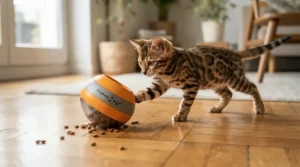
FAQ
❓ What is the best treat dispensing toy for kittens under £10?
❓ How old should a kitten be before using a kitten puzzle toy?
❓ How many treats can a kitten have from a treat toy each day?
❓ Can a treat dispensing toy help with kitten training?
❓ Are treat toys safe during teething and chewing?
Conclusion
A treat dispensing toy for kittens is one of the cheapest, simplest ways to channel a young cat’s energy into something constructive. It slows greedy eating, adds early enrichment, and gives your kitten a safe outlet for hunting instincts.
If you want one starting point, the Catit Pixi Treat Dispenser is the most versatile, thanks to its adjustable slider. For teething and chewing, KONG Kitty is the gentler choice. For a first kitten puzzle toy, the Trixie Solitaire is a sensible step, while the Catit Senses 2.0 Food Tree and Trixie Poker Box suit kittens ready for more. The Kruuse Catrine Catmosphere Dispenser Ball is ideal for chasers, and Smart Choice is a fun budget trial.
Whatever you choose, start easy, supervise, and let your kitten set the pace. Cats differ, and the right toy is the one yours actually uses.
Recommended for You
- Slow Feeder Puzzle Bowl For Cats: 7 Best Picks Compared (2026)
- Puzzle Feeder For Overweight Cats: 7 Best UK Picks (2026)
- Ball Track Toy Vs Food Puzzle Toy: 7 Best Picks For UK Cats (2026)
Disclaimer: This article contains affiliate links. As an Amazon Associate, I earn from qualifying purchases. If you purchase products through these links, we may earn a small commission at no additional cost to you.
✨ Found this helpful? Share it with your friends! 💬🤗
