
In This Article
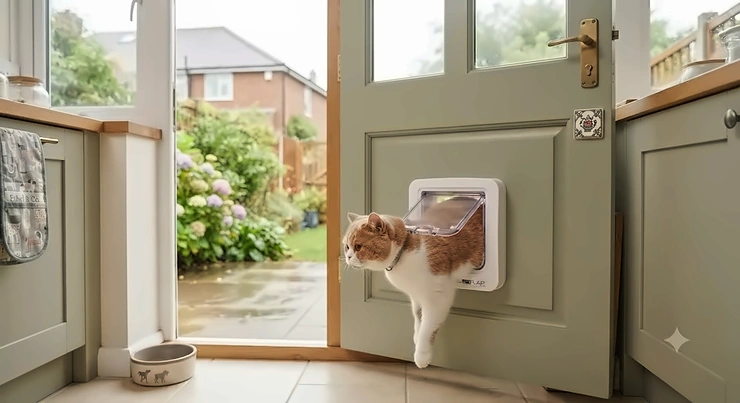
A microchip cat flap vs magnetic cat flap decision sounds trivial until you’re standing in the pet aisle with a cat carrier under one arm and a screwdriver in the other, trying to work out which little plastic door is actually worth your money. In short: a microchip cat flap reads the identification chip already sitting under your cat’s skin and unlocks automatically, while a magnetic cat flap relies on a small magnet fixed to your cat’s collar to trigger the latch. Both keep the flap locked to everyone else. The difference matters more than it sounds, and it’s the whole reason this comparison exists.
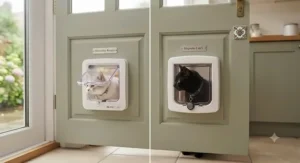
Here’s the honest starting point — I haven’t personally fitted every model on this list into my own back door, so nothing here is dressed up as hands-on testing. What you’re getting instead is a close read of the real specifications, the aggregated sentiment from thousands of genuine Amazon UK reviews, and a fair bit of comparative reasoning about which system actually suits which household. Since June 2024, every pet cat in England legally has to be microchipped anyway, which quietly changes the maths on this decision — more on that shortly.
Cats don’t care about your DIY skills or your budget spreadsheet; they care about getting in and out without a queue. This guide breaks down seven real, currently sold products, weighs microchip against magnetic technology feature by feature, and gives you a decision framework so you’re not just guessing based on which box looks nicest in the shop.
Quick Comparison Table: Microchip vs Magnetic Cat Flaps
| Factor | Microchip Cat Flap | Magnetic Cat Flap | Best For |
|---|---|---|---|
| How it identifies your cat | Scans existing microchip via RFID | Detects a magnet fitted to collar | Multi-cat or multi-species households → microchip |
| Extra accessory needed | None — uses the chip your vet already fitted | Collar + magnetic key (can fall off) | Collar-shy cats → microchip |
| Typical price range (Amazon UK) | Around £55-£200+ | Around £20-£50 | Tight budgets → magnetic |
| Batteries required | Usually yes (4x AA, ~12 months) | Sometimes none (purely mechanical) | Off-grid or draughty porches → magnetic |
| False entries from next-door’s cat | Very low — needs matching chip ID | Possible if a neighbour’s cat wears a similar magnet | Households near stray colonies → microchip |
Reading across that table, the pattern is fairly clear: microchip flaps trade a higher upfront price and a battery-change habit for near-zero risk of accidental impostor entry, while magnetic flaps trade a small ongoing risk of collar loss for a cheaper, often battery-free mechanism. Neither is objectively “better” — it depends whether your priority is cost control or absolute selectivity, which is exactly what the rest of this article digs into.
💬 Just one click — help others make better buying decisions too!😊
Top 7 Microchip & Magnetic Cat Flaps: Expert Analysis
We’ve mixed both technologies here deliberately, spanning budget, mid-range and premium, so you can compare like-for-like rather than reading two separate “best of” lists that never talk to each other.
1. SureFlap Microchip Cat Flap — best all-rounder for UK homes
The original SureFlap remains the benchmark microchip flap in the UK, and its Amazon UK review volume — north of 22,000 ratings on some listings — tells you it’s not a niche product. It reads 9, 10 and 15-digit microchip formats, which covers essentially every chip a UK vet would have implanted, plus SureFlap’s own RFID collar tags for pets that aren’t chipped.
The one-button programming stores up to 32 cat identities in memory, which sounds like overkill until you remember multi-cat households and visiting relatives’ pets exist. Battery life sits around 12 months on 4x AA cells, and a red low-battery light gives fair warning before it dies mid-week. Based on the spec comparison with cheaper microchip alternatives, the standout is the 4-way manual lock, letting you set in-only mode so your cat can come home without being able to go back out — handy on bin day or firework night.
Reviewers consistently note that installation into standard door cut-outs (leftover from an old cat flap) is genuinely straightforward, while a recurring theme in less favourable reviews is occasional missed reads on the first attempt, usually solved by re-centring the collar or chip position relative to the sensor. This is the safe default pick for most British homes without unusual door materials or extreme budget constraints.
Pros:
- ✅ Reads all common UK microchip formats out of the box
- ✅ Stores up to 32 identities for multi-cat households
- ✅ 4-way manual lock adds curfew-style control
Cons:
- ❌ Occasional missed first-attempt reads reported by users
- ❌ Batteries not included despite being required
Price sits in the around £70-£120 range depending on colour and retailer at the time of research; for the reliability track record, it’s fair value rather than a bargain.
2. SureFlap DualScan Microchip Cat Flap — best for households with indoor cats too
The DualScan takes the standard SureFlap mechanism and adds a second reader on the inside of the flap, meaning it identifies your cat on the way out as well as the way in. What most buyers overlook about this distinction is that it’s not just a gimmick — it lets you restrict specific cats to indoor-only status while still letting others roam freely through the same physical door, which is a genuinely useful setup for households mixing an elderly or medically restricted cat with younger, more adventurous ones.
Like its sibling, it reads 9, 10 and 15-digit microchips and RFID collar tags, runs on 4x AA batteries, and offers the same one-button memory programming for up to 32 pets. On paper this means near-identical day-to-day behaviour to the standard SureFlap, with the added dual-direction logic layered on top.
Aggregated review sentiment sits a touch lower than the standard model — around 4.2 out of 5 across roughly 2,600 UK ratings — and a common complaint in user reviews is that dual-direction scanning occasionally causes brief hesitation before the flap unlocks, which some cats interpret as “closed” and simply stop trying. That’s worth factoring in if your cat is easily discouraged.
Pros:
- ✅ Scans on both entry and exit for finer control
- ✅ Can restrict specific cats to indoor-only living
- ✅ Same 32-pet memory and battery life as the standard SureFlap
Cons:
- ❌ Slightly lower aggregated review score than the standard model
- ❌ Reported hesitation before unlocking can confuse nervous cats
At around £100-£190 depending on retailer and stock, this is a premium buy that earns its place specifically in mixed indoor/outdoor households rather than single-cat homes.
3. PetSafe Staywell Microchip Cat Flap — best value RFID alternative
PetSafe’s microchip flap is the sensible “SureFlap, but slightly cheaper” option, and it’s worth taking seriously rather than dismissing as a knock-off. It reads the most common FDX-B 15-digit microchip format used in UK cats, offers selective entry for up to 40 programmed pets, and pairs that with a reinforced dual auto-latch plus the same 4-way manual lock logic seen on the SureFlap models.
Here’s what the spec sheet won’t tell you, but user reports suggest: installation into glass, brick or metal doors needs a separate microchip installation adaptor sold apart from the main unit, so budget for that if your door isn’t standard wood or uPVC. The draught excluder design is a genuine practical touch for older UK houses with gappy door frames — something cheaper magnetic flaps often skimp on.
Reviewers consistently report solid day-to-day reliability once installed correctly, with the main recurring gripe being that non-standard 9 or 10-digit microchips (less common but not unheard of in rescue cats) aren’t always recognised, so it’s worth checking your cat’s specific chip format with your vet before buying.
Pros:
- ✅ Reads up to 40 programmed pets, more than most rivals
- ✅ Built-in draught excluder suits older UK homes
- ✅ Reinforced dual auto-latch feels sturdy in daily use
Cons:
- ❌ Metal, glass or brick doors need a separate adaptor purchase
- ❌ Doesn’t reliably read some older 9/10-digit microchip formats
Expect a price in the £60-£85 range at the time of research, positioning it as a genuine mid-range alternative to SureFlap rather than a downgrade.
4. Cat Mate Microchip Activated Cat Flap (360) — most affordable true microchip option
If your priority is getting proper microchip selectivity without paying SureFlap money, the Cat Mate 360 is the model to look at. It stores up to 30 pet IDs, offers the same category of selective entry as the pricier competition, and comes from Pet Mate, a UK-based manufacturer with decades in the pet-door business under the Cat Mate, Dog Mate and Fish Mate names.
Based on the spec comparison, the trade-off for the lower price is a simpler control interface — fewer of the granular curfew-style settings the SureFlap DualScan offers — but the core function of reading a genuine microchip and refusing unrecognised cats works the same way. It’s weatherproof and designed for silent operation, which matters more than people expect once the flap is actually installed near a bedroom.
A recurring theme in aggregated review sentiment is genuinely positive value-for-money commentary, with the main criticism being a smaller UK review pool than SureFlap or PetSafe, so there’s simply less collective data to draw firm long-term reliability conclusions from compared to the market leaders.
Pros:
- ✅ Cheapest genuine microchip-reading flap on this list
- ✅ Stores up to 30 pet identities
- ✅ UK-based manufacturer with long pet-door heritage
Cons:
- ❌ Fewer advanced curfew/control settings than premium rivals
- ❌ Smaller review sample makes long-term reliability harder to verify
Priced around £50-£70 depending on retailer, this is the pick for budget-conscious owners who still want genuine microchip security rather than a magnetic compromise.
5. PetSafe Staywell 400 Deluxe Magnetic Cat Flap — best magnetic pick overall
Moving to magnetic technology, the Staywell 400 is the most established option in this category on Amazon UK, with thousands of ratings across its various colourways. It works with a supplied magnetic collar key rather than a microchip scan — your cat wears a small magnet, and the flap’s locking mechanism releases when that magnet passes close enough to the sensor.
The 4-way lock (in-only, out-only, open, locked) mirrors the control logic of the microchip models above, and crucially, this mechanism needs no batteries at all — the magnet-and-latch system is entirely mechanical. What most buyers overlook about this is the trade-off: no batteries means no ongoing running cost or dead-battery lockouts, but it also means no memory, no logging, and no way to distinguish between two cats wearing similar magnetic keys.
Reviewers consistently report that the magnetic key occasionally detaches from cheaper collars, particularly with older cats prone to squeezing through tight gaps, and a common complaint in user reviews involves needing to buy replacement keys after a year or two of daily wear. Suitable for cats up to roughly 7kg with a maximum shoulder width of around 150mm.
Pros:
- ✅ Fully mechanical — no batteries, no charging, no dead-flap mornings
- ✅ 4-way manual lock matches microchip-flap flexibility
- ✅ Lower price point than any microchip model on this list
Cons:
- ❌ Magnetic collar key can detach or go missing over time
- ❌ No way to log which cat used the flap or when
Expect a price around £30-£47 at the time of research, making it genuinely the most affordable route to selective entry rather than an unlocked free-for-all flap.
6. Cat Mate Electromagnetic Cat Flap (254) — cheapest magnetic entry point
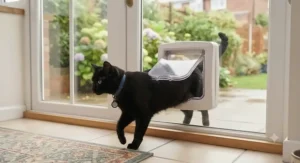
The Cat Mate 254 electromagnetic flap is the budget end of magnetic technology, and it’s worth being precise about terminology here: this is a battery-powered electromagnet that locks the flap shut until a cat wearing the correct collar magnet approaches, distinct from the purely mechanical Staywell 400 above. It ships with two collar magnets, runs on a single 9V battery, and is aimed squarely at small to average-sized cats.
Based on the spec comparison, the appeal is straightforwardly the price — this consistently ranks among the cheapest genuinely selective-entry flaps sold on Amazon UK, sitting well under most microchip alternatives. The brush-sealed, draught-resistant design is a decent practical touch given the low cost, and the silent action gets specifically flagged in product materials as a design priority.
A common complaint in user reviews concerns 9V battery life being shorter than the AA-powered competition, with some owners reporting more frequent changes than expected, though aggregated ratings around 4.4 out of 5 across roughly 2,300 UK reviews suggest most buyers find it does its core job reliably for the money.
Pros:
- ✅ One of the cheapest genuinely selective-entry flaps available
- ✅ Ships with two collar magnets included
- ✅ Draught-resistant, brush-sealed build for the price point
Cons:
- ❌ 9V battery reportedly needs more frequent replacement than AA models
- ❌ Only suits small to average-sized cats, not larger breeds
At around £20-£35 depending on retailer, this is the entry point for anyone who wants more security than an unlocked flap but can’t stretch to microchip pricing.
7. Sure Petcare SureFlap Microchip Cat Flap Connect — best for tracking and app control
The Connect is SureFlap’s smart-home step-up, pairing the standard DualScan microchip mechanism with a Sure Petcare Hub and companion app. Here’s what the spec sheet won’t tell you directly: this isn’t just a fancier lock, it’s a monitoring tool — you get notifications when your cat leaves or returns, and over time you can track patterns in their comings and goings, which vets increasingly point to as an early indicator of behavioural or health changes.
It retains full microchip and RFID collar tag compatibility, the same 4-way lock logic, and 4x AA battery power for the flap itself (the Hub needs mains power). What most buyers overlook about this model is that the intelligence lives partly in the cloud — if your home wifi or the Sure Petcare servers have a wobble, the flap itself still works locally, but the app features pause until connectivity returns.
Aggregated review sentiment is more mixed here than the simpler SureFlap models, sitting around 3.9 out of 5 across roughly 1,400 ratings, with a recurring theme being setup friction connecting the Hub to home networks, alongside genuinely positive feedback about the peace of mind the activity tracking provides for owners of elderly or unwell cats.
Pros:
- ✅ Real-time entry/exit notifications via smartphone app
- ✅ Long-term activity tracking can flag early health changes
- ✅ Full microchip and RFID collar compatibility retained
Cons:
- ❌ App/Hub setup reportedly fiddly for less tech-confident owners
- ❌ Lower aggregated rating than SureFlap’s simpler models
Pricing typically falls in the £190-£215 range at the time of research, positioning it firmly as a premium buy for owners who specifically want the monitoring layer, not just the door.
Full Lineup Comparison: Specs, Price Range & Best For
| Product | Technology | Price Range | Rating (aggregated) | Best For |
|---|---|---|---|---|
| SureFlap Microchip Cat Flap | Microchip/RFID | £70-£120 | ~4.4/5 | General UK households |
| SureFlap DualScan Microchip Cat Flap | Microchip/RFID (dual scan) | £100-£190 | ~4.2/5 | Mixed indoor/outdoor cats |
| PetSafe Staywell Microchip Cat Flap | Microchip/RFID | £60-£85 | ~4.1-4.4/5 | Value-focused microchip buyers |
| Cat Mate Microchip Activated Cat Flap (360) | Microchip/RFID | £50-£70 | Not extensively verified | Budget microchip seekers |
| PetSafe Staywell 400 Deluxe Magnetic | Magnetic (mechanical) | £30-£47 | ~4.3/5 | No-battery reliability |
| Cat Mate Electromagnetic Cat Flap (254) | Magnetic (electromagnetic) | £20-£35 | ~4.4/5 | Tightest budgets |
| SureFlap Microchip Cat Flap Connect | Microchip/RFID + app | £190-£215 | ~3.9/5 | Health/activity monitoring |
Looking at the table as a whole, there’s a fairly clean price ladder from the Cat Mate Electromagnetic Cat Flap (254) at the bottom to the SureFlap Microchip Cat Flap Connect at the top, with the jump in price between magnetic and microchip technology being roughly £30-£50 in most cases rather than a dramatic gulf. If you’re weighing pure reliability-per-pound, the standard SureFlap Microchip Cat Flap and the PetSafe Staywell 400 Deluxe Magnetic both sit at genuine sweet spots within their respective technologies.
Upgrading an Old Cat Flap: A Practical Guide
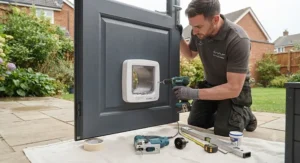
Swapping an ancient, unlocked cat flap for a microchip or magnetic model is one of the more satisfying small DIY jobs a cat owner can do, mostly because it solves a problem you’ve probably been quietly annoyed by for months. Here’s the process most owners actually follow.
First, measure before you buy anything. Old cat flap cut-outs vary wildly in size, and while SureFlap and PetSafe models are designed as drop-in replacements for common older flaps, it’s worth measuring your existing hole against the new unit’s frame dimensions rather than assuming compatibility. Second, check your door material — standard wood or uPVC doors take most flaps directly, but glass, brick, single-skin metal or cavity walls typically need a separate tunnel or adaptor, sold apart from the main unit on most of these ranges.
Third, do the actual swap on a day your cat can be shut in a different room; a half-finished cat flap installation with a curious cat trying to help is nobody’s idea of a good afternoon. Fourth, once fitted, programme the chip or magnet before you let your cat anywhere near the door — a locked new flap that’s never opened for them even once tends to create a lasting wariness that takes weeks to undo. Finally, leave the flap propped open with a rolled towel or the manual lock set to “open” for the first day or two, so your cat learns the physical motion before the lock behaviour kicks in.
A common first-30-days mistake is switching straight from an unlocked flap to a fully locked microchip or magnetic one without this transition period — cats that have never had to “trigger” anything to get through a flap sometimes simply give up and start scratching at the back door instead, which rather defeats the point of the upgrade.
Real-World Scenarios: Which Cat Flap Suits Which Household
The multi-cat household with a nosy neighbourhood tom. If you’re managing three cats and a persistent visitor from two doors down who’s worked out your old flap has no lock, a microchip flap like the SureFlap Microchip Cat Flap or PetSafe Staywell Microchip Cat Flap solves this cleanly — the intruder simply has no matching chip, full stop, regardless of how determined they are.
The budget-conscious first-time cat owner. If you’ve just adopted a rescue cat, your immediate spend is already vet checks, food, litter and insurance, and £150 on a smart cat flap isn’t realistic this month. The Cat Mate Electromagnetic Cat Flap (254) or PetSafe Staywell 400 Deluxe Magnetic gets you genuine selective entry — better than nothing at all — for a fraction of microchip pricing, with the option to upgrade later once budget allows.
The owner of an elderly or medically monitored cat. If your cat has a health condition your vet wants monitored, or you simply want reassurance about an older cat’s movements while you’re at work, the SureFlap Microchip Cat Flap Connect earns its premium price through the notification and activity-tracking layer, turning a simple door into a low-effort monitoring tool.
RFID vs Magnet: How Cat Door Technology Actually Compares
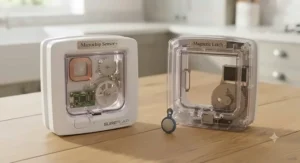
This is really the technical heart of the microchip cat flap vs magnetic cat flap decision, so it’s worth being precise about what’s actually happening inside each mechanism. RFID (radio-frequency identification) is the same underlying technology used in contactless payment cards and warehouse stock tags — a passive chip with no battery of its own gets energised briefly by a reader’s electromagnetic field and transmits back a unique ID number, which the flap checks against its stored memory before unlocking. You can read more about how the underlying RFID technology works more broadly beyond pet doors.
Magnetic systems work on a much simpler physical principle — a small permanent (or electromagnet-triggered) magnet, worn on the collar, moves a mechanical latch or reed switch inside the flap frame when it gets close enough. There’s no unique ID being read at all; any magnet of roughly the right strength in roughly the right position will trigger the same response, which is precisely why two cats wearing similar magnetic collar keys can occasionally both open the same “locked” flap.
| Technology | Identification method | Uniqueness | Power draw | Failure mode |
|---|---|---|---|---|
| RFID (microchip) | Reads permanent chip ID | Genuinely unique per cat | Continuous scanning drains batteries | Missed reads, flat batteries |
| Magnetic | Detects magnet presence/strength | Not unique — any similar magnet works | Often zero (mechanical) or low (electromagnetic) | Lost/detached collar key |
What most buyers overlook about this table is the uniqueness column specifically — it’s the single biggest practical difference between the two systems, and it’s the reason microchip flaps consistently command a price premium over otherwise similar-looking magnetic models. If your cat has never had an unwanted visitor try the flap and you’re simply after a lockable door, magnetic technology does the job perfectly well and more cheaply.
How to Choose Between a Microchip and Magnetic Cat Flap
- Check whether your cat is already microchipped — as of June 2024 this is a legal requirement in England anyway, so a microchip flap likely uses an ID your cat already carries at no extra cost.
- Count your cats and your neighbours’ cats — more animals in the mix means more benefit from a genuinely unique identifier rather than a shared-style magnet.
- Be honest about your budget ceiling — magnetic flaps in the £20-£47 range deliver real selective entry for far less outlay than most microchip models.
- Consider your cat’s collar habits — cats that regularly lose collars undermine magnetic systems entirely, making microchip flaps the more dependable route.
- Think about door material — glass, brick and metal doors often need extra adaptors regardless of technology, so factor that cost in before comparing headline prices.
- Decide if you want data, not just a lock — only app-connected microchip models like the SureFlap Connect give you entry/exit logging and notifications.
- Weigh battery tolerance — if you dislike remembering battery changes, a purely mechanical magnetic flap like the Staywell 400 removes that chore entirely.
Common Mistakes When Buying a Cat Flap
The single most common mistake is buying based on price alone without checking the cat’s shoulder width against the flap’s maximum opening — a flap rated for cats “up to 7kg” isn’t automatically wide enough for a broad-chested Maine Coon type, and a squeeze that’s too tight can put cats off using the flap entirely.
A second frequent error is ignoring door material until after purchase. Ordering a standard microchip flap for a UPVC panel door with internal cavities, then discovering you need a separate tunnel or adaptor, is an avoidable extra cost and delay that a five-minute measurement beforehand would have prevented. Third, some owners assume “microchip compatible” universally means their specific cat’s chip will be read — in reality, older 9 or 10-digit chip formats aren’t recognised by every model, so it’s worth a quick check with your vet on chip format before buying a premium unit expecting it to just work.
Finally, underestimating installation time is common with first-time buyers — budget an afternoon rather than twenty minutes, particularly for wall or window installations that need additional tunnel accessories beyond the base unit.
Cat Flap Collar Keys: What Cat Owners Need to Know
Collar keys are the physical link in any magnetic collar cat flap system, and they deserve more attention than they usually get at purchase time. The key itself is a small magnet (or occasionally an infrared tag on older Staywell “select” ranges) that clips onto a standard breakaway cat collar — critically, always a breakaway or quick-release collar, since a fixed collar with any rigid attachment is a genuine strangulation risk if it snags on a fence or branch.
Reviewers consistently report that collar keys are the single most commonly lost component of any magnetic system, generally because breakaway collars are designed to detach under strain, taking the key with them. Replacement keys are sold separately by both PetSafe and Cat Mate, typically for a modest sum compared to replacing the whole unit, so it’s worth ordering a spare when you first buy the flap rather than scrambling later.
One frequently overlooked practical point: because magnetic collar keys aren’t individually unique, a spare key from the same product range — even one bought years apart — will generally still work, which is convenient for replacement but reinforces the earlier point about magnetic systems lacking true per-cat identification.
Common Cat Flap Reliability Issues (And How to Avoid Them)
Every mechanical device with moving parts and outdoor exposure develops reliability quirks over time, and cat flaps are no exception. Based on the aggregated review patterns across the products in this guide, a handful of issues come up repeatedly enough to be worth flagging honestly rather than glossing over.
Missed microchip reads are the most commonly reported issue on RFID models, usually caused by the cat approaching at an angle rather than head-on, or by the chip having migrated slightly from its original implant position over the cat’s lifetime — both fixable by re-centring the collar area near the sensor during a brief retraining session. Battery drain is the second recurring theme; microchip flaps scan continuously while active, so 4x AA batteries genuinely do need changing roughly annually, and skipping this leads to a flap that either won’t unlock or, worse, sticks open.
On the magnetic side, the dominant complaint is physical: magnets detaching from ageing or stretched collars, or weakening slightly with age and requiring the cat to approach closer than before to trigger the latch. Weatherproofing failures — swollen frames after prolonged rain exposure, or brush seals wearing thin — show up on both technologies roughly equally and are largely a function of build quality and installation care rather than the underlying tech itself. If you research one thing before buying, it should be your cat’s specific chip format and collar habits, since both issue categories above are largely predictable and avoidable with the right model match from the start.
Safety, Regulations & Compliance Guide
Since 10 June 2024, England has required all pet cats over 20 weeks old to be microchipped by law, with registered keeper details kept current on an approved database, and non-compliance carrying a fine of up to £500. You can read the official regulations directly if you want the full legal detail, though the practical upshot for this article is simple: if you’re buying a cat in 2026, it’s almost certainly already chipped, which tilts the cost-benefit calculation further towards microchip flaps than it might have looked a few years ago.
Welfare organisations are broadly supportive of both flap technologies but consistently flag collar safety as the point requiring care. Any collar used with a magnetic key must be a breakaway or quick-release design, and Cats Protection’s guidance on microchipping specifically notes that microchip cat flaps can be programmed directly from a cat’s existing chip number, removing the need for any collar accessory at all — a genuine safety advantage for outdoor cats prone to getting caught on fencing or undergrowth. It’s also worth checking your cat’s chip is registered on a Defra-approved database and kept current, since a working flap and an out-of-date microchip register are two entirely separate things.
✨ Don’t Miss These Exclusive Deals!
🔍 Take your cat flap search to the next level with these carefully selected picks. Click through to check current pricing and availability, and give your cat the secure, hassle-free access they deserve.
Frequently Asked Questions
❓ Is a microchip cat flap better than a magnetic one?
❓ Do magnetic cat flaps work with any collar?
❓ How long do batteries last in a microchip cat flap?
❓ Can a microchip cat flap read any cat's chip by mistake?
❓ Is it worth upgrading an old unlocked cat flap?
Conclusion
Working through the microchip cat flap vs magnetic cat flap question properly, the honest answer is that both technologies do their core job competently, and the real decision comes down to your specific household rather than any universal winner. Microchip models like the SureFlap Microchip Cat Flap and PetSafe Staywell Microchip Cat Flap earn their higher price through genuinely unique identification, which matters most in multi-cat homes or areas with persistent neighbourhood visitors. Magnetic options like the PetSafe Staywell 400 Deluxe Magnetic Cat Flap and Cat Mate Electromagnetic Cat Flap (254) deliver real, tested selective entry for meaningfully less money, and remove battery maintenance from your to-do list entirely.
Given that compulsory microchipping has been UK law since June 2024, most cats bought or adopted from this point forward will already carry a usable chip, which nudges the value calculation gently toward microchip flaps for anyone starting from scratch. That said, a tight budget and a single, collar-loyal cat with no local stray problem is still a perfectly sound case for going magnetic. Match the product to your actual circumstances rather than the marketing, check your door material and your cat’s specific chip format before ordering, and whichever of the seven models here you land on, you’ll be leaving behind the genuinely unsecured free-for-all of an old, unlocked flap.
Recommended for You
- Screen Door Cat Flap: 7 Best Picks for UK Homes (2026)
- Lockable Cat Flap: 7 Best Secure Picks for UK Homes (2026)
- Cat Flap for Large Cats: 7 Best Wide Doors Tested (2026)
Disclaimer: This article contains affiliate links. As an Amazon Associate, I earn from qualifying purchases. If you purchase products through these links, we may earn a small commission at no additional cost to you.
✨ Found this helpful? Share it with your friends! 💬🤗
