
In This Article
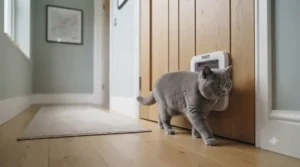
You know the scene: a broad-chested, fifteen-pound tabby wedges himself halfway through a standard cat flap, gets stuck at the shoulders, and glares at you like it’s somehow your fault. It usually is, to be fair — most cat flaps sold on the high street were designed around an average five-kilogram cat, and a genuinely large cat, whether that’s a chunky moggy or a full-grown Maine Coon, simply doesn’t fit that mould. Searching for a cat flap for large cats isn’t fussiness; it’s the only way to stop your cat treating the back door like an obstacle course.
Here’s the direct answer before we go any further: a cat flap for large cats is any pet door built with a flap opening of roughly 17 x 17cm or larger, wide enough for a broad-chested breed to pass through without squeezing their shoulders or crouching, and these models typically come in manual, magnetic, or microchip-activated versions to suit different households and budgets.
This guide skips the generic spec-list approach. We’ve pulled real listings from Amazon UK, manufacturer dimension charts, and aggregated review sentiment to bring you seven genuine products, an honest look at flap opening dimensions, and the sizing maths that actually matters if you’re shopping for a Maine Coon or any other large breed cat flap. According to International Cat Care, fitting a microchip-controlled cat flap is one of the most effective ways to stop your own cat feeling territorially threatened by intruding neighbourhood cats — which matters just as much for a big cat as a small one, arguably more, since large cats tend to patrol wider territories.
Quick Comparison Table
| Product | Flap Opening (approx.) | Best For | Price Range |
|---|---|---|---|
| Cat Mate 221 Large Cat Flap | 18 x 19.7cm | Budget-friendly manual locking | £20-£35 range |
| PetSafe Big Cat Flap 2.0 | 18.4 x 19.7cm | Quiet, soft-close daily use | £30-£45 range |
| SureFlap Microchip Pet Door | 17.8 x 17cm | Trusted standalone microchip security | £95-£130 range |
| SureFlap Pet Door Connect | 17.8 x 17cm | Remote app control and monitoring | £140-£190 range |
| PetSafe Petporte Smart Flap (11kg) | 18 x 19.5cm | Mains-powered, no battery anxiety | £140-£180 range |
| EGETOTA Extra Large Cat Door | Approx. 19 x 17cm | Largest opening on a tight budget | £20-£35 range |
| PetSafe Staywell Aluminium XL Pet Door | 69 x 42cm outer frame | Biggest opening of any option here | £70-£110 range |
Line these up and the sizing spread tells its own story: everything from the Cat Mate 221 to the PetSafe Petporte Smart Flap clusters around the 17-19cm mark, which is the sweet spot for most large domestic cats, while the PetSafe Staywell Aluminium XL Pet Door sits in a different category entirely — genuinely oversized, built as much for small dogs and giant-breed cats as anything else. If you’re specifically shopping for a wide cat door for big cats and your household includes anything approaching Maine Coon proportions, that last row deserves a proper look before you commit to a standard “large” size.
💬 Just one click — help others make better buying decisions too!😊
Top 7 Cat Flaps for Large Cats: Expert Analysis
1. Cat Mate 221 Large Cat Flap — best budget 4-way manual lock for large cats
The standout feature is refreshingly simple: this is a genuinely large opening at a genuinely small price. The Cat Mate 221 Large Cat Flap is specifically built for cats and small dogs with a shoulder height up to 36cm, and that extra headroom is exactly what a broad-shouldered cat needs to pass through without stooping.
Key specs translate directly into practical benefit: an entrance opening of 18 x 19.7cm, a total frame size of 23.5 x 25.2cm, and a secure double-point 4-way lock (in only, out only, both ways, or fully locked). Based on the spec comparison against other manual flaps, this is one of the widest non-electronic openings available on Amazon UK, and the self-lining design means it fits doors up to 5cm thick without extra hardware.
Reviewers consistently report genuine satisfaction with the size increase over standard flaps, including one owner whose 11kg Maine Coon reportedly fits through comfortably. The most common honest criticism concerns the locking tabs, which a handful of buyers describe as slightly fiddly to engage confidently after repeated use.
Pros:
- ✅ Genuinely wide 18 x 19.7cm entrance opening
- ✅ Secure double-point 4-way locking system
- ✅ Fits doors and walls up to 5cm thick
Cons:
- ❌ Locking tabs can feel fiddly after months of use
- ❌ No selective entry, so any cat can push through
At around the £20-£35 range at the time of research, this is the sensible starting point if budget matters more than smart features.
2. PetSafe Big Cat Flap 2.0 — quietest soft-close mechanism on this list
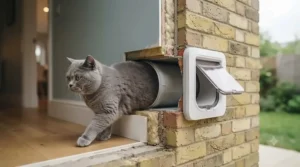
What most buyers overlook about the PetSafe Big Cat Flap 2.0 is that “soft-close” isn’t just a comfort feature — for a large, heavier cat, a flap that slams shut is genuinely more likely to startle them mid-transit than it would a lighter cat. The GentleClose mechanism here gives even a slow-moving senior cat time to clear the flap before it settles shut.
Specs worth expanding on: a spacious 7¼ x 7¾ inch opening (roughly 18.4 x 19.7cm), a weight capacity up to 25lb (about 11kg), and a push-and-turn 4-way lock offering locked, unlocked, in-only, and out-only settings. Here’s what the spec sheet won’t spell out plainly — the weather-strip seal combined with magnetic flap closure genuinely reduces draughts better than many bare-hinge alternatives, which matters more once you’ve sized up to a bigger flap opening that would otherwise let more cold air through.
Aggregated UK review sentiment is strongly positive on build quality and size specifically for larger cats, with several owners noting their cat no longer has to duck or squeeze to get through, and installers commenting on the solid, sturdy construction once fitted.
Pros:
- ✅ Soft-close flap reduces startling noise and impact
- ✅ Weight capacity up to 25lb (approx. 11kg)
- ✅ Weatherstripped for reduced draughts
Cons:
- ❌ No selective or microchip entry option
- ❌ Some owners note the flap requires a firm-ish push initially
Sitting in the £30-£45 range at the time of research, this is a sensible mid-tier pick if you want size and quiet operation without paying for smart features.
3. SureFlap Microchip Pet Door — most trusted standalone microchip large flap
The clue is in the name: this isn’t a resized cat flap, it’s specifically branded a “Pet Door” because SureFlap builds it larger than their standard microchip cat flap range from the outset. The flap opening measures 178mm x 170mm (roughly 17.8 x 17cm), noticeably bigger than the brand’s standard 142mm x 120mm cat-specific model.
Specs that matter in practice: microchip and RFID collar tag recognition for up to 32 pets, a curfew mode that locks and unlocks on a schedule, and a required installation hole of 207mm x 234mm. Based on the spec comparison, the larger opening combined with selective microchip entry addresses two separate large-cat problems at once — physical fit and territorial security — without needing an app, hub, or WiFi connection at all.
Reviewer sentiment on this exact model is consistently positive for reliability, with the wider community specifically praising it as large enough for sizeable cats and, in forum discussions among Maine Coon owners, repeatedly named as workable for cats up to around 22lb, though some forum members note their broadest-shouldered cats found it snug rather than roomy.
Pros:
- ✅ Microchip selective entry keeps other cats out
- ✅ Wider 178mm x 170mm opening than SureFlap’s standard flap
- ✅ Curfew scheduling without needing an app or hub
Cons:
- ❌ Exceptionally broad-shouldered cats may find it snug
- ❌ Battery-only power, no mains option on this model
Typically found in the £95-£130 range at the time of research, this is the trusted mid-premium pick for most large cats short of the very biggest Maine Coon males.
4. SureFlap Pet Door Connect — only app-controlled option with remote locking
The standout here is control from anywhere, not just from your kitchen. The SureFlap Pet Door Connect shares the same 178mm x 170mm opening as the standalone Pet Door above, but adds WiFi connectivity through the separately sold Sure Petcare Hub, letting you lock, unlock, or check your cat’s comings and goings from your phone.
On paper, the extra layer is genuinely useful for specific situations: remote-locking your cat in before a vet visit without needing to be home, or getting an alert if your cat hasn’t come home by a set time. What most buyers overlook is that this convenience comes with two real trade-offs worth weighing honestly — the Hub is sold separately, adding to the total cost, and you’re now relying on home WiFi uptime for the smart features to work at all, with the mechanical lock still functioning as a fallback if the network drops.
Aggregated sentiment mirrors the standalone SureFlap model closely on size and build quality, since the core hardware is identical; the additional feedback specific to Connect centres on the setup process, which several reviewers describe as more involved than a simple battery-powered flap, alongside general satisfaction with the peace of mind the monitoring feature provides.
Pros:
- ✅ Remote lock and unlock control via the app
- ✅ Same wide 178mm x 170mm opening as the standalone version
- ✅ Activity notifications for your cat’s movements
Cons:
- ❌ Requires the separately sold Sure Petcare Hub
- ❌ Setup and pairing takes longer than a basic flap
At the £140-£190 range at the time of research (before accounting for the Hub), it’s the pick specifically for households that want remote oversight, not just a bigger hole in the door.
5. PetSafe Petporte Smart Flap (11kg version) — mains-powered for zero battery anxiety
The headline feature is straightforward but genuinely important for a heavier cat that uses the flap dozens of times a day: mains power. The PetSafe Petporte Smart Flap, in its larger 11kg-capacity configuration, runs primarily from the mains with an optional battery backup, removing the “did the battery just die” anxiety that comes with battery-only microchip flaps under heavy daily use.
Specs worth unpacking: a flap opening of 18cm x 19.5cm within a larger 27.4cm x 36.3cm frame, microchip detection for up to 25 or 31 cats depending on configuration, and an adjustable flap-open duration from 2 to 28 seconds — a detail that matters more than it sounds, since a slower-moving, heavier cat benefits from the flap staying open longer rather than needing to hustle through before it swings shut.
Review sentiment for the Petporte range consistently praises the reliability that comes from mains power and highlights the automatic dusk detection that keeps cats in after dark as a genuine safety plus; the recurring honest criticism is the multi-part assembly, with more than one buyer describing the initial setup and cabling as fiddlier than expected for a first-time DIY install.
Pros:
- ✅ Mains-powered with battery backup, not battery-only
- ✅ Adjustable flap-open duration for slower or heavier cats
- ✅ Automatic dusk detection for after-dark security
Cons:
- ❌ Multi-part assembly is fiddlier than simpler flaps
- ❌ Higher price point than most mechanical alternatives
Sitting in the £140-£180 range at the time of research, it’s a strong premium pick specifically for households wary of battery-dependent smart flaps.
6. EGETOTA Extra Large Cat Door — largest opening for the lowest price
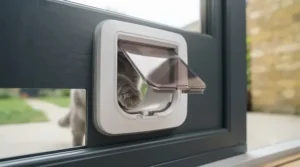
The standout is right there in the outer dimensions: an 11″ x 9.8″ (roughly 28 x 25cm) outer frame, among the largest overall footprints of any budget option on Amazon UK, which translates to one of the widest practical openings you’ll find below the £35 mark.
Specs are straightforward: a 4-way locking flap, weatherproof construction, and suitability for cats and small dogs up to a listed circumference limit rather than a strict weight cap. Here’s what most buyers overlook about budget extra-large flaps generally — a bigger outer frame doesn’t automatically mean a proportionally bigger usable opening, since manufacturers vary in how much frame material surrounds the actual flap. Based on the spec comparison, this model’s opening is genuinely competitive with pricier branded alternatives, which is precisely why it’s worth checking before assuming you need to spend three times as much for the size alone.
Aggregated review sentiment sits solidly positive for the price point, with buyers specifically calling out the size as a genuine improvement over standard flaps for bigger cats; as with most budget imports, a smaller number of reviews mention variable build consistency between units, so it’s worth inspecting the flap and seals carefully on arrival.
Pros:
- ✅ Large 11″ x 9.8″ outer frame at a budget price
- ✅ 4-way manual locking for basic security
- ✅ Genuinely competitive opening size versus pricier rivals
Cons:
- ❌ Build consistency reportedly varies between units
- ❌ No selective or microchip entry option
At around £20-£35 at the time of research, this is worth a look if you want the biggest opening your budget allows without stepping up to a premium brand.
7. PetSafe Staywell Aluminium Extra Large Pet Door — biggest opening of any product here
There’s no subtlety to the standout feature: at 69cm x 42cm overall, the PetSafe Staywell Aluminium Extra Large Pet Door dwarfs every other product on this list, built primarily to serve small-to-medium dogs but explicitly suitable for the very largest cats too, including giant-breed Maine Coons that other “large” flaps still leave feeling snug.
Specs reflect that scale: solid aluminium-framed construction rather than moulded plastic, a substantially larger flap panel than any cat-specific model here, and an easy-install design intended for exterior doors taking regular heavy use. Based on the spec comparison, the aluminium build is the meaningful difference over plastic large cat flaps — it’s rated for the kind of frequent, forceful daily use a household with both a large dog and a big cat would put it through, rather than gentle cat-only traffic.
Aggregated sentiment is strongly positive on durability and size specifically, with buyers noting it comfortably fits large cats and small dogs side by side; the trade-off reviewers mention most is the lack of any selective entry system, meaning it’s a straightforward mechanical flap rather than a microchip-secured one, and its scale means it’s genuinely a bigger, more visible hole in your door than most cat owners will want purely for a cat.
Pros:
- ✅ Largest opening of any product on this list
- ✅ Durable aluminium frame built for heavy daily use
- ✅ Suits mixed households with large cats and small dogs
Cons:
- ❌ No microchip or selective entry available
- ❌ Overkill in size for most cat-only households
Priced in the £70-£110 range at the time of research, this is the specialist choice for genuinely giant cats or mixed dog-and-cat homes, not a default pick for an averagely large moggy.
Full Specification Comparison
| Product | Locking Type | Flap Opening (approx.) | Rating (Amazon UK, aggregated) | Best For |
|---|---|---|---|---|
| Cat Mate 221 Large Cat Flap | Manual 4-way | 18 x 19.7cm | Around 3.5-4 stars | Budget-conscious large-cat owners |
| PetSafe Big Cat Flap 2.0 | Manual 4-way, soft-close | 18.4 x 19.7cm | Strongly positive on size and quiet closing | Quiet daily use, mixed cat and small dog homes |
| SureFlap Microchip Pet Door | Microchip/RFID, 5-way | 17.8 x 17cm | Around 4.3-4.4 stars | Security-conscious large-cat households |
| SureFlap Pet Door Connect | Microchip/RFID plus app | 17.8 x 17cm | Generally positive, praised for monitoring | Remote monitoring and control |
| PetSafe Petporte Smart Flap (11kg) | Microchip, mains-powered | 18 x 19.5cm | Around 4.1 stars | Heavy daily use without battery worry |
| EGETOTA Extra Large Cat Door | Manual 4-way | Approx. 19 x 17cm | Around 4.5 stars | Maximum size on a minimum budget |
| PetSafe Staywell Aluminium XL | Manual 4-way | Largest available, no fixed cat-spec figure published | Around 4.3 stars | Giant cats and mixed dog households |
Reading across this table, the trade-off is fairly clear-cut: manual locking flaps like the Cat Mate 221 and EGETOTA Extra Large Cat Door win on price and simplicity, while the microchip options — the SureFlap Microchip Pet Door, SureFlap Pet Door Connect, and PetSafe Petporte Smart Flap — cost considerably more but solve the separate problem of unwanted cats letting themselves into your home. If your priority is purely fitting your cat through the hole, the cheaper manual options genuinely compete on size; if territorial intruders are already a problem in your area, the extra spend on selective entry becomes the deciding factor rather than size alone.
Practical Usage Guide: Installing and Training Your Cat on a Large Cat Flap
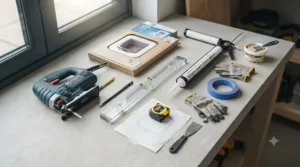
Getting the flap through the door is only step one; getting your cat confidently using it is where most of the early frustration happens. Before installation, always order the specific flap first and use its supplied template rather than guessing dimensions, since even models marketed as similar sizes vary in their exact cut-out requirements by a centimetre or two either way.
For training, start by taping or wedging the flap fully open for the first few days, letting your cat walk through freely without the flap’s weight or spring resistance to contend with at all. Once they’re moving through confidently, gradually lower the flap a little at a time over a week or two rather than releasing it fully on day one — a genuinely large cat can find a heavier flap’s resistance more discouraging than a lighter cat would, simply because there’s more surface area for the flap to push against.
A common mistake in the first month is assuming a bigger cat will “just figure it out” faster than a smaller one purely because the opening is roomier. In practice, older or heavier cats often need more encouragement, not less — use treats placed just beyond the flap and call your cat’s name from the other side, repeating short sessions several times a day rather than one long one.
Maintenance is minimal but shouldn’t be skipped: check the magnetic seal and brush strips every few months for wear, since a large flap under regular heavy use wears its seals faster than a small one, and top up batteries on microchip models before they fully die rather than waiting for the low-battery warning to catch you out.
Real-World Scenarios: Which Large Cat Flap Fits Your Household
Picture three different households all searching for the same thing. First, a single large moggy, no other cats in the neighbourhood causing trouble, owner on a tight budget after a house move — here the Cat Mate 221 Large Cat Flap or EGETOTA Extra Large Cat Door make complete sense, since neither territorial security nor smart features are the priority; size and price are.
Second, imagine a household with an 8kg rescue cat in a densely catted street, where neighbouring cats have previously wandered in uninvited through the old, unsecured flap. This is exactly the profile the SureFlap Microchip Pet Door suits best — the wider 178mm x 170mm opening solves the fit problem, while microchip recognition solves the intruder problem in one purchase, without needing an app or subscription.
Third, consider a genuinely giant-breed household: a Maine Coon approaching 9-10kg, plus a small terrier that also needs door access, in a home where the owner travels for work and wants to check on both pets remotely. Here, either the SureFlap Pet Door Connect for the monitoring feature, or the PetSafe Staywell Aluminium XL Pet Door if raw opening size for a mixed dog-and-cat household matters more than smart features, are the honest recommendations — the PetSafe Petporte Smart Flap is also worth shortlisting here specifically for its mains-power reliability under heavy daily two-pet traffic.
None of these scenarios are prescriptive, but they’re a genuinely useful way to narrow seven options down to the one or two that actually match your specific mix of cat, household, and neighbourhood.
✨ Don’t Miss These Exclusive Deals!
🔍 Ready to stop your cat squeezing through the wrong-sized hole? Click through to check current pricing and availability on the models above, and give your big cat the freedom they deserve!
Cat Flap Size Guide: How to Measure Your Cat Correctly
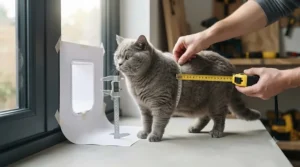
A proper cat flap size guide starts with a tape measure, not a guess. Measure your cat’s width across the widest point of their chest or shoulders — for most cats this is the shoulder blades, though broader-chested breeds sometimes measure widest at the ribcage instead — and separately measure their height from the top of their shoulders to the ground while they’re standing normally, not stretched or crouched.
As a rough general benchmark that several UK cat flap retailers use consistently: cats up to around 5kg are typically comfortable with a standard 14cm x 12cm opening, cats around 6kg tend to need closer to 14cm x 15cm, and cats at 7kg and above generally require the full 17cm x 17cm or larger openings covered throughout this guide. Always add a small margin beyond your cat’s measured width and height rather than sizing to the exact centimetre, since cats naturally like a little clearance and won’t confidently use a flap that feels tight against their fur on both sides.
It’s worth measuring twice, at different times of day if your cat is the type to puff up defensively when handled, and if you have multiple cats of different sizes, always size the flap to your largest cat rather than an average — a flap too small for your biggest cat defeats the purpose entirely, while a flap sized generously for your biggest cat will still work perfectly well for smaller housemates.
Flap Opening Dimensions: What the Numbers Actually Mean
Every product listing throws numbers at you — 178mm x 170mm, 18cm x 19.7cm, 7¼ x 7¾ inches — and it’s genuinely easy to glaze over them without understanding what they actually measure. Flap opening dimensions specifically refer to the narrowest point your cat’s body needs to clear, not the outer frame size or the hole you’ll cut in your door, and confusing these two figures is one of the most common ordering mistakes people make.
Manufacturers typically publish three separate measurements worth understanding individually: the flap opening or entrance size (the actual gap your cat squeezes through), the cut-out or required hole size (larger than the flap opening, since it needs to accommodate the frame and mechanism), and sometimes a total or overall frame size (the biggest number, covering the whole visible unit once installed). Based on the spec comparison across this guide’s seven products, opening sizes cluster tightly around 17-19cm in both dimensions for genuinely large-cat-rated flaps, while the cut-out size required is typically 3-6cm larger in each direction to accommodate the frame.
What most buyers overlook is tunnel depth, a number that matters enormously for thick or insulated doors but rarely gets mentioned until you’re mid-installation — most flaps are designed for doors up to roughly 5-7cm thick as standard, and anything thicker, including many composite or insulated exterior doors, needs a separate tunnel extender sold alongside the flap, adding to your total spend if you don’t check this before ordering.
Extra Large Cat Flap vs a Wide Cat Door for Big Cats: Same Thing, Different Search
If you’ve searched both “extra large cat flap” and “wide cat door for big cats” while researching this purchase, you’re not alone, and honestly, you’re describing the same category of product from two different angles. “Extra large” tends to describe the overall size classification manufacturers use in product names, while “wide cat door” more often reflects how people naturally describe the problem they’re trying to solve — a cat that’s too broad, rather than too tall, for a standard opening.
The practical distinction worth actually caring about is between width and height individually, not just a combined “large” label. A cat with a notably broad chest but average height, common in muscular or naturally stocky breeds, needs generous width more than generous height, while a long-legged, tall-shouldered cat needs the reverse. Checking a product’s individual width and height figures separately, rather than trusting a single “extra large” badge, avoids buying a flap that’s tall enough but still uncomfortably narrow for your specific cat’s build.
In practice, every genuinely large-cat-rated product in this guide, from the Cat Mate 221 through to the PetSafe Staywell Aluminium XL Pet Door, qualifies under both search terms equally — the labelling difference is marketing language, not a meaningfully different product category, so don’t feel you need to search both terms separately expecting different results.
Large Breed Cat Flap vs Standard: Why One Size Doesn’t Fit All
| Approach | Typical Opening | Suitability | Risk If Wrong Size |
|---|---|---|---|
| Standard cat flap | Around 14 x 12cm | Average domestic shorthairs under 5kg | Large cats get stuck or refuse to use it |
| Large breed cat flap | Around 17-19cm both dimensions | Broad-chested or tall breeds, 6-11kg | Rare, but check individual width vs height |
| Extra large / dog-crossover door | 25cm+ in at least one dimension | Giant-breed cats, mixed dog-and-cat homes | Oversized for cat-only homes, less secure-feeling |
| DIY-cut oversized hole | Variable, no manufacturer testing | Not generally recommended | Draughts, poor sealing, structural risk to the door |
The comparison above makes a genuinely important point that’s easy to skip past: a large breed cat flap isn’t simply a standard flap scaled up proportionally, it’s specifically engineered with different hinge tension, frame reinforcement, and seal design to cope with a heavier animal pushing through it dozens of times a day. Every product in this guide from the SureFlap Microchip Pet Door to the PetSafe Big Cat Flap 2.0 reflects that purpose-built approach rather than being a generic flap simply sold in a bigger box, which is precisely why buying a properly rated large or extra-large model matters more than it might seem for long-term durability.
Maine Coon Cat Products: What Actually Matters Beyond the Flap Itself
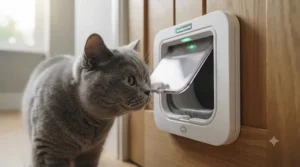
Maine Coons deserve their own section here because their size genuinely changes the buying calculation, not just for cat flaps but for related Maine Coon cat products generally. According to the Governing Council of the Cat Fancy’s official breeding policy, average adult male Maine Coons weigh 7-9kg and females 4-7kg, with the breed standard specifically describing a long, rectangular body shape with substantial legs and a broad chest — proportions that genuinely stress-test even a “large” cat flap’s width more than its height.
For a Maine Coon specifically, prioritise width measurements over height ones when comparing products, since the breed’s broad-chested, rectangular build tends to hit shoulder width limits before it hits any height ceiling. Products like the SureFlap Microchip Pet Door and PetSafe Petporte Smart Flap are repeatedly cited by Maine Coon owners in community discussions as workable up to around 22lb, though owners of the very largest males consistently recommend physically measuring your specific cat rather than trusting breed-average assumptions, since individual Maine Coons vary considerably even within the breed’s already generous size range.
Beyond the flap itself, other Maine Coon cat products worth budgeting for alongside a properly sized door include reinforced, extra-wide litter trays (standard trays genuinely cramp a long-bodied Maine Coon’s ability to turn and dig), heavy-duty scratching posts rated for a bigger cat’s full body weight, and wider cat carriers for vet visits — all following the same underlying principle as the cat flap itself: standard-sized cat products are built around an average cat, and a Maine Coon simply isn’t one.
Common Mistakes When Buying a Cat Flap for a Large Cat
The most frequent mistake is ordering based on the product name alone rather than the published dimensions. “Large” and “extra large” aren’t standardised terms across manufacturers, and as this guide’s comparison table shows, actual opening sizes for products both labelled “large” can differ by several centimetres.
A second common error is skipping the tunnel depth check for thick or insulated doors, only to discover after installation that the standard flap tunnel doesn’t reach through the full depth of a composite exterior door, requiring an additional extender purchase and a second, avoidable delay.
Third, plenty of buyers assume a bigger flap automatically means a bigger, colder draught, and either avoid large flaps unnecessarily or fail to check for proper weatherstripping when they do buy one — as this guide has shown, products like the PetSafe Big Cat Flap 2.0 specifically address this with magnetic seals and weather-stripping, so it’s a solvable problem rather than an inevitable trade-off.
Finally, a genuinely underrated mistake is buying a microchip-activated flap without checking your cat’s existing microchip is a compatible frequency and properly registered — since cat microchipping has been a legal requirement in England since June 2024, most cats now have one, but confirming compatibility before buying an expensive smart flap avoids an unpleasant surprise on installation day.
Long-Term Cost & Maintenance: Is a Premium Microchip Flap Worth It
Thinking in terms of what the extra spend on a microchip flap actually buys you changes the value picture considerably. A manual flap like the Cat Mate 221 solves the sizing problem for roughly £20-£35 and effectively nothing more, while a microchip model like the SureFlap Microchip Pet Door solves both sizing and unwanted-intruder security for several times that price.
| Product | Approx. Price Range | Typical Lifespan | Ongoing Cost |
|---|---|---|---|
| Cat Mate 221 Large Cat Flap | £20-£35 | 3-5 years | None beyond occasional seal wear |
| PetSafe Big Cat Flap 2.0 | £30-£45 | 4-6 years | Minimal, occasional seal replacement |
| SureFlap Microchip Pet Door | £95-£130 | 5-8 years | AA batteries every 6-12 months |
| SureFlap Pet Door Connect | £140-£190 | 5-8 years | Batteries plus Hub, ongoing WiFi reliance |
| PetSafe Petporte Smart Flap (11kg) | £140-£180 | 5-8 years | Minimal, mains-powered with backup battery |
| EGETOTA Extra Large Cat Door | £20-£35 | 2-4 years | None, but variable build life |
| PetSafe Staywell Aluminium XL | £70-£110 | 6-10 years, aluminium build | Minimal, very durable materials |
Reading this table, the maintenance-cost gap narrows more than the upfront price suggests: cheaper manual flaps carry no ongoing cost but a shorter typical lifespan, while microchip models add small recurring battery costs but tend to last considerably longer given their more robust engineering. If you’re planning to keep the same door and cat for five-plus years, the PetSafe Staywell Aluminium XL and the SureFlap microchip range both offset their higher upfront price with genuinely long service life, whereas budget options like the Cat Mate 221 or EGETOTA Extra Large Cat Door make more sense if you’re renting, moving soon, or simply want to solve the sizing problem without a large investment.
According to Cats Protection UK, a cat flap significantly reduces territorial stress by giving cats reliable, independent access to the outdoors rather than needing to “ask” a human every time — a genuine wellbeing benefit that applies regardless of which price tier you land on, provided the flap actually fits your cat properly in the first place.
Frequently Asked Questions
❓ What size cat flap do I need for a large cat?
❓ Will a standard cat flap fit a Maine Coon?
❓ Do large cat flaps let in draughts?
❓ Can I fit a large cat flap into a UPVC or composite door myself?
❓ Is a microchip cat flap worth it for a large cat specifically?
Conclusion
There’s no single best cat flap for large cats that suits every household, and this guide has tried to show you why: a single, budget-conscious large moggy has genuinely different needs from a giant-breed Maine Coon sharing a home with a small dog, and the right product depends on your specific mix of cat size, neighbourhood cat traffic, and budget far more than any one bestseller list can capture.
Of the seven products covered, the SureFlap Microchip Pet Door stands out as the best all-round balance of genuine size, proven security, and manageable price for most large cats, while the Cat Mate 221 Large Cat Flap remains the sensible starting point if budget is the priority and territorial intruders aren’t currently a problem. For the very largest Maine Coons or mixed dog-and-cat households, the PetSafe Staywell Aluminium XL Pet Door is worth the extra size and spend, and anyone wanting remote oversight should look seriously at the SureFlap Pet Door Connect.
Whichever you choose, get the measuring tape out before you order rather than trusting a product name, check the flap opening dimensions against your specific cat’s actual width and height, and factor in tunnel depth if your door is on the thicker side. Get those basics right and even a modestly priced flap will serve your large cat well for years, no more awkward doorway wedging required.
✨ Don’t Miss These Exclusive Deals!
🔍 Give your big cat the freedom they’ve been asking for at the back door. Click through to check current pricing and availability on the models above before your cat finds another way to make their frustration known!
Recommended for You
- Cat Flap for Multiple Cats: 7 Best Picks Compared (2026)
- Window Cat Flap 2026: 7 Brilliant Options Compared
- Cat Flap for Sliding Glass Doors: 7 Best UK Picks for 2026
Disclaimer: This article contains affiliate links. As an Amazon Associate, I earn from qualifying purchases. If you purchase products through these links, we may earn a small commission at no additional cost to you.
✨ Found this helpful? Share it with your friends! 💬🤗
