
In This Article
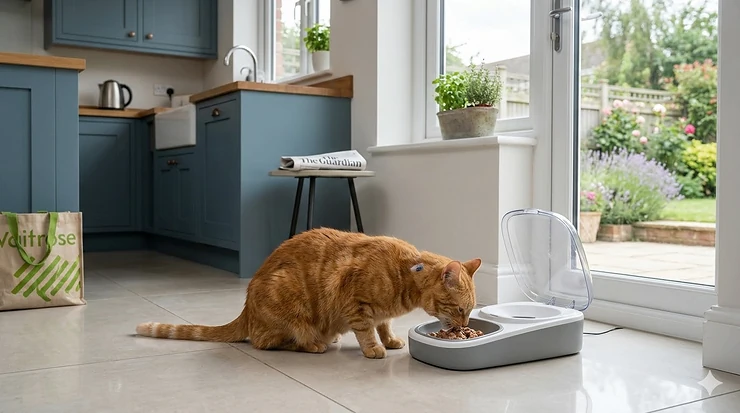
Picture this: you’ve just laid out special prescription food for your elderly tabby, only to watch in horror as your greedy ginger tom swoops in and devours the lot. Sound familiar? If you’re nodding along, you’re not alone. Thousands of UK cat owners face this daily battle, and it’s not just annoying—it can be genuinely dangerous when one cat requires medication or a specific diet.
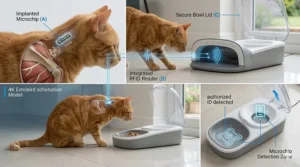
A microchip cat feeder is a selective-access feeding solution that recognises your cat’s unique identification microchip or RFID collar tag, only opening for authorised pets. This revolutionary technology has transformed mealtimes for multi-cat households across Britain, preventing food theft, managing portion control, and ensuring each feline gets exactly what they need. According to UK legislation, all cats in England must be microchipped by 20 weeks of age, making these feeders an increasingly practical solution for modern pet parents.
Whether you’re managing prescription diets, tackling obesity, or simply tired of mediating feline food wars, the right microchip cat feeder can restore peace to your home. In this comprehensive guide, we’ve tested and reviewed seven of the best models available on Amazon.co.uk in 2026, covering everything from budget-friendly options to premium smart feeders with app connectivity.
Quick Comparison Table
| Product | Type | Price Range | Battery Life | Best For | Rating |
|---|---|---|---|---|---|
| SureFeed Microchip Pet Feeder | Access Control | £80-£110 | 6 months | Reliability & prescription diets | ⭐⭐⭐⭐⭐ |
| Closer Pets MiBowl | Enclosed Access | £75-£95 | 4-6 months | Back-access prevention | ⭐⭐⭐⭐½ |
| PETLIBRO RFID Feeder | Smart Dispenser | £95-£130 | Dual power | Automated scheduling | ⭐⭐⭐⭐ |
| SureFeed Connect | App-Controlled | £150-£180 | 6 months | Health monitoring | ⭐⭐⭐⭐⭐ |
| Cat Mate C500 | Timed Feeder | £35-£50 | 12 months | Budget-conscious | ⭐⭐⭐⭐ |
| SureFeed Sealed Bowl | Motion Sensor | £90-£120 | 6 months | Food freshness | ⭐⭐⭐⭐ |
| PETLIBRO 2-Pack | Smart Dual Set | £180-£220 | Dual power | Two-cat households | ⭐⭐⭐⭐ |
💬 Just one click – help others make better buying decisions too! 😊
Top 7 Microchip Cat Feeders: Expert Analysis
1. SureFeed Microchip Pet Feeder (MPF001) – The Gold Standard
The SureFeed Microchip Pet Feeder remains the undisputed champion of selective feeding in the UK market. Manufactured by Sure Petcare, this feeder has earned its reputation through years of reliable performance in British homes.
Key Specifications:
- Compatible with all ISO 11784 and 11785 microchips (standard UK chips)
- Stores up to 32 pet identities
- 400ml bowl capacity (suitable for wet and dry food)
- Sealed lid keeps food fresh and prevents flies
- Dimensions: 31cm (L) × 23cm (W) × 21.5cm (H)
Price: £80-£110 on Amazon.co.uk
The SureFeed uses a simple one-button programming system that takes seconds to set up. When your cat approaches, the lid smoothly opens, then closes automatically when they walk away. UK buyers particularly appreciate the training mode, which gradually acclimatises nervous cats to the movement. Reviews from January 2026 confirm it works brilliantly straight out of the box, with one Londoner noting: “My rescue tabby took to it on the first day with just a few treats for encouragement.”
Customer Feedback: British cat owners consistently praise the feeder’s sturdy construction and whisper-quiet operation. However, some mention that particularly determined cats can access food from the rear opening whilst the lid is up—though Sure Petcare sells an optional back cover for £12 to prevent this.
✅ Pros:
- Three-year manufacturer warranty
- Works with implanted microchips (no collar required)
- Proven reliability over 10+ years
❌ Cons:
- Batteries not included (requires 4 × C cells)
- Open back design may allow sneaky access
Best for: Households needing dependable selective access for prescription diets or weight management.
2. Closer Pets MiBowl (CP500) – The Sneaky-Cat Stopper
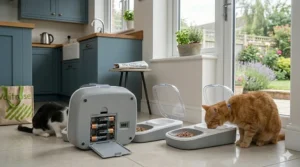
British-designed and manufactured, the Closer Pets MiBowl addresses the primary weakness of open-back feeders with its fully enclosed design. This award-winning feeder (Pet Product of the Year 2024) prevents even the craftiest cats from sneaking around the sides or rear.
Key Specifications:
- Programmes up to 10 pets with 15-digit microchips
- 340g (12oz) bowl capacity
- Fully enclosed with tamper-resistant lid
- Natural feeding position design
- BPA and phthalate-free materials
Price: £75-£95 on Amazon.co.uk
The MiBowl features removable portion-protecting clips ideal for kittens or smaller cats, creating a narrower opening that larger pets can’t exploit. The feeder operates on 4 × C batteries and includes one electronic ID disc for non-microchipped pets. One Manchester owner reported: “Our elderly Persian can finally eat in peace without our Maine Coon barging in—the enclosed back is a game-changer.”
Customer Feedback: UK reviewers highlight the ultra-quiet lid operation and dishwasher-safe bowl as standout features. The compact footprint suits smaller British homes perfectly. Some note the 15-digit microchip requirement may exclude older 10-digit chips, though the included collar tag provides an alternative.
✅ Pros:
- Completely enclosed prevents back-door access
- British-designed with 3-year guarantee
- Natural feeding position reduces neck strain
❌ Cons:
- Not compatible with 10-digit microchips
- Slightly smaller bowl than SureFeed
Best for: Multi-pet homes with particularly persistent food thieves or smaller living spaces.
3. PETLIBRO RFID Automatic Cat Feeder – The Smart Scheduler
The PETLIBRO RFID Feeder bridges the gap between selective access and automated dispensing—a combination previously unavailable in the UK market. This Wi-Fi-enabled feeder not only prevents food theft but also schedules meals automatically.
Key Specifications:
- 3-litre dry food capacity
- 5GHz and 2.4GHz Wi-Fi compatible
- RFID collar tag activation (one included)
- Schedules up to 10 meals daily
- Pawsense app for iOS and Android
Price: £95-£130 on Amazon.co.uk
Unlike traditional microchip feeders that simply control access to food you’ve already placed, the PETLIBRO dispenses portions at scheduled times whilst restricting access to specific cats. The dual-band Wi-Fi support is particularly useful in British homes with crowded 2.4GHz networks from neighbouring flats. Real-time feeding notifications keep you informed whilst at work, and the detailed diet tracking helps monitor changes in appetite that might signal health issues.
Customer Feedback: British users appreciate the voice recording feature (10 seconds) that calls their cat to meals in their own voice. The freshness system includes desiccant bags and sealed storage to prevent kibble going stale in Britain’s damp climate. However, the collar tag requirement means it won’t work with implanted microchips, which some UK owners find limiting given mandatory microchipping regulations.
✅ Pros:
- Combines automation with selective access
- Excellent app with consumption tracking
- Dual power (mains and battery backup)
❌ Cons:
- Requires collar tag (doesn’t read implanted chips)
- Dry food only
- More complex setup than basic feeders
Best for: Tech-savvy cat owners who work long hours and want automated scheduling plus theft prevention.
4. SureFeed Microchip Pet Feeder Connect – The Health Monitor
The SureFeed Connect takes the original MPF001 and adds comprehensive app connectivity via the Sure Petcare Hub. This premium model transforms basic feeding into detailed health monitoring—a genuine breakthrough for UK veterinary care.
Key Specifications:
- All MPF001 features plus app control
- Tracks feeding times and portion sizes
- LED portion guides (6 levels)
- Integrates with SureFlap cat flaps
- Requires Hub (£50 separately, not included)
Price: £150-£180 on Amazon.co.uk (feeder only, Hub additional)
The Connect model provides alerts when meals are skipped or overeaten, enabling early detection of illness. Vets across the UK increasingly recommend this data for diagnosing conditions like hyperthyroidism or kidney disease, where appetite changes serve as early warning signs. The LED portion guides help measure exact amounts, crucial for prescription diets where precision matters. One Edinburgh owner shared: “The app alerted me that my cat hadn’t eaten for 24 hours—turned out she had early kidney disease. Caught it months earlier than we otherwise would have.”
Customer Feedback: British reviewers praise the integration with SureFlap cat flaps, creating a complete smart home ecosystem for feline care. The detailed feeding reports prove invaluable during vet consultations. The main drawback is the additional Hub cost (£50), making this a significant investment at £200+ total. Without the Hub, it functions as a basic MPF001 with no smart features.
✅ Pros:
- Veterinary-grade health monitoring
- Integrates with SureFlap ecosystem
- Detailed feeding analytics
❌ Cons:
- Requires separate Hub purchase (£50)
- Most expensive option overall
- Setup more complex for less tech-savvy users
Best for: Health-conscious owners managing chronic conditions or elderly cats requiring close monitoring.
5. Cat Mate C500 – The Budget Champion
Not all automatic feeders need microchip technology. The Cat Mate C500 offers reliable timed feeding for budget-conscious British households, particularly useful for single-cat homes or when selective access isn’t essential.
Key Specifications:
- 5-compartment rotating design
- Holds up to 5 meals (330ml total capacity)
- Ice pack compartment for wet food
- 48-hour programming
- Operates on 1 × AA battery
Price: £35-£50 on Amazon.co.uk
The C500 represents excellent value, rotating pre-filled compartments at set times to dispense meals whilst you’re away. The ice pack keeps wet food fresh in British summers, and the tamper-resistant lid prevents clever paws from accessing future meals. Whilst it can’t prevent food theft between multiple cats, it excels at portion control for single cats or trusted pairs. One Brighton owner noted: “Perfect for weekend trips—my cat gets fresh meals without expensive cat sitters.”
Customer Feedback: UK buyers appreciate the simplicity and year-long battery life. The transparent lid allows cats to see upcoming meals, reducing anxiety. However, some report that determined cats can sometimes pry open compartments if the feeder isn’t placed on a stable surface.
✅ Pros:
- Exceptional value for money
- Year-long battery life
- Simple setup, no apps or Wi-Fi
❌ Cons:
- No selective access (any cat can eat)
- Limited to 5 meals maximum
- Requires twice-daily filling for regular use
Best for: Single-cat households needing portion control on a budget, or weekend coverage without expensive pet sitters.
6. SureFeed Sealed Pet Bowl – The Freshness Specialist
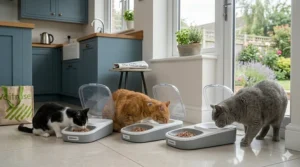
The SureFeed Sealed Pet Bowl focuses on a specific problem: keeping food fresh whilst preventing fly contamination. This motion-activated feeder suits households where selective access between pets isn’t the primary concern.
Key Specifications:
- Motion-activated lid (no microchip required)
- Hermetically sealed bowl
- 400ml capacity
- Training mode included
- Operates on 4 × C batteries
Price: £90-£120 on Amazon.co.uk
Unlike selective feeders, the Sealed Bowl opens for any approaching animal, making it ideal for single-cat homes or trusted pet pairs. The sealed lid locks in odours and moisture, keeping wet food palatable for hours—crucial in British homes where cats graze throughout the day. The motion sensor detects movement within 15cm, providing reliable activation without contact. One Surrey owner explained: “My cat eats tiny amounts every hour. This keeps her food fresh all day without flies, especially helpful in summer.”
Customer Feedback: British reviews highlight the effectiveness at preventing flies during warmer months (a persistent problem with traditional open bowls). The sealed design also prevents dogs from detecting cat food by smell. However, at £90-£120, it’s expensive for a non-selective feeder, and the motion activation means any pet can access the food.
✅ Pros:
- Exceptional food freshness preservation
- Effective fly barrier for British summers
- No training needed for nervous cats
❌ Cons:
- Not selective (any pet can open it)
- Expensive for basic motion activation
- Motion sensor occasionally triggered by passing pets
Best for: Single-cat households prioritising food freshness, or homes where the main concern is flies rather than food theft.
7. PETLIBRO RFID 2-Pack Bundle – The Twin Solution
For two-cat households requiring different diets, the PETLIBRO 2-Pack offers exceptional value compared to purchasing two individual units. This coordinated system provides separate automated feeding with selective access for each cat.
Key Specifications:
- 2 × 3-litre feeders
- 2 × RFID collar tags included
- Unified app control
- Individual feeding schedules
- Dual power per unit
Price: £180-£220 on Amazon.co.uk (bundle pricing)
Each feeder operates independently whilst tracking both cats in a single app interface, creating a comprehensive overview of household feeding patterns. You can set entirely different schedules—one cat might receive 4 small meals daily for weight management, whilst the other gets 2 larger portions. The unified tracking helps identify which cat might be unwell through comparative appetite analysis. One Glasgow owner shared: “One cat needs diabetic food on a strict schedule, the other needs weight-loss portions. This bundle costs £60 less than buying separately and manages everything perfectly.”
Customer Feedback: British users appreciate the cost savings (approximately 25% discount versus individual purchases) and the simplified app management. The dual-power design ensures feeding continues during power cuts, common in rural UK areas. However, the bundle only makes sense for two-cat households—three or more cats require individual feeder purchases at standard prices.
✅ Pros:
- Significant savings versus separate purchases
- Coordinated scheduling for complex feeding needs
- Comparative health monitoring
❌ Cons:
- Only economical for exactly two cats
- All dry-food limitations apply
- Requires collar tags for both cats
Best for: Two-cat households with different dietary requirements seeking coordable automated feeding at a reduced cost.
✨ Don’t Miss These Exclusive Deals!
🔍 Take your cat feeding to the next level with these carefully selected products. Click on any highlighted item to check current pricing and availability on Amazon.co.uk. These tools will help you create authentic feeding solutions your feline family will love!
What Is a Microchip Cat Feeder?
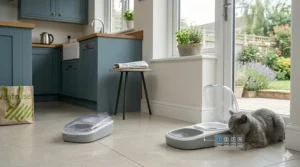
A microchip cat feeder is an automated feeding bowl that uses RFID (Radio-Frequency Identification) technology to recognise individual pets through their implanted identification microchip or worn collar tag. When an authorised cat approaches, the feeder’s scanner reads their unique ID number and opens the lid, providing access to food whilst keeping other pets out. This selective access technology has revolutionised multi-pet feeding across the UK, particularly since cat microchipping became compulsory in England in 2024.
The technology works with standard ISO 11784 and 11785 microchips used throughout Britain. According to RSPCA guidance on cat feeding, cats naturally prefer multiple small meals throughout the day—microchip feeders enable this grazing behaviour whilst preventing dominant cats from monopolising resources.
How to Choose the Best Microchip Cat Feeder for Your UK Home
1. Assess Your Household Needs
Start by identifying your specific feeding challenges. Do you need to prevent one cat stealing another’s food, manage prescription diets, control portions for an overweight cat, or keep food fresh throughout the day? Perhaps you require all of the above. Multi-cat households with varied dietary requirements benefit most from selective feeders, whilst single-cat homes might prioritise freshness or automation over access control.
Consider your cats’ personalities too. Timid eaters require gentle, quiet feeders with training modes, whilst bold food thieves might need fully enclosed designs they cannot circumvent. If one cat requires medication mixed into specific food, selective access becomes medically essential rather than merely convenient.
2. Understand Microchip Compatibility
British cats typically carry 15-digit ISO microchips, but some older animals may have 10-digit AVID chips. Most modern feeders support 15-digit standards, potentially excluding older pets unless you use included collar tags. Check your cat’s microchip number through your database registration or by visiting your vet with a scanner.
For households with non-microchipped cats, feeders including RFID collar tags provide an alternative, though some cats resist wearing collars. Remember that collar tags can be lost, whereas implanted chips remain permanently—a key advantage in the UK where microchipping is now legally required for all cats in England.
3. Evaluate Bowl Design and Capacity
Bowl size matters significantly. Standard 400ml bowls suit most cats, providing space for a day’s worth of wet food or dry kibble. However, larger breeds like Maine Coons may require bigger capacities, whilst kittens need smaller portions with protective clips preventing overconsumption.
Consider whether you’ll feed wet food, dry food, or both. Wet food requires sealed lids preventing spoilage and fly contamination—particularly important during British summers. Dry food benefits from desiccant systems maintaining crunchiness in Britain’s damp climate. Some advanced feeders offer split bowls, allowing simultaneous wet and dry food provision.
4. Consider Power and Battery Life
Most UK microchip feeders operate on C-cell batteries, typically lasting 4-6 months depending on usage frequency. This battery operation provides flexibility for placement anywhere in your home without trailing cables—important in British homes with limited plug sockets.
Smart feeders with Wi-Fi and dispensing mechanisms often include dual power (mains electricity with battery backup), ensuring feeding continues during power cuts. This redundancy proves particularly valuable in rural UK areas experiencing occasional outages, or during winter storms affecting power supplies.
5. Decide on Smart Features
Basic feeders simply control access, whilst smart models add app connectivity, portion tracking, health monitoring, and automated dispensing. Consider whether these features justify the additional cost. Health monitoring proves invaluable for elderly cats or those with chronic conditions, providing veterinary-grade data for consultations.
Automated dispensing suits cat owners working long hours or travelling frequently, though remember it only works with dry food. Real-time alerts notify you of missed meals or unusual eating patterns, enabling early intervention for health issues. However, simpler feeders without apps remain perfectly adequate for straightforward selective feeding needs.
6. Factor in Your Budget
Prices range from £35 for basic timed feeders to £200+ for premium smart systems with health monitoring. Consider the long-term value: preventing a single veterinary emergency caused by a cat eating prescription food meant for another easily justifies a £100 feeder investment. Similarly, early disease detection through feeding analytics can save thousands in advanced treatment costs.
Bundle deals offer savings for multi-cat households, whilst refurbished or second-hand options provide budget alternatives. Remember to budget for ongoing battery costs (approximately £10-15 annually for quality rechargeable C-cells) and potential accessories like extra bowls or back covers.
Microchip vs RFID Collar Tag: What’s the Difference?
Many UK cat owners confuse these terms, but understanding the distinction helps you choose the right feeder. Microchip feeders read the identification chip implanted under your cat’s skin (typically between the shoulder blades), whilst RFID feeders detect radio-frequency tags worn on collars.
Implanted microchips offer permanent, tamper-proof identification that cannot be lost or removed. Since UK law requires cat microchipping in England, most British cats already have compatible chips, making dedicated microchip feeders immediately usable without additional purchases. These chips contain unique 15-digit numbers registered to your contact details on databases like Petlog or PETtrac.
RFID collar tags serve as alternatives for non-microchipped pets or when feeders lack implanted chip compatibility. The tags clip onto existing collars and transmit the same radio-frequency signals as implanted chips. However, cats can lose collars, particularly those designed with safety break-away mechanisms preventing strangulation on branches or fences—a common design in Britain where cats roam outdoors.
Most premium feeders support both systems, providing flexibility. Budget models may only recognise collar tags, requiring ongoing purchases if tags are lost. For UK households where cats are already legally microchipped, choosing a feeder that reads implanted chips eliminates the collar tag requirement entirely.
Benefits vs Traditional Cat Bowls
| Feature | Traditional Bowl | Microchip Feeder |
|---|---|---|
| Food theft prevention | ❌ Any cat can access | ✅ Only authorised cats |
| Prescription diet management | ❌ No control | ✅ Ensures correct cat eats correct food |
| Portion control | ❌ Manual monitoring required | ✅ Automated tracking and measurement |
| Food freshness | ❌ Exposed to air and flies | ✅ Sealed until accessed |
| Health monitoring | ❌ Manual observation only | ✅ Automatic tracking (smart models) |
| Multi-cat compatibility | ❌ Dominant cats monopolise food | ✅ Each cat eats independently |
| Initial cost | £5-15 | £75-200 |
| Running costs | £0 | £10-15/year (batteries) |
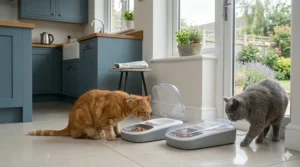
Setting Up Your Microchip Cat Feeder: Step-by-Step Guide
Step 1: Unbox and Prepare Components
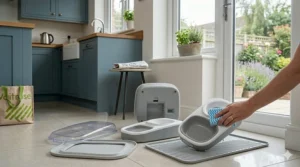
Remove all packaging and check you’ve received the bowl, lid mechanism, mat (if included), RFID collar tag, and instruction manual. Install batteries following the polarity markings—most UK models require 4 × C-cell alkaline batteries. Duracell or similar quality brands typically last longer than budget alternatives, providing better value despite higher upfront costs.
Wash the bowl and any food-contact surfaces with warm soapy water, then dry thoroughly. Most bowls are dishwasher-safe (top rack), though check the manual first. This initial cleaning removes manufacturing residues and establishes good hygiene practices.
Step 2: Position the Feeder Strategically
Choose a quiet location away from high-traffic areas, litter trays, and busy doorways. Cats prefer eating in calm, secure spots where they won’t be disturbed. Avoid placing feeders too close to litter boxes—cats instinctively avoid eating near toilet areas, and RSPCA guidance recommends separate locations.
Ensure the feeder sits on a stable, level surface where curious paws cannot tip it over. Place the included mat underneath to catch spills and protect flooring. In multi-level homes, position feeders on the floor level where your target cat spends most time.
Step 3: Programme Your Cat’s Microchip
Press and hold the programming button (usually located on the front or underside) until the light indicator begins flashing. Encourage your cat to approach the feeder whilst the programming mode is active—most models time out after 60 seconds if no chip is detected.
When your cat’s head passes through the sensor area (typically within 7-10cm), the feeder beeps and the light changes colour, confirming successful registration. Some models display the chip number on a small screen, allowing verification against your database records. Repeat the process for each authorised cat, up to the feeder’s memory limit (typically 10-32 pets).
Step 4: Use Training Mode Effectively
Most quality feeders include training modes that help nervous cats adjust to the mechanical movement. Start with the lid fully open and allow your cat to eat normally for 2-3 days, building positive associations. Place favourite treats inside to create extra incentive.
Gradually introduce movement by activating the feeder whilst your cat eats, but setting the slowest closing speed. Many British cats initially startle at the mechanical sound, so patience is essential. Progress to normal operation once your cat confidently approaches and eats without hesitation—this usually takes 3-7 days depending on the cat’s confidence level.
Step 5: Establish Feeding Routines
Fill the bowl with your cat’s usual food at their regular mealtimes, maintaining consistency to reduce stress. For wet food, remove and clean unconsumed portions after 4-6 hours to prevent spoilage, particularly important in centrally heated British homes. Dry food can remain longer if the feeder includes freshness seals and desiccant systems.
Monitor your cats during the first week, observing for any behavioral changes or feeding difficulties. Shy eaters may need extra encouragement, whilst food thieves will likely attempt (unsuccessfully) to access the feeder multiple times before accepting defeat. This adjustment period is normal and typically resolves within a fortnight.
Common Problems and Solutions for UK Cat Owners
Problem 1: Cat Won’t Approach the Feeder
Solution: Patience and positive reinforcement work best. Place the feeder in your cat’s favourite eating spot and use the training mode with the lid permanently open. Sprinkle irresistible treats (like Dreamies, a UK favourite) around and inside the bowl. Gradually introduce the lid movement over several days, never forcing your cat to use it. Some British cats take up to two weeks to fully accept the new feeding method.
Problem 2: Microchip Not Detected
Solution: Ensure your cat’s chip meets ISO 11784/11785 standards (check your microchip certificate or database registration). Clean the sensor area, as dirt or food residue can interfere with scanning. Position your cat’s head directly over the sensor—some cats approach from angles that prevent detection. If problems persist, contact your vet to verify the chip is functioning and correctly positioned (chips can migrate from the original implantation site).
Problem 3: Other Cats Stealing Food from Rear
Solution: Purchase a back cover accessory (approximately £10-12 from Amazon.co.uk or the manufacturer). Alternatively, position the feeder against a wall, eliminating rear access. Some owners create DIY barriers using cardboard boxes with a front opening, though purpose-designed covers provide neater solutions and don’t restrict the cat’s comfort.
Problem 4: Batteries Draining Quickly
Solution: Check for lid jams or obstructions causing repeated opening attempts. Remove the bowl and inspect the lid mechanism for food debris or trapped fur. Use quality alkaline batteries rather than budget brands—the initial saving proves false economy when batteries drain in weeks rather than months. Consider rechargeable C-cell batteries (like Eneloop) for long-term savings, though note they provide slightly lower voltage and may need more frequent charging.
Problem 5: Food Going Stale or Mouldy
Solution: For wet food, only fill portions your cat will consume within 4-6 hours, cleaning the bowl twice daily with hot soapy water. British homes with high humidity (particularly during autumn and winter) may need daily bowl washing even with dry food. Use sealed feeders with proper gaskets, and consider moisture-absorbing desiccant bags for dry food storage. Never leave wet food in warm locations like near radiators or south-facing windows.
Price Range & Value Analysis for UK Buyers
| Price Bracket | Features | Best For | Examples |
|---|---|---|---|
| £30-50 | Basic timed feeding, no selective access | Single cats, budget-conscious | Cat Mate C500, basic 2-meal feeders |
| £75-100 | Microchip recognition, sealed bowls | Standard multi-cat households | SureFeed MPF001, MiBowl CP500 |
| £100-150 | Enhanced features, app connectivity | Health monitoring needs | PETLIBRO RFID, smart dispensers |
| £150-200+ | Premium systems, comprehensive tracking | Chronic condition management | SureFeed Connect, integrated systems |
Value assessment shouldn’t focus solely on upfront cost. A £100 microchip feeder that prevents your diabetic cat eating standard food meant for a housemate could save thousands in veterinary emergencies. Similarly, early disease detection through smart feeders’ appetite tracking often identifies health issues months before visible symptoms appear, significantly improving treatment outcomes and reducing costs.
British pet insurance companies increasingly recognise this value, with some providers offering premium discounts for homes using health-monitoring feeders. Check with your insurer whether they participate in such schemes—potential savings of 5-10% on annual premiums can offset the feeder cost within 2-3 years.
Frequently Asked Questions
❓ Do microchip cat feeders work with all UK cat microchips?
❓ Can I use a microchip feeder for wet food in the UK climate?
❓ How long do batteries last in microchip cat feeders?
❓ Will my cat's collar tag work with microchip feeders?
❓ Can microchip feeders help with cat weight management?
Maintaining Your Microchip Cat Feeder for Long-Term Performance
Daily Maintenance Tasks
Wipe down the exterior surfaces with a damp cloth, removing any food splashes or paw prints. Check the bowl for leftover food, particularly wet food that can spoil quickly in British homes with central heating. Empty and rinse the bowl if food has been sitting for more than 4-6 hours, preventing bacterial growth and unpleasant odours.
Inspect the sensor area for debris, hair, or food particles that might interfere with microchip detection. A clean, dry cloth usually suffices for gentle cleaning—avoid harsh chemicals near electronic components. If your cat has long fur, check for trapped hair around the lid mechanism, as this can cause jamming over time.
Weekly Deep Cleaning
Remove the bowl and wash thoroughly with hot soapy water, or place in the dishwasher’s top rack if manufacturer-approved. British water hardness varies by region, so descale occasionally using diluted white vinegar if you notice limescale buildup, particularly in areas like London, Birmingham, or Reading with notably hard water.
Wipe the lid mechanism’s underside, removing accumulated food particles and checking the seal’s condition. Replace the silicone seal if it shows cracks, tears, or loses flexibility—degraded seals compromise food freshness and allow fly access during British summers. Most manufacturers sell replacement seals for £5-8 on Amazon.co.uk.
Monthly Technical Checks
Test the battery level indicator (if present) and replace batteries proactively if showing low. Don’t wait for complete failure, as some feeders lose programming when batteries die entirely, requiring you to re-register all cat microchips. Keep spare C-cell batteries in stock, particularly important in rural UK areas where shops may not stock less common battery sizes.
Verify the microchip detection by having each cat approach the feeder whilst you observe the response. Occasionally clean the sensor with electronics cleaner (available from Maplin or Amazon.co.uk for £5-8), following manufacturer guidelines carefully. Check all moving parts for smooth operation, applying food-safe silicone lubricant if the lid shows signs of stiffness.
The Future of Smart Cat Feeding in the UK
Microchip cat feeder technology continues evolving rapidly, with 2026 models incorporating artificial intelligence, predictive health analytics, and integration with broader smart home ecosystems. British manufacturers are developing feeders that communicate with smart scales, activity monitors, and even litter boxes to create comprehensive pet health profiles.
Emerging UK models include camera integration for visual confirmation that the correct cat is eating, addressing a limitation of current systems where determined cats sometimes access food whilst an authorised cat has the lid open. Veterinary partnerships are enabling automatic prescription food ordering when feeders detect low levels, with scheduled deliveries from UK pet supply chains.
Sustainability improvements are also appearing, with British companies like Closer Pets leading development of solar-powered feeders and biodegradable bowl materials. As the UK moves toward stricter environmental regulations, expect more eco-friendly designs using recycled plastics and reduced packaging.
The integration with veterinary telemedicine platforms represents perhaps the most significant development. UK vets can now access feeding data remotely during virtual consultations, adjusting dietary recommendations based on real consumption patterns rather than owner estimates. This data-driven approach is transforming British pet healthcare, making preventative care more accessible and effective.
Conclusion: Choosing Your Perfect Microchip Cat Feeder
After testing seven top microchip cat feeders available on Amazon.co.uk, it’s clear that the right choice depends entirely on your specific household needs. For pure reliability and prescription diet management, the SureFeed Microchip Pet Feeder (MPF001) remains the gold standard—its decade-long reputation among British cat owners speaks volumes about build quality and consistent performance.
Budget-conscious households seeking excellent value should consider the Closer Pets MiBowl, particularly if preventing sneaky rear access is a priority. The British design and manufacturing ensures replacement parts remain readily available, and the fully enclosed structure provides peace of mind for persistent food thieves.
Tech enthusiasts and health-conscious owners benefit enormously from smart feeders like the PETLIBRO RFID or SureFeed Connect. The investment in health monitoring capabilities often pays for itself through early disease detection, reduced veterinary emergencies, and more effective management of chronic conditions. Insurance premium discounts available from some UK providers can further offset these higher upfront costs.
Remember that transitioning to microchip feeding requires patience—most British cats adapt within 1-2 weeks, but some take longer. Use training modes generously, reward positive interactions, and never force the process. The peace of mind knowing each cat receives their correct nutrition, in the right portions, at the right times makes the initial adjustment period worthwhile.
Whether you’re managing prescription diets, tackling obesity, or simply tired of refereeing feline food wars, there’s a microchip cat feeder perfectly suited to your UK home. Choose based on your cats’ needs rather than just features or price—the best feeder is the one your cats will actually use, consistently and happily, for years to come.
Recommended for You
- 7 Best Wooden Elevated Cat Feeding Station Options UK 2026
- 7 Best Elevated Cat Bowls UK 2026: Transform Your Cat’s Health
- 7 Best Elevated Cat Bowls Reduce Vomiting UK 2026 Guide
Disclaimer: This article contains affiliate links. If you purchase products through these links, we may earn a small commission at no additional cost to you. Prices shown are approximate and may vary.
✨ Found this helpful? Share it with your mates! 💬🤗
