
In This Article
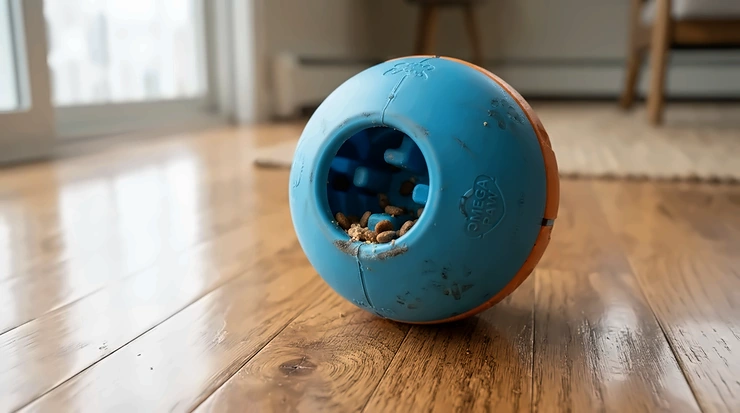
Your cat doesn’t have a laziness problem. They have an employment problem. Modern indoor life serves breakfast on a plate, so there is no stalking, no pouncing and no puzzling anything out. A treat dispensing cat toy puts a little of the hunt back into the day. In 2026 the UK market is crowded with them, from a few pounds to the price of a decent takeaway.
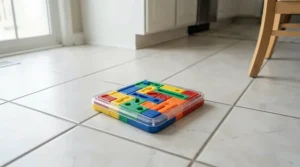
Not every one earns its spot on the shelf, though. Some are properly clever. Others are a plastic rattle that dribbles kibble across your laminate and gets abandoned by Thursday.
So this guide stays honest. Everything here is built from manufacturer specifications, retailer listings and the aggregated sentiment of real buyers. I haven’t claimed hands-on testing of any product, and where review data was thin, I’ve said so.
The case for these toys is well founded. International Cat Care’s guidance on puzzle feeders says they suit cats of every age and ability. It also notes that, where appropriate, a cat’s entire daily food can be delivered this way.
Below you’ll find seven real products, three comparison tables and a practical guide to using these toys without overfeeding. You’ll also find fixes for the “my cat ignores it” problem. Let’s get your cat clocking in.
Quick Comparison: The Top 7 at a Glance
Here is the whole field on one page before we go deeper. Prices are ranges based on UK listings at the time of research, so check current price before buying.
| Product | Type | Difficulty | Price range | Best For |
|---|---|---|---|---|
| Catit Treat Ball | Rolling ball | Easy | Under £10 | Cats new to treat toys |
| Trixie Cat Activity Snack Ball | Rolling ball with maze | Easy to medium | Under £10 | Budget-conscious owners |
| Trixie Cat Activity Snack Roll | Rolling cylinder | Medium | Under £10 | Quiet homes and easy cleaning |
| Catit PIXI Mouse | Self-righting wobbler | Medium | Roughly £8–£15 | Food-motivated swatters |
| Catit Senses 2.0 Digger | Digging tubes | Medium | Roughly £10–£20 | Pawing and scooping cats |
| Nina Ottosson Catstages Buggin’ Out | Sliding puzzle | Medium to hard | Roughly £15–£20 | Clever cats and slow feeding |
| Cat Amazing MEGA | Multi-level maze | Hard | Roughly £20–£35 | Experienced puzzle solvers |
Looking at the table, the two Trixie balls and the Catit Treat Ball are the cheapest ways to test whether your cat cares about food toys at all. If they do, the Nina Ottosson Catstages Buggin’ Out is the sweet spot between price and challenge. Only buy the Cat Amazing MEGA once your cat has outgrown simpler puzzles.
💬 Just one click — help others make better buying decisions too!😊
What Is a Treat Dispensing Cat Toy?
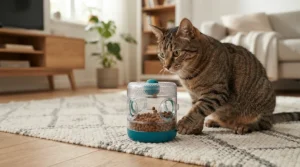
A treat dispensing cat toy is a refillable toy that releases small amounts of dry treats or kibble when your cat bats, rolls, paws or noses it. It turns a snack into a short foraging game. That adds exercise, problem-solving and slower eating to an indoor cat’s day without you dangling a wand for twenty minutes.
The four main families
- Rolling balls and cylinders. Treats drop out as the toy tumbles. These are the classic treat dispenser toy for cats and the easiest to understand.
- Wobblers. A weighted base makes the toy right itself after every swat, so the game never quite ends.
- Digging feeders. Food hides in tubes or cups that cats scoop out with their paws.
- Sliding puzzles and mazes. Compartments, flaps and pegs hide the food. These ask the most of a cat’s brain.
Which family suits your cat depends on their style. Some are bashers, some are scoopers and some are sniff-and-think types. The sections below match each style to a product.
Top 7 Treat Dispensing Cat Toys: Expert Analysis
I’ve ordered these from gentlest introduction to biggest brain-bender. Each entry explains what the specs mean in practice, who the toy suits and what real buyers keep saying.
1. Catit Treat Ball — simplest first step into treat toys
The hidden spiral track inside is what makes this ball work. It makes kibble take the scenic route out, so every roll pays off slowly instead of in one big spill.
The Catit Treat Ball measures about 7.5 cm across and weighs roughly 80 g. A twist-lid switches between a larger filling hole and a smaller dispensing hole, or closes fully so it becomes a plain ball. In practice, that size sits comfortably under a paw and is light enough for a gentle bat to move it. It also means it skitters across hard floors.
Based on the spec comparison, this is the right pick for a cat who has never met a food toy. It works as a low-risk experiment before you spend more. Listings describe an adjustable opening for different treat sizes, but some buyers report effectively one size, so test it with your own treats.
Reviewers consistently say their cats enjoy batting it about. US retailer ratings sit in the high-3s out of 5 across more than a thousand reviews. Recurring complaints are that it can’t be opened fully for cleaning and that treats scatter across the floor.
Pros:
- ✅ Spiral track slows treat release nicely
- ✅ Closes fully to double as a plain ball
- ✅ Small and light enough for any cat to bat
Cons:
- ❌ Can’t be opened fully for deep cleaning
- ❌ Treats may scatter across hard floors
Expect to pay under £10, so check the current price. It’s good value as a first experiment.
2. Trixie Cat Activity Snack Ball — adjustable difficulty on a tiny budget
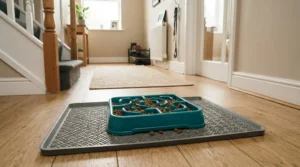
Most budget balls are fixed-difficulty. The Trixie Cat Activity Snack Ball lets you dial the challenge up or down with an adjustable opening.
It’s offered in 6 cm and 7 cm versions, with plastic construction. Some versions add a removable maze that makes treats work harder to escape. The adjustable opening matters more than it sounds. Set it wide and a hesitant cat gets quick wins. Narrow it as they improve and the toy stays interesting for weeks instead of days.
My honest take is that this suits owners who want a treat ball for cats with room to grow, without paying for a puzzle board. Pair it with small, uniform kibble so nothing jams.
On review sentiment, Amazon UK summaries lean positive. In the sample I saw, most of the roughly two dozen customer mentions were favourable, with owners describing it as an entertaining way to make cats work for food. The one negative note was a cat too unmotivated to bother, which is a cat problem rather than a toy problem.
Pros:
- ✅ Adjustable opening scales difficulty over time
- ✅ Compact enough for small flats
- ✅ Very low cost of entry
Cons:
- ❌ Hollow plastic can be noisy on hard floors
- ❌ Unmotivated cats may lose interest quickly
It sits comfortably under £10 and is outstanding value for a toy you can re-tune as your cat learns.
3. Trixie Cat Activity Snack Roll — quiet, rubber-coated and dishwasher-safe
Rubber coating is the quiet feature here. Where a hard plastic ball clatters, the Trixie Cat Activity Snack Roll rolls with a muffled hum, which your neighbours and light sleepers will appreciate.
It’s a cylinder of roughly 6 cm by 14 cm, with a plastic core, a rubber coating and a screw-on lid. Removable rods inside let you adjust how freely treats escape. The cylinder shape rolls more predictably than a sphere, so it won’t ricochet under the sofa quite as dramatically. The screw lid and dishwasher-safe construction make hygiene far easier than with sealed balls.
This is a solid pick for cats who like to paw and nudge rather than sprint after things, and for owners who want an easy-clean option. Fill it with dry treats only.
Reviews are mixed, and it’s worth saying so plainly. Some buyers find it entertaining for their pets. Others say the dispensing didn’t engage their cat, and one wished the holes were adjustable, so check how the rods work with your treat size before settling on a layout.
Pros:
- ✅ Rubber coating keeps rolling noise down
- ✅ Screw lid and dishwasher-safe for easy cleaning
- ✅ Removable rods adjust treat flow
Cons:
- ❌ Mixed reviews on cat engagement
- ❌ Not suited to wet or sticky treats
Prices sit in the low single digits to around £10 at the time of research, which makes it great value for a washable toy.
4. Catit PIXI Mouse — wobbles back up for endless swatting
Self-righting is the party trick. A weighted base pops the Catit PIXI Mouse back upright after every smack, which keeps the game going without you resetting it.
The toy is about 8 cm wide and 10 cm tall, with a transparent chamber holding roughly 60 g of treats. It takes treats up to 9 mm in diameter. A slider adjusts the difficulty, and scent openings let your cat smell what’s inside. That transparency is a smart touch. Cats are far more likely to persist at something they can see and smell.
Based on those specs, this suits food-motivated, swatty cats who treat any wobbling object as prey. One reviewer who used it for slow-feeding said it’s brilliant for a hungry cat but won’t help one that isn’t food-motivated, which is fair advice.
US retailer ratings are around the mid-3s out of 5 from just over a hundred reviews, while a UK Catit page shows a higher average from a small sample. Complaints focus on treat compatibility. Some chunkier or irregular treats jam or won’t pass through the slider, and treats can fall out when the toy is stood upright.
Pros:
- ✅ Weighted base resets itself after each swat
- ✅ Transparent chamber and scent vents attract interest
- ✅ Slider adjusts difficulty
Cons:
- ❌ Fussy with larger or irregular treats
- ❌ Smaller capacity than board-style feeders
Expect roughly £8–£15. It’s good value for a playful wobbler if you stick to small, round treats.
5. Catit Senses 2.0 Digger — for cats who scoop with their paws
Instead of rolling things around, the Catit Senses 2.0 Digger invites your cat to fish for food. Five rounded tubes sit in a stable base, and cats paw the treats out of them.
The set comes with three short narrow tubes and two long wide ones, so you can vary the challenge. A sloped surface lets you leave a few easy kibbles in view as bait. Dimensions vary between retailers, but expect something around 37 cm across and 8 cm high. A rubber mat holds it in place, and the tubes lift out for hand-washing. For a paw-scooping cat, this mimics digging prey out of a burrow.
I’d pick it for cats who prefer fiddling to chasing, and for homes with wooden floors where a rolling toy would be noisy. The trade-off is footprint, since it needs a permanent spot.
Review data is sparse on UK retailer pages, so treat this with caution. The small sample I found included one owner whose cat took a few days to work out the tubes, and another who felt it takes up a lot of space for the amount of use.
Pros:
- ✅ Five tubes with two difficulty sizes
- ✅ Stays put on a rubber mat
- ✅ Tubes lift out for easy washing
Cons:
- ❌ Big footprint for a small toy
- ❌ Limited UK review data to lean on
Roughly £10–£20. It’s good value as a permanent feeding station rather than a one-off toy.
6. Nina Ottosson Catstages Buggin’ Out — the best price-to-challenge ratio
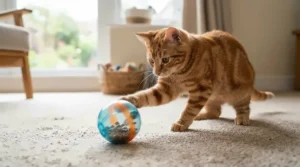
If one puzzle deserves to be the default recommendation, it’s the Nina Ottosson Catstages Buggin’ Out. It pairs 16 hidden treat compartments with a difficulty dial, at a price that doesn’t sting.
The toy holds about a quarter of a cup of food. In easy mode, treats sit in the base compartments. In hard mode, extra treats go into sliding cups, so cats must push and swivel pieces to release them. It has no removable parts, which helps cleaning and means nothing gets lost. It also doubles as a slow feeder for part of a meal.
Based on the specs, this is the one for curious, problem-solving cats, and for owners who want to start with meals rather than treats. Start in easy mode, then step up.
Buyer sentiment is strong. US retailer averages sit around 4.4 out of 5 across thousands of reviews. Reviewers praise its sturdiness and the way it holds interest. The common complaints are that clever cats solve it within a day or so, and that small kibble can occasionally get trapped in gaps.
Pros:
- ✅ Two difficulty modes grow with your cat
- ✅ Sixteen compartments hold a decent portion
- ✅ No removable parts and easy to wipe clean
Cons:
- ❌ Very clever cats may master it fast
- ❌ Small kibble can occasionally lodge in gaps
Roughly £15–£20 at the time of research, and exceptional value for the enrichment it delivers.
7. Cat Amazing MEGA — the heavyweight maze for expert solvers
Size is the headline. The Cat Amazing MEGA is the biggest, most layered puzzle in the Cat Amazing range. Its listing promises three levels and 27 sections of treat-hunting.
It’s made of cardboard that the brand describes as plant-based and biodegradable. Listing data suggests a footprint of about 28 cm square and roughly 40 cm tall, with typical play sessions of 20 to 35 minutes per handful of treats. That’s far longer than a ball offers, because the maze keeps surprising a cat who thinks they’ve solved it. The material also means a few trade-offs, including no dishwasher, no wet food and a shorter lifespan than plastic.
The MEGA suits experienced puzzle solvers who have already mastered easier toys, plus owners happy to rotate toys to keep things fresh. I couldn’t verify a robust review pool for the MEGA itself. The wider Cat Amazing range gets mixed-to-positive feedback, from owners calling it the only puzzle their cat would use to one who found it pretty useless for theirs.
Pros:
- ✅ Three levels give serious longevity
- ✅ Longest play sessions on this list
- ✅ Plant-based cardboard construction
Cons:
- ❌ Cardboard isn’t washable or wet-food friendly
- ❌ Biggest footprint and highest price here
Expect roughly £20–£35. It’s worth it only if your cat has outgrown simpler puzzles.
How to Choose a Treat Dispensing Cat Toy
Choosing well is mostly about matching the toy to your cat’s style, not chasing the fanciest design. Work through these steps.
- Watch how your cat plays. Bashers suit rolling balls, scoopers suit digging feeders and thinkers suit sliding puzzles. A toy that fits their natural move gets used.
- Match difficulty to ability. Start easy so your cat wins quickly. A frustrated cat gives up, and a bored cat ignores it.
- Check treat size compatibility. Most dispensers want small, dry, uniform pieces. The Catit PIXI Mouse, for instance, caps out at 9 mm.
- Consider where it will live. Rolling toys rattle on hard floors. Digging boards and mazes need dedicated floor space.
- Prioritise cleaning. Fats and crumbs go stale. Choose toys with screw lids, removable parts or a dishwasher-safe finish where you can.
- Look at the whole home. In multi-cat homes, get one toy per cat so nobody guards the only puzzle.
- Set a budget with room to rotate. Two or three cheap toys swapped weekly beat one expensive puzzle left out forever.
✨ Ready to Start the Hunt?
🔍 Take your cat’s playtime up a level with these carefully selected picks. Click any highlighted product name to check current pricing and availability, and match each toy to your cat’s style. 🐾
Treat Ball for Cats: Rolling, Wobbling and What Actually Works
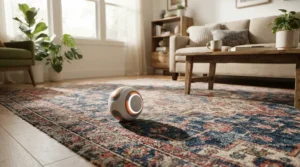
The treat ball for cats is the entry-level star of this category. It’s cheap, easy to understand and needs almost no instruction. It can also go badly wrong if you buy the wrong one.
Why balls work for some cats and not others
Balls reward movement. A cat that loves chasing will happily roll a Catit Treat Ball across the kitchen. A cat that likes to sit and think may ignore it. The Trixie Cat Activity Snack Ball adds adjustable difficulty, which helps in the middle ground.
The hard-floor problem
Reviewers often mention treats scattering. The simple fix is to play on a rug or carpet, or inside a hallway where escaped treats are easy to recover. Treat it as a short, supervised session rather than something left out all day.
Pairing with the right treat
Small, round, dry kibble flows best. Chewy or oval treats jam. If your cat’s favourite treats are chunky, a wobbler or digging board will suit them better than a ball.
Mental Stimulation for Cats: What Puzzles Actually Deliver
Mental stimulation for cats isn’t a nice-to-have. It’s part of welfare. Indoor cats that don’t get to use their hunting instincts can slide into boredom and inactivity, and weight is part of that story.
The numbers matter here. PDSA reports that over a third of UK cats are overweight. It also warns that excess weight raises the risk of diabetes, cystitis and arthritis.
A treat dispensing cat toy won’t fix weight on its own. It gives your cat a reason to move and think, and it slows the pace of eating.
Not all stimulation is equal
- Physical: balls and wobblers like the Catit PIXI Mouse get cats chasing and swatting.
- Problem-solving: puzzles like the Nina Ottosson Catstages Buggin’ Out ask cats to work out sequences.
- Sensory: open scent vents and visible treats pull cats in through smell and sight.
The honest limit
A feeder can’t cure territorial stress or a medical appetite problem. If your cat’s behaviour changes suddenly, talk to your vet before blaming boredom.
Positive Reinforcement Play: Turning Treat Toys into Training
Positive reinforcement play means rewarding behaviour you like straight after it happens. A treat dispenser toy for cats does this automatically. The cat bats, treats appear and the habit strengthens, with no timing effort from you.
Make it a habit loop
Cats love a sequence: hunt, catch, eat. Run a short wand session first, then offer a treat toy as the “catch and eat” finish. That pairing satisfies the whole predatory pattern and leaves your cat calmer afterwards.
Use a food reward toy as a calm-down tool
A food reward toy offered at the same time each day builds a reliable routine. Cats that know a rewarding activity is coming often settle faster than cats left to guess.
Keep it positive
Never force a cat to use the toy, and don’t punish a cat for ignoring it. Instead, make it more inviting by sprinkling a few treats beside it and using a gentler setting. If your cat gets frustrated, step the difficulty down.
Cat Feeding Enrichment: Replacing the Bowl Safely
Cat feeding enrichment is where these toys earn their keep. Rather than treating them as occasional extras, use them as part of your cat’s actual feeding plan.
A simple five-step method
- Measure the daily ration first. Weigh or measure the food so you know the total.
- Start with a small share. Put one meal’s worth, or less, into a puzzle such as the Nina Ottosson Catstages Buggin’ Out.
- Sprinkle food around it. International Cat Care suggests this to help cats link the puzzle with food.
- Increase gradually. If your cat copes calmly, shift more of the daily food into puzzles. iCatCare notes that where appropriate, all of a cat’s food can be offered this way.
- Rotate. Alternate toys such as the Catit Senses 2.0 Digger and a ball so your cat uses different skills.
Respect the treat budget
If you’re using real treats rather than meals, the WSAVA guidance on feeding treats says treats should stay under 10% of a cat’s daily calories. Count them, and reduce regular meals on heavy treat days.
Treat Dispenser Toy for Cats vs Bowl vs Interactive Play
Is a puzzle really better than a bowl, or than playing with a wand? Here is the comparison.
| Feature | Plain bowl | Treat dispenser toy for cats | Wand play with you |
|---|---|---|---|
| Effort needed from cat | None | Moderate | High |
| Effort needed from you | Low | Low after setup | High |
| Slows eating | No | Yes | Not applicable |
| Works while you’re out | Yes | Yes | No |
| Best For | Cats with medical feeding needs | Catit Treat Ball, Nina Ottosson Catstages Buggin’ Out | Bonding and exercise |
The table shows that a treat dispenser toy for cats sits in the useful middle. It asks more of your cat than a bowl but needs far less of you than wand play. It doesn’t replace play with you, though. The best set-up combines all three: wand sessions, puzzle feeding and the occasional plain bowl for cats that struggle with puzzles.
Problem → Solution: When Your Cat Won’t Play
Here are the most common snags and what to do about them.
“My cat ignores it completely.”
Make it obvious. Add a few high-value treats in plain view and sprinkle a few outside the toy. Start with the easiest setting on a toy like the Trixie Cat Activity Snack Ball.
“The treats go everywhere.”
Move to a rug or switch to a toy that keeps contents in, such as the Catit Senses 2.0 Digger, where food stays in tubes.
“My cat solved it in a day.”
That’s a good problem. Step up to harder modes on the Nina Ottosson Catstages Buggin’ Out, or graduate to the Cat Amazing MEGA.
“Treats jam inside.”
Check the size limit. The Catit PIXI Mouse takes treats up to 9 mm. Anything bigger is a jam waiting to happen.
“It smells rancid.”
Wash it. Fats and crumbs build up quickly. Choose washable designs like the Trixie Cat Activity Snack Roll where hygiene matters most.
Real-World Scenarios: Matching Toys to Cats
The flat-dwelling young cat
A one-bedroom flat, a bored two-year-old and neighbours below. The Trixie Cat Activity Snack Roll, with its rubber coating, keeps noise down. Add a Catit Treat Ball on the rug for variety, and the whole setup comes in under about £20.
The greedy senior with a weight problem
A food-obsessed older cat who inhales meals. Slowing eating is the aim. The Catit Senses 2.0 Digger makes dinner a fiddly, paw-powered job, and the Catit PIXI Mouse can hold part of the daily ration. Check with your vet before changing the diet.
The clever, bored multi-cat household
Two cats, one a genius. Buy two puzzles, not one, to avoid guarding. Give the quick learner the Cat Amazing MEGA and the gentler cat the Nina Ottosson Catstages Buggin’ Out on its easy setting.
Common Mistakes When Buying a Treat Dispensing Cat Toy
- Buying the hardest puzzle first. A cat that fails repeatedly learns to ignore it. Start easy.
- Forgetting to count the treats. Hidden calories add up fast. Keep to the 10% guideline.
- Leaving toys out all day. Novelty fades. Rotate a few toys through the week.
- Ignoring cleaning. Residue turns stale and can put cats off.
- Skipping supervision. Inspect toys for damage regularly, don’t let cats chew pieces and retire anything cracked.
- Treating it as a replacement for you. Feeders add enrichment, not companionship. iCatCare’s wider advice on enriching your cat’s life is a useful reminder that play, climbing, scratching and rest all count too.
Long-Term Cost & Maintenance
The cheapest toy isn’t always the cheapest to own, and a pricey one can pay for itself if it lasts.
| Product | Price range | Cleaning | Lifespan expectation | Best For |
|---|---|---|---|---|
| Catit Treat Ball | Under £10 | Wipe only | Moderate | Testing interest |
| Trixie Cat Activity Snack Roll | Under £10 | Dishwasher-safe | Long | Easy hygiene |
| Catit Senses 2.0 Digger | £10–£20 | Hand-wash tubes | Long | Permanent station |
| Nina Ottosson Catstages Buggin’ Out | £15–£20 | Wipe clean | Long | Daily meals |
| Cat Amazing MEGA | £20–£35 | Not washable | Shorter | Occasional challenge |
Looking at the data, a washable plastic toy tends to win on cost over time, while cardboard trades longevity for a bigger challenge. For most homes, one sturdy puzzle plus one or two cheap rollers gives the best value per week of enrichment.
Maintenance is simple. Empty leftover treats, wash weekly where the toy allows it and dry thoroughly. Replace anything cracked.
FAQ
❓ How much does a good treat dispensing cat toy cost in the UK?
❓ Can I put wet food in a treat dispenser toy for cats?
❓ How many treats should go in a food reward toy each day?
❓ What's the best option for a cat that gives up quickly?
❓ How often should I wash a treat ball for cats?
Conclusion
The right treat dispensing cat toy is the one your cat actually uses, and that depends on how they play. For a cautious beginner, the Catit Treat Ball or Trixie Cat Activity Snack Ball is a cheap, low-risk test. If noise or cleaning worries you, the Trixie Cat Activity Snack Roll is the sensible pick. For a swatty, food-driven cat, the Catit PIXI Mouse brings the wobble. A pawing, scooping cat will love the Catit Senses 2.0 Digger.
For most owners, the Nina Ottosson Catstages Buggin’ Out is the best all-rounder, thanks to two difficulty modes and strong reviewer sentiment. Keep the Cat Amazing MEGA in reserve for a cat who has already conquered everything else.
Whichever you choose, treat the toy as part of a bigger picture: measured portions, regular play with you and a rotation that keeps things fresh. Start easy, count the calories, wash the toy and let your cat win early.
Recommended for You
- Top Ball Track Toy For Cats: 7 Best Picks For UK Homes (2026)
- Motion Activated Cat Toy For Senior Cats: 7 Gentle Picks (2026)
- Electronic Cat Toy For Kittens: 7 Best Picks For UK Homes (2026)
Disclaimer: This article contains affiliate links. As an Amazon Associate, I earn from qualifying purchases. If you purchase products through these links, we may earn a small commission at no additional cost to you.
✨ Found this helpful? Share it with your friends! 💬🤗
