
In This Article
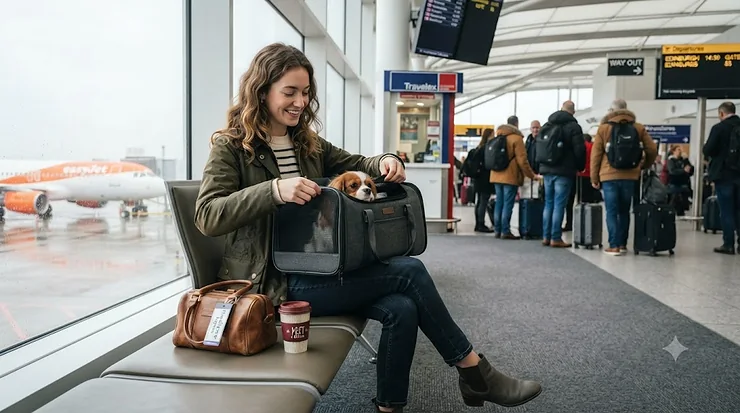
Type “easyJet approved pet carrier” into Google and you’ll find dozens of listings happily selling you one. Here’s the uncomfortable bit: easyJet doesn’t actually let pets fly in the cabin, full stop, other than recognised assistance dogs. No cat, no small dog, no hamster in a backpack. So before you spend £60 on a carrier because the box said “easyJet approved,” it’s worth understanding what that phrase can and can’t mean, and which carriers genuinely do get you and your cat onto a European flight together. An airline compliant pet carrier is simply a soft or hard-sided bag or crate built to a specific airline’s published under-seat or cargo-hold dimensions and weight cap, typically around 45 x 30 x 25cm and 8kg combined for cabin travel. This guide walks through the honest picture for easyJet and British Airways, then gets into seven real carriers that will actually work, on airlines that will actually take your cat.
What Is an “Airline Approved” Pet Carrier, Really?
There’s no official industry certification stamped “airline approved” — it’s marketing shorthand for a carrier whose dimensions and construction happen to fit within a specific airline’s published pet policy. That’s an important distinction, because a carrier can be “approved” for Lufthansa and still get you turned away at a Vueling gate. According to the International Air Transport Association’s Live Animals Regulations, which most global carriers reference when writing their own pet policies, containers need enough room for the animal to stand, turn around and lie down naturally, alongside secure ventilation on multiple sides. What “approved” doesn’t mean, unfortunately, is that any UK budget carrier will let your pet board at all — which is exactly the confusion this article aims to clear up.
Quick Comparison: Cabin Bag vs Hold Crate
| Factor | Soft-sided cabin bag | Hard-sided hold crate |
|---|---|---|
| Typical size | ~45 x 30 x 25cm | Sized to pet + 10% growth allowance |
| Works for | KLM, Air France, Lufthansa, Vueling, TAP, Finnair | British Airways (IAG Cargo), long-haul hold transfers |
| Weight cap | 8kg combined (pet + carrier) | Set by IATA crate sizing formula, not a flat cap |
| Best for | Short-haul European trips, cat travelling with you | UK entry/exit, larger cats, unaccompanied transport |
Reading across the table, the split really comes down to where your cat is sitting during the flight, not which carrier looks nicest in photos. A soft-sided bag only matters if you’re flying an airline that seats pets in the cabin in the first place; if you’re routing through British Airways or need to bring a pet into Great Britain under DEFRA’s Pet Travel Scheme, you’re shopping for a hard IATA crate instead, because that’s the only format the hold route accepts.
💬 Just one click — help others make better buying decisions too!😊
Top 7 Pet Carriers for Flying: Expert Analysis
1. PetAmi Premium Airline Approved Soft-Sided Cat Carrier — lightest budget option on this list
The standout here is weight: an empty PetAmi leaves noticeably more of your 8kg allowance for the actual cat than most rivals. Constructed from a padded polyester shell over a wire frame, it measures close to 43 x 26 x 28cm, sitting comfortably inside the KLM and Lufthansa envelopes with room to spare, and it collapses flat for storage between trips. Based on the spec comparison, this is the sensible pick for owners flying once or twice a year who don’t want to sink £150 into a carrier that spends 50 weeks in a cupboard. Reviewers consistently report that the mesh panels hold up well to nervous scratching, though a handful mention the base feels a little soft under a heavier cat, something worth padding out with a firm liner. It suits first-time flyers, budget-conscious owners and anyone whose cat is under 5kg. At around £25-£35, it’s one of the cheapest genuinely compliant options available on amazon.co.uk.
Pros:
- ✅ Very light empty weight, more room under the 8kg cap
- ✅ Collapses flat for easy home storage
- ✅ Fits the KLM and Lufthansa cabin envelope with margin
Cons:
- ❌ Base padding feels underbuilt for cats over 5kg
- ❌ Fewer premium touches than pricier rivals
2. Sherpa Original Deluxe Pet Carrier — comes with a boarding guarantee
What most buyers overlook about the Sherpa Original Deluxe is its Guaranteed On Board scheme: register your trip online beforehand and, if your carrier gets refused at the gate on a covered airline, Sherpa reimburses your flight and pet fee. On paper this means genuine peace of mind rather than just a marketing line, since a refused carrier at check-in is most people’s actual nightmare scenario. Specs-wise it runs a spring-wire frame that compresses at the rear to squeeze into tighter under-seat gaps, with a machine-washable faux-lambskin liner and mesh on three sides for visibility and airflow. Aggregated review sentiment is strongly positive on comfort and construction quality, with the recurring criticism being that determined cats can eventually work a claw through the mesh over repeated trips. It’s well suited to nervous flyers who want a name with an established compliance track record, and to anyone connecting through more than one airline on the same itinerary. Expect to pay in the £45-£65 range depending on size.
Pros:
- ✅ Guaranteed On Board reimbursement scheme included
- ✅ Compressible frame adapts to tighter under-seat spaces
- ✅ Washable faux-lambskin liner for comfort
Cons:
- ❌ Mesh can wear through with a persistent scratcher
- ❌ Pricier than basic soft-sided alternatives
3. Amazon Basics Airline Approved Soft-Sided Pet Carrier — cheapest reliable starter bag
The honest appeal of the Amazon Basics carrier is that it does the fundamentals without any frills, at a price that doesn’t sting if your cat turns out to hate flying and you never use it again. Dimensions land around 42 x 27 x 28cm with a removable, washable fleece pad and a top-loading zip, and the shell holds its shape reasonably well thanks to a lightly reinforced frame. Here’s what to weigh: this carrier is genuinely functional for occasional trips, but it lacks the compressible frame that lets pricier bags squeeze under a tighter seat, so it’s worth measuring your specific aircraft’s under-seat gap before relying on it for a connecting flight on unfamiliar equipment. Reviewers commonly note it’s an easy carrier for a first-time nervous flyer to get their cat used to at home before travel day, thanks to the low sale price making trial-and-error less costly. Budget owners and infrequent flyers are the clear audience here. Pricing typically sits under £30.
Pros:
- ✅ Genuinely low price for a compliant cabin bag
- ✅ Removable washable fleece pad
- ✅ Simple top-loading design cats settle into quickly
Cons:
- ❌ Frame doesn’t compress for very tight under-seat spaces
- ❌ Less durable stitching than premium competitors
4. Trixie Ryan Pet Carrier Bag — built to continental European sizing from the outset
The Trixie Ryan is worth including specifically because it’s designed by a German pet-goods company for the European market, so its roughly 45 x 27 x 25cm footprint and 9kg capacity were never retrofitted from a US spec sheet — they were built around the same continental airline norms you’re actually flying against. It opens from both the top and front, has an integrated short lead sewn into the interior to stop a startled cat bolting the instant you unzip it, and includes a detachable shoulder strap alongside the carry handles. What the spec sheet won’t tell you, but reviewers note, is that the outer accessory pocket is just large enough for a folded pet passport and vaccination card, which matters more than it sounds like on a Pet Travel Scheme journey. It suits owners flying from the UK into the Netherlands, France or Germany specifically, where Trixie’s home-market design assumptions line up with the airline you’ve actually booked. Expect a price in the £35-£50 range.
Pros:
- ✅ Dimensions designed around continental European airline norms
- ✅ Integrated short lead reduces bolting risk at the zip
- ✅ Front and top opening for flexible loading
Cons:
- ❌ Less widely stocked in UK stores than US-designed rivals
- ❌ Structure is softer than frame-reinforced competitors
5. SturdiBag Large Pet Carrier — flexes to fit unusually tight underseat gaps
The SturdiBag’s defining feature is a flexible-top frame that compresses laterally under a genuinely tight seat pitch without folding in on the cat inside it, which is the structural distinction that separates a carrier that merely looks compliant from one that survives contact with a real Airbus A320 under-seat gap. At roughly 45.7 x 30.5 x 30.5cm it sits right at the edge of several airlines’ published limits, so on paper this means it’s the carrier for readers who’ve checked their specific route’s dimensions closely rather than assumed all “airline approved” bags are interchangeable. Reviewers consistently praise the dome top for giving a taller cat headroom without breaching the compressed footprint once seated. It’s the pick for medium-to-large cats on KLM or similar routes where a slightly undersized rigid bag would be genuinely uncomfortable. Pricing generally runs around £90-£110.
Pros:
- ✅ Compresses under tight seat pitch without squashing the cat
- ✅ Dome top gives taller cats extra headroom
- ✅ Holds structure better than basic wire-frame bags
Cons:
- ❌ Sits close to the size limit on some shorter-cabin aircraft
- ❌ Costs meaningfully more than entry-level bags
6. Sleepypod Air In-Cabin Pet Carrier — the only crash-tested carrier on this list
The Sleepypod Air earns its premium price through Center for Pet Safety crash-test certification, a distinction no other soft carrier here can claim, plus an internal safety tether that clips to your cat’s harness rather than relying purely on the zip staying shut. Its collapsible frame compresses from roughly 56cm down to around 41cm in length, letting it adapt between car travel and the tighter demands of a narrowbody cabin. Based on the spec comparison, buyers should note the trade-off: at around 26-27cm uncompressed height, it clears most European carriers’ limits but runs close to the edge on a handful of shorter-cabin aircraft, so it rewards owners who check their specific route before flying rather than assuming crash-test credentials guarantee gate approval. It’s aimed squarely at owners who also drive with their cat regularly and want one carrier that does both jobs safely. Budget around £150-£180.
Pros:
- ✅ Center for Pet Safety crash-test certification
- ✅ Internal tether adds a second layer of security
- ✅ Doubles as a safe car-travel carrier, not just a flight bag
Cons:
- ❌ Among the priciest soft carriers on the market
- ❌ Height runs close to the limit on some shorter cabins
7. Petmate Vari Kennel (Sky Kennel) — the IATA-compliant crate for hold and cargo travel
This is the carrier that matters if you’re flying British Airways with a cat, because BA only moves pets through the temperature-controlled hold via IAG Cargo, and that route requires a genuinely rigid, IATA-compliant crate, not a soft cabin bag. The Vari Kennel is hard-sided ventilated polypropylene with a steel-wire door, meets the standard requirement that pets be able to stand, turn and lie down without touching the roof, and comes in sizes calculated against your cat’s measured length and height plus the standard growth allowance airlines expect. Reviewers who’ve used it for cargo shipping consistently flag the reassurance of a metal door latch over a plastic one, since IAG Cargo and similar handlers will reject crates with anything less secure. It’s the obvious choice for anyone bringing a cat into Great Britain under DEFRA’s pet travel rules, or flying a route where cabin travel simply isn’t offered. Prices vary by size, typically landing in the £45-£90 range.
Pros:
- ✅ Meets IATA hold-crate ventilation and door-security standards
- ✅ Correctly sized options for BA/IAG Cargo requirements
- ✅ Sturdy metal door latch handlers won’t reject at check-in
Cons:
- ❌ Bulky to store between trips compared with soft bags
- ❌ Not usable as an under-seat cabin carrier
Airline Pet Policy Comparison at a Glance
| Airline | Cabin pets allowed? | Typical cabin limit | Notes |
|---|---|---|---|
| easyJet | No (assistance dogs only) | N/A | No cabin or hold option for ordinary pets on any route |
| British Airways | No (assistance dogs only) | N/A | Hold travel only, via IAG Cargo / PetAir UK |
| KLM | Yes | 46 x 28 x 24cm, 8kg combined | Connects well through Amsterdam |
| Lufthansa | Yes | 55 x 40 x 23cm, 8kg combined | Larger footprint than most rivals |
| Vueling | Yes | Combined 10kg limit | One of the more generous weight caps |
The pattern that jumps out here is how consistently narrow the “yes” column is compared with how many UK travellers assume their default airline will simply work. Reviewers and forum threads alike report the same lesson learned the hard way: booking the flight before checking the pet policy is the single most common and most expensive mistake in this whole process, because rerouting a connecting flight around a pet-friendly carrier after the fact rarely comes cheap.
British Airways Cat Carrier Requirements Explained
Because British Airways routes every pet through IAG Cargo rather than the cabin, “British Airways cat carrier requirements” really means IATA crate requirements, not a soft bag spec. The crate needs to be strong, secure and properly ventilated, with mesh or ventilation gaps too small for a paw or nose to pass through, food and water bowls securely fixed to the inside, and enough internal height and floor space for your cat to stand fully upright and turn around without touching the walls. Fibreboard, wicker and wire-mesh-only containers are explicitly unsuitable for air transport under these rules. Brachycephalic (flat-faced) breeds, including Persian, Himalayan and Exotic cats, require a crate roughly 10% larger than standard, reflecting the added respiratory risk these breeds carry in transit. For US and Canadian departures specifically, BA has previously specified 68 x 50 x 48cm as the reference cat crate size, though your actual crate should always be sized to your individual cat’s measurements plus growth allowance rather than assumed from a single published figure. This is honestly the area where getting it wrong costs the most, since a rejected crate at cargo check-in can mean rebooking an entire shipment through a pet transport agent at short notice.
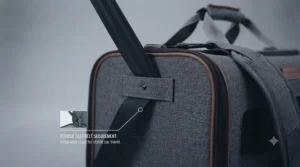
How to Choose an Airline Compliant Pet Carrier
- Confirm your airline actually carries pets in the cabin. Check the specific airline’s own published pet policy page before buying anything, since easyJet and British Airways don’t offer a cabin option at all.
- Measure your cat, not just the carrier. Your cat needs to stand, turn and lie down without touching the sides — a carrier that’s technically airline-compliant but too small for your cat is still the wrong purchase.
- Weigh pet plus carrier together. Most European cabin-friendly airlines cap the combined weight at 8kg, so an unusually heavy carrier eats directly into your cat’s allowance.
- Check the exact millimetres against your specific aircraft, not a rough estimate. Under-seat space genuinely varies between aircraft types on the same airline.
- Decide cabin bag versus hold crate early. These are different product categories entirely, and buying the wrong one wastes both money and time before departure.
- Factor in DEFRA and Pet Travel Scheme paperwork timing. A compliant carrier means nothing if your microchip, rabies vaccination and health certificate timeline isn’t sorted well in advance.
- Trial the carrier at home before travel day. A cat encountering its carrier for the first time at the airport is a recipe for a stressful boarding experience for everyone nearby.
Getting Carrier-Ready: A Practical Setup and Travel-Day Guide
Buying the right carrier is only half the job; getting your cat comfortable inside it is the part most airline pet policy pages skip entirely. Start at least two to three weeks before travel by leaving the carrier open in a regular living space with a familiar blanket inside, letting your cat investigate it on their own terms rather than being placed inside cold on departure morning. Feed treats or a meal near the entrance, gradually moving the bowl further inside over several days, so the carrier becomes associated with something genuinely positive rather than only appearing before stressful vet trips. In the final week, start doing short practice sessions with the carrier zipped and carried around the house or a quiet car journey, so the sensation of movement isn’t entirely new on the day itself. On travel morning, withhold a large meal a few hours beforehand to reduce the risk of travel sickness, but do offer water right up until departure, and always attach an ID tag to the harness inside, not just the outside of the bag, in case of an unexpected separation during transit.
Real-World Scenarios: Matching the Carrier to Your Trip
If you’re a Bristol-based owner flying KLM via Amsterdam for a fortnight in the Dordogne with a 4kg tabby, the PetAmi or Amazon Basics bag covers the trip comfortably and doesn’t cost much if it turns out to be a one-off. If you’re relocating permanently from London to Frankfurt with a slightly larger, more anxious cat who’ll be making the same journey again for veterinary visits and future trips, the SturdiBag or Sherpa Original Deluxe earns its higher price through repeated use and a genuinely tighter compression fit. If you’re bringing a cat into Great Britain from outside the Pet Travel Scheme’s Part 1 list, or flying British Airways at any point in the journey, none of the soft cabin bags above are relevant at all — you need a correctly sized Petmate Vari Kennel or equivalent IATA crate and a pet transport agent who can navigate the IAG Cargo booking process on your behalf.
Common Mistakes When Buying a Cat Carrier for Flying
Booking a flight on easyJet or British Airways and only checking the pet policy afterwards is comfortably the most common and most expensive error, since by that point you’re either rebooking through a different carrier entirely or arranging a specialist cargo route from scratch. A close second is buying a carrier sized to the airline’s absolute maximum dimensions without checking that it also fits comfortably under the specific aircraft’s seat, since published cabin limits and real-world under-seat space don’t always match. Owners also frequently underestimate how much a carrier’s own weight eats into an 8kg combined cap — a heavier premium bag can leave noticeably less allowance for the cat than a lighter budget one. Finally, leaving DEFRA paperwork, microchipping and the 21-day post-rabies-vaccination wait until the week before departure is a persistent and entirely avoidable source of last-minute cancelled trips.
Features That Actually Matter (And Those That Don’t)
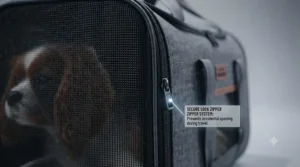
Ventilation on at least two sides, a base rigid enough not to sag when lifted, and secure double-zip closures are the features worth paying for, since they directly affect whether a gate agent or cargo handler accepts the carrier at all. A compressible frame matters specifically if you’re flying an aircraft type with a known tight under-seat gap, and matters far less on a wide-body long-haul cabin with generous floor space. What tends not to matter nearly as much as marketing suggests: decorative prints, matching travel accessories, and branded “airline approved” labelling with no reference to a specific airline’s actual policy, since that phrase carries no enforceable meaning on its own. Reviewers across multiple carriers in this guide consistently rate genuine ventilation and a secure zip mechanism above cosmetic extras when asked what mattered most once they were actually at the airport.
Safety, Regulations and Compliance: DEFRA and the Pet Travel Scheme
Every carrier decision in this guide sits downstream of a bigger regulatory picture that’s easy to overlook until it derails a trip. Under the UK government’s Pet Travel Scheme guidance for bringing pets into Great Britain, your cat needs to be microchipped before their rabies vaccination, wait at least 21 full days after that vaccination before travelling, and enter via an approved route with the correct documentation, or face up to four months in quarantine. None of that is enforced by your carrier choice directly, but a rejected crate or bag at check-in can just as easily unravel a trip that was otherwise fully compliant on the paperwork side. If you’re travelling from the UK to an EU country, the equivalent outbound guidance requires an animal health certificate from an authorised vet, since UK-issued pet passports are no longer valid for entry into the EU post-Brexit. Building in a buffer of several weeks before departure for both the vaccination timeline and the carrier trial period isn’t optional admin — it’s the difference between a straightforward trip and a cancelled one.
Frequently Asked Questions
❓ Does easyJet have an approved pet carrier?
❓ Can I fly with my cat on British Airways in the cabin?
❓ What size carrier do most European airlines accept in the cabin?
❓ Do I need a hard or soft carrier for flying?
❓ How early should I get my cat used to a carrier before flying?
Conclusion
The honest answer to “easyJet approved pet carrier” is that the phrase describes a product category that doesn’t currently apply to easyJet at all, and getting clear on that early saves both money and a stressful morning at the gate. What does hold true across the board is that a well-chosen carrier, matched correctly to either a cabin-friendly airline like KLM or Lufthansa, or to British Airways’ cargo-only route, makes the practical difference between a calm departure and a refused boarding. Whether you land on the budget-friendly PetAmi for an occasional short hop or the IATA-compliant Petmate Vari Kennel for a British Airways cargo journey, the seven carriers above cover the realistic range of trips UK cat owners are actually planning in 2026. Check your airline’s current policy directly before booking, give your cat time to settle into the carrier at home, and the rest of the journey tends to fall into place.
✨ Ready to get your cat travel-ready?
🔍 Check current pricing on the carrier that matches your route above, and give yourselves plenty of runway before departure day! 🐾✈️
Recommended for You
- Airline Approved Cat Carrier: 7 Picks That Actually Fly (2026)
- Best Collapsible Cat Carrier UK 2026: 7 Top Picks Reviewed
- Best Soft Sided Cat Carrier UK 2026: 7 Top Picks Reviewed
Disclaimer: This article contains affiliate links. As an Amazon Associate, I earn from qualifying purchases. If you purchase products through these links, we may earn a small commission at no additional cost to you.
✨ Found this helpful? Share it with your friends! 💬🤗
