
In This Article
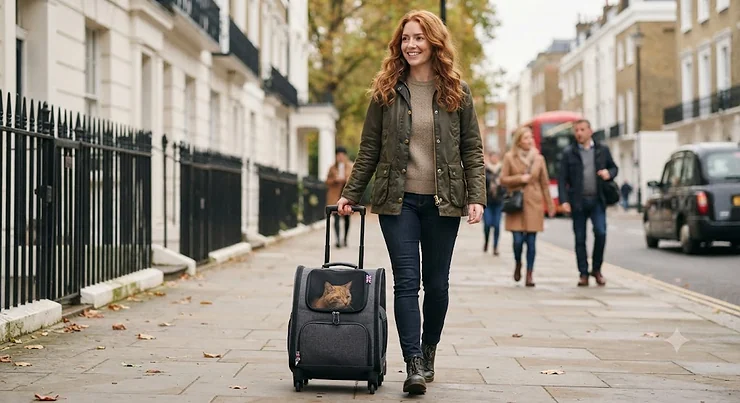
There’s a very specific kind of ache that comes from lugging a wriggling nine-kilo Maine Coon through a car park, isn’t there? Your shoulder burns, the handle digs a groove into your palm, and your cat yowls the whole way like you’ve personally betrayed them. A rolling cat carrier is a soft or hard-sided cat travel case built onto a wheeled base with a telescopic handle, so it pulls along the ground like hand luggage instead of hanging from your arm. It’s the difference between carrying your cat and simply walking them, suitcase-style, wherever you both need to go.
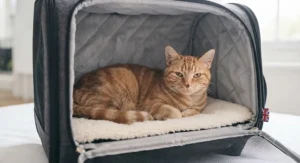
We’ve dug into real product listings, verified specs, and aggregated genuine customer feedback from UK retailers and manufacturer pages to work out which wheeled carriers earn their keep and which ones wobble apart after three vet trips. This isn’t a rehashed spec sheet either. Every product below comes with honest analysis of who it actually suits, because a carrier that’s brilliant for a placid twelve-year-old tabby might be a nightmare for a nervy rescue cat who hates vibration underfoot.
Cats, as the experts at International Cat Care point out, generally do better when they’re allowed to get comfortable with their carrier long before travel day arrives, and the type of carrier you choose plays a big part in how stressful that process is. Wheels solve a very real problem for owners, particularly if you’re managing mobility issues, a heavy cat, or a long walk between the front door and the vet’s waiting room, but they introduce a new set of considerations: noise, ground clearance, and whether your cat tolerates rolling motion at all. This guide walks through seven genuine rolling cat carrier options, a full comparison table, transformation-focused how-to sections, and answers to the questions UK cat owners actually type into Google before they buy.
Quick Comparison Table
Before we get into the detail, here’s a snapshot of how the seven carriers stack up against each other on the things that matter most: weight capacity, portability style, and who each one genuinely suits.
| Carrier | Type | Max Weight | Standout Feature | Best For |
|---|---|---|---|---|
| PawHut 4-in-1 Pet Carrier | Convertible trolley/sling/car seat | 4 kg | Four uses in one bag | Small cats, occasional trips |
| Petsfit Pet Carrier Trolley | Rolling tote with telescopic handle | Not stated (medium cats) | Simple, sturdy trolley design | Vet runs, mobility-limited owners |
| Morpilot Rolling Cat Carrier | Detachable wheels, foldable | Large cat rated | Airline-approved build | Frequent flyers |
| A4 Pet Carrier with Wheels | Collapsible, telescopic handle | 15 kg | High weight capacity | Large or multi-cat households |
| Pecute Steel Wire Trolley | Dolly separates from bag | Medium/large | Detachable wheel dolly | Multi-use travellers |
| Lollimeow 3-in-1 Carrier | Backpack/car seat/wheeled hybrid | Small-medium | Privacy shades, telescopic rod | Anxious or shy cats |
| Babenest Detachable Wheel Carrier | Airline-approved, shoulder strap | Small-medium | Multiple carry configurations | Cabin travel and day trips |
Looking across the table, the pattern is clear: rolling cat carriers aren’t a one-size-fits-all category. A owner with a single easy-going shorthair and a five-minute walk to the surgery has very different needs from someone flying twice a year with a twenty-pound rescue moggy. The A4 Pet carrier’s higher weight rating makes it the obvious pick for bigger or multiple cats, while the Morpilot and Babenest earn their keep specifically because they’re built to satisfy airline cabin dimensions rather than just “fitting” a cat. Price also tracks fairly predictably with build complexity here; convertible designs with more moving parts (wheels, backpack straps, car-seat clips) tend to sit in the mid-to-upper range, while single-purpose trolleys stay closer to entry-level pricing.
💬 Just one click — help others make better buying decisions too!😊
Top 7 Rolling Cat Carriers: Expert Analysis
1. PawHut 4-in-1 Pet Carrier On Wheels — best budget all-rounder for small cats
The PawHut earns its “4-in-1” label honestly: it converts between a wheeled trolley, a sling carrier, a hand-carried bag, and a car seat, all from the same base unit. That kind of flexibility at this price point is genuinely rare in the UK market. On the spec sheet, it’s built from oxford fabric over a lightweight aluminium handle frame, with detachable wheels and a one-button telescopic handle that adjusts to your height rather than forcing you to stoop. It’s rated for cats and miniature dogs under 4 kg, so this is very much a carrier for a compact cat rather than a strapping Maine Coon.
Based on the spec comparison with pricier convertible models, what stands out here is the sheer number of use cases PawHut has squeezed into one bag without inflating the price. Reviewers consistently note that the wheels go on and off easily and that the trolley handles well on flat surfaces like tiled vet floors and pavements, though a few mention the plastic wheel castors can be noisy on rougher ground. This is a strong fit for owners with a single small cat who want one product that handles the school run to the vet, the car journey, and quick trips without needing three separate pieces of kit.
Pros:
- ✅ Four use modes from a single purchase
- ✅ One-button telescopic handle adjusts to height
- ✅ Lightweight oxford fabric keeps overall weight down
Cons:
- ❌ Weight limit of 4 kg excludes larger cats
- ❌ Plastic wheels can be noisy on uneven paving
Currently sitting in the budget-to-mid price bracket (around £45-£65, though always check current price before buying), the PawHut represents strong value if your cat fits comfortably within its size limits.
2. Petsfit Pet Carrier Trolley with Telescopic Handle — best straightforward wheeled tote
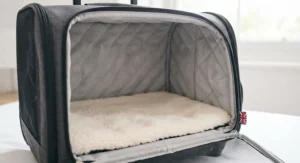
Where the PawHut tries to do everything, the Petsfit trolley does one thing and does it cleanly: it’s a rolling tote bag with a telescopic handle, sized at roughly 66 x 36 x 37 cm, designed to take the physical strain out of walking a cat any distance. What most buyers overlook about this model is how much that handle height range matters in daily use; taller owners in particular tend to end up hunching over shorter carriers, and a fully extending telescopic bar solves that without you noticing.
The bag itself uses a soft-sided tote construction with mesh ventilation panels, and the wheel assembly bolts onto a solid base rather than dangling off fabric straps, which meaningfully reduces the sideways wobble that plagues cheaper rolling carriers. One verified UK buyer reviewing this exact wheeled-trolley category noted that the carrier let a family member with mobility problems bring their cat to the vet independently for the first time, describing the wheels and handle as genuinely life-changing rather than just convenient. That’s the kind of honest, specific feedback that matters more than a star rating.
Pros:
- ✅ Full telescopic handle suits taller owners
- ✅ Solid wheel base reduces side-to-side wobble
- ✅ Roomy enough for medium-sized cats
Cons:
- ❌ Single-purpose design, no backpack conversion
- ❌ Some owners report the castors are the noisiest part
At a price typically in the low-to-mid range for wheeled carriers, this is worth considering if you want reliability over gimmicks.
3. Morpilot Rolling Cat Carrier, Airline Approved — best for frequent flyers
The Morpilot has racked up thousands of reviews on Amazon listings, and its foldable, detachable-wheel design is clearly built with air travel dimensions in mind rather than general home use. Reviewers consistently note that the multi-directional wheels roll smoothly across tile and carpet, though several flag that the wheels struggle on gravel or uneven outdoor pavement, which tracks with its airport-and-terminal design brief rather than countryside walks.
Here’s what the spec sheet won’t tell you outright: an airline-approved label refers to dimensions that satisfy common carry-on limits, not a guarantee that any specific airline will accept it, so you still need to check with your carrier before booking. On paper, this means the Morpilot is best suited to owners who travel by plane or long-distance coach reasonably often and want one carrier that folds flat for storage between trips. The mesh ventilation is rated well by aggregated review sentiment, with multiple owners specifically praising airflow during warm terminal waits, though pocket space is consistently flagged as a letdown, with only minimal external storage for treats, waste bags, or documents.
Pros:
- ✅ Dimensions suit most airline carry-on limits
- ✅ Detachable wheels fold flat for storage
- ✅ Strong ventilation praised across reviews
Cons:
- ❌ Limited external pocket space
- ❌ Wheels underperform on gravel or grass
Pricing sits in the mid-range bracket, which feels justified given the airline-focused engineering and the sheer weight of positive review volume behind it.
4. A4 Pet Carrier with Wheels, Collapsible — best large rolling cat carrier
If you own a genuinely big cat, or two cats who travel together, the A4 Pet carrier is one of the few wheeled options rated up to roughly 15 kg. It measures around 67 x 44 x 36 cm and uses a collapsible frame with a detachable pull rod, so it folds down for storage rather than permanently occupying a cupboard shelf. The retractable metal handle extends across four sections up to about 86 cm, which honestly makes a difference if you’re tall and tired of stooping.
Based on the spec comparison with the smaller carriers on this list, the trade-off here is fairly obvious: more space and a higher weight ceiling mean a heavier empty carrier to begin with, so it suits car-based trips and vet visits more than long walks. What most buyers overlook is that “large” carriers like this one also tend to have wider wheelbases, which genuinely improves stability on uneven ground compared with narrower trolleys, at the cost of being trickier to manoeuvre through tight doorways or narrow vet corridors. This is the carrier to reach for if your current bag leaves your cat’s tail pressed against the mesh.
Pros:
- ✅ Weight capacity suits large or multiple cats
- ✅ Folds flat with a detachable pull rod
- ✅ Wide wheelbase adds stability on rough ground
Cons:
- ❌ Bulkier to manoeuvre through narrow spaces
- ❌ Heavier empty weight than compact rivals
Expect this to sit in the mid-range price bracket, representing solid value given the higher weight allowance most rivals simply don’t offer.
5. Pecute Steel Wire Frame Trolley — best British-brand value pick
Pecute’s trolley design separates cleanly into two parts: a steel wire-framed carrier bag and a wheeled dolly base that clips underneath it. Aggregated customer sentiment describes the build as sturdy, with one detailed review noting the frame sags slightly under a heavier cat’s weight but shows no sign of structural failure even after repeated use. The wheels themselves are consistently praised as smooth-rolling, though multiple reviewers flag the lack of a wheel-locking mechanism as an oversight, meaning the trolley can roll away on a sloped vet car park if you’re not holding it.
Reviewers consistently note that the carrying handles and straps tuck away neatly when not needed, which is a small but genuinely thoughtful touch that prevents loose fabric catching on car doors or your coat zip. On paper, the two-piece separable design means you can use the carrier bag alone for short indoor trips and only attach the dolly base when you know you’re walking any real distance, which is more flexible than fixed-wheel competitors. This is a strong middle-ground option for owners who want the trolley benefit without paying premium prices for convertible extras they’ll never use.
Pros:
- ✅ Two-piece design separates bag from dolly
- ✅ Smooth-rolling wheels praised in reviews
- ✅ Straps and handles store away neatly
Cons:
- ❌ No wheel-locking mechanism
- ❌ Frame can sag slightly under heavier cats
Priced in the budget-to-mid bracket, the Pecute represents genuinely good value for money once you factor in the separable dolly design.

6. Lollimeow 3-in-1 Rolling Cat Carrier — best for anxious or shy cats
The Lollimeow stands out from every other carrier on this list because of one specific feature: retractable privacy shades that block outside stimulation completely, then roll up again when your cat feels confident enough to want a view. For a nervous cat who finds movement and noise overwhelming, that single design choice can be the difference between a calm journey and a stressed one. It converts between a wheeled carrier, a car seat, and a backpack, with a telescopic rod that extends up to roughly 20 inches for taller owners.
What the spec sheet won’t tell you, but aggregated reviewer feedback does, is that a padded mat and fleece blanket come included as standard, alongside a safety tether that clips inside to stop a spooked cat bolting the moment the door opens. Based on the spec comparison with simpler trolleys, this carrier is clearly engineered around emotional comfort features rather than pure hauling capacity, so it suits owners whose priority is reducing visible stress signs (panting, drooling, frantic meowing) over raw weight allowance or size. It’s worth noting this style isn’t designed for in-cabin plane travel, so frequent flyers should look toward the Morpilot or Babenest instead.
Pros:
- ✅ Retractable privacy shades reduce visual stress
- ✅ Padded mat, fleece blanket, and tether included
- ✅ Converts between wheeled, backpack, and car-seat modes
Cons:
- ❌ Not designed for in-cabin airline travel
- ❌ Multi-function design adds bulk versus simple trolleys
Sitting toward the upper-mid price range, this reflects the extra material and hardware involved in a genuine three-in-one conversion system.
7. Babenest Cat Carrier with Detachable Wheels — best convertible wheeled pet carrier for cabin travel
The Babenest rounds out this list as a genuinely flexible convertible wheeled pet carrier: detachable wheels, a telescopic handle, and a shoulder strap mean it works as a rolling case for the walk to departures, then converts to a hand-carried or shoulder-slung bag the moment you need to remove the wheeled base for cabin storage. It’s marketed as airline-approved, and its dimensions are pitched squarely at small-to-medium cats travelling in-cabin.
Honest analysis of the aggregated review themes shows a consistent split: owners who use it primarily for airports rate it highly for the quick wheel-detach mechanism, while a smaller group flags that the shoulder strap alone isn’t comfortable for extended carrying once wheels are removed, since the weight distribution shifts entirely onto one shoulder. What most buyers overlook is that “detachable” wheels genuinely change the calculus for airline travel; you can roll the carrier confidently through the terminal, then simply unclip the base so the remaining bag fits within cabin under-seat dimensions without needing a second product. For UK owners who fly a couple of times a year and don’t want two separate carriers cluttering the cupboard, this multi-mode approach earns its place.
Pros:
- ✅ Detachable wheels satisfy under-seat cabin rules
- ✅ Telescopic handle plus shoulder strap options
- ✅ Airline-approved dimensions for cabin travel
Cons:
- ❌ Shoulder strap alone isn’t ideal for long carries
- ❌ Wheel-detach process takes practice at first
Pricing lands in the mid-range bracket, reasonable given the dual rolling-and-carrying functionality built in.
Practical Usage Guide: Getting Your Cat Used to a Rolling Carrier
Buying the right carrier is only half the job; the setup and introduction period in the first 30 days genuinely shapes whether your cat tolerates or dreads it long-term. Start by leaving the carrier open and stationary in a room your cat already likes, with the wheels detached if your model allows it, so the object itself becomes boring and familiar before it’s ever associated with movement. Add a blanket that already smells like your cat’s usual sleeping spot, since scent familiarity does more heavy lifting here than any amount of coaxing.
Once your cat enters voluntarily and settles, reattach the wheels but don’t move the carrier yet; let them get used to the slightly different balance and any faint rattle the wheel mechanism makes when the whole unit shifts weight. The most common mistake in these first few weeks is rushing straight to a full walk outside on day one. Instead, roll the carrier a few metres across your own hallway or kitchen floor with your cat inside, morning and evening, for several days before attempting an actual outing. Maintenance-wise, check the wheel axles and telescopic handle locking clips monthly for grit or hair buildup, since these small mechanisms are usually the first parts to fail on budget models, and wipe down mesh panels regularly to stop odour building up in fabric fibres.
Real-World Scenarios: Which Rolling Carrier Fits Your Life?
Picture three genuinely different UK cat owners. First, a retired couple with mobility issues and one elderly, laid-back Ragdoll who needs quarterly vet check-ups a ten-minute walk away; for them, a straightforward trolley like the Petsfit or Pecute makes the most sense, since neither owner needs backpack versatility or airline dimensions, just a stable, easy-to-push wheeled base that won’t strain a bad shoulder or hip.
Second, consider a young professional in a London flat who flies home to see family twice a year with a nervous rescue cat who startles at loud noises; here, the Babenest or Morpilot’s airline-approved dimensions matter enormously, and the ability to detach wheels for cabin storage solves a genuine logistical problem that a fixed-wheel trolley simply can’t. Third, picture a family with two cats and a large mixed-breed household pet, needing to transport both animals to a cattery before a summer holiday; the A4 Pet carrier’s higher weight capacity and roomier interior make it the only realistic option on this list, since squeezing two cats into a 4 kg-rated bag like the PawHut would be both cramped and unsafe.
How to Choose a Rolling Cat Carrier
Picking the right model comes down to working through a short list of practical criteria rather than chasing the highest star rating. Here’s the process we’d recommend:
- Weigh your cat first. Every weight limit on this list is a genuine safety threshold, not a suggestion, since an overloaded frame can crack or the wheels can buckle mid-journey.
- Decide your primary use case. Frequent flyers need airline-approved dimensions; vet-visit-only owners need stability and easy folding far more than cabin compliance.
- Check ground conditions on your usual route. Smooth pavements and tiled vet floors suit small castor wheels; gravel drives or cobbled streets need a wider, more rugged wheelbase.
- Consider your cat’s temperament. A carrier with privacy shades, like the Lollimeow, genuinely helps anxious cats more than a see-through mesh design ever will.
- Test the telescopic handle height mentally against your own height. A handle that forces you to stoop defeats much of the point of buying wheels in the first place.
- Look for a wheel-locking or stability feature if you’ll ever park the carrier on a slope, such as a car park or driveway.
- Factor in storage space at home. Collapsible and detachable-wheel designs save real cupboard space between trips, which matters more than it sounds once you actually own one.
Common Mistakes When Buying a Wheeled Pet Carrier
The single most common mistake we see is buying based on overall bag size rather than the internal cat-usable space once padding, mesh gussets, and structural framing eat into the interior. A second frequent error is assuming “airline approved” guarantees acceptance on your specific flight; airlines set their own under-seat dimensions and pet weight rules, so a Google search of the manufacturer’s claim isn’t a substitute for checking directly with your airline before booking. Buyers also regularly underestimate how much noise matters to a nervous cat; a set of cheap plastic castors rattling across a tiled floor can undo weeks of careful carrier training in a single trip.
Another overlooked pitfall is ignoring the empty (unloaded) weight of the carrier itself, particularly for anyone with a bad back or limited grip strength, since a heavier bag partially cancels out the physical benefit that wheels are supposed to provide in the first place. Finally, many owners buy a convertible three-or-four-in-one design assuming they’ll use every mode, then discover in practice that they only ever need the trolley function, meaning a simpler and often cheaper single-purpose carrier would genuinely have served them better.
Rolling Cat Carrier vs Traditional Handheld Carrier
The core trade-off between a wheeled carrier and a traditional handheld basket comes down to physical strain versus ground-level vibration. A handheld carrier keeps your cat steady and off the ground entirely, which many cats actually prefer, but it transfers all the weight onto your arm and shoulder for however long the journey lasts. A rolling carrier removes that physical burden almost entirely, letting you pull rather than lift, but it introduces vibration and a slightly different motion pattern that some cats find genuinely more stressful than being carried.
| Factor | Wheeled Carrier | Traditional Handheld Carrier |
|---|---|---|
| Physical strain on owner | Low | Moderate to high |
| Ground vibration for cat | Present, varies by surface | None |
| Best surface type | Smooth, flat ground | Any surface |
| Typical weight capacity | Often higher (frame-supported) | Usually lower |
| Storage footprint | Larger, though many fold | Compact |
As the table shows, there isn’t a universally “better” option here; it genuinely depends on your cat’s individual tolerance for movement versus your own physical capacity to carry weight over distance. Owners managing a heavier cat or a longer regular route tend to find the wheeled option pays for itself within a few uses, while owners with particularly noise-sensitive cats or very short trips often find a traditional handheld carrier remains the simpler, calmer choice.
What to Expect: Real-World Performance
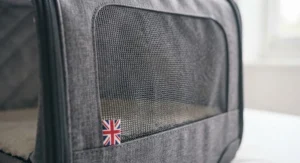
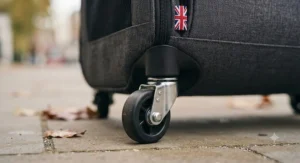
On paper, wheel diameter and mesh panel counts are just numbers, but in daily use they translate into very specific experiences. A small 4-5 cm castor wheel, common on budget and mid-range trolleys, glides fine across tiled vet floors and smooth pavement but will catch and judder on any gap wider than about a centimetre, which includes most paving slabs and cobbled paths. Reviewers consistently note that this juddering is often what actually upsets a cat mid-journey, more so than the carrier’s overall motion. Wider, more rugged wheelbases found on larger carriers like the A4 Pet model handle these gaps with noticeably less vibration transferred into the cabin.
Mesh ventilation ratings also translate directly into comfort on warm days; carriers with panels on three or more sides, such as the Morpilot, keep noticeably cooler air moving through than single-panel designs, based on aggregated reviewer commentary about summer travel specifically. Telescopic handles rated for taller users genuinely reduce lower-back strain over a walking distance beyond about five minutes, according to consistent feedback from owners with mobility considerations, which is exactly the demographic wheeled carriers are built to serve in the first place.
Long-Term Cost & Maintenance
A rolling cat carrier is a durable-goods purchase, not a consumable, so total cost of ownership matters more than the sticker price alone. Budget trolleys without locking wheel mechanisms or reinforced axles tend to develop wobble or wheel failure faster under regular use, meaning a genuinely cheap option can cost more over three years if you need to replace it twice. Mid-range and premium carriers with steel wire frames or reinforced dolly bases, such as the Pecute or A4 Pet models, typically hold up to weekly use for several years before any structural component needs attention.
Maintenance costs stay low across the board: mesh panels need occasional hand-washing, fabric exteriors wipe clean, and the only genuinely replaceable part on most models is the wheel assembly itself, which some manufacturers sell separately. If you’re a frequent flyer relying on airline-approved dimensions, factor in that airline policies do occasionally shift, so a carrier that satisfies today’s cabin rules isn’t a guaranteed lifetime investment against future rule changes, another reason to check current requirements before every trip rather than assuming last year’s approval still holds.
Buyer’s Decision Framework
If your priority is minimising physical strain and you have a single small-to-medium cat, choose a straightforward trolley design, because you don’t need to pay for backpack or car-seat conversions you won’t use. If you fly regularly, choose an airline-approved model with detachable wheels, because cabin storage rules genuinely require the wheeled base to come off. If your cat shows visible anxiety around new stimuli, choose a design with privacy shades or fully enclosed sides over a heavily mesh-panelled one, since reducing visual input tends to calm cats faster than increasing airflow does. If you own a large cat or multiple cats travelling together, choose the highest-rated weight capacity on this list rather than assuming “large” labelling alone is enough, since actual kilogram ratings vary significantly between manufacturers claiming the same size category.
Safety, Regulations, and Compliance for UK Cat Owners
Rolling cat carriers themselves aren’t subject to specific UK product regulation beyond general consumer safety law, but how and where you use them absolutely is. If you’re travelling by bus or train within the UK, PDSA guidance on public transport confirms that carriers generally must not exceed 85x60x60cm and shouldn’t block gangways or take up separate seats, which is worth checking against your carrier’s dimensions before a train journey. If you’re taking your cat abroad or bringing a cat into Great Britain, the rules around microchipping, rabies vaccination, and pet travel documents are set out clearly on GOV.UK’s official pet travel guidance, and these apply regardless of which carrier you use to get your cat to the airport.
For car journeys, the Highway Code requires animals to be “suitably restrained,” and a securely buckled-in carrier satisfies this requirement far better than a cat loose on the back seat or, worse, on your lap while driving. On general carrier welfare standards, RSPCA advice on cat carereinforces that any carrier, wheeled or otherwise, should let your cat sit, turn around, and lie down naturally, a baseline every product on this list meets for its stated weight category, but one worth double-checking against your own cat’s actual size before buying.
Features That Actually Matter (And Those That Don’t)
Genuinely useful features worth paying extra for include a wheel-locking mechanism, a telescopic handle with multiple height settings, and mesh panelling on at least two opposing sides for cross-ventilation. Features that sound impressive on a listing but rarely change real-world experience include built-in cup holders (nice in principle, rarely used mid-journey with a cat aboard) and an excessive number of external pockets beyond two or three, since most owners report only ever using one for essentials like treats or a spare lead. Colour options and cosmetic styling genuinely don’t affect performance at all, so don’t let a nicer-looking grey carrier sway you away from a better-specced option in a colour you like less.
Frequently Asked Questions
❓ Are rolling cat carriers actually good for cats?
❓ What size rolling cat carrier do I need?
❓ Can I take a rolling cat carrier on a plane?
❓ Do cats get scared of wheels on a carrier?
❓ How much does a good rolling cat carrier cost in the UK?
Conclusion
Choosing between these seven rolling cat carriers really comes down to being honest with yourself about how you’ll actually use it, not how you imagine you might. If you’re managing a single easy-going cat and a short regular walk to the vet, don’t overspend on airline-approved features you’ll never touch; the Petsfit or Pecute will serve you well. If cabin travel by plane is a genuine yearly reality, the Morpilot or Babenest earn their higher price tag through dimensions and detachable wheels built specifically for that job. And if your cat is the anxious type who hides at the first sign of a car journey, the Lollimeow’s privacy shades address a problem no amount of extra pocket space or wheel quality ever will.
Whichever you choose, the biggest factor in a smooth experience isn’t actually the carrier at all, it’s the weeks of calm, low-pressure introduction beforehand that turn a wheeled box into a place your cat genuinely doesn’t mind entering. Take the time on that step, and any of the seven options above should serve you and your cat well for years of vet visits, holidays, and everything in between.
✨ Don’t Miss These Exclusive Deals!
🔍 Take your cat’s travel comfort to the next level with the carriers featured above. Click through to check current pricing and availability on each one, and give your feline companion a smoother, calmer ride to wherever you’re headed next!
Recommended for You
- EasyJet Approved Pet Carrier? 7 Real Cabin Bags for 2026
- Airline Approved Cat Carrier: 7 Picks That Actually Fly (2026)
- Best Collapsible Cat Carrier UK 2026: 7 Top Picks Reviewed
Disclaimer: This article contains affiliate links. As an Amazon Associate, I earn from qualifying purchases. If you purchase products through these links, we may earn a small commission at no additional cost to you.
✨ Found this helpful? Share it with your friends! 💬🤗
