
In This Article
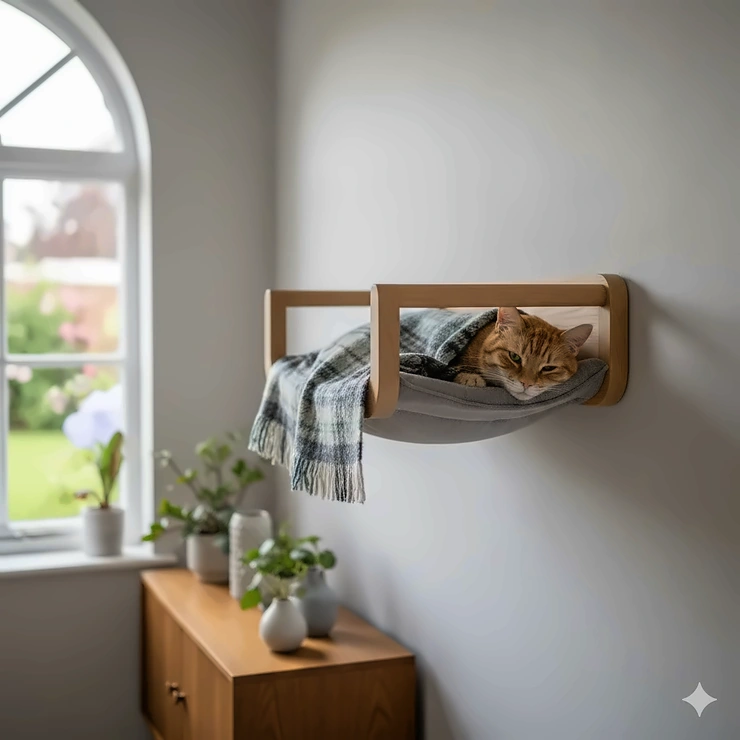
When I first installed a wall mounted cat hammock in my London flat, I had no idea it would completely revolutionise my cat’s daily routine. Within hours, Luna claimed her new elevated throne and hasn’t looked back since. If you’re looking to maximise your living space whilst giving your cat the vertical territory they instinctively crave, you’ve come to the right place.
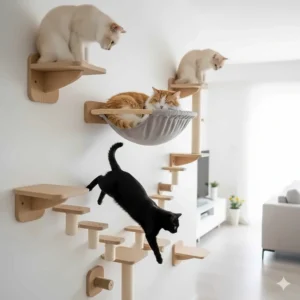
A wall mounted cat hammock is a space-saving, wall-attached resting platform designed specifically for cats to lounge, sleep, and observe their surroundings from an elevated position, typically featuring a fabric sling or cushioned surface supported by sturdy wooden or metal brackets.
Research from veterinary behaviourists consistently shows that cats with access to vertical spaces experience significantly less stress and exhibit fewer behavioural problems. Providing vertical structures such as cat trees or shelves reduces stress indicators such as hiding or aggression, with cats spending more time exploring and less time in vulnerable positions. This is particularly crucial in UK homes where space is often at a premium, making wall mounted cat hammock solutions an ideal compromise between your cat’s needs and your floor space.
Whether you’re in a compact Manchester studio or a Brighton terraced house, these ingenious feline furniture pieces utilise unused wall space to create a private sanctuary for your cat. From budget-friendly options under £30 to premium designs exceeding £80, there’s a perfect wall mounted cat hammock waiting for every home and every moggy.
Quick Comparison Table
| Product | Price Range (£) | Weight Capacity | Material | Best For |
|---|---|---|---|---|
| FUKUMARU Cat Hammock | £45-65 | Up to 13.6kg | Rubberwood, cotton canvas | Large cats, durability |
| 7 Ruby Road ALTO Set | £55-75 | Up to 18kg | Plywood, cotton canvas | Modern homes, style |
| YITAHOME 7-Piece Set | £70-95 | Up to 13.6kg | Pine wood, sisal | Multi-cat households |
| Latawon 3-Step System | £50-70 | Up to 15kg | Solid wood, plush | Climbing enthusiasts |
| FUKUMARU White Flannel | £40-55 | Up to 13.6kg | Rubberwood, flannel | Cosy comfort |
| MEWOOFUN Large Hammock | £35-50 | Up to 12kg | Wood, flannel | Budget-conscious |
| Navaris Rope Bridge Set | £45-60 | Up to 10kg | Pine, cotton rope | Adventure seekers |
💬 *Just one click – help others make better buying decisions too!*😊
Top 7 Wall Mounted Cat Hammock Products: Expert Analysis
1. FUKUMARU Cat Hammock Wall Mounted – Editor’s Choice
For those seeking premium quality without breaking the bank, the FUKUMARU Cat Hammock stands as our top recommendation. This elegantly crafted piece measures 40 x 35 centimetres and can comfortably support cats weighing up to 13.6 kilogrammes (30 pounds).
Key Specifications:
- Natural rubberwood frame with vegetable oil finish (PEFC/FSC certified)
- Machine-washable cotton canvas hammock bed
- Three-sided support bar design for enhanced stability
- Passed rigorous 15kg/48-hour static load testing
UK buyers consistently praise this hammock’s robust construction. One satisfied customer from Birmingham noted that their 7-kilogramme Maine Coon uses it daily with no signs of wear after six months of constant use. The removable fabric cover is a particular favourite amongst owners, making washing day considerably less stressful.
Price Range: £45-£65
✅ Pros:
- Exceptional build quality with sustainable materials
- Easy to clean with removable, washable cover
- Elegant design complements modern interiors
❌ Cons:
- Requires drilling into studs for maximum safety
- Higher price point than basic alternatives
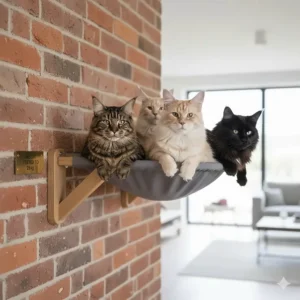
2. 7 Ruby Road Cat Hammock ALTO Set – Best for Style
The 7 Ruby Road ALTO Set combines Scandinavian minimalism with practical functionality. This comprehensive set includes a generous 53 x 47 centimetre hammock plus two jute rope climbing steps, creating a complete vertical playground.
Key Specifications:
- Sustainably sourced plywood construction
- Lightly padded cotton canvas hammock (removable)
- Natural jute rope steps ideal for scratching
- Supports cats up to 18 kilogrammes
British cat owners particularly appreciate 7 Ruby Road’s commitment to eco-friendly manufacturing. The company’s emphasis on sustainability resonates well with environmentally conscious UK buyers, and the neutral wood tones blend seamlessly with contemporary home décor from Cornwall to Aberdeen.
Price Range: £55-£75
✅ Pros:
- Eco-friendly materials and ethical manufacturing
- Includes climbing steps for easy access
- Replacement covers available for purchase
❌ Cons:
- Must be installed on 40-centimetre stud walls
- Premium pricing reflects sustainability commitment
3. YITAHOME 7-Piece Wall Mounted Set – Best for Multi-Cat Homes
When one cat simply isn’t enough, the YITAHOME 7-Piece Set delivers a comprehensive climbing system. This elaborate setup transforms bare walls into a feline adventure park, featuring multiple platforms, scratching posts, and a cosy hammock.
Key Specifications:
- Seven separate components including hammock, platforms, and scratching posts
- Pure solid pine wood with natural sisal covering
- Total weight capacity: 13.6 kilogrammes per platform
- Includes non-slip mats and complete mounting hardware
Glasgow-based reviewer Ron S. awarded this set five stars, praising the “superb quality solid wood—not the usual chipboard you get from most other sellers.” The flexibility to arrange components according to your wall layout makes this particularly suitable for UK homes with varying ceiling heights and wall configurations.
Price Range: £70-£95
✅ Pros:
- Extensive DIY customisation possibilities
- High-quality materials throughout
- Excellent value for money considering piece count
❌ Cons:
- Installation time approximately 45-60 minutes
- Requires significant wall space
4. Latawon 3-Step Wall Mounted Hammock – Best Value
The Latawon 3-Step System offers an excellent entry point for first-time buyers. This compact yet functional set provides everything needed to create a basic vertical territory without overwhelming your space or budget.
Key Specifications:
- Solid wood construction with plush fabric covering
- Three climbing steps with scratching surfaces
- Hammock platform with protective fencing
- Weight capacity: 15 kilogrammes
UK customers in smaller flats have found this product particularly useful. The compact design fits comfortably in corners or along hallway walls, making efficient use of otherwise wasted space. Installation takes approximately 20 minutes with two people, according to verified Amazon.co.uk purchasers.
Price Range: £50-£70
✅ Pros:
- Straightforward installation process
- Compact footprint ideal for smaller homes
- Good weight capacity for the price
❌ Cons:
- Basic design lacks advanced features
- Plush covering may retain fur and require frequent cleaning
5. FUKUMARU White Flannel Hammock – Cosiest Option
For cats who prioritise comfort above all else, the FUKUMARU White Flannel edition delivers cloud-like softness. This variant features the same robust construction as the standard FUKUMARU but wrapped in luxuriously soft white flannel.
Key Specifications:
- Natural rubberwood frame (38 x 35 centimetres)
- Thick white flannel fabric for extra warmth
- Three-sided wooden support system
- Supports up to 13.6 kilogrammes
British cat owners in cooler climates particularly appreciate this model during autumn and winter months. The flannel material provides additional insulation, creating a warm microclimate that cats instinctively seek. Edinburgh-based customers report their cats gravitating towards this hammock on chilly Scottish mornings.
Price Range: £40-£55
✅ Pros:
- Extra warmth for cold weather comfort
- Maintains FUKUMARU’s quality standards
- Machine-washable flannel cover
❌ Cons:
- White fabric shows dirt more readily
- May be too warm during summer months
6. MEWOOFUN Large Cat Hammock – Budget Champion
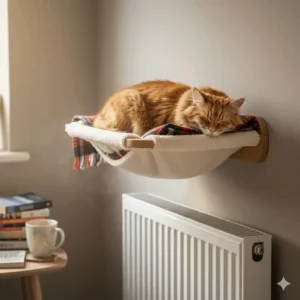
The MEWOOFUN Large Cat Hammock proves you don’t need to spend a fortune to provide quality vertical space. Measuring 52 x 32 centimetres, this generous hammock offers impressive value for budget-conscious cat owners.
Key Specifications:
- Wooden frame with white flannel fabric
- Simple two-bracket mounting system
- Dimensions: 52 x 32 centimetres
- Weight limit: 12 kilogrammes
Whilst not as feature-rich as premium alternatives, this hammock performs its core function admirably. UK customers describe it as “perfectly adequate” and “exactly what I needed without unnecessary frills.” The straightforward design means less can go wrong, and replacement is affordable if needed.
Price Range: £35-£50
✅ Pros:
- Excellent price-to-quality ratio
- Sufficient for average-sized cats
- Quick and easy installation
❌ Cons:
- Lower weight capacity than premium options
- Basic aesthetic may not suit all interiors
7. Navaris Rope Bridge with Shelves – Most Adventurous
For cats with adventurous spirits, the Navaris Rope Bridge Set transforms your wall into an exciting climbing course. This unique configuration features two solid pine connector shelves joined by a suspended rope walkway.
Key Specifications:
- Natural pine wood connector platforms
- Heavy-duty cotton rope bridge (approximately 60 centimetres)
- Dual mounting points for stability
- Combined weight capacity: 10 kilogrammes
London cat owner Emma R. describes watching her Bengal navigate this bridge as “the best entertainment we’ve had all year.” The dynamic movement of the rope provides mental stimulation and physical exercise simultaneously, addressing two crucial aspects of feline enrichment in a single product.
Price Range: £45-£60
✅ Pros:
- Unique design encourages active play
- Strong cotton rope construction
- Engaging for energetic breeds
❌ Cons:
- Not suitable for elderly or arthritic cats
- Lower weight capacity limits use for larger breeds
✨ Don’t Miss These Exclusive Deals!
🔍 Take your feline’s comfort to the next level with these carefully selected products. Click on any highlighted item to check current pricing and availability on Amazon.co.uk. These high-quality hammocks will help create an elevated sanctuary your cat will adore!
Why Your Cat Needs a Wall Mounted Cat Hammock
The Science Behind Vertical Territory
Cats aren’t being awkward when they insist on climbing curtains or scaling bookcases—they’re responding to millions of years of evolutionary programming. According to Wikipedia’s comprehensive article on cat behaviour, cats are both predators and prey, and climbing gives them a vantage point to look down on things whilst also allowing them to escape potential threats.
Dr. Mimi Fitchett, a veterinarian specialising in feline behaviour, explains that verticality is imperative for cats. The higher they climb, the calmer they feel, as elevated positions serve as safety zones. This is particularly important in multi-cat households where vertical spacing can significantly reduce tension and territorial disputes.
University of Pennsylvania veterinary behaviourist Dr. Carlo Siracusa notes that cats’ bodies are made to climb and use vertical spaces as much as horizontal spaces. Suppressing this natural behaviour can lead to stress, anxiety, and destructive behaviours like scratching furniture or aggressive tendencies. Research published in Applied Animal Behaviour Science demonstrates that environmental enrichment significantly impacts feline welfare and behaviour outcomes.
Health Benefits of Elevated Resting Spots
Beyond psychological comfort, wall mounted cat hammock installations provide tangible physical health benefits:
Exercise and Muscle Development: Climbing to elevated perches engages your cat’s core muscles, hind legs, and forelimbs. Regular use helps maintain muscle tone and joint flexibility, particularly important for indoor cats who may otherwise lead sedentary lifestyles.
Weight Management: Obesity affects approximately 40% of UK cats according to recent veterinary surveys. Creating vertical pathways encourages movement throughout the day, burning calories and combating the expanding waistlines that plague modern moggies. The PDSA (People’s Dispensary for Sick Animals), Britain’s leading veterinary charity, emphasises that environmental enrichment plays a crucial role in maintaining healthy feline body weight.
Joint Health for Senior Cats: Whilst elderly cats may struggle with high jumps, gradual climbing using steps remains accessible and beneficial. The gentle movement helps maintain joint mobility without the impact stress of jumping down from heights.
Stress Reduction: Research published in the Journal of Veterinary Behavior demonstrates that access to vertical structures significantly reduces stress indicators in domestic cats. Lower stress levels translate to improved immune function, better appetite regulation, and enhanced overall wellbeing.
Space Optimisation in UK Homes
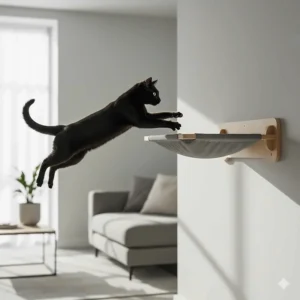
British homes notoriously lack generous square footage. According to the Royal Institute of British Architects (RIBA), the average new-build home in England provides just 82 square metres of floor space—amongst the smallest in Europe. Wall mounted cat hammock solutions brilliantly address this constraint by utilising the one dimension we often overlook: height.
A typical cat tree occupies approximately 0.4 square metres of floor space and extends roughly 1.5 metres high. In contrast, a wall mounted cat hammock uses zero floor space whilst potentially extending from floor to ceiling, creating multiple levels of usable territory for your cat without sacrificing precious room for human furniture.
How to Choose the Perfect Wall Mounted Cat Hammock
Step 1: Assess Your Cat’s Size and Weight
Accurate weight assessment forms the foundation of safe hammock selection. Most wall mounted cat hammock products specify maximum weight capacities ranging from 10-18 kilogrammes (22-40 pounds).
Average UK Cat Weights:
- Domestic shorthair: 3.6-5.4kg (8-12 pounds)
- British Shorthair: 4.5-8kg (10-18 pounds)
- Maine Coon: 6.8-11kg (15-25 pounds)
- Siamese: 3.6-6.3kg (8-14 pounds)
Always select a hammock rated for at least 30% more than your cat’s current weight to account for dynamic loading (the additional force generated when jumping) and potential weight gain.
Step 2: Evaluate Your Wall Construction
UK homes employ various wall construction methods, each requiring different mounting approaches:
Solid Brick Walls: Excellent for hammock mounting. Use appropriate masonry anchors and drill bits. Weight capacity is typically not a concern with properly installed fixtures.
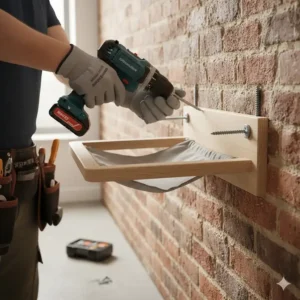
Stud Walls (Plasterboard/Drywall): Common in modern builds and renovations. Absolutely must mount into wooden studs, not just plasterboard. UK studs typically space at 40 or 60-centimetre centres. Use a stud finder to locate them accurately.
Concrete Walls: Requires masonry drill bits and appropriate concrete anchors. Extremely secure once properly installed.
Cavity Walls: Exercise caution. The inner leaf is typically blockwork or brick, but you must ensure your fixings reach it. Consult a builder if uncertain.
Never attempt to mount cat furniture solely into plasterboard using cavity fixings—the weight and dynamic forces will eventually cause failure, potentially injuring your cat.
Step 3: Consider Your Cat’s Age and Mobility
Kittens (Under 12 Months): Fearless climbers who benefit from lower installations initially. Place hammocks 60-90 centimetres from the floor whilst they develop coordination.
Adult Cats (1-10 Years): Full physical capability allows for higher installations. Most adults comfortably reach hammocks up to 2 metres high with intermediate steps.
Senior Cats (10+ Years): May develop arthritis or reduced jumping ability. Lower hammocks (under 1 metre) or those with multiple climbing steps prove more accessible and comfortable.
Step 4: Match Aesthetics to Your Interior
British homes encompass diverse design styles, from Victorian terraces to contemporary new-builds. Fortunately, wall mounted cat hammock manufacturers now offer various finishes:
Natural Wood: Suits Scandinavian, rustic, and traditional interiors. Works particularly well in homes with exposed beams or wooden furniture.
Painted Finishes: White, grey, or black options coordinate with minimalist or modern schemes. Some manufacturers offer custom colour matching.
Luxury Materials: Faux fur or velvet coverings elevate (pun intended) the aesthetic for homes where pet furniture must harmonise with high-end décor.
Step 5: Budget Appropriately
Quality wall mounted cat hammock solutions span a broad price spectrum:
Budget Range (£30-50): Basic functionality with adequate quality for single cats. Expect simpler designs and possibly shorter lifespans.
Mid-Range (£50-75): Sweet spot for most buyers. Better materials, improved aesthetics, and often includes additional features like scratching surfaces or extra platforms.
Premium (£75-120+): Exceptional build quality, designer aesthetics, and comprehensive systems. Worth considering for multi-cat households or if furniture placement is limited.
Step 6: Plan Installation Logistics
Before purchasing, honestly assess your DIY capabilities. Most wall mounted cat hammock products require:
- Electric drill (corded models provide more power for masonry)
- Appropriate drill bits for your wall type
- Spirit level for accurate alignment
- Pencil for marking
- Screwdriver (often included)
- Stud finder (if mounting to stud walls)
- Optional: Another person to hold components during fitting
Installation typically requires 20-45 minutes depending on system complexity. If you lack confidence with power tools, hiring a handyperson costs approximately £40-60 per hour across most UK regions—a worthwhile investment for peace of mind.
Step 7: Think Long-Term Maintenance
Consider ongoing care requirements:
Washable Covers: Prioritise hammocks with removable, machine-washable fabrics. Cat fur accumulates rapidly, and easy cleaning maintains hygiene.
Material Durability: Natural materials like wood and canvas typically outlast synthetic alternatives. They also age more gracefully, developing character rather than looking shabby.
Replacement Parts: Some manufacturers (like 7 Ruby Road and FUKUMARU) sell replacement cushions and covers separately, extending the product’s lifespan significantly.
Installation Guide: Setting Up Your Wall Mounted Cat Hammock Safely
Essential Preparation
Start by selecting the optimal location. Consider:
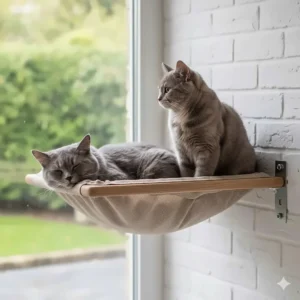
Natural Light: Cats adore sunny spots. Position hammocks near windows where afternoon sun creates warm lounging opportunities.
Views: Cats spend significant time on elevated surfaces observing their environment, especially when stressed or in multi-pet households. Provide views of gardens, streets, or indoor activity centres.
Accessibility: Ensure your cat can reach the hammock via jumping or climbing steps. Account for furniture placement that might serve as intermediate platforms.
Traffic Flow: Avoid high-traffic areas where constant disturbance prevents relaxation. Cats value peaceful, secure resting places.
Wall Strength Testing
Before drilling, verify your wall can support the anticipated load:
- Locate studs using an electronic stud finder or by tapping—studs sound solid whilst hollow areas sound empty
- Mark stud centres with pencil
- Plan mounting positions to hit studs where possible
- For masonry walls, avoid obvious cracks or weak mortar
Step-by-Step Installation Process
For Stud Walls:
- Use a stud finder to locate and mark stud centres
- Hold the hammock bracket against the wall at desired height
- Mark drilling points with pencil, ensuring they align with studs
- Select appropriate drill bit size (typically 3-5mm for pilot holes)
- Drill pilot holes into studs
- Insert wall anchors if provided
- Align bracket and drive screws firmly but avoid overtightening
- Check level with spirit level before final tightening
- Attach hammock fabric or platform to brackets
- Test stability by pressing down firmly (do not hang from it yourself!)
For Masonry Walls:
- Mark desired hammock position with pencil
- Select masonry drill bit matching anchor size (usually 6-8mm)
- Drill holes to depth matching anchor length (typically 40-50mm)
- Clean dust from holes using vacuum or blowing
- Insert wall plugs, tapping gently until flush
- Position bracket and drive screws
- Verify alignment with spirit level
- Complete assembly according to manufacturer instructions
Safety Checks Post-Installation
Before allowing your cat to use their new perch:
- Confirm all screws are tight (but not overtightened, which can strip threads)
- Apply downward pressure equivalent to your cat’s weight
- Check for any movement or creaking sounds
- Inspect fabric attachments for secure connection
- Verify no sharp edges or protruding hardware could injure your cat
- Test any moving parts (like swinging hammocks) for smooth operation
Introducing Your Cat to Their New Hammock
Don’t expect immediate adoption. Cats often require patience when accepting new furniture:
Day 1-3: Place favourite treats on the hammock. Let your cat investigate at their own pace. Resist forcing them onto it.
Day 4-7: Add a familiar blanket or cushion carrying your cat’s scent. Play with favourite toys near the hammock to create positive associations.
Week 2 onwards: Most cats naturally claim the hammock once comfortable. Some immediately, others take weeks. Both patterns are entirely normal.
Comparison Table: Wall Mounted vs Traditional Cat Furniture
| Feature | Wall Mounted Hammock | Floor-Standing Cat Tree | Combination |
|---|---|---|---|
| Floor Space Required | None | 0.3-0.8 m² | 0.3-0.5 m² |
| Height Potential | Limited only by ceiling | Usually <2m | Variable |
| Stability | Excellent (wall-mounted) | Varies by design | Good |
| Installation Complexity | Moderate (drilling required) | None | Moderate |
| Portability | Low (permanent fixture) | High (move anytime) | Moderate |
| Cost Range | £30-95 | £40-200 | £60-150 |
| Multi-Cat Suitability | Excellent (add multiple units) | Good (limited by structure) | Excellent |
| Aesthetics | Modern, space-saving | Can be bulky | Customisable |
Price Range & Value Analysis
Budget Tier (£30-50): Entry-Level Solutions
Products in this range typically feature:
- Basic construction (engineered wood or lower-grade materials)
- Simple designs with minimal extras
- Single hammock without additional platforms
- Adequate for cats under 10kg
- Limited or no replacement parts available
Best For: First-time owners testing whether their cat enjoys elevated spaces, or temporary housing situations.
Mid-Range Tier (£50-75): Optimal Value
The sweet spot for most UK cat owners offers:
- Solid wood or quality engineered materials
- Removable, washable covers
- Weight capacities up to 15kg
- Often includes climbing steps or scratching surfaces
- Better aesthetic integration with home décor
Best For: Long-term installations where quality matters but budget constraints exist. Ideal for average-sized cats in single or dual-cat households.
Premium Tier (£75-120+): Investment Quality
Top-tier products deliver:
- Sustainably sourced materials with certifications
- Designer aesthetics
- Maximum weight capacities (up to 18kg)
- Comprehensive multi-piece systems
- Replacement parts readily available
- Extended warranties or guarantees
Best For: Multi-cat households, large breed cats, or homes where furniture must meet high aesthetic standards.
Common Mistakes to Avoid When Buying
1. Underestimating Your Cat’s Weight
British owners frequently misjudge their cat’s actual weight, particularly with fluffy breeds. A “medium-sized” Persian may actually weigh 7 kilogrammes—solidly into the large cat category. Always weigh your cat accurately before purchasing to avoid safety issues.
2. Ignoring Wall Construction
The number one installation failure stems from mounting into plasterboard without locating studs. This results in catastrophic failures, property damage, and potentially injured cats. When uncertain about wall construction, consult a builder or handyperson.
3. Positioning Too High Initially
Whilst cats adore height, placing a hammock 2.5 metres up without intermediate steps creates an accessibility barrier. Start lower or provide a climbing pathway using furniture, cat trees, or additional wall shelves.
4. Neglecting Multiple Access Routes
In multi-cat households, dominant cats may “guard” single-access hammocks, preventing timid cats from using them. Always ensure multiple ways to reach and leave elevated spaces to prevent territorial conflicts.
5. Forgetting About Cleaning
Some designs feature non-removable fabric covers that become hygiene nightmares. Prioritise products with machine-washable components unless you’re committed to regular spot-cleaning.
Maintaining Your Wall Mounted Cat Hammock
Weekly Maintenance Tasks
Vacuuming: Use a handheld vacuum or upholstery attachment to remove loose fur, dirt, and debris. This five-minute task prevents buildup requiring deep cleaning.
Visual Inspection: Check mounting brackets for looseness. Cats’ dynamic movements can gradually loosen fixtures. Tighten screws if needed.
Spot Cleaning: Address any accidents or spills immediately using pet-safe enzymatic cleaners. This prevents staining and odour development.
Monthly Maintenance Tasks
Cover Washing: Remove fabric covers and wash according to manufacturer instructions (typically 30-40°C machine wash). Line dry to prevent shrinkage.
Wood Care: Wipe wooden components with slightly damp cloth to remove dust and oils. Avoid harsh chemicals that might harm your cat.
Bracket Examination: Inspect wall connections for any signs of stress, cracking plaster, or pulling away from the wall. Address issues immediately.
Quarterly Maintenance Tasks
Deep Cleaning: Disassemble components where possible for thorough cleaning. Use pet-safe disinfectant on all surfaces.
Hardware Check: Verify all screws, bolts, and connections remain secure. Replace any worn or stripped hardware.
Wear Assessment: Examine fabric for tears, excessive wear, or thinning that might compromise safety. Replace worn components proactively.
Frequently Asked Questions
❓ How much weight can a wall mounted cat hammock safely hold?
❓ Can I install a cat wall hammock in a rental property?
❓ Will my elderly cat use a wall mounted hammock?
❓ How do I clean a wall mounted cat hammock effectively?
❓ Are wall mounted cat hammocks suitable for kittens?
Conclusion: Elevating Your Cat’s Quality of Life
Investing in a wall mounted cat hammock represents far more than purchasing another piece of pet furniture—you’re acknowledging and respecting your cat’s fundamental biological needs whilst optimising your precious living space. British homes may lack generous square footage, but they possess abundant vertical territory waiting to be claimed.
The products reviewed here span various budgets, aesthetics, and functionality levels, ensuring every UK cat owner can find an appropriate solution. Whether you choose the premium sustainability of 7 Ruby Road, the robust reliability of FUKUMARU, or the comprehensive playground of YITAHOME, you’re taking meaningful steps towards enriching your cat’s daily experience.
Remember that successful cat furniture isn’t measured by price tags or Instagram-worthiness, but by how frequently and contentedly your cat uses it. Start with one hammock, observe your cat’s response, and expand your vertical territory gradually. Many UK cat owners discover their walls transform into elaborate climbing systems over time, creating genuinely three-dimensional homes shared between species.
Your cat’s next favourite napping spot awaits—it’s time to think vertically!
Recommended for You
- 7 Best Cat Bridge for Wall 2026: Transform Your Cat’s Space
- 7 Best Cat Wall Climbing Systems UK 2026: Expert Reviews
- 7 Best Cat Wall Shelves UK 2026: Transform Your Space
Disclaimer: This article contains affiliate links. If you purchase products through these links, we may earn a small commission at no additional cost to you. Prices shown are approximate and may vary. All product recommendations are based on genuine research and customer feedback from UK buyers on Amazon.co.uk.
✨ Found this helpful? Share it with your mates! 💬🤗
