
In This Article
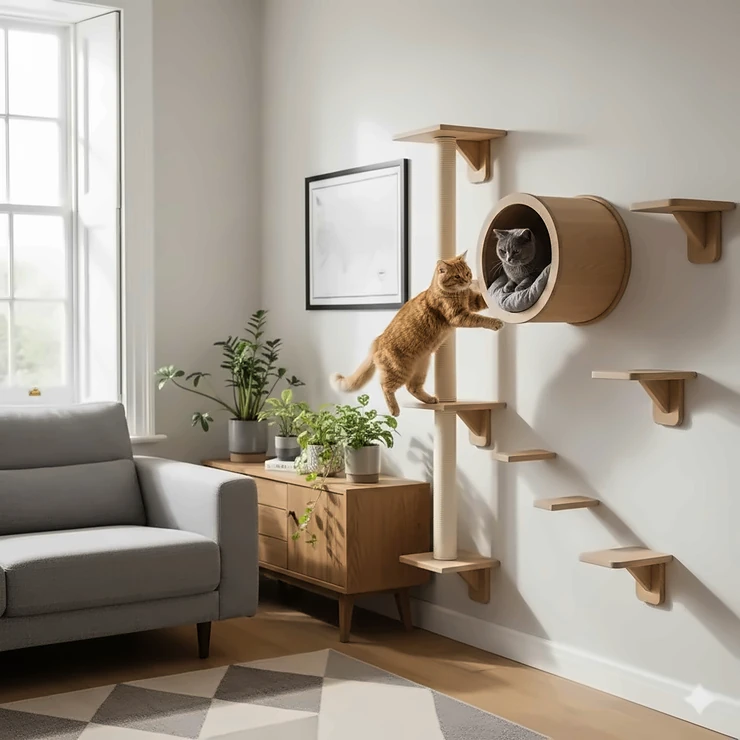
Have you ever watched your cat perch atop the wardrobe, eyeing their domain with regal satisfaction? That’s not just peculiar behaviour—it’s deeply ingrained evolutionary instinct. A cat wall climbing system transforms your ordinary walls into an extraordinary feline playground, and honestly, it might be the single best investment you’ll make for your indoor cat’s wellbeing.
Research published in the Journal of Feline Medicine and Surgery demonstrates that cats with access to vertical spaces experience significantly less stress and exhibit fewer behavioural problems. This is particularly crucial in urban UK environments where outdoor access may be limited. According to the RSPCA, cats are natural climbers with powerful muscles designed for jumping and climbing, and indoor cats require enrichment activities to maintain their physical and mental health.
Modern cat wall playground kits offer complete solutions that save precious floor space whilst satisfying your cat’s natural climbing instincts. From budget-friendly options starting around £35 to premium modular cat wall furniture exceeding £150, there’s a system perfect for every home and every moggy. Let’s explore the very best options available in the UK this year, all verified and available on Amazon.co.uk.
Quick Comparison Table: Top Cat Wall Climbing Systems
| Product | Pieces | Price Range (£) | Weight Capacity | Best For | Rating |
|---|---|---|---|---|---|
| YITAHOME 7-Piece Set | 7 | £85-£110 | 18kg | Multi-cat homes | 4.4/5 |
| Fukumaru 4-in-1 Set | 4 | £75-£95 | 18kg | Small spaces | 4.5/5 |
| PawHut 4-Piece Wall Set | 4 | £55-£75 | 5kg | Budget buyers | 4.2/5 |
| YITAHOME 8-Piece Deluxe | 8 | £95-£125 | 18kg | Large cats | 4.3/5 |
| OZD 10-Piece Modular | 10 | £115-£145 | 10kg | DIY enthusiasts | 4.1/5 |
| Fukumaru Hammock Set | 3 | £40-£60 | 13.6kg | Minimalists | 4.6/5 |
| YITAHOME 5-Piece Compact | 5 | £65-£85 | 18kg | Starter systems | 4.4/5 |
💬 Just one click – help others make better buying decisions too! 😊
Top 7 Cat Wall Climbing Systems: Expert Analysis
1. YITAHOME 7-Piece Wall Mounted Cat Climbing Shelves
The YITAHOME 7-Piece Wall Mounted Cat Climbing Shelves stands as our top recommendation for good reason. This comprehensive connected cat furniture system includes three sisal-covered scratching posts, a four-step stairway, a cosy hammock, a cat bed with scratching mat, and four platforms. It’s essentially an entire cat playground compressed onto your wall.
Key Specifications:
- Seven pieces: hammock, bed, 3 sisal posts, 4-step stairway, 4 platforms
- Pure pine wood construction with natural sisal
- Maximum weight capacity: 18kg per platform
- £85-£110
UK buyers consistently praise the solid construction and ease of assembly. One Southampton customer shared: “The instructions were so clear and it was so simple to do. My cats are obsessed and it looks fabulous.” The natural pine wood finish blends beautifully with modern UK interiors, whether you’re in a Manchester flat or a London townhouse.
Pros:
✅ Complete cat wall setup with multiple activity zones
✅ Exceptional build quality from FSC-certified wood
✅ Suitable for cats up to 18kg (most Maine Coons)
Cons:
❌ Requires solid walls (not suitable for plasterboard alone)
❌ Takes 30-45 minutes to install properly
2. Fukumaru Cat Wall Shelves 4-in-1 Large Furniture Set
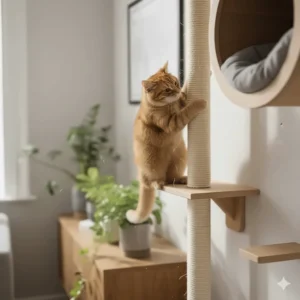
The Fukumaru 4-in-1 Set represents the perfect balance between functionality and aesthetic appeal. This modular cat wall furniture includes a bridge, wall bed, scratching post, and shelf—all designed with that gorgeous natural wood aesthetic that Scandinavian design lovers adore.
Key Specifications:
- Solid multi-layer wood with pet-friendly peach velvet
- Designed specifically for 16-inch (40cm) stud spacing
- Load-tested to support cats over 18kg
- £75-£95
What sets Fukumaru apart is their attention to detail. They use vegetable wood wax oil from Germany, passing both PEFC and FSC certification. The nature-inspired green design creates a jungle-like atmosphere that cats absolutely adore. Bristol-based customers report their cats sleeping in the elevated bed for hours, finally getting the high perch they’ve always craved.
Pros:
✅ Scientifically designed for easy UK wall stud installation
✅ Premium materials with eco-friendly finishing
✅ Multi-functional integrated cat climbing solution
Cons:
❌ Fewer pieces than some competitors
❌ Higher price point for four pieces
3. PawHut 4-Piece Wall Mounted Cat Tree
For those working with tighter budgets, the PawHut 4-Piece Wall Mounted Cat Tree delivers remarkable value. This cat walkway system includes a hammock, cat nest, scratching post, and jumping platforms—all covered in soft plush material that feels like a cosy cloud for your feline.
Key Specifications:
- Four pieces with soft plush covering
- Multi-layer board construction
- Recommended for cats up to 5kg
- £55-£75
Edinburgh customers appreciate how this space-saving design maximises vertical territory without overwhelming smaller flats. The hammock has become particularly popular with younger cats who love curling up in elevated, secure spaces. One Birmingham reviewer noted: “Fantastic for my cats. Wish I had got this years ago. Super space saving and looks great.”
Pros:
✅ Most affordable complete cat wall set
✅ Soft, comfortable materials throughout
✅ Perfect for smaller cats and kittens
Cons:
❌ 5kg weight limit excludes larger breeds
❌ Materials less durable than solid wood options
4. YITAHOME 8-Piece Wall Mounted Climbing Shelves
The YITAHOME 8-Piece set represents their deluxe offering, including stairways, two platforms, two ladders, non-slip mats, a sisal post, a large platform, and even a bed with two feeding bowls. It’s like creating an entire cat apartment on your wall.
Key Specifications:
- Eight comprehensive pieces including feeding station
- Pine wood with FSC certification
- Weight capacity: 18kg per platform
- £95-£125
This full cat wall setup truly shines in multi-cat households. The multiple platforms at varying heights allow cats to establish their own territories without conflict. Glasgow customers with three cats report significantly reduced territorial disputes since installation. The integrated feeding bowls are a clever touch that keeps mealtime elevated and dignified—just as cats prefer.
Pros:
✅ Most comprehensive cat wall bridge and shelves system
✅ Integrated feeding solution
✅ Excellent for multi-cat households
Cons:
❌ Requires substantial wall space (2+ metres)
❌ More complex installation process
5. OZD 10-Piece Modular Cat Wall Furniture
The OZD 10-Piece Modular Set offers ultimate flexibility for DIY enthusiasts who want to design their own cat vertical playground. With ten individual pieces including a bridge, condo, scratching posts, and multiple shelves, you can create endless configurations.
Key Specifications:
- Ten modular pieces in beige finish
- 4-in-1 functionality with complete activity centre
- Maximum load: 10kg per platform
- £115-£145
Cardiff residents love the creative freedom this system provides. You can start with a basic configuration and expand over time as your confidence (and your cat’s enthusiasm) grows. The modular nature means you can reconfigure the layout if you move house or redecorate—something fixed systems simply can’t offer.
Pros:
✅ Maximum design flexibility and expandability
✅ Comprehensive 10-piece starter set
✅ Modern beige finish suits contemporary homes
Cons:
❌ Lower weight capacity than competitors
❌ Requires significant planning and measuring
6. Fukumaru Cat Hammock Wall Mounted Set
Sometimes simplicity wins. The Fukumaru Hammock Set proves you don’t need ten pieces to create a beloved cat sanctuary. This minimalist three-sided hammock, crafted from solid rubber wood, provides the ultimate elevated napping spot.
Key Specifications:
- Three-sided support bar design
- Solid rubber wood construction
- White flannel cushioning
- Weight capacity: 13.6kg
- £40-£60
Newcastle customers particularly appreciate this option for rental properties where extensive wall mounting isn’t practical. The three-sided wooden pole design provides stability whilst doubling as a comfortable sleeping pillow. According to behavioural research from Cat Behavior Associates, elevated sleeping spots significantly enhance cats’ sense of security and reduce stress hormones.
Pros:
✅ Affordable entry into cat wall playground kits
✅ Quick installation (under 15 minutes)
✅ Perfect for rental properties
Cons:
❌ Limited functionality compared to full systems
❌ Single resting spot only
7. YITAHOME 5-Piece Sturdy Cat Climbing Wall Set
The YITAHOME 5-Piece Set serves as the ideal introduction to wall-mounted cat furniture. Made from flannel-covered pine wood, this compact system includes a cat house, bed, sisal column, and two padded platforms—everything needed to get started.
Key Specifications:
- Five essential pieces in natural wood
- Flannel covering for comfort
- Pine wood and natural sisal construction
- Weight capacity: 18kg
- £65-£85
Liverpool buyers recommend this as the perfect starter system before committing to larger installations. The cat house provides crucial hiding space for more timid cats, whilst the elevated platforms satisfy those surveying instincts. One Leeds customer observed: “My rescue cat finally feels confident enough to watch the birds. She spends hours up there now.”
Pros:
✅ Balanced combination of functionality and price
✅ Includes essential hiding house
✅ Suitable for nervous or rescue cats
Cons:
❌ Fewer vertical levels than larger systems
❌ May need expansion for very active cats
✨ Don’t Miss These Exclusive Deals!
🔍 Take your feline enrichment to the next level with these carefully selected products. Click on any highlighted item to check current pricing and availability on Amazon.co.uk. These tools will help you create authentic vertical territories your cat will love!
Understanding Cat Wall Climbing Systems: More Than Just Furniture
A cat wall climbing system represents far more than decorative pet furniture. It’s a scientifically-backed solution to one of indoor cats’ most pressing needs: vertical territory. When we understand the “why” behind these systems, we can make better choices about which features truly matter.
The Science Behind Vertical Space
Cats evolved as both predators and prey species, which explains their deep-seated need for elevated observation points. Research highlighted by Young-Williams Animal Center reveals that vertical spaces provide cats with crucial security, territorial advantage, and mental stimulation. In the wild, cats naturally seek high vantage points to survey territory, watch for predators, and scope out prey.
Dr John Bradshaw, feline behaviour expert and author of Cat Sense, explains that cats are natural ambush predators whose survival depends on strategic positioning. Even domesticated cats carry these instincts, feeling demonstrably more secure when perched above ground level. A study published in Applied Animal Behaviour Science found that cats in multi-pet households actively chose elevated resting spots to avoid interactions, significantly reducing stress and conflict.
Physical and Mental Health Benefits
The physical benefits of climbing cannot be overstated. Regular use of a complete cat wall set provides essential exercise that helps prevent the obesity affecting approximately 60% of UK indoor cats. Climbing strengthens muscles, improves balance, and maintains joint flexibility—particularly important for cats confined indoors.
Mentally, vertical enrichment combats boredom and reduces destructive behaviours. Cats denied climbing opportunities often develop anxiety, aggression, or inappropriate scratching. According to the RSPCA, cats are naturally agile creatures skilled at running, jumping, and climbing. Providing appropriate outlets for these behaviours is fundamental to their welfare.
Space Efficiency: Perfect for UK Homes
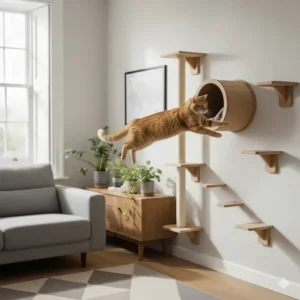
British homes, particularly flats in London, Manchester, and Birmingham, rarely offer abundant floor space. Here’s where wall-mounted systems shine brilliantly. A comprehensive cat walkway system utilises vertical territory that would otherwise sit empty, transforming bare walls into engaging cat infrastructure without sacrificing a single square metre of living space.
Think of it this way: a traditional floor-standing cat tree might occupy a 60cm × 60cm footprint. A wall-mounted system uses approximately 15cm of depth whilst potentially covering several metres of wall space, offering exponentially more climbing territory.
Types of Cat Wall Climbing Systems Available in UK
Modular Systems
Modular cat wall furniture offers maximum flexibility. These systems consist of individual components—platforms, bridges, hammocks, scratching posts—that you can arrange according to your space and cat’s preferences. Brands like OZD excel here, providing 10+ pieces that create entirely customised configurations.
Advantages: Endless design possibilities, easy to expand over time, can reconfigure when moving house
Considerations: Requires planning and measuring, more time-intensive installation, may need additional purchases for complete coverage
Complete Sets
Complete sets like the YITAHOME 7-piece or 8-piece collections provide everything needed in one purchase. These integrated cat climbing solutions are designed to work together harmoniously, with complementary heights, styles, and functions.
Advantages: No guesswork about compatibility, aesthetically cohesive, often better value than buying individual pieces
Considerations: Less flexibility for customisation, may include pieces you don’t need, typically requires more wall space
Hybrid Systems
Some manufacturers offer starter sets designed for expansion. The YITAHOME 5-piece falls into this category—sufficient as a standalone system but designed to integrate with additional YITAHOME pieces as your cat’s empire grows.
Advantages: Start small and expand, test your cat’s preferences before major investment, easier to justify initial cost
Considerations: May end up more expensive than buying complete set initially, requires tracking compatible products
Installation Guide: Making It Safe and Secure
Finding Wall Studs (Absolutely Essential)
Never—and I cannot stress this enough—mount cat furniture to plasterboard alone. UK homes typically feature wall studs (wooden support beams) spaced 40cm (16 inches) apart. The Fukumaru range is specifically designed for this standard spacing, making installation significantly easier.
How to locate studs:
- Use an electronic stud finder (£10-20 from any DIY store)
- Knock along the wall—solid studs produce a denser sound
- Measure 40cm from confirmed studs to find the next one
- Mark stud centres with light pencil marks
Essential Tools
You’ll need these basics for any cat wall climbing system installation:
- Electric drill with masonry and wood bits
- Spirit level (crucial for preventing wonky platforms)
- Measuring tape
- Pencil for marking
- Appropriate wall anchors (included with most systems)
- Optional: Second person for holding pieces during alignment
Step-by-Step Installation Process
Planning Phase (30 minutes)
- Lay all pieces on the floor in your intended configuration
- Measure the total height and width requirements
- Sketch the layout with measurements
- Use masking tape on the wall to visualise positions
- Consider your cat’s jumping ability between platforms (30-40cm spacing works well)
Mounting Phase (45-60 minutes)
- Start with the lowest platform to establish your baseline
- Use the spirit level religiously—uneven platforms frustrate cats
- Drill pilot holes slightly smaller than your screws
- For studs: drive screws directly into wood
- For masonry: use appropriate wall anchors rated for 20kg+
- Install platforms progressively upward, checking stability after each piece
- Ensure at least two routes down from any high platform (crucial for multi-cat homes)
Safety Inspection Checklist
Before allowing your cat access, verify:
- [ ] All mounting brackets secure with no wobble
- [ ] Platforms level (test with marble or ball)
- [ ] No sharp edges or protruding screws
- [ ] Scratching surfaces firmly attached
- [ ] Weight-test each platform with 1.5× your cat’s weight
- [ ] Multiple descent routes available
- [ ] No platforms above delicate furniture or electronics
Material Considerations: What Really Matters
Wood Types
Pine Wood (Most Common) The YITAHOME range predominantly uses pine, offering excellent strength-to-weight ratio and natural aesthetic. Pine accepts wood wax oils beautifully, providing moisture protection without toxic chemicals. FSC-certified pine ensures sustainable forestry practices.
Rubber Wood (Premium Option) Fukumaru’s rubber wood products are exceptionally durable with natural resistance to moisture and wear. Slightly more expensive but noticeably longer-lasting, particularly in high-traffic cat households.
Multi-Layer Board Budget options like PawHut use multi-layer board (engineered wood). Whilst less expensive, these materials can degrade faster with heavy use and don’t age as gracefully as solid wood.
Covering Materials
Sisal Rope The gold standard for scratching surfaces. Natural sisal fibres satisfy cats’ scratching instincts whilst protecting your furniture. Look for posts wrapped in 8mm+ thick rope for longevity.
Plush/Fleece Soft materials like those on PawHut products feel luxurious and encourage lounging. Choose removable, washable covers when possible. UK buyers should ensure materials meet fire safety standards.
Bare Wood Some cats prefer un-covered wood platforms. The natural texture provides grip without excess material that collects fur. Easier to clean with a damp cloth.
Safety Certifications
Look for these marks when purchasing:
- FSC (Forest Stewardship Council): Ensures sustainable wood sourcing
- PEFC (Programme for the Endorsement of Forest Certification): Alternative sustainability certification
- CE Marking: Indicates compliance with EU/UK safety standards
- UKCA (UK Conformity Assessed): Post-Brexit UK safety standard
Choosing the Right System for Your Cat
Consider Your Cat’s Personality
The Confident Climber Active cats who already scale curtains and wardrobes need substantial systems with maximum height. The YITAHOME 8-piece or OZD 10-piece provide sufficient challenge and variety.
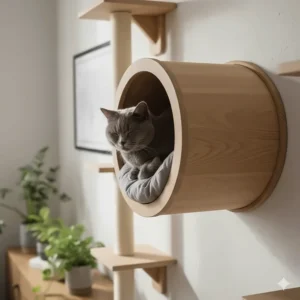
The Timid Observer Nervous cats benefit from systems offering hiding spots and multiple escape routes. The YITAHOME 5-piece with enclosed house works brilliantly, allowing gradual confidence building.
The Senior Feline Older cats appreciate lower platforms with easy access. Consider adding ramps between platforms or choosing systems with closer vertical spacing (20-25cm instead of 40cm).
Multi-Cat Households
The golden rule: provide enough vertical territory that each cat can maintain 1-2 metres of separation. Research from the Journal of Applied Animal Behaviour Science demonstrates that vertical spaces dramatically reduce aggression between cats—although not around feeding areas.
For two cats, a 7-8 piece system works well. Three or more cats benefit from 10+ pieces or multiple separate systems. Always ensure multiple descent routes; dead-end platforms can trap timid cats, leading to conflicts.
Space Limitations
Small Flats (Under 50m²) Focus on vertical rather than horizontal expansion. A corner-mounted system like the Fukumaru 4-in-1 maximises height whilst minimising footprint. Even studio flats can accommodate substantial vertical enrichment.
Medium Homes (50-100m²) Ideal for complete 7-8 piece systems along one wall. Consider the YITAHOME 7-piece or 8-piece deluxe, which provide comprehensive coverage without overwhelming the space.
Large Homes (100m²+) Lucky you! Consider multiple systems in different rooms or a truly expansive 10+ piece configuration creating a genuine cat highway system. Some UK customers install connecting systems that span entire walls or wrap around corners.
Maintenance and Longevity
Weekly Maintenance
Quick Clean (10 minutes)
- Vacuum platforms and hammocks to remove fur
- Wipe wood surfaces with damp cloth
- Check scratching posts for wear
- Tighten any loose connections
Monthly Deep Clean
Thorough Maintenance (30 minutes)
- Remove washable covers and launder at 30°C
- Vacuum between platform and wall
- Inspect mounting brackets for any movement
- Clean sisal posts with pet-safe cleaner
- Check for splinters or rough edges
Seasonal Care
Quarterly Inspection (45 minutes)
- Completely remove and inspect each platform
- Re-tighten all screws and brackets
- Apply wood wax oil if surfaces look dry
- Replace worn scratching surfaces
- Assess whether vertical spacing still suits your cat’s age/ability
Replacement Timelines
Quality systems last 5-10 years with proper care. However, individual components wear differently:
- Sisal scratching posts: 12-24 months (depending on use intensity)
- Fabric covers: 18-36 months (wash regularly to extend life)
- Wood platforms: 5-10 years (solid wood) or 3-5 years (engineered wood)
- Mounting brackets: Indefinite if properly installed
Common Mistakes to Avoid
The Plasterboard Trap
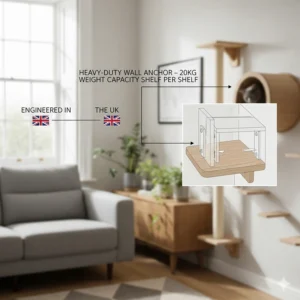
I cannot emphasise this enough: plasterboard alone cannot safely support cat furniture. UK building standards typically use 12.5mm plasterboard over wooden studs. Mounting to plasterboard with standard anchors might hold initially but will fail eventually—potentially when your cat is using it.
Solution: Always mount to wall studs or use specialist plasterboard anchors rated for 20kg+ (and even then, seek studs whenever possible).
Platform Spacing Errors
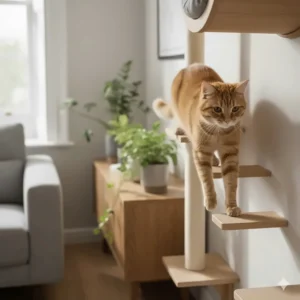
Placing platforms too far apart (50cm+) discourages use, particularly for kittens, seniors, or less athletic breeds. Conversely, platforms too close together (under 20cm) waste vertical space and provide minimal enrichment.
Optimal spacing: 30-40cm between platforms for most cats, 20-25cm for seniors or kittens.
Ignoring Escape Routes
A single-path system with no alternative descent routes creates stress in multi-cat homes. Dominant cats can trap subordinate cats, leading to conflicts and anxiety.
Solution: Design layouts with minimum two routes down from every elevated platform. Think circuit, not dead-end.
Forgetting the Landing Zone
Cats need clear space to jump down safely. Positioning platforms directly above furniture, electronics, or other obstacles risks injury and property damage.
Safety margin: Maintain 60cm clearance below platforms where possible, extending to 100cm for highest points.
Comparing Cat Wall Systems to Traditional Cat Trees
Space Efficiency
Traditional floor-standing cat trees occupy significant floor space—typically 60-80cm square for modest models, up to 120cm+ for elaborate designs. In compact UK flats, that’s substantial real estate.
Wall-mounted systems use approximately 15-20cm of depth whilst potentially covering 2-3 metres of wall height. You’re essentially trading unused vertical space for enrichment your cat desperately needs.
Height Potential
The tallest floor-standing cat trees reach approximately 180-200cm—limited by physics and stability concerns. Wall-mounted systems easily exceed 250cm, utilising full ceiling height in most UK homes (typically 240-270cm).
Greater height equals better security and territorial advantage for your cat. It’s simply not possible to achieve the same elevated satisfaction with a floor-standing tree.
Stability Concerns
Large traditional cat trees can be top-heavy and unstable, particularly with multiple energetic cats. They require heavy bases which further increase floor footprint.
Properly installed wall-mounted systems are inherently stable, anchored directly to structural supports. No wobbling, no tipping—just rock-solid confidence.
Aesthetic Integration
Let’s be honest: most traditional cat trees look like cat trees. They rarely integrate seamlessly with modern UK home décor.
Contemporary wall-mounted systems, particularly those using natural wood finishes like Fukumaru and YITAHOME, blend beautifully with Scandinavian, minimalist, or contemporary interiors. Many visitors won’t immediately recognise them as cat furniture.
🎯 Ready to Transform Your Walls?
Click on any of our recommended cat wall climbing systems above to check today’s best prices on Amazon.co.uk. Your cat’s vertical paradise awaits, and installation is easier than you think!
FAQ: Cat Wall Climbing Systems UK
❓ What weight can cat wall climbing systems support?
❓ Can I install cat wall shelves in a rental property?
❓ How do I encourage my cat to use new wall-mounted furniture?
❓ What's the difference between cat wall playground kits and traditional cat trees?
❓ Are modular cat wall systems suitable for older cats?
Conclusion: Elevating Your Cat’s Quality of Life
Investing in a proper cat wall climbing system represents one of the most impactful decisions you can make for your indoor cat’s wellbeing. The science is unequivocal: vertical space reduces stress, prevents obesity, satisfies natural climbing instincts, and can significantly reduce behavioural problems. With UK homes increasingly compact, wall-mounted solutions offer the perfect answer to providing enrichment without sacrificing living space.
Whether you choose the comprehensive YITAHOME 7-piece set at £85-110, the elegantly designed Fukumaru 4-in-1 at £75-95, or the budget-friendly PawHut 4-piece at £55-75, you’re providing your cat with essential vertical territory. Remember that proper installation into wall studs is non-negotiable for safety, and planning your layout carefully ensures maximum enrichment value.
British cat owners have enthusiastically embraced these systems, with thousands of positive reviews praising improved cat behaviour, reduced furniture scratching, and the joy of watching their felines confidently navigate their vertical kingdoms. Your walls represent untapped potential—transform them into the engaging, species-appropriate environment your cat deserves.
The question isn’t whether to install a cat wall climbing system, but rather which one suits your space, budget, and cat’s personality best. Start your research today, and within a week, you could be watching your cat survey their territory from a proud, elevated perch. After all, they’ve been trying to tell you they need vertical space—now you know how to provide it properly.
Recommended for You
- 7 Best Cat Wall Shelves UK 2026: Transform Your Space
- 7 Best Feandrea Cat Trees UK 2026
- 7 Best Cat Tree for Multiple Cats UK 2026
Disclaimer: This article contains affiliate links. If you purchase products through these links, we may earn a small commission at no additional cost to you. Prices shown are approximate and may vary. All products featured were independently researched and selected based on genuine customer reviews and specifications available on Amazon.co.uk.
✨ Found this helpful? Share it with your mates! 💬🤗
