
In This Article
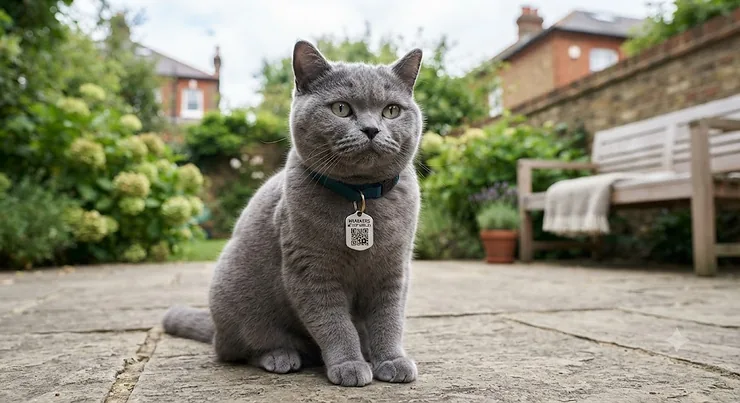
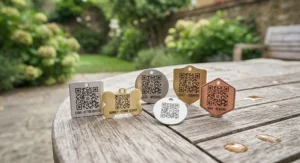
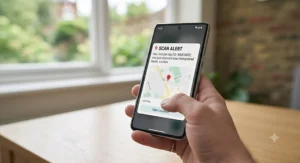
A QR code cat tag is a lightweight collar attachment printed or engraved with a scannable code that links to an online profile containing your contact details, rather than having them etched permanently into metal. Anyone who finds your cat can scan the code with any smartphone camera — no app required on their end — and instantly see how to reach you, with many tags also sending you an automatic email alert the moment someone scans it.
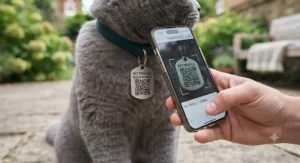
That last part is the real shift here. A QR code cat tag isn’t just a modern-looking alternative to engraving — it’s a genuinely different kind of object. Where a traditional metal tag freezes your phone number in place the day you buy it, a QR code cat tag points to a page you can update at 11pm from your sofa the day you move house. This guide looks honestly at seven real QR code cat tags available in the UK, what they actually do well, where they fall short, and how they fit alongside — never instead of — the compulsory microchipping law that now applies to every cat in England.
Quick Comparison: 7 QR Code Cat Tags
| Tag | Material | Price Range | Best For |
|---|---|---|---|
| WhoseID QR Code Cat Tag | Silent silicone | Under £15 | Small cats, silent daily wear |
| PawView QR Code Dog Tag UK (Heart) | Silicone + NFC | £10-£20 range | QR and NFC dual-scan flexibility |
| Pawaii QR Code Pet ID Tag | Food-grade silicone | Under £15 | Bite-resistant everyday wear |
| MYLUCKYTAG NFC & QR Code Smart Pet ID Tag | Epoxy resin + NFC chip | £10-£20 range | Tech-forward owners, dual scanning |
| GoTags Slide-On Pet ID Tag | Stainless steel | £10-£20 range | Truly silent, no-jingle wear |
| Gotcha Smart Pet ID Tag by Max & Molly | Plastic/metal composite | £10-£25 range | App-based profile management |
| PAWFINDA AI Digital Personalised Pet ID Tag | Engraved metal + NFC/QR | £15-£30 range | UK-developed, most feature-rich |
Looking at the spread above, the WhoseID QR Code Cat Tag and Pawaii QR Code Pet ID Tag are the two genuinely purpose-built silent options for cats specifically, while the GoTags Slide-On Pet ID Tag solves the noise problem through a completely different route — a flat slide-on design rather than silicone. If dual scanning technology matters more to you than price, the MYLUCKYTAG NFC & QR Code Smart Pet ID Tag and PAWFINDA AI Digital Personalised Pet ID Tag both combine NFC tap-to-scan with a traditional QR code, giving finders two ways to reach your details rather than one.
💬 Just one click — help others make better buying decisions too!😊
Top 7 QR Code Cat Tags: Expert Analysis
1. WhoseID QR Code Cat Tag — best purpose-built silent tag for small cats
The WhoseID QR Code Cat Tag is sized specifically for small breeds and cats at around 1 inch across, rather than being a dog tag that happens to also fit a cat collar — a distinction that matters more than it sounds, since oversized tags on a lightweight cat collar tend to flip round and sit code-down, hiding the very thing that’s supposed to be scannable.
Made from silicone rather than metal, it makes genuinely no noise against buckles or bells, and the flat, low-profile shape means it doesn’t catch on furniture or foliage the way a swinging metal disc can. Based on the spec sheet, this is a battery-free, app-free system: you scan the code once to set up an online profile with your contact details and emergency information, and the tag itself never needs charging or replacing unless it’s physically damaged. What most buyers overlook about tags in this silicone-and-QR category is that the online profile can typically be updated an unlimited number of times for free, which is the entire point — your phone number changes, the tag doesn’t need to.
Aggregated review sentiment describes the setup process as quick, typically a few minutes from unboxing to a live profile, and several reviewers specifically mention appreciating that no ongoing subscription is required. A recurring theme in feedback is that the small size, while ideal for cats, can make the printed QR code slightly harder to scan in low light compared with a larger tag.
Pros:
- ✅ Sized specifically for cats, not a shrunk dog tag
- ✅ Genuinely silent silicone construction
- ✅ Free, unlimited profile updates with no subscription
Cons:
- ❌ Small QR code can be harder to scan in dim light
- ❌ Colour options more limited than larger tag ranges
Priced under £15 in most listings, this is the strongest pick specifically for owners who want the smallest, quietest option that’s still genuinely built for cats — check the current price and colour availability before ordering.
2. PawView QR Code Dog Tag UK (Heart Design, NFC) — best for dual QR and NFC scanning
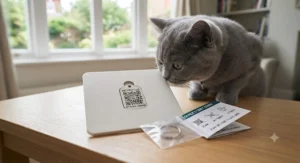
The PawView QR Code Dog Tag UK pairs a printed QR code with an embedded NFC chip, meaning a finder can either scan the code with their camera or simply tap a compatible smartphone against the tag to bring up your pet’s profile — genuinely useful redundancy, since not every phone camera focuses cleanly on a small code on the first try, particularly in poor lighting or if the tag has picked up light scuffing.
The heart-shaped silicone body is marketed towards dogs but works equally well on cat collars given its lightweight build and silent material, and the zinc alloy edge trim adds a bit of structural rigidity compared with pure silicone tags without adding meaningful weight. Here’s what to weigh up: NFC only works if the finder’s phone has NFC enabled and supports tap-to-read, which most modern smartphones do but not universally — so treat the QR code as the reliable fallback and the NFC as a bonus convenience, not the primary mechanism.
Reviewers consistently note the app-based profile (rather than a simple web page) as a double-edged feature — genuinely useful for storing more detailed information like feeding notes or medical conditions, but a small extra step for a finder compared with tags that open a plain webpage with no app download prompt.
Pros:
- ✅ Dual QR code and NFC scanning for reliability
- ✅ Reinforced zinc alloy edge adds durability
- ✅ App stores more detailed pet profile information
Cons:
- ❌ NFC scanning depends on finder’s phone settings
- ❌ App-based profile is an extra step versus plain webpage
At roughly £10-£20 depending on pack size, this suits owners who want a belt-and-braces scanning approach — check the current price, as single and multi-pack options vary.
3. Pawaii QR Code Pet ID Tag — most bite- and wear-resistant silicone option
The Pawaii QR Code Pet ID Tag is built from food-grade silicone with what the manufacturer describes as anti-bite, anti-tensile reinforcement and a clear protective coating over the printed code — a genuinely sensible feature set for any cat that grooms near its collar regularly, since standard printed silicone can wear thin at the surface over months of licking and rubbing.
It comes with a notably sturdy O-ring attachment point, which reviewers flag as a meaningful upgrade over the flimsy split rings that ship with cheaper tags and can bend open or snag a fingernail during fitting. The design offers two wearing positions — hanging from the collar in the usual way, or clipped to the back of a harness, which the manufacturer suggests as a way to reduce day-to-day wear on the QR code itself and extend its scannable life, since a code facing outward on a harness back sees less friction than one dangling and swinging under a chin.
Based on the spec comparison with similar silicone tags, the anti-bite coating is the standout differentiator here; aggregated reviews describe the tag as holding up well to months of daily wear without the code fading or scratching to the point of being unreadable, which is a common complaint on lower-cost, uncoated silicone alternatives.
Pros:
- ✅ Reinforced anti-bite, anti-wear coating over the QR code
- ✅ Sturdy O-ring, easier to fit than flimsy split rings
- ✅ Two wearing positions to reduce code wear over time
Cons:
- ❌ Slightly bulkier than the slimmest silicone alternatives
- ❌ Suitable for adult cats only per manufacturer guidance
Sitting under £15 for most colour options, this is worth prioritising if your cat is a persistent groomer or you want maximum daily durability — check the current price for the full colour range.
4. MYLUCKYTAG NFC & QR Code Smart Pet ID Tag — most tech-forward option with an established online profile system
The MYLUCKYTAG NFC & QR Code Smart Pet ID Tag embeds an NTAG213 NFC chip inside a clear epoxy resin disc alongside a printed QR code, giving it a noticeably different look from the flat silicone tags elsewhere on this list — more like a small, glossy medallion than a simple disc, which some owners will prefer aesthetically and others will find less discreet.
The epoxy construction is genuinely waterproof and non-fading by design, addressing a real weakness of some printed-plastic tags that can cloud or crack under repeated exposure to rain and sunlight over a year or more outdoors. MYLUCKYTAG has been operating in this specific space — QR-based pet anti-loss technology — since 2019, which is a longer track record than several newer entrants in this category, and the brand’s system sends an instant location alert email the moment the tag is scanned, which several of the tags on this list also do but with varying reliability according to aggregated feedback.
Reviewers frequently mention the setup process and the responsiveness of the alert emails as strong points, with the brand’s established customer support getting specific positive mentions in review threads — a genuinely useful signal, since digital pet tags live or die on whether the backend service stays maintained years after purchase.
Pros:
- ✅ Waterproof, non-fading epoxy resin construction
- ✅ Established brand with track record since 2019
- ✅ Reliable instant scan-location email alerts
Cons:
- ❌ Glossy medallion look less discreet than flat silicone tags
- ❌ Slightly heavier than the lightest silicone alternatives
Priced in the £10-£20 range, this is the pick for owners who want a more established, longer-running digital pet ID service behind the tag itself — check the current price for engraving and colour options.
5. GoTags Slide-On Pet ID Tag — the true no-jingle alternative for noise-sensitive households
The GoTags Slide-On Pet ID Tag takes a fundamentally different approach to silence than the silicone tags above: rather than swapping metal for silicone, it slides flat onto the collar itself and sits flush rather than dangling from a ring, which physically removes the mechanism that causes jingling in the first place — there’s simply nothing left to swing and clatter against a buckle.
Made from stainless steel rather than silicone, it’s a genuinely different material trade-off: more rigid and scratch-resistant over the long term than silicone, but without silicone’s slight give and grip against a collar surface. The curved profile is designed to follow the natural shape of a cat’s or dog’s neck rather than sitting as a flat rectangle, which several reviewers note makes a real difference to comfort, particularly on cats who are sensitive to anything unfamiliar against their fur.
A common theme in aggregated review sentiment is genuine surprise at how completely the jingling stops compared with traditional dangling tags — several reviewers specifically mention it as a solution for multi-cat households where the constant background noise of several tags had become a low-level annoyance. It’s worth noting this specific model is engraved rather than QR-based by default in its base listing, so if a live scannable QR code is the priority, check the specific listing variant carefully before ordering, as GoTags offers both engraved and QR options across its range.
Pros:
- ✅ Flat slide-on design physically eliminates jingling
- ✅ Durable stainless steel, resistant to scratching over years
- ✅ Curved profile designed for comfortable, close collar fit
Cons:
- ❌ Some listing variants are engraved-only, not QR-based
- ❌ Less flexible than silicone if the collar shifts position
At £10-£20 depending on size and finish, this is the strongest choice for owners whose priority is eliminating noise completely, provided you confirm the QR-enabled variant specifically — check the current price and listing details before buying.
6. Gotcha Smart Pet ID Tag by Max & Molly — most established app ecosystem for ongoing profile management
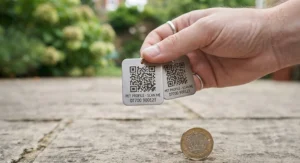
The Gotcha Smart Pet ID Tag by Max & Molly comes from a brand better known for its collar ranges, and this standalone tag version lets any cat or dog wear the same Smart ID system regardless of what collar brand they’re actually wearing. Registration happens through a dedicated Gotcha! app, using Google Maps-based geo-tagging to relay a scan location back to the owner — a more structured approach than some of the simpler web-page-only systems elsewhere on this list.
Because Max & Molly builds this system into their own collar lines as standard, the Gotcha tag benefits from being part of an established, actively maintained product ecosystem rather than a standalone accessory from a smaller specialist — reassuring if you’re wary of a niche tag brand’s backend service quietly disappearing a few years down the line. On paper this means slightly more setup involved than a pure QR-to-webpage tag, since registering requires the app rather than just a browser, but in exchange you get a more feature-rich, persistent pet profile that ties into the wider Max & Molly product range if you use it.
Aggregated sentiment is positive around the app’s ease of use for registration specifically, with the geo-tagging scan-location feature getting repeated favourable mentions from owners who’ve had it triggered by a genuine finder scan.
Pros:
- ✅ Backed by an established, actively maintained brand ecosystem
- ✅ Google Maps geo-tagging on scan for precise location alerts
- ✅ Works independently of any specific collar brand
Cons:
- ❌ Requires the dedicated app rather than browser-only access
- ❌ Slightly more setup steps than the simplest QR tags
Sitting in the £10-£25 range depending on retailer, this is a solid choice if you want a smart tag backed by a brand with a wider, established product range — check the current price and app compatibility for your phone.
7. PAWFINDA AI Digital Personalised Pet ID Tag — most feature-rich, UK-developed option
The PAWFINDA AI Digital Personalised Pet ID Tag is developed, designed and supported in the UK, which is a genuinely relevant distinguishing feature in a category where most competing brands are based overseas — UK-based support can matter in practice if you ever need help with the online profile system or have a query about UK data handling specifically.
It combines contactless NFC and QR code technology on a single engraved tag, and adds what the manufacturer describes as “PawVoice AI” functionality — an added digital layer beyond the basic scan-to-contact function that most tags on this list offer. Reviewers and the product listing describe this as a more premium, feature-dense option than the simpler silicone tags earlier in this roundup, reflected in its position at the top of the price range here. Based on the spec comparison with the other six tags, PAWFINDA’s combination of engraving (a physical fallback if the digital system is ever unavailable), NFC and QR gives it the broadest redundancy of contact methods on this list — genuinely useful given how much this category relies on backend services staying online indefinitely.
Because it’s a newer, more specialised entrant than some established competitors, the review pool is smaller than for higher-volume tags like GoTags or MYLUCKYTAG — in the interest of honesty, that means less aggregated sentiment data to draw on, though what’s available skews positive, particularly around UK-based customer support responsiveness.
Pros:
- ✅ UK-developed and UK-supported end to end
- ✅ Combines physical engraving with NFC and QR redundancy
- ✅ Additional AI-driven profile features beyond basic contact info
Cons:
- ❌ Sits at the top of this roundup’s price range
- ❌ Smaller review pool than more established competitors
At roughly £15-£30 depending on personalisation options, this is the pick for owners who want maximum redundancy and UK-based support specifically — check the current price, as engraving and finish options affect the final cost.
Practical Usage Guide: Setting Up Your QR Code Cat Tag Properly
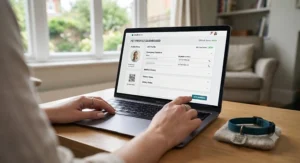
Getting the tag onto the collar is the easy five minutes; setting the digital side up properly is where the real value of a QR code cat tag actually lives, and it’s worth doing this thoroughly rather than rushing it. Start by scanning the code yourself before you put the tag on your cat, confirming it links to a genuine, working profile page rather than a placeholder — a small number of buyers in aggregated reviews across this category report receiving a tag that needed re-scanning or re-registering before the link activated properly.
When filling in your profile, include a phone number you’ll actually answer to an unknown caller (rather than a landline nobody picks up), and consider adding a second emergency contact if you travel regularly, since a finder calling at an inconvenient time is far better than a finder giving up. In the first 30 days, the most common mistake is setting the profile up once and then never revisiting it — treat it the way you’d treat updating your address with your GP, something to redo whenever your circumstances change, not a one-time task.
For maintenance, silicone tags benefit from an occasional wipe with a damp cloth to keep the printed QR code scannable, since a layer of grime or fur oil can genuinely interfere with a phone camera’s ability to focus and read the pattern. If you ever notice a tag’s code becoming difficult to scan, most providers allow you to request a replacement tag linked to the same existing profile, so check your provider’s process before assuming you need to start the registration from scratch.
Real-World Scenarios: Which Tag Suits You?
The multi-cat household tired of constant jingling: if you’ve got two or three cats and the combined noise of dangling metal tags has become genuinely grating, the GoTags Slide-On Pet ID Tag solves this most directly by physically removing the swinging mechanism, while the WhoseID QR Code Cat Tag or Pawaii QR Code Pet ID Tag offer the same silence through silicone if you’d prefer a QR-first design from the outset.
The owner who travels or relocates frequently: anyone whose contact details change more than once every few years should prioritise a genuinely easy-to-update digital profile over engraving durability. The MYLUCKYTAG NFC & QR Code Smart Pet ID Tag and PawView QR Code Dog Tag UK both make updating details a simple online process, meaning you’re never stuck with an outdated phone number etched permanently into metal.
The owner who wants maximum redundancy and doesn’t mind paying more: if peace of mind matters more than shaving a few pounds off the price, the PAWFINDA AI Digital Personalised Pet ID Tag combines physical engraving with both NFC and QR scanning, meaning a finder has three separate ways to reach you even if one system — a scratched engraving, a flat phone battery preventing an NFC tap — fails on the day it matters most.
How to Choose a QR Code Cat Tag
- Confirm it’s genuinely silent, not just marketed that way. Look specifically for silicone construction or a flush slide-on design rather than a dangling metal disc, and check reviews for actual noise complaints rather than trusting the listing title alone.
- Check whether QR, NFC, or both are included. A QR-only tag is the reliable baseline; NFC is a useful bonus for phones that support tap-to-read, but shouldn’t be relied on as the sole scanning method.
- Look for a no-subscription, no-app-required profile page where possible. The lower the barrier for a stranger finding your cat, the faster they’ll actually make contact — a plain webpage beats an app download every time for a first-time finder.
- Prioritise coating or wear-resistance if your cat grooms heavily. Uncoated printed codes on cheap silicone can fade or scratch to the point of being unreadable within months of daily wear.
- Match the tag size to your cat, not a generic pet size chart. A tag genuinely sized for cats scans more reliably and sits better on a lightweight collar than a shrunk-down dog tag.
- Treat the tag as a companion to microchipping, never a replacement. Cats Protection’s collar safety advice is clear that a collar and tag should always be paired with permanent microchip identification, since collars can and do come off.
- Check the attachment ring quality before you buy. A flimsy split ring is a common source of lost tags in aggregated reviews across nearly every brand — a sturdy O-ring or reinforced loop is a small detail that prevents a real, recurring problem.
QR Code Tags vs Traditional Engraved Cat Tags
The core trade-off between a QR code cat tag and a classic engraved metal disc comes down to permanence versus flexibility. Engraved tags need no battery, no internet connection and no backend service to keep working — the information is physically stamped into the metal and will remain readable for the tag’s entire working life, which some owners find reassuring precisely because nothing can go offline. The obvious downside is that if your phone number or address changes, you’re stuck ordering and fitting an entirely new tag, and in the meantime the old one is actively giving a finder outdated information.
A QR code cat tag flips that trade-off. The physical tag itself typically carries no personal information directly visible to a casual glance — genuinely useful from a privacy standpoint, since a stranger glancing at your cat’s collar in the park doesn’t see your address the way they would on an old-style engraved tag — but everything depends on the backend profile page staying live and the code remaining scannable. This is where the anti-bite, weatherproof and wear-resistant construction differences between the seven tags above genuinely matter in the long run, since a QR code that’s scratched illegible after a year of outdoor grooming defeats the purpose entirely.
For most UK cat owners, the sensible middle ground several of these products already lean into — engraved fallback text alongside a QR code, as seen on the PAWFINDA AI Digital Personalised Pet ID Tag — offers genuine belt-and-braces protection: a permanent basic contact route that works even if the digital layer ever fails, plus the flexibility of an updatable online profile for as long as it stays active.
Digital Cat ID Tags and Data Privacy: What to Know
One thing worth being upfront about with any digital cat ID tag is exactly what information you’re putting online and who can see it. Most of the systems reviewed here let you control what’s visible on the public-facing profile a finder sees when they scan — typically your phone number and perhaps an email address — while keeping more sensitive details like your home address hidden or shared only after direct contact, which is a sensible default and worth checking is genuinely how each provider’s system behaves before you rely on it.
It’s also worth reading each provider’s privacy policy for how long they retain your data and what happens to your profile if the company ever stops trading — a fair question for any smaller, newer brand in this space, and one none of the seven products here should be faulted for individually, but one that’s genuinely worth five minutes of your time before committing your contact details to any provider’s system long-term.
✨ Ready to Give Your Cat a Modern, Silent ID Tag?
📲 Compare these seven QR code options side by side and check current pricing before you commit. A tag costing well under £20 is a small outlay against the peace of mind of a fast, silent, scannable way home.
Common Mistakes When Buying a QR Code Cat Tag
The single most frequent mistake across aggregated reviews in this category is buying the tag and never actually completing the online profile setup — the QR code itself does nothing without a live, filled-in profile behind it, so treat activation as part of the purchase, not an optional extra step for later. A second common error is choosing a tag sized or styled for dogs without checking cat-specific sizing, which can result in an oversized tag that flips over and hides the scannable code against a lightweight cat collar.
Buyers also regularly overlook the attachment ring quality when comparing listings, focusing entirely on the QR technology and silicone material while the actual point of failure — a cheap split ring bending open — goes unchecked. Finally, it’s worth remembering that a QR code cat tag is not a substitute for the legally required microchip in England; treating the tag as sufficient on its own, without registering a microchip, is both a compliance gap and a genuine welfare risk if the collar comes off.
Long-Term Cost & Maintenance
None of the seven tags here involve an ongoing subscription fee based on our research, which is a meaningful point of honesty worth flagging clearly: the one-time purchase price is, in most cases, the only cost you’ll pay, with the digital profile hosted free of charge indefinitely by the provider. The genuine long-term cost consideration is replacement — silicone tags can wear or the printed code can fade over one to two years of daily outdoor use, while stainless steel and engraved options tend to last considerably longer physically, though the QR code element (where present) is still subject to the same wear considerations as any printed surface.
Total cost of ownership, realistically, comes down to how often you replace the physical tag rather than any recurring service charge — most providers let you link a replacement tag to your existing profile rather than starting registration again from scratch, which keeps the long-term cost close to just the price of the tag itself.
Safety and Regulations: Cat Tags Alongside UK Microchipping Law
Since 10 June 2024, UK legislation requires every cat in England to be microchipped and the keeper’s contact details kept up to date on an approved database, with owners who don’t comply potentially facing a fine. This is the single most important context for anyone buying a QR code cat tag: the tag is a fast, visible way for a finder to reach you directly, but it is not a legal substitute for microchipping, and the two are meant to work together rather than as alternatives.
On the collar safety side, Cats Protection specifically recommends quick-release or snap-opening collars for any cat wearing a collar and tag, since a collar that catches on a branch or fence needs to release under pressure rather than trap the cat. Every tag in this roundup is designed to attach to a standard collar rather than replacing the collar itself, so make sure whatever collar you’re fitting the tag to has a genuine quick-release mechanism, not just a standard buckle — this matters more for outdoor cats than the tag technology itself does.
Features That Actually Matter (and Those That Don’t)
Genuinely worth prioritising: a genuinely no-subscription, easy-to-update profile system, a sturdy attachment ring, and either wear-resistant coating or a physical construction (like slide-on steel) that holds up to years of daily wear. These affect whether the tag actually works when it matters, months or years after purchase.
Genuinely overrated at this price point: elaborate app ecosystems with features you’ll rarely use, and marketing language around “AI” features that, on inspection, add relatively modest extra functionality over a well-built basic QR profile. A simple, reliable, always-online webpage with your correct phone number beats a feature-packed app you never fully explore.
What to Expect: Real-World Performance
On paper, most QR code cat tags in this category promise broadly the same thing — scan, see contact details, get an alert email. In practice, the meaningful differences show up in daily wear: silicone tags genuinely disappear against a cat’s fur and make no sound, which owners consistently report as the single biggest quality-of-life improvement over traditional dangling metal discs, particularly for cats who were previously irritated by tag noise.
The digital side performs best when treated as a living system rather than a set-and-forget purchase — providers that send a genuine, prompt alert email when someone scans the tag (rather than a delayed or occasionally missed notification) earn the most consistent praise in aggregated reviews, and this reliability, more than any single design feature, is what separates a tag that gives real peace of mind from one that’s simply a modern-looking accessory.
FAQs About QR Code Cat Tags
❓ Do QR code cat tags replace the need for a microchip?
❓ Are QR code cat tags actually silent?
❓ Does scanning a QR code cat tag require an app?
❓ How do I update my phone number on a QR code cat tag?
❓ Can a QR code cat tag work if my phone has no signal?
Conclusion
A QR code cat tag genuinely earns its place alongside — never instead of — a microchip, giving a finder the fastest possible route back to you without needing a vet visit or a scanner. Across these seven picks, the meaningful differences come down to construction: the WhoseID QR Code Cat Tag and Pawaii QR Code Pet ID Tag cover the purpose-built, genuinely silent end of the market well, while the GoTags Slide-On Pet ID Tag solves noise through an entirely different physical design. For owners who want the broadest redundancy of contact methods, the PAWFINDA AI Digital Personalised Pet ID Tag and MYLUCKYTAG NFC & QR Code Smart Pet ID Tag layer NFC and engraving on top of the basic QR function.
Whichever you choose, the fundamentals matter more than the branding: confirm it’s genuinely silent, actually finish the online registration, check the attachment ring, and keep it paired with an up-to-date microchip record. Get those right, and a tag costing well under £20 becomes a small, sensible piece of everyday peace of mind.
Recommended for You
- Cat ID Tags UK: 7 Brilliant Picks for 2026
- Vest Harness for Cats: 7 Best Picks for UK Owners in 2026
- How To Walk A Cat On A Lead: 7 Best Harnesses (2026 UK)
Disclaimer: This article contains affiliate links. As an Amazon Associate, I earn from qualifying purchases. If you purchase products through these links, we may earn a small commission at no additional cost to you.
✨ Found this helpful? Share it with your friends! 💬🤗
