
In This Article
Picture this: you’re sat on your sofa with a cuppa, watching telly, when suddenly your beloved moggy launches herself at the curtains like she’s auditioning for Mission Impossible. Sound familiar? If you’ve got an indoor cat wreaking havoc on your furniture, a floor to ceiling cat tree UK might just be the solution you’ve been searching for.
I’ll be honest with you—when I first heard about these towering structures, I thought they were a bit over the top. But after researching the science behind vertical space for cats and testing several models myself, I’ve become a proper convert. These aren’t just oversized scratching posts; they’re architectural playgrounds that tap into your cat’s deepest instincts.
Indoor cats live in a world that barely rises above skirting boards, yet their bodies carry the legacy of tree-dwelling hunters. When you give them proper height access, the entire room transforms. Your anxious tabby becomes a confident climber. Your bored Persian discovers a whole new dimension to explore.
In this comprehensive guide, I’ll walk you through everything you need to know about choosing the perfect floor to ceiling cat tree UK for your home—from the best budget options under £75 to premium models that’ll make your cat the envy of the neighbourhood. We’ll cover real products currently available on Amazon.co.uk, complete with honest pricing, specifications, and what actual UK buyers are saying.
Quick Comparison Table
| Product | Height Range | Key Features | Best For | Approximate Price |
|---|---|---|---|---|
| FUKUMARU 6-Level Cat Tree | Adjustable | 6 levels, transparent capsule, thick posts | Multi-cat homes | £149.99 |
| Cat Craft 4-Tier Tower | 228-274cm | Modern design, 4 tiers, carpeted platforms | Small to medium cats | £89.99-£119.99 |
| Pippa & Max’s Grey Cat Tree | 215-280cm | 3 platforms, natural sisal, spring-loaded | Value seekers | £69.99-£74.99 |
| PAWZ Road Cactus Cat Tree | 239-275cm | Unique design, hammock, dangling balls | Style-conscious owners | £79.99-£99.99 |
| PAWZ Road 5-Tier Grey Tower | 216-273cm | 5 levels, cosy bed, anti-fall belt | Active climbers | £84.97-£99.96 |
| Yoakaiax 6-Tier Cat Tree | Up to 300cm | Height freedom, modern design, multiple platforms | High ceilings | £99.99-£129.99 |
| PAWZ Road Wooden Design | 240-260cm | Natural wood look, extra scratching post, deluxe | Traditional homes | £119.99-£149.99 |
💬 Just one click – help others make better buying decisions too! 😊
Top 7 Floor to Ceiling Cat Tree UK Products: Expert Analysis
After scouring Amazon.co.uk and analysing hundreds of customer reviews from UK buyers, I’ve handpicked these seven standout models. Each offers something unique, whether you’re working with a tight budget or seeking the absolute best for your feline family.
1. FUKUMARU Floor to Ceiling Cat Tree – The Premium Choice
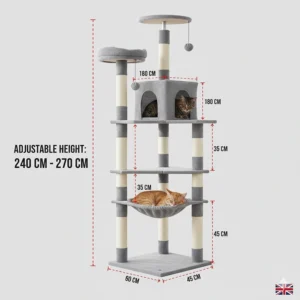
When it comes to sheer quality and features, the FUKUMARU Floor to Ceiling Cat Tree stands head and shoulders above the competition. This 6-level behemoth isn’t just furniture—it’s a feline entertainment complex.
Key Specifications:
- Adjustable height accommodation
- 6 distinct climbing levels
- 13cm extra-thick support columns
- 360° transparent viewing capsule
- Extra-large soft hammock
- Maximum weight capacity: 65kg
What makes this model exceptional is its engineering. The reinforced screw rod system at the top isn’t just marketing waffle—it genuinely provides rock-solid stability. UK buyers consistently report that even their chunkiest cats (we’re talking proper units here) can scramble up without any wobbling.
The transparent capsule deserves special mention. Cats absolutely adore it, treating it like their personal observation pod. One reviewer from Manchester noted their tabby spends half the day peering through it “like a furry security guard.”
Price Range: £149.99
Pros:
✅ Exceptional stability for heavy cats
✅ Premium materials (rubber wood plywood and jute)
✅ Multiple resting options suit different personalities
Cons:
❌ Higher price point
❌ Requires ample ceiling height
UK customer feedback highlights excellent build quality, though assembly takes about 45-60 minutes. Worth noting: the semi-enclosed condo and viewing perch combo keeps even territorial cats happy in multi-cat households.
2. Cat Craft Floor to Ceiling Cat Tree Tower – Best Mid-Range Option
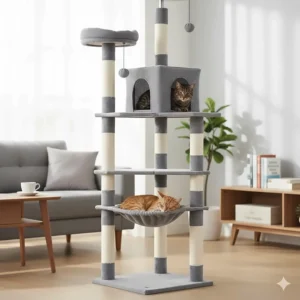
For those seeking a balance between quality and affordability, the Cat Craft Floor to Ceiling Cat Tree Tower hits the sweet spot. This 4-tier modern design proves you don’t need to spend a fortune to give your cat proper vertical territory.
Key Specifications:
- Adjustable height: 228-274cm (7.5-9 feet)
- 4 carpeted climbing platforms
- Sturdy scratching posts
- Modern grey finish
- Compact base footprint
This model particularly suits UK homes with standard ceiling heights (2.4-2.7 metres). The spring-loaded tension system means no drilling into your ceiling—brilliant if you’re renting or simply don’t fancy putting holes everywhere.
Price Range: £89.99-£119.99
Pros:
✅ No ceiling damage (tension-mounted)
✅ Takes up minimal floor space
✅ Modern aesthetic suits contemporary décor
Cons:
❌ Not suitable for vaulted ceilings
❌ Material can fray with heavy scratching
One Edinburgh buyer mentioned the tree arrived quickly and was “dead easy to assemble.” Her cat took to it immediately, though she noted the carpeted material does show wear after about a month of enthusiastic scratching. Still, for the price, it’s brilliant value.
3. Pippa & Max’s Grey Cat Tree – The Budget Champion
If you’re watching your pennies but still want quality, Pippa & Max’s Grey Cat Tree offers remarkable value. This UK-based brand has built a solid reputation for creating durable, no-nonsense cat furniture.
Key Specifications:
- Height range: 215-280cm
- 3 extra-large platforms (45cm x 25cm each)
- 4 natural sisal scratching posts
- Spring-loaded ceiling attachment
- Optional wall fixings included
What I particularly appreciate about this model is its honest, straightforward design. There’s no unnecessary fluff—just three solid platforms wrapped in quality plush faux fur and four proper scratching posts.
Price Range: £69.99-£74.99
Pros:
✅ Excellent value for money
✅ Larger platform sizes than competitors
✅ Proven longevity (reviews mention 4+ years)
Cons:
❌ Fewer features than premium models
❌ Limited colour options
UK buyers rave about this one. A Bristol owner purchased her third unit after the first two lasted four years each—now that’s a proper endorsement! The sisal rope quality is noteworthy, maintaining its texture even with daily use.
4. PAWZ Road Cactus Cat Tree – Most Stylish Design
Who says cat furniture has to be boring? The PAWZ Road Cactus Cat Tree brings a playful aesthetic without sacrificing functionality. This quirky design adds character to your home whilst keeping your cat entertained.
Key Specifications:
- Adjustable height: 239-275cm
- 5 climbing tiers
- Distinctive cactus shape
- Integrated hammock
- Dangling ball toy
- Sisal-covered scratching posts
The cactus design isn’t just for show—the offset platforms actually create more interesting climbing routes than traditional straight towers. UK customers report their cats enjoy the varied jumping distances.
Price Range: £79.99-£99.99
Pros:
✅ Unique aesthetic adds personality
✅ Engaging design encourages exploration
✅ Comprehensive feature set
Cons:
❌ Green colour may not suit all décor
❌ Requires occasional tightening of tension rod
A London buyer mentioned having to trim a few centimetres off the extension pole to fit her ceiling perfectly, but after that modification, it’s been “absolutely solid.” Her kitten makes the journey to the top every evening for his bedtime perch.
5. PAWZ Road 5-Tier Grey Tower – Best for Active Cats
The PAWZ Road 5-Tier Grey Tower caters specifically to athletic cats who treat your home like an obstacle course. With its anti-fall belt system and well-spaced platforms, it’s engineered for safety during high-energy play.
Key Specifications:
- Height adjustment: 216-273cm
- 5 graduated platforms
- Anti-fall safety belt included
- Cosy top bed
- Dangling ball entertainment
- Neutral grey colour
The platform spacing on this model is particularly clever—roughly 43cm between levels, which encourages proper jumping mechanics rather than dangerous leaps.
Price Range: £84.97-£99.96
Pros:
✅ Safety-focused design
✅ Encourages healthy exercise
✅ Neutral colour suits any room
Cons:
❌ Assembly can be fiddly
❌ May wobble slightly without wall mounting
Several UK reviewers mentioned reinforcing the installation by sawing off the extension piece and anchoring platforms to the wall. After these modifications, the structure becomes “super solid, like a set of shelves.”
6. Yoakaiax 6-Tier Cat Tree – Best for High Ceilings
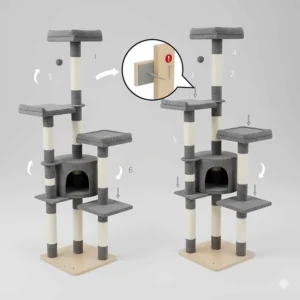
Got Victorian ceilings or a loft conversion? The Yoakaiax 6-Tier Cat Tree adjusts up to 3 metres, making it perfect for UK homes with above-average ceiling heights.
Key Specifications:
- Extreme height adjustment (up to 300cm)
- 6 climbing levels
- Sectional assembly for height freedom
- Thickened scratching posts
- Modern minimalist design
This model’s sectional design means you can configure it precisely for your space. Too much height? Simply remove a section. Need the full monty? Assemble every piece for a towering cat skyscraper.
Price Range: £99.99-£129.99
Pros:
✅ Exceptional height versatility
✅ Modular design offers flexibility
✅ Suits non-standard ceilings
Cons:
❌ More complex assembly
❌ Heavier than average
UK customers with period properties particularly appreciate this model’s adaptability. One Cambridge homeowner with 3.2-metre ceilings finally found a cat tree that actually reaches the top.
7. PAWZ Road Wooden Cat Tree – The Traditional Choice
For those who prefer a more natural aesthetic, the PAWZ Road Wooden Cat Tree combines traditional materials with modern functionality. The wooden construction and natural sisal create a sophisticated look.
Key Specifications:
- Recommended height: 240-260cm
- Natural wood appearance
- 100% natural sisal covering
- Bonus scratching post (for lower ceilings)
- Substantial weight for stability
The wooden construction isn’t just about looks—it provides exceptional rigidity. However, PAWZ Road recommends this model specifically for ceilings between 240-260cm for optimal stability.
Price Range: £119.99-£149.99
Pros:
✅ Premium natural materials
✅ Sophisticated appearance
✅ Extra-sturdy construction
Cons:
❌ Specific height requirements
❌ Heavier (more difficult to move)
UK reviewers consistently praise the build quality, noting the sisal maintains its texture longer than synthetic alternatives. The natural colour palette blends beautifully with wooden floors and traditional furniture.
Understanding Why Cats Need Vertical Space
Before we dive deeper into selection criteria, let’s address the fundamental question: why do cats even need vertical territory?
The Science Behind Climbing Instincts
Cats feel safest when they can observe their environment from an elevated position, allowing them to feel more in control and less vulnerable to sudden changes in their surroundings. This isn’t just anthropomorphic speculation—it’s rooted in evolutionary biology.
According to the RSPCA, cats are agile animals with powerful, tightly controlled muscles and fast reflexes that allow them to move quickly and gracefully. They are skilled at running, jumping, climbing and stealthily stalking prey—behaviours that remain deeply ingrained even in domesticated cats.
In the wild, cats are simultaneously predators and prey. Elevation provides dual benefits: a hunting vantage point and an escape route from larger predators. Your domesticated moggy retains these instincts despite generations of comfortable sofa-dwelling.
Mental and Physical Health Benefits
The advantages of vertical space extend far beyond satisfying natural instincts:
Physical Exercise: Climbing engages different muscle groups than horizontal running. The gripping, balancing, and leaping actions strengthen core muscles and improve coordination. For indoor cats limited to flat surfaces, vertical climbing becomes their primary form of athletic activity.
Stress Reduction: Elevated perches serve as “recovery bays” where cats can observe without participating. Researchers at the University of Bristol’s Veterinary School have been conducting pioneering studies on cat health, welfare and behaviour since 2010, with findings showing that climbing and exploratory play boost dopamine and serotonin, while predictable escape routes reduce stress hormones like cortisol.
Territorial Management: In multi-cat households, vertical space literally adds another dimension of territory. Rather than competing for limited floor space, cats can establish separate vertical territories, significantly reducing conflicts.
Mental Stimulation: Different heights provide varied perspectives, keeping your cat’s environment interesting. This environmental enrichment prevents boredom-related behavioural issues like excessive meowing or destructive scratching.
UK-Specific Considerations
British homes, particularly flats and terraced houses, often have limited square footage. Floor to ceiling cat trees maximise vertical space without claiming precious floor area. A typical model requires only 40-50cm of floor space whilst providing 2+ metres of climbing height—brilliant space efficiency for compact UK dwellings.
The RSPCA advises that indoor cats are active and like to run, jump and climb, and they often feel safest when high. Providing a suitable high place to climb and rest, such as floor to ceiling cat trees or shelves, is essential for their wellbeing—particularly important for the estimated 24% of UK adults who own at least one cat.
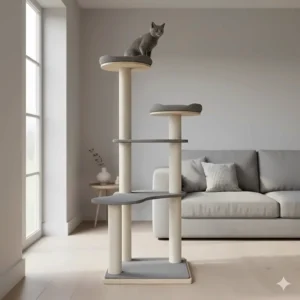
How to Choose the Perfect Floor to Ceiling Cat Tree UK
Selecting the right model involves balancing several factors. Here’s my systematic approach to making the best choice:
1. Measure Your Ceiling Height Precisely
This seems obvious, but I’ve seen too many disappointed reviews from people who didn’t measure properly. Use a tape measure—don’t guess! UK homes typically have ceiling heights between 230-260cm, but period properties, loft conversions, and newer builds vary significantly.
Top tip: Measure at the exact spot where you plan to place the tree. Some ceilings aren’t perfectly level, especially in older properties.
2. Assess Your Cat’s Personality and Age
Not all cats interact with vertical space identically:
Athletic cats (Bengals, Abyssinians, young moggies) benefit from maximum height and challenging spacing between platforms. Consider models with 5-6 levels and varied platform sizes.
Senior cats or those with mobility issues need closer platform spacing and possibly ramps. The FUKUMARU model works well here with its gradual level progression.
Timid cats appreciate enclosed spaces at various heights. Look for models featuring cubbies or the transparent capsule design.
Multiple cats require enough platforms for simultaneous use without conflict. Aim for at least one perch per cat, plus extras.
3. Consider Your Home’s Décor
Gone are the days when cat furniture meant hideous beige carpet towers. Modern floor to ceiling cat trees come in sophisticated designs:
- Minimalist homes: Choose neutral greys or the Yoakaiax modern design
- Traditional décor: The PAWZ Road wooden model complements classic interiors
- Contemporary spaces: The Cat Craft grey tower suits modern aesthetics
- Playful environments: The PAWZ Road cactus design adds character
4. Evaluate Stability Features
Safety isn’t negotiable. Quality floor to ceiling cat trees should include:
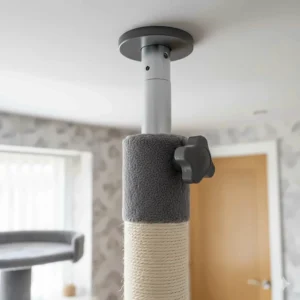
- Tension rod systems: Spring-loaded tops that press firmly against ceilings
- Optional wall brackets: For additional security, especially with heavy cats
- Thick support columns: 10cm minimum diameter for proper stability
- Broad base plates: Prevent tipping during enthusiastic climbing
- Weight capacity specifications: Ensure it supports your cat’s current and potential future weight
5. Check Material Quality
Sisal vs synthetic rope: Natural sisal maintains texture longer and satisfies scratching instincts better. Most UK models feature sisal, but verify before purchasing.
Platform coverings: Plush materials feel cosy but may show wear faster. Some cats prefer bare wood platforms, which last longer but offer less cushioning.
Structural materials: Particle board is standard and sufficient for most cats. Heavy-duty models use plywood or solid wood for superior durability.
6. Review Assembly Requirements
Most floor to ceiling cat trees require 30-60 minutes of assembly. Check whether:
- Instructions are clear (many UK buyers mention this in reviews)
- All necessary tools are included
- You’ll need a second person’s help
- Modifications like trimming poles might be necessary
7. Budget Realistically
Expect to invest £70-£150 for quality models. The budget-friendly Pippa & Max option proves you needn’t spend a fortune, but ultra-cheap alternatives (under £50) often lack durability.
Cost per year calculation: A £70 tree lasting 4 years costs £17.50 annually—cheaper than replacing shredded furniture!
Installation Tips for UK Homes
Getting your floor to ceiling cat tree properly installed ensures safety and longevity. Here’s what I’ve learned through experience and UK buyer feedback:
Pre-Installation Preparation
- Clear the area completely – Remove all furniture and obstacles from the installation zone
- Check for ceiling obstructions – Light fittings, smoke alarms, and ceiling roses can interfere
- Identify ceiling joists (if using optional wall brackets) – A stud finder helps locate solid mounting points
- Clean the ceiling surface – Dust and debris reduce tension rod grip
Step-by-Step Installation
Assemble the base first: Most models require platform attachment before raising the structure. Follow instructions precisely—skipping steps causes instability.
Position carefully: Once partially assembled, place the tree exactly where it’ll stay. Moving a tall structure after installation risks damaging ceilings.
Extend the tension rod gradually: Don’t force it to maximum tension immediately. Extend in small increments, checking stability at each stage.
Test before introducing your cat: Apply pressure to platforms mimicking a jumping cat. Any wobbling indicates insufficient tension or improper assembly.
Common UK Installation Challenges
Low ceilings: Some buyers need to trim extension poles. Use a hacksaw and smooth edges with sandpaper. Measure twice, cut once!
High ceilings: Ensure your chosen model extends adequately. The Yoakaiax handles exceptional heights best.
Uneven ceilings: Period properties often have slightly sloped ceilings. Position the tree where ceiling height is most consistent.
Rented properties: Tension systems avoid ceiling damage, but photograph the installation area beforehand for your deposit protection.
Wall Mounting Recommendations
Whilst tension systems work independently, wall mounting adds security:
- Use the included L-brackets (most models provide them)
- Locate solid wall studs rather than plasterboard
- Mount brackets to at least two platforms
- Check bracket tightness monthly
A Leeds buyer reported her Maine Coon (7kg) bounces energetically on their wall-mounted tree with zero movement—proper installation makes all the difference.
Maintenance and Longevity: Making Your Investment Last
Floor to ceiling cat trees represent a significant investment, but proper maintenance extends their lifespan considerably. Here’s how to maximise your return:
Weekly Maintenance Tasks
Vacuum thoroughly: Cat hair accumulates quickly, especially in crevices and on plush surfaces. A handheld vacuum simplifies this task.
Check tension: Ceiling-mounted systems can loosen over time. Give the tree a gentle shake weekly—it shouldn’t wobble at all.
Inspect sisal wrapping: Look for loose ends or significant wear. Catching deterioration early prevents complete unravelling.
Examine platform stability: Ensure platform attachments remain secure. Tighten any loosening screws immediately.
Monthly Deep Clean
Remove loose hair with a lint roller: More effective than vacuuming for embedded fur.
Spot-clean stains: Use pet-safe cleaner and warm water. Avoid harsh chemicals that might irritate paws or discourage use.
Tighten all connections: Check every screw, bolt, and bracket. Vibrations from jumping gradually loosen hardware.
Trim frayed sisal: Carefully cut loose fibres flush with the post using sharp scissors.
Quarterly Inspection
Assess overall stability: Re-evaluate ceiling tension and wall bracket security.
Check for structural damage: Look for cracked platforms, bent support poles, or damaged carpeting.
Replace worn components: Many manufacturers sell replacement parts. A £15 new platform beats replacing the entire £100 structure.
Extending Lifespan Tips
Rotate platform usage: Encourage cats to use different levels equally by occasionally moving favourite toys between platforms.
Trim cat claws regularly: This reduces wear on sisal and carpeting. Aim for every 2-3 weeks.
Apply catnip strategically: Refresh interest in underused areas by rubbing catnip on those platforms.
Address issues immediately: Small problems become big ones. Fix loose screws before platforms detach.
UK buyers report average lifespans of 3-5 years with proper maintenance—some Pippa & Max owners mention 6+ years! Compare this to traditional cat trees that often need replacement after 18 months.
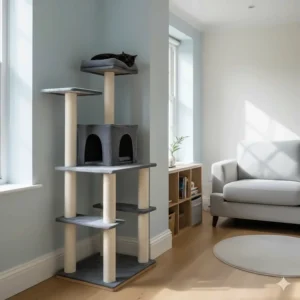
Multi-Cat Households: Special Considerations
Living with multiple cats adds complexity to choosing a floor to ceiling cat tree UK. In multi-cat households, high shelves or perches help reduce tension by giving each cat its own space to retreat to.
Territorial Requirements
Minimum platform rule: Provide at least one platform per cat, plus two extras. Three cats? Look for models with 5+ platforms.
Vertical segregation: Dominant cats often claim top perches. Ensure mid-level and lower platforms offer equally attractive features so subordinate cats don’t feel excluded.
Multiple access routes: Avoid designs with single climbing paths. Models offering varied routes up and down prevent one cat from blocking another’s access.
Feeding and Resource Distribution
Strategic positioning: Place the cat tree away from feeding stations. Cats don’t want to eat near their litter trays or relaxation zones.
Individual territories: In serious multi-cat conflicts, consider two smaller trees rather than one large one.
Escape routes: The FUKUMARU model excels here with its multiple levels offering quick escape options.
Success Stories from UK Multi-Cat Homes
A Manchester household with four cats reported their floor to ceiling tree “completely transformed the dynamics.” Previously competitive cats now share the space peacefully, each gravitating toward preferred heights.
Another Birmingham owner found her two territorial females finally coexisted after installing a 6-level tree. “They’ve established their own floors—Misty owns levels 1-3, whilst Bella rules the top three. Problem solved!”
Safety Considerations and Common Mistakes
Even the best floor to ceiling cat tree UK poses potential hazards if improperly used or installed. Let’s address the critical safety elements:
Installation Safety
Never skip wall brackets for heavy cats: Cats over 5kg generate significant force when jumping. Wall mounting isn’t optional—it’s essential.
Avoid placing near windows without guards: Cats can become overstimulated by outdoor activity and potentially crash through glass. Maintain safe distances.
Check ceiling integrity: Old plaster ceilings may not support tension systems properly. If unsure, consult a builder.
Keep away from heat sources: Radiators, fireplaces, and heating vents can overheat platforms, creating burns risk.
Usage Precautions
Supervise initial use: Watch your cat’s first several climbing sessions. Some overconfident felines overestimate their abilities.
Remove dangling collar tags: These can catch on sisal or platform edges, creating strangulation hazards.
Secure loose cables nearby: Cats might incorporate climbing over entertainment units into their route, potentially tangling in cables.
Monitor kitten access: Very young kittens (under 12 weeks) may struggle with tall structures. Introduce gradually.
Common Mistakes to Avoid
Installing on soft flooring: Carpet compresses under weight, reducing stability. Use wooden or tile floors where possible.
Ignoring manufacturer weight limits: Exceeding capacity risks platform collapse. If you’ve got a Maine Coon or Norwegian Forest cat, verify weight specifications carefully.
Positioning too close to furniture: Cats use nearby furniture as launching pads, creating unintended (and potentially dangerous) climbing routes.
Delayed maintenance: “I’ll tighten that screw next week” becomes “Why did the platform collapse?” Address issues immediately.
When to Replace vs. Repair
Replace if:
- Structural damage to support poles
- Multiple platforms showing cracks
- Ceiling tension system fails repeatedly
- Base becomes unstable despite tightening
Repair if:
- Sisal needs rewrapping (relatively simple DIY)
- Single platform shows wear
- Carpet covering deteriorates
- Minor stability issues resolve with tightening
Floor to Ceiling Cat Trees vs. Traditional Cat Furniture
Understanding the differences helps justify the investment:
| Feature | Floor to Ceiling | Traditional Cat Tree |
|---|---|---|
| Height | 210-300cm | 100-150cm typical |
| Floor space | Minimal (40-50cm base) | Larger footprint required |
| Stability | Ceiling-mounted (very stable) | Base-weighted (can topple) |
| Multi-cat capacity | Excellent (vertical segregation) | Limited (horizontal crowding) |
| Typical price | £70-£150 | £40-£100 |
| Lifespan | 3-5+ years | 1.5-3 years |
| Installation | 45-60 minutes | 20-30 minutes |
Why Spend More?
The £30-50 price premium for floor to ceiling models delivers:
- Double the height – Satisfies climbing instincts completely
- Superior stability – Ceiling mounting eliminates tipping risks
- Space efficiency – Vertical growth vs. horizontal sprawl
- Longevity – Better materials typically used
- Reduced furniture damage – Proper scratching outlets save sofas
When Traditional Might Suit Better
Low ceilings under 215cm: Some rooms simply can’t accommodate floor to ceiling models.
Extreme budget constraints: If £70 is genuinely unaffordable, a £40 traditional tree beats nothing.
Temporary housing: Planning to move soon? Simpler structures transport easier.
Senior or disabled cats: Lower structures with ramps might suit mobility-challenged felines better.
Understanding UK Pet Safety Standards
Unlike some pet products, cat trees don’t face mandatory UK safety testing. However, reputable manufacturers follow voluntary guidelines:
Material Safety
Quality models use:
- Non-toxic adhesives: Formaldehyde-free bonding
- Pet-safe dyes: No harmful chemical treatments
- Natural sisal: Untreated, chemical-free fibres
- Fire-resistant materials: Particularly important for platforms near radiators
Structural Requirements
Though not legally mandated, responsible manufacturers ensure:
- Platforms support minimum 15kg
- No sharp edges or protruding screws
- Secure attachment systems
- Stability testing with dynamic loads
Consumer Protection
UK buyers benefit from:
- Consumer Rights Act 2015: Products must match descriptions and be fit for purpose
- Amazon A-to-Z Guarantee: Protection for purchases through Amazon.co.uk
- Manufacturer warranties: Many brands offer 12-month guarantees
The Animal Welfare Act 2006 places a duty of care on pet owners to provide for their animals’ basic needs, including an appropriate environment in which to live. Whilst this doesn’t specifically mandate cat trees, it does establish that owners must ensure their pets can exhibit normal behaviour patterns—which for cats includes climbing.
Always purchase from reputable retailers. Suspiciously cheap models from unknown sellers often skip safety considerations.
Seasonal Considerations for UK Cat Owners
British weather patterns influence how cats interact with vertical space:
Winter Benefits
Heat rises: Top platforms become naturally warmer as hot air accumulates near ceilings. Cats instinctively seek these cosy spots during cold months.
Radiator positioning: If possible, position trees near (but not directly above) radiators. The rising warmth makes mid-level platforms particularly attractive.
Extended indoor time: Cats spend more hours indoors during dark, wet winter months. Vertical territory prevents boredom.
Summer Adjustments
Ventilation consideration: Ensure top platforms aren’t directly under skylight that creates greenhouse effects.
Cooling modifications: Some owners attach small battery-powered fans near top perches during heatwaves.
Reduced usage: Cats may prefer lower, cooler platforms in summer. This is normal behaviour.
Year-Round Positioning
Avoid direct sunlight: Prolonged sun exposure degrades materials and overheats platforms.
Consider seasonal light: Winter sun angles differ from summer. Choose spots with consistent, gentle natural light.
Climate control: Keep trees away from air conditioning vents that might create uncomfortable drafts.
Environmental Impact and Sustainability
As eco-conscious consumers, many UK buyers consider environmental factors:
Sustainable Materials
Natural sisal: Renewable resource, biodegradable, chemical-free processing.
FSC-certified wood: Some premium models use Forest Stewardship Council approved timber.
Recycled particle board: Better quality models incorporate post-consumer recycled content.
Longevity as Sustainability
The greenest cat tree is one that doesn’t need replacing. A £75 tree lasting 4-5 years beats purchasing three £30 structures that fail after 18 months.
UK waste statistics: Approximately 140,000 tonnes of pet products enter landfills annually. Choosing durable options reduces this burden.
Disposal Considerations
When your tree eventually needs replacing:
Sisal components: Can be composted (remove any synthetic backing first)
Wood/particle board: Many UK councils accept in garden waste collections if untreated
Metal hardware: Recyclable through household metal collection
Fabric coverings: Check local textile recycling schemes
Some innovative UK cat owners repurpose old trees into garden structures for outdoor cats or donate to animal shelters.
Frequently Asked Questions
❓ How stable are floor to ceiling cat trees for large cats?” answer-0=”✅ Quality models like the FUKUMARU support up to 65kg and remain remarkably stable even with heavy breeds like Maine Coons or Norwegian Forest cats. The ceiling-mounted design distributes weight between floor and ceiling, preventing the tipping issues common with traditional base-weighted trees. UK buyers with large cats consistently report excellent stability, provided proper installation and optional wall mounting for cats over 6kg…” image-0=”” headline-1=”h3″ question-1=”❓ Will a floor to ceiling cat tree damage my rental property ceiling?” answer-1=”✅ Most modern tension systems use soft rubber contact points that won’t mark or damage ceilings when properly installed. Unlike shelf brackets or wall-mounted units, they require no drilling or permanent fixtures. Always photograph the installation area beforehand for your tenancy deposit protection, and remove the tree before final inspection…” image-1=”” headline-2=”h3″ question-2=”❓ How do I stop my cat tree from wobbling?” answer-2=”✅ Wobbling typically indicates insufficient ceiling tension or loose platform connections. First, extend the tension rod another few turns—it should feel quite stiff. Check all platform screws monthly and tighten as needed. For persistent wobbling with heavy cats, use the included wall brackets to anchor at least two platforms to wall studs. Some UK buyers report trimming the extension pole slightly for tighter ceiling contact…” image-2=”” headline-3=”h3″ question-3=”❓ Can I use a floor to ceiling cat tree with sloped or vaulted ceilings?” answer-3=”✅ Unfortunately, most tension-mounted systems require relatively flat, horizontal ceiling surfaces to function safely. Vaulted cathedral ceilings or significant slopes prevent proper installation. However, if you have a sloped ceiling with one flat section, position the tree there. Alternatively, consider wall-mounted shelf systems designed specifically for angled ceilings…” image-3=”” headline-4=”h3″ question-4=”❓ What’s the best height spacing between platforms for older cats?” answer-4=”✅ Senior cats benefit from closer platform spacing—30-35cm apart rather than the standard 40-45cm. This reduces joint stress whilst still providing climbing exercise. Models like the FUKUMARU with multiple intermediate levels work well, or you can add aftermarket platform additions to existing trees. If your elderly cat struggles with climbing entirely, consider transitioning to ramp-based systems…” image-4=”” count=”5″ html=”true” css_class=””]
Conclusion: Transforming Your Home into a Vertical Cat Paradise
Choosing the right floor to ceiling cat tree UK transforms how your feline experiences their indoor environment. For indoor cats, the ability to climb is crucial to satisfying natural instincts whilst providing mental stimulation and physical exercise.
Whether you opt for the budget-friendly Pippa & Max’s Grey Cat Tree at £69.99 or splash out on the premium FUKUMARU 6-Level model at £149.99, you’re investing in your cat’s wellbeing. The vertical territory you create reduces stress, encourages healthy exercise, and often eliminates destructive behaviours like furniture scratching.
Remember the key considerations we’ve covered:
- Measure ceiling height precisely before purchasing
- Match the model to your cat’s age, size, and personality
- Budget for quality—cheap alternatives rarely last
- Install properly with wall mounting for heavy cats
- Maintain regularly to extend lifespan
The transformation I’ve witnessed in cats after introducing proper vertical space is genuinely remarkable. Anxious cats become confident. Bored cats become engaged. Destructive cats channel their energy appropriately.
Your cat isn’t being naughty when they scale your curtains—they’re following instincts honed over millions of years of evolution. Give them a proper outlet for those climbing urges, and everyone benefits. Your furniture stays intact, your cat stays healthy and happy, and you enjoy watching your feline friend embrace their inner tree-dwelling ancestor.
Ready to revolutionise your cat’s world? Any of the seven models we’ve reviewed will deliver excellent results. Choose based on your ceiling height, budget, and aesthetic preferences—then watch your cat’s eyes light up as they discover a whole new dimension to explore.
✨ Don’t Miss These Exclusive Deals!
🔍 Take your cat’s wellbeing to the next level with these carefully selected products. Click on any highlighted item to check current pricing and availability on Amazon.co.uk. These towers will help you create an enriching vertical environment your cat will absolutely love!
Recommended for You
- 7 Best Corner Cat Trees UK 2026 | Expert Reviews & Buying Guide
- Best Cat Tree for Small Flat UK: Space-Saving Picks 2026
- 7 Best Cat Tree for Large Cats UK 2026: Expert-Tested & Reviewed
Disclaimer: This article contains affiliate links. If you purchase products through these links, we may earn a small commission at no additional cost to you. Prices shown are approximate and may vary. All products featured are available on Amazon.co.uk and current as of January 2026.
✨ Found this helpful? Share it with your mates! 💬🤗
