
In This Article
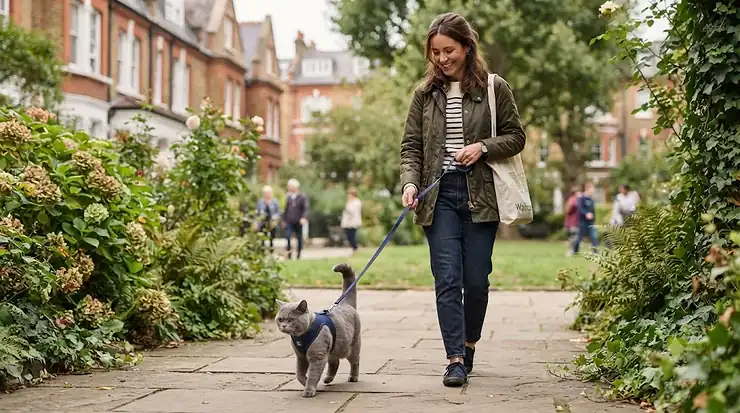
Somewhere between “she’ll never figure this out” and “she is currently three gardens away,” most cat owners discover the hard way that not every harness lives up to its label. An escape proof cat harness is meant to solve exactly that problem — a design built so a cat cannot wriggle, back out, or shimmy free the way they can from a loose collar or a badly fitted vest. But here’s the slightly awkward truth the marketing copy tends to skip: no harness is bulletproof against a truly determined, Houdini-brained cat. What genuinely exists is a spectrum of anti-escape engineering — dual adjusters, wrap-around vests, self-tightening chest panels — that makes escape dramatically less likely when the fit is right.
This guide exists because “escape proof” gets slapped on a lot of listings that don’t earn it. We’ve dug through real specs, real review patterns, and the design differences that actually matter, so you’re not gambling your cat’s safety on a product photo. Whether you’re after a jacket style escape proof cat harness for a nervous first-timer or a snug-fit cat body harness for an athletic escape artist, you’ll find a genuinely useful match here — plus the fitting and training know-how that most product pages simply won’t tell you. As Cats Protection points out, keeping the lead slack and letting your cat set the pace matters just as much as the harness itself, and we’ll come back to that theme throughout.
By the end, you’ll know which of the seven harnesses below suits a nervous kitten, a barrel-chested tomcat, or a cat who’s already proven Houdini had nothing on them — and you’ll understand exactly why.
Quick Comparison Table
| Harness | Style | Best For | Price Range |
|---|---|---|---|
| rabbitgoo Escape Proof Cat Harness | Wrap-around step-in vest | Kittens and first-time walkers | Under £15 |
| PetSafe Come With Me Kitty | 2-point nylon harness | Budget buyers, calm cats | Under £15 |
| Kitty Holster | Wraparound cotton vest jacket | Anxious or fabric-sensitive cats | £20–£30 range |
| Hepper Cat Harness and Leash Set | H/X-style velvet-mesh vest | Snug, escape-resistant everyday fit | £20–£30 range |
| OutdoorBengal Houdini Harness | Tactical self-tightening vest | Confirmed escape artists | £25–£40 range |
| Voyager Step-in Cat Harness | All-weather mesh step-in | Active outdoor cats | £10–£20 range |
| LupinePet H-Style Harness | Lightweight H-style webbing | Small cats, minimalist fit | Under £15 |
Looking across the table, the split isn’t really budget-versus-premium — it’s design philosophy. Step-in vests like the rabbitgoo and Voyager win on convenience for cats who hate anything going over their head, while wraparound jackets such as the Kitty Holster and OutdoorBengal Houdini trade a slightly fiddlier fit for genuinely harder-to-escape construction. The Hepper and LupinePet sit in between, proving that a snug H-style design doesn’t have to be flimsy to be simple.
💬 Just one click — help others make better buying decisions too!😊
Top 7 Escape Proof Cat Harnesses: Expert Analysis
Coverage here spans budget, mid-range and premium options, plus the specific styles readers search for by name — wrap-around, jacket-style, step-in and snug-fit body harnesses — so whatever shape suits your cat’s temperament, there’s a genuine option below.
1. rabbitgoo Escape Proof Cat Harness — wrap-around vest with dual-lock security
The standout here is the dual-lock system: high-grip hook-and-loop tape backed up by a quick-release buckle, so a single failure point doesn’t mean a runaway cat. rabbitgoo’s escape-proof range uses a wrap-around vest with a step-in leg entry, which sidesteps the classic “head-shy cat refuses to let anything go over its ears” problem entirely. The four-point adjustment lets you dial in the neck, chest and girth independently rather than relying on one elasticated strap doing all the work, and the mesh panel is genuinely breathable rather than the stiff pleather some budget brands use.
This is a rabbitgoo cat harness review worth taking seriously if your household includes a kitten or an anxious rescue cat: the soothing, snug wrap does a decent job of mimicking a calming hug rather than feeling like restraint, which matters enormously for cats who associate straps with stress. Rabbitgoo’s own customer feedback, aggregated across its review platform, sits around 4.6 out of 5 based on close to 100 verified reviews — solid, though not spotless. A recurring theme in that feedback is that the hook-and-loop adjusters can loosen gradually with heavy pulling, so owners of strong or persistent cats should check the fit every few minutes on early walks rather than assuming a morning adjustment holds all day. On the positive side, several reviewers mention it fitting kittens from around three months right through to adulthood on the smallest setting, which is decent value if your cat is still growing.
Pros:
- ✅ Step-in design avoids the over-the-head struggle entirely
- ✅ Dual-lock hook-and-loop plus buckle adds backup security
- ✅ Grows with kittens thanks to generous adjustment range
Cons:
- ❌ Hook-and-loop straps can loosen under sustained pulling
- ❌ Sizing runs slightly small — measure girth carefully first
At around £10-£15 for the full harness and lead set, this is genuinely strong value for a first harness, and the price point makes it easy to size up once without much financial sting.

2. PetSafe Come With Me Kitty — budget-friendly bungee-leash classic
What stands out about this one is the bungee leash, which absorbs sudden lunges rather than yanking straight back on the cat’s chest — a small mechanical detail that makes a real difference to comfort during those “a bird just flew past” moments. The two-point harness applies gentle pressure across the shoulders rather than the neck, which is the baseline safety feature any decent cat harness needs, and the nylon build is tough enough to survive a determined chewer having a go at the strap.
Independent buyer’s guides consistently flag this as the go-to budget option, and it’s easy to see why: it’s been on the market for years, which means the fit quirks are well documented and the sizing chart is reliable rather than guesswork. It suits calmer, more compliant cats better than genuine escape artists — the simple two-point design gives less structural resistance to a cat that’s actively trying to back out of it, so it’s not the first choice if your cat has form for slipping collars. Aggregated reviews describe it as comfortable and reasonably durable, with the most common complaint being that the neck loop needs to be snug (not just “on”) for the anti-escape properties to actually kick in.
Pros:
- ✅ Bungee leash cushions sudden pulls and lunges
- ✅ Pressure sits on shoulders, not the throat
- ✅ Well-documented sizing after years on the market
Cons:
- ❌ Two-point design offers less resistance to determined escapers
- ❌ Needs a genuinely snug neck fit to work as intended
Typically sold under £15, it’s an accessible entry point if you’re not yet sure whether your cat will tolerate a harness at all.
3. Kitty Holster — cotton wraparound jacket for fabric-sensitive cats
The soft 100% cotton muslin lining is the headline feature, and it solves a problem most mesh harnesses create: fur getting rubbed, pinched, or matted along the strap lines. Kitty Holster wraps securely around the chest and shoulders using wide, industrial-strength Velcro, distributing pressure evenly with no single pinch point — the vest genuinely feels closer to a hug than a harness, which is precisely the point for cats who tense up at anything strappy.
This is the jacket style escape proof cat harness most independent buyer’s guides point nervous owners toward, and for good reason: the wide-girth wraparound construction makes it “significantly harder for cats to slip out compared to H-style harnesses,” according to the manufacturer’s own engineering claims, though it’s worth noting no design is escape-proof for every cat regardless of build quality. It’s handmade in small batches rather than mass-produced, so stitching quality tends to be more consistent than what you’ll find on ultra-budget alternatives, and the design keeps the area between the front legs open, avoiding the bulk that makes some vest-style harnesses feel restrictive. The trade-off is fewer colour options and a single core silhouette — if your cat wants a rainbow of choices, look elsewhere.
Pros:
- ✅ Cotton lining protects coat and skin from rubbing
- ✅ Wide Velcro wraparound resists backing-out escapes
- ✅ Even pressure distribution avoids choking or pinching
Cons:
- ❌ Limited colour range compared with mass-market rivals
- ❌ Premium price for what is a simple silhouette
Sitting in the £20-£30 range, it’s a mid-to-premium pick that earns its price through fabric quality and construction rather than flashy extras.
4. Hepper Cat Harness and Leash Set — reinforced H/X-style vest with climbing-rope lead
Hepper’s standout is the hardware: double aluminium D-rings and reinforced stitching on a step-in vest, paired with a genuinely tough leash made from thick nylon climbing rope with a 360-degree rotating clamp. That rotating clamp matters more than it sounds — it stops the lead twisting and tightening awkwardly mid-walk, which is a surprisingly common source of cat discomfort that owners rarely think to check.
Built from premium velvet fabric and breathable mesh with soft edging, this sits closer to what shoppers mean by a snug-fit cat body harness — the “H” or “X” shape hugs the back of the front legs specifically to stop a cat squeezing its shoulders through the gap, which is the classic escape route for slim or flexible cats. Buyer’s guide consensus repeatedly ranks it “best overall” for escape resistance, citing the combination of adjustable straps and reflective stitching for visibility on evening walks. The catch, echoed across several review roundups, is that if it isn’t fitted precisely per the sizing instructions, the escape-resistant properties simply don’t apply — this harness rewards owners who take five minutes with a tape measure rather than eyeballing it.
Pros:
- ✅ Double aluminium D-rings for genuinely strong hardware
- ✅ Rotating clamp leash prevents twisting and tangling
- ✅ Hugs the front-leg gap where slim cats slip out
Cons:
- ❌ Only true escape-resistant if sized and fitted precisely
- ❌ Colour range limited on the smallest sizes
Priced around £20-£30, it’s positioned as a considered mid-range investment rather than an impulse buy, and the hardware quality reflects that.
5. OutdoorBengal Houdini Escape Proof Harness — self-tightening tactical vest
The self-tightening chest pad is the genuine innovation here: rather than staying static, it actively cinches tighter the moment a cat tries to back out of it, which independent testers have called the most escape-resistant mechanism among comparable harnesses. That’s a meaningfully different approach from most of the market, which relies purely on a fixed snug fit rather than a responsive one.
This tactical-style vest is squarely aimed at what the name promises — a Houdini-proof cat walking jacket for cats with a genuine track record of escaping. It pairs the self-tightening panel with a 50-inch no-tangle carabiner leash, and the adjustable straps are wider than most competitors, spreading pressure across a larger surface area for cats that pull hard against resistance. Reviewers in the premium bracket consistently note it as the pick for “determined escape artists” specifically, rather than a general-purpose harness for placid cats who’d be fine in something simpler. It runs slightly bulkier than mesh step-in designs, so it suits confident, sturdier cats better than tiny kittens who might find the structured panel overwhelming at first.
Pros:
- ✅ Self-tightening panel actively resists backing-out attempts
- ✅ Wide straps distribute pressure for cats that pull hard
- ✅ No-tangle carabiner leash suits confident outdoor cats
Cons:
- ❌ Bulkier fit may overwhelm very young kittens
- ❌ Premium pricing reflects the specialised mechanism
At £25-£40, it’s the most expensive pick on this list, but for a cat with an established escape history, the mechanism arguably justifies the outlay.
6. Voyager Step-in Cat Harness — all-weather mesh for active outdoor cats
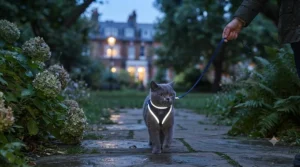
The all-weather mesh construction is the headline draw, holding up to damp grass, muddy paws and repeated outdoor use without the fabric degrading the way cheaper polyester blends can. The step-in lock design means your cat walks into the harness rather than having anything pulled over its head, and the reflective stitching adds a genuine safety margin for dusk or early-morning walks.
Positioned in the mid-range, this one leans toward active, outdoor-focused cats who’ll be wearing the harness regularly rather than for the occasional vet trip. The 5-foot neoprene-handle leash is a nice practical touch — a padded grip matters more than people expect once you’re holding a lead for twenty minutes on a windy afternoon. Community buyer discussions and deal forums consistently flag it as good value relative to build quality, with the main gripe being that “escape-proof” claims should always be read as “escape-resistant when properly fitted,” since a determined enough cat can still find weaknesses in any strap-based system given time and motivation.
Pros:
- ✅ All-weather mesh withstands regular outdoor use
- ✅ Step-in lock avoids over-the-head fitting stress
- ✅ Neoprene handle leash is genuinely comfortable to hold
Cons:
- ❌ “Escape-proof” branding oversells what any strap harness can guarantee
- ❌ Reflective stitching is less bright than dedicated safety vests
Typically priced £10-£20, it’s a sensible middle-ground choice for owners wanting a durable everyday harness without premium pricing.
7. LupinePet H-Style Harness — lightweight, handcrafted minimalist fit
The jacquard-woven nylon is what sets this apart — the pattern is woven directly into the webbing rather than printed on top, so it won’t fade, crack or rub off the way screen-printed straps eventually do. It’s a genuinely simple H-style design: one loop around the neck, one around the girth, connected by a short length of webbing, with a steel D-ring for the lead attachment.
This is the lesser-known but high-quality alternative worth knowing about, particularly for a snug-fit cat body harness that stays lightweight rather than padded or bulky. Handmade in small batches, it suits cats who find vest-style harnesses too warm or restrictive, and the narrow half-inch webbing is genuinely less noticeable to a cat that’s sensitive to anything covering its body. The obvious trade-off against wraparound vests is structural: an H-style harness relies entirely on correct girth-loop tightness to prevent slipping, so it demands more careful, repeated fit-checking than a wraparound jacket that inherently covers more surface area. It’s best suited to smaller, lighter cats rather than powerfully built ones who might test the narrower webbing’s limits.
Pros:
- ✅ Jacquard weave resists fading and cracking long-term
- ✅ Ultra-lightweight fit suits heat-sensitive or timid cats
- ✅ Handcrafted construction with genuine attention to stitching
Cons:
- ❌ Offers less structural backup than wraparound designs
- ❌ Requires more frequent fit-checking to stay secure
Priced under £15, it’s an affordable, no-frills pick — just budget the extra few minutes each walk to double-check the girth loop hasn’t loosened.
Anti-Escape Cat Harness Features That Actually Matter
Not every feature marketed as “anti-escape” earns the label. Here’s what genuinely reduces the odds of a cat slipping free, ranked by real-world impact:
- Multi-point adjustment over single-strap elastic. A harness you can tune independently at the neck, chest and girth fits actual cat anatomy far better than one relying on stretch alone.
- Wide surface-area contact. Vest and wraparound designs spread pressure across more of the body, giving a cat less leverage to twist free than a thin single strap.
- Backup fastenings. Dual-lock systems — hook-and-loop paired with a buckle, for instance — mean one loosened point doesn’t equal a full escape.
- Step-in vs over-the-head entry. This isn’t strictly an anti-escape feature, but a cat that fights the fitting process is more likely to be tense and squirming when you’re outdoors — exactly when a poor fit becomes dangerous.
- Chest-hugging shape at the front legs. The classic escape route for slim cats is backing out through the front-leg gap; harnesses shaped to hug that area specifically close off the weak point.
What most buyers overlook is that a cat harness that cats can’t escape from on paper can still fail in practice if it’s the wrong size. Every reviewed harness above performs better or worse almost entirely based on fit — the spec sheet won’t tell you this, but user reports across every brand consistently trace escapes back to a loose girth strap rather than a fundamentally flawed design.
Jacket-Style vs Wrap-Around vs Snug-Fit: Which Anti-Escape Design Wins?
| Design | Example | Escape Resistance | Comfort for Nervous Cats |
|---|---|---|---|
| Jacket / wraparound vest | Kitty Holster, OutdoorBengal Houdini | High — wide contact area, few weak points | High — feels like a hug, not a strap |
| Snug-fit H/X-style body | Hepper, LupinePet | Moderate-High if sized precisely | Moderate — lightweight but less forgiving |
| Step-in mesh vest | rabbitgoo, Voyager | Moderate — good if dual-locked | High — no over-the-head stress |
Based on the spec comparison, jacket-style and wraparound designs consistently edge out slimmer H-style harnesses on raw escape resistance, simply because there’s more fabric contact and fewer single points of failure. That said, a snug-fit cat body harness like the Hepper or LupinePet isn’t automatically the weaker choice — for a lean, agile cat that overheats in bulkier fabric, a precisely sized H-style harness genuinely outperforms a loosely fitted jacket. The honest takeaway is that “best design” is cat-specific: a nervous kitten benefits most from a secure wrap-around cat harness that feels calming, while a confident, athletic cat might do better in something minimal that doesn’t restrict its natural movement.
How to Choose an Escape Proof Cat Harness
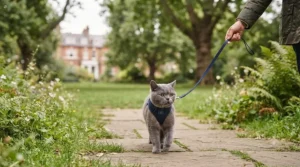
What is an escape proof cat harness? It’s a harness engineered with reinforced, multi-point construction — wraparound vests, dual-lock fastenings, or self-tightening panels — specifically designed to prevent a cat backing out, slipping free, or wriggling loose during outdoor walks, unlike standard single-strap harnesses.
Choosing the right one comes down to seven practical checks:
- Measure girth and neck before shopping. A harness bought on guesswork is the single biggest cause of “escape-proof” harnesses that aren’t.
- Match the style to your cat’s temperament. Nervous cats generally do better in wraparound vests; confident, athletic cats often prefer lighter H-style designs.
- Check for multi-point adjustment. Independent neck, chest and girth adjusters beat a single elasticated strap every time.
- Look for backup fastenings. Dual-lock systems reduce single-point failure risk significantly.
- Prioritise breathable fabric for warm weather. Mesh panels prevent overheating on longer walks, especially in summer.
- Read aggregated review themes, not star ratings alone. A 4.5-star average can still hide a recurring sizing complaint worth knowing about.
- Buy from a size chart, and size up if your cat is between measurements. A slightly loose harness with a well-fitted adjustment range is safer than one that’s genuinely too small.
Common Mistakes When Buying an Escape Proof Cat Harness
Even well-intentioned owners trip up in predictable ways. Here’s honest commentary on where it goes wrong:
Buying by breed averages instead of actual measurements. “Medium” means different things across brands — a tape measure beats a size guess every time.
Assuming mesh equals comfort for every cat. Some cats find synthetic mesh scratchy against bare skin; a cotton-lined option like the Kitty Holster solves this specific problem.
Skipping the indoor trial period entirely. A harness should be introduced with treats and praise indoors before any outdoor walk, ideally practised in a secure garden before venturing further afield, according to PDSA guidance on lead-walking cats — skip this step and even the best-engineered harness meets a panicking cat.
Ignoring the leash attachment point. A lead clipped to the back distributes pull more safely than one attached near the neck.
Assuming “escape-proof” branding removes all risk. Every product reviewed here performs best with correct sizing and supervised introduction — no harness replaces attentive handling.
Practical Usage Guide: Getting Your Cat Used to a Houdini-Proof Harness
Even the most secure jacket won’t help if your cat associates it with panic. Here’s the setup and first-30-days routine that actually works:
Week one — familiarity, not fitting. Leave the harness near your cat’s bed or feeding spot so they can sniff and investigate on their own terms, with no pressure to wear it yet.
Days 5-10 — brief, rewarded contact. Drape the harness over your cat for a few seconds, followed immediately by a treat. Build up gradually rather than forcing a full fitting on day one.
Days 10-14 — full fitting, no leash. Once your cat tolerates the harness being worn for a few minutes calmly, fasten it properly and let them wander indoors, checking you can slip two fingers underneath comfortably.
Days 15-20 — attach the leash, stay indoors. Let the leash trail loosely behind your cat in a room with nothing it could snag on, distracting with play or treats rather than pulling.
Days 21-30 — first supervised outdoor session, garden only. Keep it under ten minutes, in a familiar, enclosed space, and let your cat set the pace entirely.
A common first-30-days mistake is rushing straight to a street walk. Every credible source on this topic — from rescue charities to veterinary bodies — agrees that a rushed introduction is the number one reason otherwise well-fitted harnesses “fail,” when the real issue was a panicked cat backing out under stress rather than a design flaw.
Real-World Scenarios: Matching Cats to Harnesses
The nervous rescue kitten. If you’ve recently adopted a shy three-month-old who startles at loud noises, choose a wraparound step-in like the rabbitgoo, which avoids over-the-head fitting and mimics a calming hug rather than a restrictive strap.
The confident garden explorer. If your cat already free-roams a secure garden and you simply want lead control near a boundary, a lightweight H-style option like the LupinePet avoids overheating during longer sessions.
The proven escape artist. If you’re a cat owner whose previous harness has already been outwitted once or twice, the self-tightening OutdoorBengal Houdini or the reinforced Hepper are the two picks genuinely built for that specific problem.
The budget-conscious first-timer. If you’re not yet sure your cat will tolerate a harness at all and don’t want to gamble £30 on finding out, the PetSafe Come With Me Kitty offers a low-risk way to test the water.
Problem → Solution: Fixing Common Escape Attempts
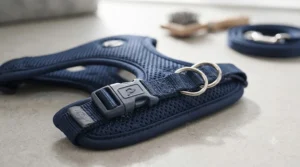
Problem: Cat backs out through the front legs. Solution: switch to a chest-hugging H/X-style like the Hepper, specifically shaped to close that gap.
Problem: Cat slips free during a sudden panic (loud noise, passing dog). Solution: a dual-lock wraparound like the rabbitgoo or self-tightening OutdoorBengal Houdini resists exactly this kind of frantic backward pull.
Problem: Harness loosens gradually over a long walk. Solution: build in a two-minute fit-check every ten minutes, and favour multi-point adjusters over single elastic straps.
Problem: Cat refuses to move once harnessed, freezing up. Solution: return to indoor training rather than pushing forward outdoors — watch for a tense, hunched body, dilated pupils or flattened ears as signs to head straight home, as Countryfile’s expert Q&A advises.
Problem: Overheating on warm-weather walks. Solution: switch to a breathable mesh design like the Voyager or lightweight LupinePet, and keep summer walks shorter.
Long-Term Cost & Maintenance
A £10 harness that needs replacing every few months isn’t necessarily cheaper than a £30 one that lasts years — the real comparison is cost-per-wear, not sticker price. Budget nylon and polyester harnesses like the PetSafe Come With Me Kitty typically show wear at the stitching after eighteen months to two years of regular use, while reinforced options like the Hepper, with its aluminium hardware, and the cotton-built Kitty Holster tend to outlast that by a considerable margin thanks to sturdier materials.
Maintenance is straightforward across the board: most of these harnesses are machine-washable on a gentle cycle, though air-drying is safer than tumble-drying for anything with Velcro, since heat can degrade the hook-and-loop grip over time. Budget for replacing the leash before the harness itself in most cases — the clip and rotation point take the most repeated mechanical stress. Factoring in an average two-to-three-year lifespan against upfront cost, the mid-range and premium picks here — Hepper, Kitty Holster, OutdoorBengal Houdini — generally work out better value per year of ownership than repeatedly replacing a £10 budget harness that’s degraded.
Safety, Regulations & Microchipping Compliance Guide
A harness is only one part of a safe outdoor routine. Since 10 June 2024, it’s been a legal requirement in England to microchip a cat older than 20 weeks under the Microchipping of Cats and Dogs (England) Regulations 2023, and owners must keep their contact details up to date with an approved database — genuinely essential if a lead is ever dropped mid-walk. The regulations themselves set out standards for the microchips used and the conditions database operators must meet, so it’s worth checking your provider is properly authorised.
Beyond the legal side, the safety basics bear repeating: never attach a lead directly to a collar, since cats can slip collars easily or injure their neck under sudden tension. Always supervise outdoor sessions fully — a harnessed cat left unattended even briefly is still at risk from traffic, other animals, or simple panic. Vaccination status matters too; most veterinary guidance recommends avoiding outdoor harness walks until a kitten’s full vaccination course is complete, generally around six months of age.
Cat Harness vs Traditional Collar & Lead
| Factor | Harness | Collar + Lead |
|---|---|---|
| Neck injury risk | Low — pressure spread across chest/shoulders | High — direct pressure on throat |
| Escape risk | Low-moderate with correct fit | High — cats slip collars easily |
| Comfort for long walks | Higher with breathable fabric | Lower — concentrated pressure point |
| Best For | Any cat being walked outdoors regularly | Not recommended for lead attachment |
The analysis here is fairly clear-cut: a properly fitted harness distributes force across the shoulders and chest rather than the throat, avoiding the choking risk collars carry when used with a lead. Collars still have a role for ID tags, but as a lead attachment point, every credible welfare source agrees they’re the wrong tool — the risk of slipping free, combined with potential neck injury, makes a dedicated cat harness the only sensible choice for walks.
Features That Actually Matter (And Those That Don’t)
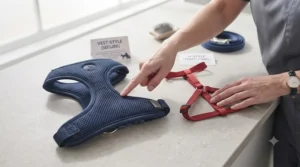
Matters: multi-point adjustment. Independent neck, chest and girth control beats a single elastic strap for genuine fit precision.
Doesn’t matter much: colour range. Nice to have, irrelevant to escape resistance — don’t let a favourite shade override a better-fitting design.
Matters: reflective stitching. Genuinely useful for dawn, dusk or evening walks, and cheap to include, so it’s worth prioritising where available.
Doesn’t matter much: “tactical” branding. Sounds impressive, but a well-engineered wraparound vest without the aesthetic still performs the same underlying function.
Matters: leash attachment point and hardware quality. A rotating clamp and reinforced D-ring prevent tangling and reduce mechanical wear far more than cosmetic extras do.
Frequently Asked Questions
❓ Is any cat harness truly 100% escape proof?
❓ How tight should an escape proof cat harness be?
❓ What's the best jacket style escape proof cat harness for kittens?
❓ Can I leave a cat harness on all day?
❓ How do I know if my cat harness size is correct?
Conclusion
There’s no single “best” escape proof cat harness — there’s only the best one for your specific cat, and that comes down to temperament, build and how much fabric your particular Houdini actually needs to stay put. Nervous first-timers tend to do best in a wraparound vest like the rabbitgoo or Kitty Holster, athletic cats often prefer the minimalism of the LupinePet, and confirmed escape artists deserve the reinforced engineering of the Hepper or OutdoorBengal Houdini. The PetSafe Come With Me Kitty and Voyager sit comfortably in between, covering most everyday walking needs without asking you to spend a fortune finding out what works.
Whichever you choose, the harness itself is only half the equation — patient, treat-led introduction and a properly measured fit do more for genuine escape resistance than any single design feature. Get both right, and outdoor walks become something your cat actively looks forward to, rather than something to plot an escape from.
✨ Don’t Miss These Exclusive Deals!
🔍 Take your outdoor cat walks to the next level with these carefully selected harnesses. Click on any highlighted item to check current pricing and availability on Amazon. These picks will help you create safe, stress-free adventures your cat will genuinely enjoy!
Recommended for You
- Designer Cat Collar: 7 Gorgeous Picks Worth Buying in 2026
- Reflective Cat Collar UK: 7 Best Hi-Vis Picks for 2026
- 7 Best Apple AirTag Cat Collar Holders in 2026 (UK)
Disclaimer: This article contains affiliate links. As an Amazon Associate, I earn from qualifying purchases. If you purchase products through these links, we may earn a small commission at no additional cost to you.
✨ Found this helpful? Share it with your friends! 💬🤗
