
In This Article
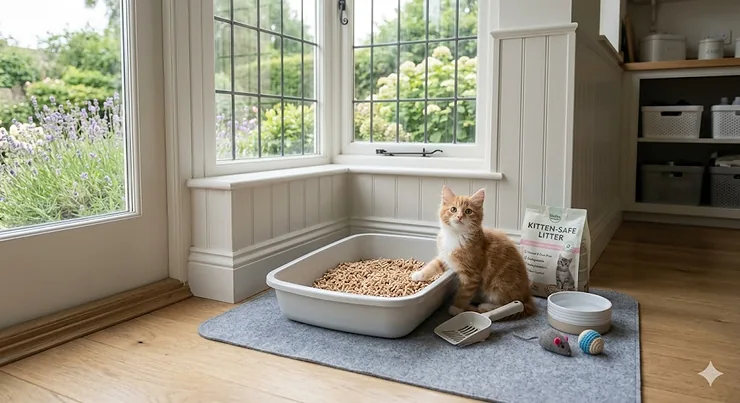
There’s a particular kind of panic that hits new kitten owners around hour three. The cardboard carrier is empty, the kitten is hiding behind the sofa, and you suddenly remember you forgot the single most important purchase on the list: litter for kittens. Food, toys, and that ridiculously expensive scratching post can wait. The litter tray cannot.
Kittens are tiny, curious, and — let’s be honest — a bit gormless when it comes to working out what’s edible and what isn’t. That’s why the best litter for kittens isn’t necessarily the one your neighbour swears by for their twelve-year-old moggy. Young cats need something soft underfoot, low in dust, and safe if a stray granule ends up in their mouth (and it will).
Below, I’ve rounded up seven options widely available on Amazon.co.uk, from budget-friendly paper litters to premium clumping formulas, with honest commentary on what works in real British homes — damp winters, tiny utility rooms, and all. As an Amazon Associate, I earn from qualifying purchases, which helps keep this site running at no extra cost to you.
Quick Comparison: Litter for Kittens at a Glance
| Product | Litter Type | Clumping? | Best For | Price Range |
|---|---|---|---|---|
| Catsan Hygiene | Mineral | No | New kittens, sensitive tummies | £8–£14 |
| Breeder Celect Paper | Recycled paper | No | Very young kittens, post-vet care | £10–£20 |
| Catit Go Natural Pea Husk | Plant-based | Yes | Odour control, multi-cat homes | £10–£15 |
| FUKUMARU Tofu Litter | Tofu/corn | Yes | Flushable, eco-conscious owners | £15–£25 |
| Nature’s Calling Walnut | Walnut shell | Yes | Budget eco-friendly clumping | £10–£18 |
| Sanicat Aloe Vera | Mineral | Yes | All-rounder, good odour control | £8–£15 |
| World’s Best Cat Litter | Corn-based | Yes | Premium long-lasting performance | £18–£30 |
A quick glance tells its own story: the cheapest options here are the non-clumping ones, which makes sense — clumping litter generally costs more to produce. But for kittens under around twelve weeks old, that’s not necessarily a downside. Non-clumping litters like Catsan and Breeder Celect are the ones vets most often recommend for the youngest cats, since there’s nothing for a curious kitten to swallow that expands dramatically in the gut. If your kitten is a little older and you’re after odour control without the safety concerns, the plant-based clumping options (pea husk, tofu, walnut) tend to strike the best balance.
💬 Just one click — help others make better buying decisions too! 😊
✨ Don’t Miss These Exclusive Deals!
🔍 Ready to sort your kitten’s litter tray? Click through to check current pricing and availability on Amazon.co.uk — these picks are a solid starting point whatever your budget.
Top 7 Litter for Kittens — Expert Analysis
1. Catsan Hygiene Cat Litter
Catsan has been the default “ask your vet” recommendation for decades, and there’s a reason it’s still everywhere on the shelves of British supermarkets and on Amazon.co.uk. This is a non-clumping mineral litter made from quartz, sand, and lime, designed to lock away moisture rather than form clumps.
For kittens, that non-clumping nature is the whole point — if a clumping litter swells in a tiny digestive system, it can cause real problems, but Catsan’s fine granules simply absorb and sit there until you change the tray. It’s white, so you can actually see when it needs changing (unlike grey clay litters, where everything blends into a murky mess after day three). UK reviewers consistently praise its odour control, though a fair few mention it does track a little around the house — handy to know if your kitten’s tray sits on laminate flooring near the kitchen.
✅ Trusted, vet-recommended choice
✅ Excellent odour absorption
✅ Easy to spot when it needs changing
❌ Some tracking reported
❌ Heavier bags (10–18L) can be awkward to carry
Price & verdict: Around £8–£14 depending on bag size. For peace of mind with a very young kitten, this is hard to beat.
2. Breeder Celect All-Natural Cat Litter
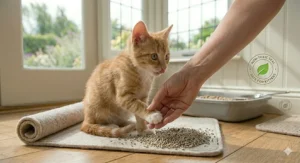
Made from 99% recycled paper, Breeder Celect (sold under the Breeder’s Choice name in some listings) is the litter most often recommended for kittens under eight weeks, nursing queens, or any cat recovering from neutering — vets frequently suggest paper litter for the latter because it’s soft and won’t stick to stitches.
What most new owners overlook is just how forgiving paper litter is on tiny paws. There’s no dust cloud when you pour it, no sharp mineral edges, and if your kitten does have a nibble, it’s about as harmless as eating a bit of cardboard (not ideal, but not an emergency either). It’s non-clumping, so you’ll be doing a full tray change every few days rather than spot-cleaning — a bit more effort, but worth it during those early weeks. UK customers regularly mention it’s a lifesaver for kittens recovering from procedures.
✅ Ultra-soft and gentle on paws
✅ Virtually dust-free
✅ Biodegradable and compostable
❌ Non-clumping means more frequent full changes
❌ Some find the texture too light, leading to scatter
Price & verdict: Roughly £10–£20 for 10–30L bags. A genuinely sound choice for the first few weeks home.
3. Catit Go Natural Pea Husk Clumping Cat Litter
This one’s a bit of a dark horse. Made from pea husks rather than clay or minerals, Catit Go Natural clumps on contact with moisture while staying almost entirely dust-free — Catit claims 99.9%, and from the reviews, that seems roughly accurate.
The vanilla scent is subtle rather than the eye-watering “fresh linen” blast you get from some supermarket litters, which matters in smaller British homes where the litter tray often lives in the bathroom or under the stairs, a few feet from where you’re trying to relax. Because it’s plant-based and lighter than mineral litter, it’s gentler if a kitten paws through it enthusiastically (and they all do). The clumping action also means less frequent full tray changes once your kitten is a bit older and reliably using the tray — generally from around 12 weeks onwards, once they’re past the highest-risk ingestion stage.
✅ Plant-based and dust-free
✅ Decent clumping with mild scent
✅ Lightweight bags, easier to carry up flats’ stairs
❌ Pricier per litre than mineral litters
❌ Best suited to slightly older kittens, not very young ones
Price & verdict: Around £10–£15 for a 5.6kg pack. Good middle ground once your kitten’s a little more grown up.
4. FUKUMARU Tofu Cat Litter
Tofu litter has had a moment in the UK over the past couple of years, and FUKUMARU’s version is one of the more widely stocked on Amazon.co.uk, often appearing as an “Amazon’s Choice” for tofu litter searches.
The appeal is straightforward: it’s made from soybean by-products, clumps quickly, and — within sensible limits — is flushable, which is genuinely useful if your bathroom is the only room in the flat with a window near the litter tray. What the packaging won’t tell you is that tofu litter is noticeably lighter than mineral litter, so if your kitten is the type to dig with great enthusiasm (most are), you’ll get more scatter around the tray edges. It’s one of the few litter types considered low-risk if accidentally eaten in small amounts, since it’s essentially food-grade material — a real comfort during the “everything goes in the mouth” phase.
✅ Flushable in small amounts
✅ Low-risk if nibbled
✅ Strong odour control for its weight
❌ Lightweight texture means more scatter/tracking
❌ Older British plumbing may not appreciate frequent flushing
Price & verdict: Roughly £15–£25 depending on pack size — sits in the mid-to-premium bracket, but the safety profile justifies it for nervous first-time owners.
5. Nature’s Calling Walnut Shell Cat and Kitten Litter
Made from reclaimed walnut shell lining, Nature’s Calling is one of the better-value clumping litters going, sold in bulk multipacks (commonly 12–13.5kg made up of several smaller bags, which is handy for storage in a typical UK kitchen cupboard).
It clumps within about fifteen minutes of contact with liquid, which makes spot-cleaning genuinely quick — useful on those mornings when you’re already running late for the bus. The trade-off, and UK reviewers are pretty consistent on this, is tracking. Walnut shell granules have a habit of hitching a ride on paws and ending up scattered near the tray, sometimes for a surprising distance. If your kitten’s tray is on carpet rather than tile or laminate, you may want a litter mat as a companion purchase. It’s biodegradable and flushable in small quantities too, ticking the eco box for owners trying to cut down on landfill waste.
✅ Fast clumping (around 15 minutes)
✅ Biodegradable, sustainable material
✅ Good value in bulk multipacks
❌ Noticeable tracking reported by many UK buyers
❌ Mixed reviews on bag consistency
Price & verdict: Around £10–£18 for large multipacks — one of the best-value clumping options here.
6. Sanicat Clumping Cat Litter with Aloe Vera
Sanicat is a familiar name on UK pet shop shelves, and its clumping mineral litter with aloe vera is a sensible all-rounder. It’s made from natural minerals, clumps reliably, and the aloe vera addition is mild enough that it doesn’t read as an artificial “fragrance bomb” the way some scented litters do.
For kittens specifically, this sits in a slightly awkward middle ground — it’s a clumping mineral litter, so it’s not the first choice for very young kittens still in the “taste everything” stage, but for kittens past around three months who are confidently using the tray, it offers solid day-to-day performance. UK reviewers tend to rate it for odour control, particularly in smaller flats where ventilation isn’t always brilliant. The 4L and 10L bag sizes are manageable for anyone living somewhere without a car boot to lug 20kg sacks home in.
✅ Reliable clumping and odour control
✅ Mild aloe vera scent, not overpowering
✅ Manageable bag sizes for flats
❌ Mineral clumping litter isn’t ideal for very young kittens
❌ Can be dustier than plant-based alternatives
Price & verdict: Around £8–£15. A steady, no-nonsense option once your kitten’s past the riskiest early weeks.
7. World’s Best Cat Litter, Comfort Care (Unscented)
The most premium pick on this list, World’s Best Cat Litter is made from whole-kernel corn and has built something of a cult following among UK cat owners willing to pay more for noticeably better clumping and odour control.
The Comfort Care formula is unscented, which I’d argue is the better choice for kittens — their sense of smell is still developing, and a heavily perfumed litter can occasionally put a fussy kitten off the tray altogether (the last thing you want when you’re trying to establish good habits). It’s marketed as 99% dust-free and flushable, and in practice the clumps hold together impressively well even after sitting for a day or two — a genuine time-saver if you’re juggling a kitten alongside work and, let’s face it, everything else. It’s imported, so you’ll occasionally see slightly higher prices or stock gaps on Amazon.co.uk compared with US listings, but UK stock is generally reliable.
✅ Excellent clumping that holds up over time
✅ Unscented — kinder on developing senses
✅ Strong dust-free reputation
❌ One of the pricier options per litre
❌ Occasional UK stock fluctuations for an imported product
Price & verdict: Roughly £18–£30. If budget allows, this is the “set and forget” option for slightly older kittens.
Practical Usage Guide: Setting Up Your Kitten’s Litter Tray Right
Getting the tray itself right matters as much as the litter inside it. For a young kitten, Battersea’s guidance suggests starting with a small, low-entry tray and only moving up to a full-sized adult tray once your kitten can climb in confidently — anything taller than the kitten’s shoulder height makes climbing in and out a faff, and a kitten that finds the tray awkward may simply decide the laundry basket is a better option. The RSPCA recommends one litter tray per cat, plus a spare — so for a single kitten, that’s two trays minimum, placed in quiet, low-traffic spots away from food and water bowls.
In a typical British home — think terraced houses with limited floor space, or flats where the “spare room” is really just a wide hallway — that can feel like a lot of trays to find room for. A practical compromise: one tray in a quiet bathroom or utility area, and a second tucked into a corner of a bedroom landing. Avoid damp spots like under-stairs cupboards in older properties, since persistent dampness can make litter clump prematurely and smell musty faster than it should.
When introducing litter, fill the tray to a depth of about 5cm — deep enough for digging, shallow enough that a small kitten doesn’t struggle. If you’re switching litter types (say, moving from paper to a plant-based clumping litter as your kitten grows), do it gradually over about a week, mixing the new litter in increasing amounts, so the change in texture and smell doesn’t put your kitten off using the tray altogether.
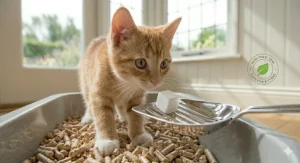
Real-World Scenarios: Matching Litter to Your Kitten’s Stage
The brand-new arrival (8–12 weeks old). If you’ve just brought home a kitten from a breeder or rescue in, say, a small flat in Manchester, stick with Breeder Celect Paper or Catsan Hygiene for the first few weeks. Both are non-clumping and low-risk if your kitten decides litter is a snack — a genuine concern at this age, and one most first-time owners simply don’t think about until it’s nearly too late.
The confident explorer (3–6 months old). A family in a semi-detached house in Leeds with a kitten who’s now fully litter-trained and a bit of a digger might find Nature’s Calling Walnut or Catit Go Natural Pea Husk strikes a good balance — decent clumping for easier daily maintenance, without the higher cost of premium corn litters, and gentle enough for paws that are still developing their pads.
The multi-pet household. If you’re juggling a kitten alongside an adult cat (and maybe a dog who thinks the litter tray is a snack bar — yes, that happens), odour control becomes the priority. Sanicat Aloe Vera or World’s Best Cat Litter both perform well here, with the corn-based option edging ahead for households where daily scooping sometimes slips to every other day during busy weeks.
How to Choose Litter for Kittens in the UK
- Check the clumping question first. Under roughly 12 weeks, non-clumping (paper or mineral) is generally the safer bet if there’s any chance of ingestion.
- Think about your flooring. Tracking is a real issue with walnut and pea husk litters — tile or laminate copes better than carpet.
- Consider where the tray lives. In a small flat, dust matters more than it would in a house with good ventilation — prioritise low-dust formulas.
- Factor in bag size and storage. A 20kg bulk bag is great value but awkward without a car or storage space; smaller 4–10L bags suit flats.
- Watch for scent sensitivity. Kittens often reject strongly scented litters — unscented or very mild scents are the safer starting point. International Cat Care notes that scented litters and deodorants can be overpowering for cats even when they seem mild to humans.
- Budget for trial and error. Most experienced owners go through two or three litter types before settling — don’t buy in bulk until you know your kitten’s preference.
- Plan the transition. As your kitten grows, you’ll likely move from a non-clumping starter litter to a clumping option — buy small bags of both during the changeover period.
Common Mistakes When Buying Litter for Kittens
A surprisingly common one: buying a heavily scented litter because it smells nice to you in the shop. Kittens have a far more sensitive sense of smell, and a tray that smells overpowering to a small animal can lead to “accidents” elsewhere in the house — which then gets blamed on the litter brand rather than the scent. PDSA vets note that experimenting with different litter types is often the fix when a cat starts avoiding the tray, rather than assuming it’s a behavioural problem.
Another frequent slip is going straight for clumping litter because it’s marketed as more convenient, without checking the age guidance. Most clumping litters are labelled suitable from around 12 weeks for a reason — younger kittens are statistically more likely to taste-test their surroundings.
Finally, plenty of new owners buy one enormous bulk bag to save money, only to discover their kitten hates the texture. Litter doesn’t go off quickly, but a 20kg bag of the wrong stuff is a frustrating amount of storage space to dedicate to something your cat refuses to use.
What to Expect: Real-World Performance in British Homes
British weather doesn’t get talked about much in litter reviews, but it’s relevant. During damp autumn and winter months, litter trays in unheated rooms — utility rooms, conservatories, garages used as cat spaces — can feel slightly damp themselves, which speeds up clumping and can make odours linger longer than the packaging promises. If your kitten’s tray lives somewhere like this, lean towards litters with stronger odour-control claims (Sanicat, World’s Best) and consider scooping daily rather than every other day during the colder months.
In smaller homes — flats, terraces, anywhere where the litter tray is inevitably closer to living spaces than you’d ideally like — dust matters more than manufacturers’ marketing might suggest. Even “low dust” litters create a visible puff when poured from height; pouring slowly and close to the tray reduces this considerably, whatever litter you choose.
FAQ: Litter for Kittens
❓ What is the best litter for kittens?
❓ Is clumping litter safe for kittens?
❓ How often should I change kitten litter?
❓ Can I get litter for kittens delivered quickly in the UK?
❓ Why does my kitten refuse to use the litter tray?
Conclusion
Choosing litter for kittens isn’t quite as simple as grabbing whatever’s cheapest on the shelf — though, refreshingly, the safest options for very young kittens (paper and basic mineral litters) often are among the cheapest too. Start gentle and non-clumping while your kitten is small and curious, then graduate to a clumping formula that suits your home, your flooring, and your tolerance for the occasional rogue granule underfoot.
Of the seven here, Breeder Celect Paper is the one I’d hand to any first-time kitten owner without hesitation, while World’s Best Cat Litter is the upgrade worth saving for once your kitten’s a bit older and the novelty of chewing everything has (mostly) worn off.
✨ Don’t Miss These Exclusive Deals!
🔍 Take the stress out of kitten-proofing your home — check current prices and availability for these picks on Amazon.co.uk before your new arrival settles in.
Recommended for You
- 7 Best Cat Litter Subscription Picks UK 2026 (Save Big)
- Best Cat Litter for Multiple Cats UK 2026: 7 Top Picks
- Best Cat Litter for Flats UK 2026 – 7 Low-Dust Picks That Work
Disclaimer: This article contains affiliate links. As an Amazon Associate, I earn from qualifying purchases. If you purchase products through these links, we may earn a small commission at no additional cost to you.
✨ Found this helpful? Share it with your mates! 💬🤗
