
In This Article
If you’ve ever come home to shredded furniture, scratched sofas, or tattered curtains, you’re not alone. Over 60% of UK cat owners report dealing with unwanted scratching behaviour at some point. But here’s the thing—your moggy isn’t being naughty. Scratching is as natural to cats as breathing is to us.
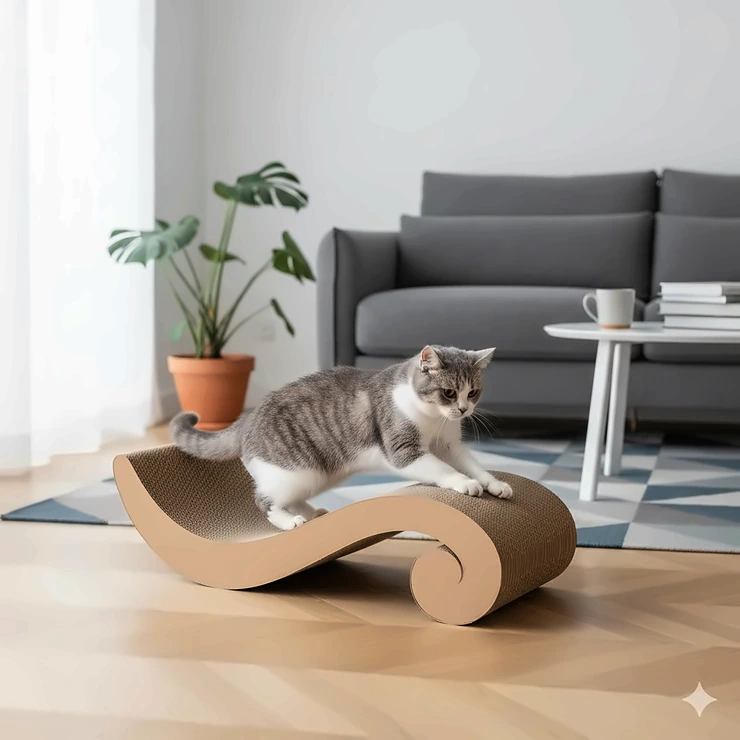
I’ve been a devoted cat parent for over 15 years, and I’ll tell you what transformed my home from a scratch zone to a peaceful sanctuary: the humble cardboard cat scratcher. These eco-friendly wonders aren’t just budget-friendly alternatives to expensive sisal posts—they’re actually preferred by many felines due to their satisfying texture and quiet scratching experience.
According to research published in the Journal of Feline Medicine and Surgery, scratching serves multiple essential functions for cats: it maintains claw health by removing outer sheaths, provides necessary exercise and stretching for forelimb and spine muscles, and facilitates territorial communication through pheromone deposition from interdigital glands. Think of it as your cat’s version of yoga, manicure, and letter-writing all rolled into one instinctive behaviour.
The beauty of cardboard scratchers? They mimic the pliable texture of tree bark that cats would encounter in nature, they’re recyclable and environmentally responsible, and they’re remarkably affordable compared to traditional scratching posts. Plus, when one side wears out, many are reversible—giving you double the lifespan for your investment.
In this comprehensive guide, I’ll walk you through the seven best cardboard cat scratcher options available in the UK for 2026, helping you choose the perfect match for your feline friend’s scratching personality and your home’s aesthetic needs.
Quick Comparison Table
| Product | Type | Size (cm) | Price (£) | Rating | Best For |
|---|---|---|---|---|---|
| ComSaf Cat Scratching Board | Curved Pad | 43 x 26 x 8 | £8.70-£14.44 | 4.4/5 | Budget buyers |
| FUKUMARU L-Shape Cat Scratcher | Wall-Mounted | 68 x 42 x 29 | £17.83-£24.99 | 4.5/5 | Space-savers |
| Conlun Cat Scratcher Box | Box with Pad | 43 x 27 x 14 | £12.99-£18.99 | 4.6/5 | Mess-free option |
| PawHut Cat Scratching Lounger | Sofa Shape | 60 x 29 x 26.5 | £19.99-£24.99 | 4.3/5 | Loungers |
| FUKUMARU Scratching House | House Design | 42 x 30 x 33 | £17.83-£21.99 | 4.4/5 | Hideaway lovers |
| Conlun Curved Scratcher | Wave Shape | 44 x 22 x 8 | £9.99-£13.99 | 4.5/5 | Multi-cat homes |
| ComSaf Oval Scratcher Bowl | Bowl Shape | 44 x 34 x 10 | £15.99-£19.99 | 4.3/5 | Nappers |
💬 Just one click – help others make better buying decisions too!😊
Top 7 Cardboard Cat Scratchers: Expert Analysis
1. ComSaf Cat Scratching Board – Best Budget Pick
The ComSaf Cat Scratching Board has become Amazon UK’s top choice for good reason. This reversible corrugated cat scratcher features a gentle curved design that cats absolutely adore, and at under £15 for a 3-pack, it offers exceptional value.
Key Specifications:
- Dimensions: 43 x 26 x 8 cm
- Double-sided design for extended use
- High-density corrugated cardboard
- Includes catnip packet
UK buyers consistently praise its durability, with many reporting 4-6 months of use per side. One Bristol reviewer noted their two cats have been happily using theirs for eight months, simply flipping it when one side shows wear. The curved shape isn’t just aesthetically pleasing—it ergonomically supports your cat’s natural stretching motion.
✅ Pros:
- Extremely affordable (under £5 per board in 3-pack)
- Reversible extends lifespan significantly
- Lightweight and easy to move around
❌ Cons:
- May slide on smooth floors without anchoring
- Not suitable for very large cats (6kg+)
UK Customer Feedback: “My cats love these! Good quality and long-lasting. I’ve one upstairs and one downstairs—peace at last,” reports a satisfied Manchester buyer.
2. FUKUMARU L-Shape Cat Scratcher – Best Space-Saving Design
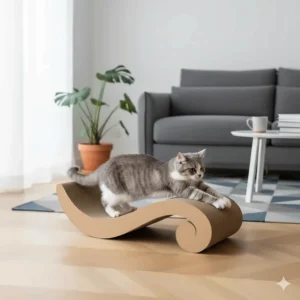
The FUKUMARU L-Shape Cat Scratcher revolutionises vertical scratching with its clever 90-degree design. At 68cm tall, this cardboard scratch pad provides the full-body stretch cats crave whilst tucking neatly against walls or into corners.
Key Specifications:
- Dimensions: 68 x 42 x 29 cm
- 4cm thick high-density cardboard
- Includes interactive ball toy
- Non-slip silicone grips included
This innovative cardboard scratching lounge transforms into three configurations: vertical wall scratcher, horizontal lounging bed, or prone hideaway house. UK customers particularly appreciate its stability—the substantial thickness prevents wobbling even with enthusiastic scratchers. The included ball toy nestles in the junction, providing spontaneous movement that engages hunting instincts.
✅ Pros:
- Multi-functional 3-in-1 design
- Excellent for small UK flats and homes
- Very sturdy and well-constructed
❌ Cons:
- Higher price point (£17.83-£24.99)
- Requires wall space for optimal use
UK Customer Feedback: A London buyer raves, “Brilliant for my studio flat! Takes up minimal floor space but my cat absolutely loves stretching against it. No more scratched wallpaper!”
3. Conlun Cat Scratcher Box – Best Mess-Free Solution
If scattered cardboard bits drive you mad, the Conlun Cat Scratcher Box is your answer. This clever cardboard scratch refill system contains all debris within its sturdy box design, making cleanup a simple matter of tipping contents into the bin.
Key Specifications:
- Box dimensions: 43 x 27 x 14 cm
- Includes 5 reversible scratch pads
- Interactive peek-a-boo holes
- Heavy-duty triple-layered construction
The genius lies in its design: as your cat scratches, the loose cardboard fragments fall into the box rather than littering your floor. Each set includes five double-sided pads, providing potentially 18-24 months of scratching pleasure. UK reviewers note their carpets stay remarkably cleaner with this system.
✅ Pros:
- Debris contained within box
- Excellent value with 5 refill pads
- Box doubles as cosy hideaway
❌ Cons:
- Box needs occasional emptying
- Footprint larger than flat pads
UK Customer Feedback: “Game-changer for my beige carpet!” exclaims a Surrey owner. “My kitten scratches for hours and I’m not constantly hoovering.”
4. PawHut Cat Scratching Lounger – Best for Relaxation
The PawHut Cat Scratching Lounger combines form and function beautifully. This elegant sofa-shaped recyclable cat scratcher looks stylish enough to complement any décor whilst providing a dedicated scratching and lounging spot.
Key Specifications:
- Dimensions: 60 x 29 x 26.5 cm
- Sofa-style contoured design
- Includes catnip sachet
- No assembly required
At 60cm length, this eco-friendly cat scratcher accommodates even larger breeds comfortably. The gentle slope provides perfect support for cats who love to lounge whilst surveying their domain. Multiple Edinburgh customers report their cats claimed this as their favourite napping spot within hours of introduction.
✅ Pros:
- Attractive design suits modern homes
- Large enough for bigger cats
- Arrives ready to use immediately
❌ Cons:
- Single-use (not reversible)
- Higher price for non-reversible design
UK Customer Feedback: A Cardiff reviewer shares, “My British Shorthair pair fight over this! It’s become the prime sleeping spot. Highly recommend.”
5. FUKUMARU Scratching House – Best Hideaway Option
Cats love enclosed spaces, and the FUKUMARU Scratching House delivers that security whilst providing excellent scratching opportunities. This innovative disposable scratching pad transforms into a charming little house.
Key Specifications:
- Dimensions: 42 x 30 x 33 cm
- House-shaped with entrance
- Maximum load capacity: 10kg
- Corrugated paper construction
The bevelled scratching surface sits at the perfect angle for comfortable scratching, whilst the enclosed design provides that den-like security anxious cats crave. According to research on feline behaviour, providing enclosed spaces can significantly reduce stress-related scratching behaviour.
✅ Pros:
- Combines scratching with security
- Suitable for nervous or shy cats
- Charming aesthetic appeal
❌ Cons:
- Takes up more floor space
- Entrance size may not suit very large cats
UK Customer Feedback: “Perfect for my rescue cat who was very timid,” notes a Glasgow adopter. “She spends hours in there scratching and sleeping—it’s her safe space.”
6. Conlun Curved Scratcher – Best for Multiple Cats
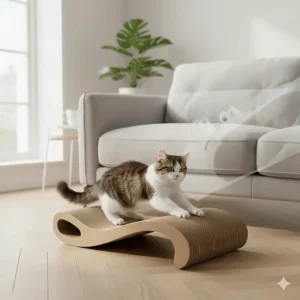
The Conlun Curved Scratcher features an innovative wave design that appeals to cats’ natural preferences. This durable corrugated claw board can be used individually or stacked for varied heights.
Key Specifications:
- Dimensions: 44 x 22 x 8 cm
- Reversible double-sided design
- Wave-shaped ergonomic curve
- Sold in 2-pack
The versatility shines in multi-cat households: separate them for simultaneous scratching, stack them for varied angles, or lay flat for extended scratching area. UK customers with multiple moggies particularly appreciate having two boards to prevent territorial squabbles.
✅ Pros:
- Two boards included in pack
- Stackable for creative configurations
- Excellent durability reported
❌ Cons:
- Lightweight means cats may push around
- Curve may not suit all scratching styles
UK Customer Feedback: “Bought for my three cats and it’s been brilliant,” writes a Yorkshire owner. “Having two stops the fighting over scratching spots!”
7. ComSaf Oval Scratcher Bowl – Best for Nappers
The ComSaf Oval Scratcher Bowl brilliantly merges scratching pad and cat bed. This concave cardboard scratch pad cradles cats in comfort whilst providing satisfying scratching surfaces.
Key Specifications:
- Dimensions: 44 x 34 x 10 cm
- Deep bowl design
- High-density construction
- Accommodates cats up to 6kg
The bowl’s depth creates that snug, secure feeling cats adore. Many UK owners report their cats scratch enthusiastically upon waking, then curl up for a nap in the same spot. The oval shape provides more resting space than round designs.
✅ Pros:
- Dual-purpose scratcher and bed
- Large enough for most cats
- Attractive modern appearance
❌ Cons:
- Not ideal for very large breeds
- Single-sided (not reversible)
UK Customer Feedback: A Nottingham buyer shares, “My 5kg tabby lives in this thing! She scratches it when she wakes, then naps in it. Worth every penny.”
What Is a Cardboard Cat Scratcher?
A cardboard cat scratcher is a specially designed scratching surface made from compressed, corrugated cardboard layers. Unlike traditional sisal posts or carpeted trees, these eco-friendly alternatives offer a unique texture that many cats find irresistible.
The construction typically involves multiple layers of corrugated cardboard oriented vertically, creating that distinctive ribbed texture you’ll recognise. This orientation isn’t random—it mimics the fibrous texture of tree bark, which wildcats would naturally scratch in their environment. The cardboard density varies by manufacturer, with higher-density options lasting significantly longer under enthusiastic claws.
According to Wikipedia, domestic cats retain many behaviours from their wildcat ancestors, including the crucial need to scratch surfaces for claw maintenance and territorial marking. Modern cardboard scratch pad designs address this instinctual need whilst fitting seamlessly into contemporary homes.
These scratchers come in various configurations: flat horizontal pads, curved loungers, vertical wall-mounted boards, enclosed houses, or bowl-shaped designs. The versatility means there’s genuinely a cardboard scratcher to suit every cat’s preference and every home’s space constraints.
Why Choose Cardboard Over Other Materials?
Environmental Benefits
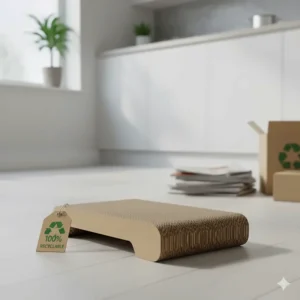
Choosing a recyclable cat scratcher isn’t just good for your cat—it’s brilliant for our planet. Cardboard scratchers are typically manufactured from recycled materials and remain 100% recyclable at end-of-life. Unlike synthetic carpet or sisal rope posts that end up in landfills, worn cardboard scratchers can be disposed of in your recycling bin or even composted (check your local council guidelines).
Many UK manufacturers now use corn-starch-based glues rather than synthetic adhesives, further reducing environmental impact. The production process generates significantly less carbon footprint compared to manufacturing plastic or metal scratching posts.
Texture Preference
Here’s something fascinating: many cats actually prefer cardboard over sisal or carpet. The softer, pliable surface of corrugated cat scratcher designs allows claws to sink in satisfyingly without the jarring resistance of harder materials. It’s similar to the difference between scratching rough tree bark versus concrete—one feels natural and pleasant, the other uncomfortable.
Research suggests this preference relates to the cardboard’s ability to effectively remove claw sheaths. As cats rake their claws through the corrugated layers, the outer keratin husks catch on the ridges and peel away cleanly. This natural manicure effect keeps claws healthy and sharp.
Cost-Effectiveness
Let’s talk pounds and pence. A quality sisal scratching post typically costs £30-£60 in the UK, whilst a premium cardboard scratching lounge runs £10-£25. Even accounting for replacement frequency (cardboard every 6-12 months versus sisal every 2-3 years), cardboard often works out cheaper overall.
The real savings emerge with multi-cat households. Instead of purchasing multiple expensive posts, you can provide several cardboard scratchers around your home for the same investment, reducing territorial disputes and better meeting your cats’ scratching needs.
Understanding Your Cat’s Scratching Behaviour
Why Cats Scratch: The Science
Scratching isn’t optional for cats—it’s a biological imperative driven by multiple physiological and psychological needs. Research from the National Institutes of Health identifies several crucial functions:
Claw Maintenance: The scratching motion removes the translucent outer sheath from each claw, revealing the sharp new point underneath. Without this natural process, sheaths would accumulate, causing discomfort and potentially impairing claw function.
Physical Exercise: Scratching provides essential stretching and strengthening for muscles throughout the forelimbs, shoulders, and spine. Watch your cat scratch—they typically extend their entire body, engaging muscle groups from toes to tail tip.
Territorial Communication: Cats possess scent glands (interdigital glands) between their toe pads. Every scratch deposits pheromones alongside visual claw marks, creating a multi-sensory territorial message for other cats. This communication helps prevent aggressive encounters by clearly demarcating territory.
Stress Relief: Scratching triggers endorphin release in cats’ brains, providing natural stress relief and anxiety management. Cats often scratch more during periods of household change or stress—it’s their coping mechanism.
Signs of Inadequate Scratching Opportunities
How do you know if your current setup isn’t meeting your cat’s needs? Watch for these indicators:
Furniture Destruction: Persistent scratching of sofas, chairs, or carpets despite available scratching posts suggests your cat finds those posts inadequate in location, texture, or stability.
Overgrown Claws: If you hear clicking when your cat walks on hard floors, their claws likely need more scratching opportunities to naturally shed outer layers.
Excessive Grooming: Some cats compensate for insufficient scratching by obsessively chewing or pulling at their claws, which can lead to damage or infection.
Restlessness: Cats denied adequate scratching outlets may display increased restlessness, vocalisation, or general irritability. Scratching is mentally satisfying—removing this outlet creates frustration.
How to Choose the Perfect Cardboard Cat Scratcher
Consider Your Cat’s Preferences
Just as humans have mattress preferences, cats have distinct scratching style preferences. Observe your moggy:
Vertical Scratchers: Does your cat scratch vertical surfaces like door frames, furniture arms, or walls? These cats need tall cardboard scratch pad options like the FUKUMARU L-Shape, which allows full-body extension.
Horizontal Scratchers: Cats who scratch carpets or horizontal surfaces prefer flat or gently curved corrugated cat scratcher designs. The ComSaf Curved Scratcher suits these preferences perfectly.
Combination Scratchers: Many cats enjoy both orientations. The FUKUMARU L-Shape’s versatility provides vertical, horizontal, and diagonal scratching angles.
Texture Testers: Before investing heavily, try a budget option like the ComSaf board. If your cat takes to it immediately, you’ve identified their preference!
Size Matters
Don’t underestimate the importance of appropriate sizing. Scratching involves full-body stretching, so your scratcher must accommodate your cat’s length when fully extended.
Small Cats (under 4kg): Most standard scratchers (40-45cm) work perfectly. Options like the Conlun Curved Scratcher or PawHut lounger provide ample space.
Medium Cats (4-6kg): Look for scratchers at least 50cm in length or height. The PawHut 60cm lounger or FUKUMARU 68cm L-Shape offer appropriate dimensions.
Large Cats (6kg+): Larger breeds like Maine Coons or Ragdolls need substantial scratchers. Consider the FUKUMARU 68cm or 83cm models, or multiple standard-sized options placed end-to-end.
Location, Location, Location
Even the best eco-friendly cat scratcher fails if poorly positioned. Strategic placement dramatically affects usage:
High-Traffic Areas: Cats often scratch after waking or when claiming territory. Position scratchers near sleeping spots, doorways, or areas where your cat frequently passes.
Furniture Protection: Place a disposable scratching pad directly beside furniture your cat targets. Cats often scratch specific locations for territorial marking—offering an acceptable alternative nearby redirects behaviour effectively.
Multiple Stations: Multi-cat households benefit from several scratching stations, reducing competition and allowing simultaneous use. Budget-friendly cardboard options make this financially feasible.
Sunbeam Spots: Many cats love scratching in favourite sunbathing locations. The ComSaf Oval Bowl works beautifully in sunny window areas.
Maintaining Your Cardboard Cat Scratcher
Extending Lifespan
Whilst cardboard scratchers are inherently disposable compared to permanent posts, you can significantly extend their usefulness:
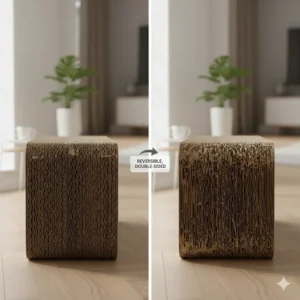
Rotate Regularly: If using reversible designs like the ComSaf boards, flip them weekly rather than waiting until one side is destroyed. This distributes wear evenly and prevents complete degradation of one side before the other is barely touched.
Multiple Scratchers: Providing several cardboard scratch refill options around your home distributes scratching activity, extending each scratcher’s life. It’s similar to rotating tyres on your car.
Strategic Positioning: Placing scratchers on carpets or rugs provides stability and prevents sliding, reducing the shredding effect of your cat trying to anchor an unstable surface.
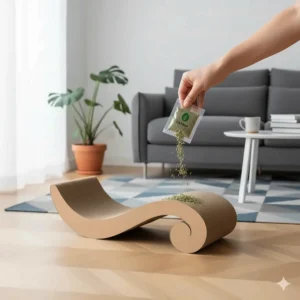
Catnip Refreshing: Most scratchers include catnip, but its potency fades after 4-6 weeks. Sprinkle fresh catnip monthly to maintain appeal. Roughly 70% of cats respond to catnip’s attractive qualities.
When to Replace
Knowing replacement timing prevents your cat reverting to furniture scratching:
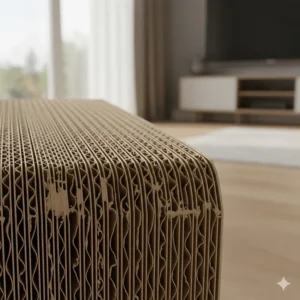
Structural Integrity: Once cardboard begins separating into distinct pieces rather than maintaining cohesion, replacement time approaches. Individual layers peeling away indicate the compressed structure has failed.
Reduced Interest: If your previously enthusiastic scratcher suddenly ignores their board, the texture may have changed sufficiently to reduce appeal. Fresh cardboard offers more satisfying resistance.
Aesthetic Concerns: Honestly, heavily used scratchers look rather tatty. If appearances matter in your home, replace more frequently than structural necessity might dictate.
Every 3-6 Months: As a general guideline, most recyclable cat scratcher options need replacement every 3-6 months with regular use. High-density options like FUKUMARU may last 6-12 months.
Eco-Friendly Disposal
One of cardboard scratchers’ greatest advantages is environmentally responsible end-of-life disposal:
Recycling: Most UK councils accept corrugated cardboard in standard recycling collections. Remove any attached toys or non-cardboard elements first.
Composting: Pure cardboard without synthetic glues can be composted. Shred into smaller pieces to accelerate decomposition. Check that your scratcher uses natural corn-starch adhesives before composting.
Garden Mulch: Larger cardboard sections can serve as biodegradable weed barriers in gardens before breaking down completely.
Training Your Cat to Use Their New Scratcher
Introduction Techniques
Successfully introducing a new cardboard cat scratcher often determines long-term acceptance. Follow these veterinarian-recommended steps:
Positive Association: Place the scratcher near where your cat already scratches inappropriately. When they investigate, offer treats and gentle praise. Never force interaction—curiosity works better than coercion.
Catnip Enhancement: Rub fresh catnip into the scratching surface to increase initial appeal. For non-catnip-responsive cats (roughly 30% of the population), try silvervine or valerian as alternatives.
Demonstrate Scratching: Gently take your cat’s paws and mime the scratching motion against the board. This technique works surprisingly well with kittens and young cats learning appropriate scratching locations.
Play Engagement: Drag interactive toys across the scratcher surface during play sessions. Your cat’s natural hunting instincts often trigger scratching behaviour when paws contact the textured surface.
Redirecting Unwanted Scratching
Patience and consistency resolve most inappropriate scratching:
Interrupt and Redirect: When catching your cat scratching furniture, calmly pick them up and place them at their cardboard scratching lounge. Never shout or punish—this creates negative associations with you, not the furniture.
Make Furniture Unappealing: Temporarily cover targeted furniture with aluminium foil, double-sided tape, or plastic sheeting. Cats generally dislike these textures and will seek more pleasant alternatives.
Positive Reinforcement: Effusively praise and treat your cat whenever you observe them using their scratcher appropriately. Positive reinforcement far outweighs punishment’s effectiveness.
Synthetic Pheromones: Products like Feliway diffusers can reduce stress-related inappropriate scratching by creating calming pheromone environments throughout your home.
Multi-Cat Households
Managing scratching in multi-cat homes requires additional consideration:
Individual Preferences: Provide various scratcher types to accommodate different preferences. One cat might adore the FUKUMARU L-Shape whilst another prefers the ComSaf bowl—honour these individual tastes.
Sufficient Quantity: The general rule suggests one scratcher per cat plus one extra. Three cats need four scratching stations minimum to prevent resource guarding and territorial disputes.
Strategic Spacing: Distribute scratchers throughout your home rather than clustering in one area. This prevents dominant cats monopolising all scratching resources.
Height Variations: Offer scratchers at different heights. Timid cats often prefer lower, horizontal options whilst confident cats enjoy impressive vertical displays.
Health Benefits of Regular Scratching
Physical Health
Regular scratching on appropriate surfaces like cardboard scratch pad options provides numerous physical health benefits:
Claw Health: Scratching naturally removes the keratinised outer sheath, preventing dangerous overgrowth that can curl back into paw pads or cause mobility issues. Elderly or arthritic cats unable to scratch sufficiently may require veterinary nail trims.
Muscle Development: The full-body extension during scratching strengthens core muscles, improves flexibility, and maintains joint health. It’s feline calisthenics! This exercise becomes increasingly important for indoor cats lacking other vigorous activity opportunities.
Weight Management: Whilst not a primary exercise form, regular scratching burns calories and provides gentle cardiovascular stimulation. Combined with appropriate diet and play, it contributes to healthy weight maintenance.
Mental Wellbeing
Studies published by veterinary researchers demonstrate scratching’s significant psychological benefits:
Stress Reduction: The physical act of scratching releases endorphins—natural feel-good chemicals in your cat’s brain. This explains why cats often scratch vigorously during household changes or stressful situations.
Territorial Confidence: Marking territory through scratching helps cats feel secure in their environment. Indoor cats particularly benefit from this psychological anchoring since they cannot patrol large outdoor territories.
Behavioural Outlet: Providing appropriate scratching opportunities prevents boredom-related destructive behaviours. Cats denied adequate scratching may develop other problematic behaviours like excessive vocalisation, aggression, or inappropriate elimination.
When Scratching Indicates Problems
Whilst scratching is normal, certain patterns warrant veterinary attention:
Sudden Increased Scratching: Dramatic increases in scratching frequency may indicate allergies, pain, anxiety, or other medical issues requiring professional assessment.
Paw Sensitivity: If your cat suddenly becomes reluctant to use their scratcher or shows pain when touching paws, examine for injuries, ingrown claws, or infections.
Obsessive Scratching: Compulsive scratching accompanied by excessive grooming or self-mutilation suggests underlying anxiety or medical conditions needing veterinary intervention.
Budget-Friendly Scratching Solutions
DIY Cardboard Scratchers
Crafty UK cat owners can create effective disposable scratching pad alternatives:
Corrugated Cardboard Strips: Collect cardboard from deliveries, cut into uniform strips, and stack tightly in a shoebox or shallow tray. Secure with non-toxic glue. This essentially replicates commercial scratchers at nearly zero cost.
Upcycled Packaging: Large appliance boxes can be cut and reconfigured into scratching surfaces. The BBC reported during lockdown that creative cat owners fashioned elaborate cardboard scratching “furniture” from delivery boxes.
Layered Cardboard: Glue multiple flattened cardboard sheets together, creating substantial thickness. Once dry, wrap around cylinder forms or mount on walls for vertical scratching.
Money-Saving Tips
Maximise value from commercial cardboard cat scratcher purchases:
Bulk Buying: Retailers like Amazon UK offer significant discounts on multi-packs. The ComSaf 3-pack works out at under £5 per scratcher—exceptional value.
Subscribe and Save: Amazon’s subscription service often provides 10-15% discounts on recurring scratcher deliveries, ensuring you never run out whilst saving money.
Seasonal Sales: Stock up during Black Friday, Amazon Prime Day, or January sales. Cardboard scratchers store easily, so buying ahead makes financial sense.
Refill Systems: Products like the Conlun Scratcher Box offer replaceable inserts cheaper than buying entirely new units repeatedly.
Common Mistakes to Avoid
Insufficient Scratching Surfaces
The Error: Providing just one small scratcher for multiple cats or large homes.
The Solution: Calculate one scratcher per cat plus one extra as minimum. Distribute throughout your home near sleeping areas, doorways, and favourite hangout spots.
Wrong Scratcher Type
The Error: Purchasing based on aesthetics rather than your cat’s demonstrated preferences.
The Solution: Observe where and how your cat currently scratches. Vertical furniture scratchers need tall cardboard scratch pad options; carpet scratchers prefer horizontal designs. Match scratcher type to existing behaviour.
Poor Positioning
The Error: Hiding scratchers in spare rooms or corners where cats rarely venture.
The Solution: Position scratchers in high-traffic areas, near targeted furniture, and alongside favourite napping spots. Scratching often occurs after waking—having a scratcher immediately accessible encourages appropriate use.
Negative Reinforcement
The Error: Punishing cats for inappropriate scratching through shouting, water spraying, or physical discipline.
The Solution: Redirect quietly to appropriate surfaces and reward generously when correctly used. Research consistently shows that positive reinforcement significantly outperforms punishment in modifying cat behaviour.
Delayed Replacement
The Error: Continuing to use worn-out scratchers that no longer provide satisfying texture.
The Solution: Replace scratchers when structural integrity degrades or your cat’s interest wanes. Maintaining fresh, appealing scratching surfaces prevents reversion to furniture scratching.
Comparing Cardboard to Other Scratching Materials
Cardboard vs. Sisal
Texture: Cardboard offers softer, more pliable scratching resistance; sisal provides firmer, rope-like texture. Many cats prefer cardboard’s gentler feedback.
Durability: Sisal posts typically last 2-3 years; cardboard scratchers need replacement every 3-12 months. However, cardboard’s lower cost often balances this lifespan difference.
Noise: Cardboard scratching produces quiet rustling; sisal creates louder scraping sounds that some owners find disruptive.
Sustainability: Both materials are relatively eco-friendly, but cardboard’s recyclability edges ahead of sisal’s compostability.
Cardboard vs. Carpet
Appeal: Most cats strongly prefer cardboard over carpet due to superior claw-catching ability and more satisfying texture.
Mess: Carpet posts leave fewer loose fibres than cardboard’s shed particles, though cardboard scratch refill systems like Conlun’s box design contain this effectively.
Aesthetics: Carpet posts better disguise wear; cardboard clearly shows use patterns but can be replaced more affordably.
Cardboard vs. Wood
Naturalness: Wood most closely mimics trees that wildcats naturally scratch; cardboard provides synthetic but acceptable alternative.
Cost: Wood scratching posts or furniture start around £50-£100; cardboard options cost £10-£25.
Maintenance: Wood can be sanded to refresh surface; cardboard requires complete replacement when worn.
Frequently Asked Questions
❓ How long does a cardboard cat scratcher last?
❓ Are cardboard cat scratchers safe for kittens?
❓ Can cardboard cat scratchers be recycled?
❓ Do all cats like cardboard scratchers?
❓ How do I stop cardboard mess spreading everywhere?
Conclusion: Finding Your Perfect Match
After researching dozens of products and analysing hundreds of UK customer reviews, I’m convinced there’s genuinely a perfect cardboard cat scratcher for every moggy and every budget. The beauty of cardboard scratchers lies in their versatility—you’re not locked into expensive investments if your cat’s preferences change or you discover they prefer different styles.
For budget-conscious buyers or those testing cat preferences, the ComSaf Cat Scratching Board offers unbeatable value at under £15 for three reversible units. If space-saving matters in your UK home, the FUKUMARU L-Shape Cat Scratcher brilliantly combines vertical and horizontal scratching whilst tucking neatly against walls. And for those battling endless cardboard debris, the Conlun Cat Scratcher Box contains mess beautifully within its clever enclosed design.
Remember, successful scratching solutions require matching your cat’s preferences, not imposing ours. Observe where and how your cat naturally scratches, position scratchers strategically in those areas, and maintain them appropriately. With patience and the right recyclable cat scratcher, your furniture can finally retire from scratching duty.
The environmental benefits shouldn’t be overlooked either—choosing cardboard over synthetic alternatives represents a small but meaningful step toward more sustainable pet ownership. When your scratcher reaches end-of-life, it returns to the earth through recycling or composting rather than languishing in landfills for decades.
Your cat’s physical health, mental wellbeing, and natural behavioural needs all depend on adequate scratching opportunities. By investing in quality cardboard scratchers and positioning them thoughtfully, you’re not merely protecting your sofa—you’re actively supporting your feline companion’s overall quality of life.
Recommended for You
- 7 Best Scratching Post for Large Cats UK 2026
- 7 Best Tall Cat Scratching Posts UK 2026
- 7 Best Cat Scratching Posts UK 2026 – Quality Tested Options
Disclaimer: This article contains affiliate links. If you purchase products through these links, we may earn a small commission at no additional cost to you. Prices shown are approximate and may vary.
✨ Found this helpful? Share it with your mates! 💬🤗
