
In This Article
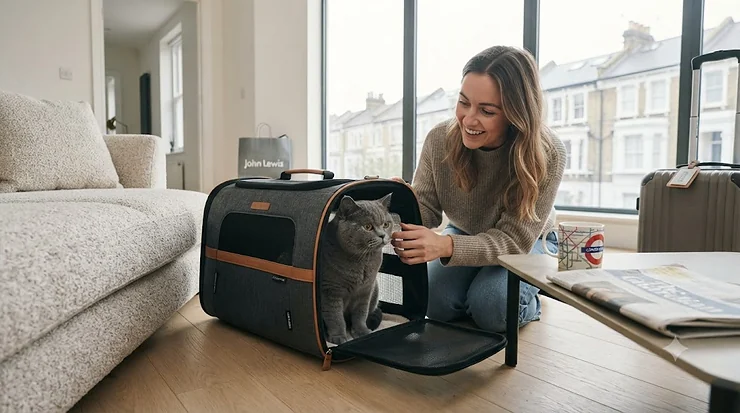
Here’s a truth nobody puts on the box: an airline approved cat carrier is not the same thing as a carrier your airline will actually let you board with. Those two ideas get treated as interchangeable on Amazon listings, and that’s precisely where things go wrong at the gate. An airline approved cat carrier is, in practical terms, a soft or semi-rigid, well-ventilated bag built to compress or fold enough to sit under the seat in front of you, while meeting the size and weight rules a specific airline sets — rules that shift depending on whether you’re flying KLM out of Heathrow or a regional hop from Edinburgh.
You’ve probably already discovered that “airline approved” is printed on carriers that don’t fit under some seats at all. It’s a marketing phrase, not a certification stamp issued by anyone official — and that gap between the label and the reality is exactly what this guide is here to close.
We’ve dug through real product specifications, aggregated genuine review sentiment, and cross-checked cabin dimensions against what UK-departing airlines publish, so you’re choosing based on facts rather than a nice-looking mesh panel. Whether you need a cat carrier that fits under airline seat limits for a short domestic hop, or a properly IATA approved cat carrier for a longer international relocation, the products and reasoning below should get you to the gate with far less anxiety — for you and your cat. Worth bookmarking alongside this guide: the UK government’s own pet travel entry requirements, which cover the paperwork side of the journey that no carrier alone can solve.
Quick Comparison Table: Best Airline Approved Cat Carrier at a Glance
| Carrier | Type | Best For | Price Range |
|---|---|---|---|
| Sturdi SturdiBag Pro 3.0 | Soft, flex-height | Widest airline compatibility | £100-£140 range |
| Sherpa Original Deluxe | Soft-sided | First-time flyers wanting a safety net | £45-£60 range |
| Sleepypod Air | Semi-structured, compressible | Anxious cats, premium comfort | £150-£200 range |
| PetAmi Premium Airline Approved | Soft-sided | Budget-conscious flyers | £35-£50 range |
| Amazon Basics Pet Carrier Bag | Soft-sided | Occasional, low-cost trips | Under £35 |
| Mr. Peanut’s Gold Series | Soft-sided, structured | Mid-range comfort and style | £50-£70 range |
| Morpilot Pet Carrier Bag | Soft-sided | Lesser-known value pick | £30-£45 range |
Looking at the spread above, the SturdiBag Pro 3.0 earns its higher price by clearing dimension checks on more airlines than any other carrier here, largely thanks to its flex-height rods, which is exactly the kind of detail a plain spec sheet won’t tell you. Budget buyers shouldn’t assume cheaper automatically means worse — the Amazon Basics bag and PetAmi both do the fundamental job for cats under roughly 6kg, they simply sacrifice the structural reinforcement and long-haul comfort that the premium picks offer. If your cat is anxious or you’re flying long-haul, the extra £100 or so for the Sleepypod Air buys genuine crash-tested engineering rather than just a nicer logo.
💬 Just one click — help others make better buying decisions too!😊
Top 7 Airline Approved Cat Carriers: Expert Analysis
1. Sturdi SturdiBag Pro 3.0 — flex-height design clears the most airline seats
The standout here is the patented flex-height rod system, which lets the whole carrier compress by several centimetres to squeeze under a shallower seat without collapsing onto your cat. In practice, that flexibility is the difference between a carrier that “should” fit and one that demonstrably does, because published seat dimensions vary by aircraft type even within the same airline. Built from 600 denier polyester with reinforced mesh panelling, it’s constructed for repeat use rather than a single trip, and the empty carrier weight sits low enough to leave meaningful headroom under the combined pet-plus-carrier weight caps that airlines like KLM and Lufthansa enforce.
Based on the spec comparison against the rest of this list, the SturdiBag is the pick for anyone doing more than one flight with their cat a year, or anyone with a longer-bodied breed who needs to stretch out. Reviewers and pet-transport professionals who use it commercially consistently highlight the removable divider option and washable pad, though a recurring theme in feedback is that UK stock availability on Amazon can be patchy compared with the more heavily marketed Sherpa.
Pros:
✅ Flex-height rods adapt to different aircraft seat depths
✅ Reinforced 600D fabric built for repeated flights
✅ Removable divider works for two smaller pets
Cons:
❌ Less consistently stocked on Amazon UK than rivals
❌ Premium price compared with basic soft bags
Priced in the £100-£140 range depending on size, it’s not the cheapest option on this list, but for frequent flyers the durability and dimensional flexibility genuinely earn the premium.
2. Sherpa Original Deluxe Airline-Approved Pet Carrier — backed by a boarding guarantee scheme
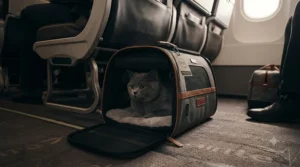
What sets the Sherpa apart isn’t a spec at all — it’s the Guaranteed On Board programme, which reimburses your flight and pet fee if the carrier is refused at the gate, provided you register in advance. That’s a genuinely useful safety net for anxious first-time flyers, because it shifts some of the financial risk of an unfamiliar airline’s judgement call away from you. The carrier itself uses a flexible frame with top and side entry points and mesh ventilation on multiple panels, which helps reduce the sense of confinement that triggers stress in some cats.
Based on aggregated feedback across major retailers, the Sherpa performs reliably for short-to-medium trips, and reviewers commonly praise the dual-entry design for making loading easier with a reluctant cat. Where the pattern in reviews turns less flattering is fabric structure over time — several buyers report the sides losing their shape after repeated washing, so this leans toward a carrier you replace every year or two of regular use rather than a decade-long investment.
Pros:
✅ Guaranteed On Board reimbursement scheme for denied boarding
✅ Dual top-and-side entry eases loading a nervous cat
✅ Widely available and easy to compare colourways on Amazon UK
Cons:
❌ Side structure can soften after repeated machine washing
❌ Interior feels tight for cats near the upper weight limit
At around £45-£60 depending on size and colour, the Sherpa sits in accessible mid-range territory, and the boarding guarantee alone makes it good value for a first international trip.
3. Sleepypod Air — the only carrier here with independent crash-safety testing
The defining feature is genuine third-party crash testing by the Center for Pet Safety, something none of the other six carriers on this list can claim, and it compresses from roughly 56cm down to 41-48cm simply by folding in the sides — a mechanical solution to the underseat problem rather than relying on soft mesh giving way. Two large mesh windows plus a removable privacy panel let you dial visibility up or down depending on how your cat copes with stimulation, which on paper sounds like a small thing but genuinely changes a stressed cat’s in-flight experience.
What most buyers overlook about this model is that its true advantage shows up on long-haul or turbulent flights, where structural integrity matters more than on a 45-minute domestic hop — this is the carrier built for cats who need active reassurance rather than passive containment. Reviewers regularly flag the internal safety tether, which clips to a harness, as reassuring rather than gimmicky, though several also note the compressed size still didn’t clear the underseat gap on certain older aircraft, so checking your specific route’s cabin configuration still matters.
Pros:
✅ Crash-tested and CPS-certified — unique on this list
✅ Compresses via folding sides rather than soft-mesh give
✅ Internal safety tether for harnessed cats
Cons:
❌ Highest price point of the seven carriers here
❌ Reports of it not clearing underseat space on some older aircraft
At around £150-£200, the Sleepypod Air is the premium end of this market, and the value case rests almost entirely on how much you weight genuine crash safety against a lower sticker price.
4. PetAmi Premium Airline Approved Soft-Sided Cat Carrier — the lightest empty carrier on this list
The headline advantage is weight: an empty PetAmi carrier is meaningfully lighter than the Sturdi or Sherpa, which matters directly at check-in because most airlines weigh the combined carrier-plus-cat total against an 8kg cap. A lighter shell simply leaves more of that 8kg for your actual cat, which is the kind of practical maths a glossy product photo never explains. Sherpa-style plush lining softens the interior, and mesh panels on the sides and top give reasonable airflow without compromising the soft-frame structure too much.
Honest analysis here has to acknowledge a trade-off: this is a soft-frame design on the unexpanded basis, meaning it clears most UK-relevant airline cabin dimensions but with less structural rigidity than the Sturdi or Sleepypod, so a cat close to 6kg will feel the tightness on a longer flight. As a US-origin product stocked on Amazon UK, availability and price can fluctuate more than domestically warehoused options, and reviewers note the shape holds up less consistently after several wash cycles than the pricier picks.
Pros:
✅ Lightest empty carrier weight, maximising cat weight allowance
✅ Plush interior lining adds comfort for shorter trips
✅ Noticeably cheaper than the premium picks on this list
Cons:
❌ Less structural rigidity than semi-rigid alternatives
❌ Shape retention weakens with frequent washing
Typically priced around £35-£50, this is a sensible budget pick for anyone who only expects to fly with their cat once or twice.
5. Amazon Basics Pet Carrier Bag — the straightforward value option
This is a no-frills polyester soft carrier with a fleece-lined base, standard carry handles, and an adjustable shoulder strap, and its main selling point is simply that it does the fundamentals competently at a genuinely low price. The stated 16-pound (roughly 7.3kg) maximum weight capacity covers the overwhelming majority of adult domestic cats, and the included travel bowl is a small but useful practical extra that pricier competitors sometimes charge separately for.
What the spec sheet won’t tell you, but user reports suggest, is that this carrier suits smaller adult cats and kittens far better than larger breeds — the interior footprint is on the snug side once you account for real-world padding and bedding. It’s also worth being upfront: the mesh panelling isn’t built to resist a determined scratcher, so a cat prone to clawing at confinement may work through it faster than the pricier reinforced options on this list. For calm cats on short, infrequent trips, though, it remains a genuinely sound choice rather than a compromise.
Pros:
✅ Lowest price point of any carrier on this list
✅ Includes a free travel bowl as standard
✅ Adjustable padded shoulder strap eases longer carries
Cons:
❌ Mesh isn’t scratch-resistant for determined clawers
❌ Cramped for larger adult cats over roughly 6kg
At under £35 in most sizes, this is the entry point for airline travel with a cat, and for occasional, calm-cat trips it earns its place through sheer value rather than premium engineering.
6. Mr. Peanut’s Gold Series Airline Approved Soft Side Carrier — structured mid-range comfort with storage extras
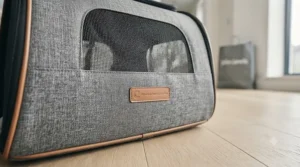
The Gold Series distinguishes itself with a sturdier internal frame than most soft-sided competitors at this price point, plus multiple external storage pockets that genuinely reduce how much you’re juggling at security — treats, a spare lead, your travel documents, all within reach without opening the main compartment. Locking zippers add a layer of security beyond a standard slider, which matters more than it sounds once you’re navigating a crowded gate area with an anxious animal.
Based on the spec comparison against the budget end of this list, the Gold Series justifies its mid-range price through that combination of structural support and organisational features rather than any single standout spec. Aggregated review sentiment leans positive on build quality and the shoulder strap’s padding, though a recurring theme is that first-time buyers underestimate how firm the base panel is, which can make folding it flat for storage between trips slightly more awkward than the fully soft alternatives.
Pros:
✅ Sturdier internal frame than most soft-sided rivals
✅ Multiple external pockets for documents and treats
✅ Locking zippers add a security layer at busy gates
Cons:
❌ Firmer base makes flat storage less convenient
❌ Sits above budget pricing without premium crash testing
Priced around £50-£70, it occupies sensible middle ground between the bare-bones budget bags and the structural premium of the Sturdi or Sleepypod.
7. Morpilot Pet Carrier Bag — a lesser-known alternative worth a look
Morpilot doesn’t have the brand recognition of Sherpa or PetAmi, and that’s precisely why it’s worth including here — it’s a genuinely capable medium-sized soft carrier with a firm bottom panel and breathable mesh on the top and sides, and it offers dual entry through either the top or front panel depending on what’s easier for your cat on a given day. The shoulder strap and hand-carry option give the same flexibility as the pricier names on this list.
Here’s what most buyers overlook about lesser-known brands generally: smaller manufacturers often compete on build quality precisely because they can’t compete on marketing spend, and the Morpilot’s firm-bottom construction reflects that — it holds its shape noticeably better under load than some similarly priced Sherpa-style clones. The trade-off is a smaller review pool overall, so if you value a long, well-documented track record over marginal savings, this may feel like a slightly bigger leap of faith than buying the household name.
Pros:
✅ Firm bottom panel holds shape better than similarly priced rivals
✅ Dual top-and-front entry for flexible loading
✅ Genuinely competitive pricing against bigger brand names
Cons:
❌ Smaller pool of verified reviews than market leaders
❌ Less established brand recognition at check-in desks
Typically found in the £30-£45 range, it’s a solid value pick for buyers comfortable choosing substance over a familiar logo.
Practical Usage Guide: Getting Your Cabin Luggage Cat Bag Flight-Ready
Buying the right carrier is only step one — how you prepare it matters just as much. Start at least two to three weeks before travel by leaving the carrier open and accessible at home, ideally with familiar bedding inside, so your cabin luggage cat bag stops being a novel, frightening object and becomes just another part of the furniture. Feeding treats or small meals near or inside the carrier builds a genuinely positive association rather than one built purely around confinement.
In the first 30 days of ownership, the most common mistake is only ever bringing the carrier out immediately before a stressful trip, which teaches your cat that its appearance predicts something unpleasant. A better rhythm is short, low-stakes outings — a five-minute drive, a walk to the end of the street and back — so the carrier’s associations diversify beyond “the vet” or “the airport.” On travel day itself, withhold food for roughly four to five hours beforehand to reduce the risk of travel sickness, while still offering water right up until departure.
Maintenance is straightforward but easy to neglect: wipe down mesh panels after every trip, machine wash removable pads on a cold, gentle cycle, and air-dry fully before the next use to avoid shrinkage that could turn a compliant carrier into a slightly-too-small one. Check zips and seams for wear every few months, since these are consistently the components that fail first across nearly every soft-sided carrier on the market.

Real-World Scenarios: Which Carrier Actually Suits Your Trip
The occasional flyer. If you’re flying with your cat once, maybe twice a year for a UK domestic trip or a short European hop, and budget matters more than long-term durability, the Amazon Basics bag or PetAmi covers the basics without overspending on features you won’t use often enough to justify.
The anxious-cat owner relocating abroad. For a longer, more stressful journey — say, a move requiring a multi-hour connection — prioritise the Sleepypod Air or SturdiBag Pro 3.0. The extra spend buys structural stability and genuine crash engineering that matters far more on a stressful, unfamiliar multi-leg journey than it does on a 40-minute regional flight.
The frequent business-and-pet traveller. If you’re regularly flying with your cat for work relocations or a genuinely nomadic lifestyle, the SturdiBag’s flex-height design and washable, repeat-use construction will save money over buying replacement Sherpa or PetAmi bags every year or two as the fabric fatigues.
Reference these profiles against the pros and cons above rather than treating any single carrier as universally “the best” — the right choice depends far more on your cat’s temperament and your flight frequency than any spec sheet alone can tell you..
Buyer’s Decision Framework: Soft, Semi-Rigid or Structured
If your cat weighs under 4kg and you’re flying once, choose a basic soft carrier like the Amazon Basics bag, because the weight savings and low cost outweigh the marginal comfort gains of pricier alternatives. If your cat is anxious, prone to pressing against carrier walls, or you’re doing a long-haul or multi-leg journey, choose a structured or semi-rigid option like the Sleepypod Air or SturdiBag, because the added rigidity reduces the sense of instability that worsens travel stress. If you fly with your cat more than twice a year, choose a carrier built for repeat use with washable, reinforced fabric — the SturdiBag or Mr. Peanut’s Gold Series — because the per-trip cost works out lower than repeatedly replacing a cheaper bag as it wears out. And if budget is your binding constraint above all else, choose the lightest, cheapest option that still clears your specific airline’s published dimensions, since an unused premium feature adds nothing to a trip you can’t afford to book in the first place.
How to Choose an Airline Approved Cat Carrier: 7 Expert Criteria
- Check your specific airline’s published cabin pet policy first. Dimensions and weight caps genuinely differ between carriers, and a bag that clears one airline’s limits can be refused by another.
- Measure the underseat space on your actual booked cabin, not a generic estimate. Aircraft type changes the available footwell depth even within the same airline.
- Weigh your cat, then subtract that from the airline’s combined weight cap. Whatever’s left is your absolute maximum for the empty carrier itself.
- Prioritise ventilation over aesthetics. Mesh coverage on at least two sides matters more for in-flight comfort than colour or branding.
- Consider your cat’s temperament, not just size. An anxious cat often does better in a semi-rigid, more enclosed design than an all-mesh bag that feels exposed.
- Factor in expandability versus compressibility. Some carriers expand for comfort at your destination but must compress to fit the seat during the flight — flex-height designs handle both roles better than fixed-frame bags.
- Read the return policy before you buy, not after a failed gate check. A carrier that turns out too large for your specific aircraft is a genuinely common outcome, and a flexible returns window saves real money.
IATA Approved Cat Carrier Standards & Underseat Dimensions Explained
There’s no single global “IATA approved cat carrier” certification stamped onto individual products — this is a persistent point of confusion. The International Air Transport Association publishes Live Animals Regulations that set general welfare-based standards — ventilation, structural strength, enough room for the animal to stand, turn and lie down — which most reputable manufacturers design toward, but individual airlines then layer their own, often stricter, cabin dimension and weight rules on top. A carrier can genuinely be “IATA compliant” in spirit while still being refused at a specific gate because it exceeds that airline’s underseat allowance.
Underseat dimensions vary more than most buyers expect. As a general working range across UK-departing airlines that accept in-cabin pets, expect maximum carrier dimensions somewhere around 45cm length, 30cm width, and 23-25cm height — though this genuinely differs by airline and aircraft. Notably, British Airways does not currently accept pets in the cabin on any route, so a cat carrier that fits under airline seat limits on BA specifically only matters for their assistance-dog exceptions; airlines such as KLM, Lufthansa, Air France and Finnair are the more realistic UK-relevant options for in-cabin cat travel, each with their own combined weight cap, commonly around 8kg. Before booking, it’s worth reviewing the current government guidance on pet travel rules, which covers the documentation side of the journey alongside the airline-specific carrier requirements.
Cabin Approved vs In-Cabin: Common Mistakes and Confusing Terms
“Cabin approved” and “in-cabin” get used almost interchangeably in product listings, but they’re describing different things. In-cabin simply means the carrier travels with you in the passenger cabin rather than the hold — a location. Cabin approved is a looser marketing claim about suitability for that location, which, as covered above, isn’t independently verified by any single body. Understanding that distinction stops you assuming a “cabin approved” label guarantees boarding on your specific flight.
The most common buying mistake is trusting a manufacturer’s stated dimensions over the airline’s own published policy — manufacturer measurements are sometimes generously rounded. A second frequent error is buying based on a carrier’s expanded size rather than its compressed, underseat-ready size, which matters enormously for flex-height designs. A third is underestimating combined weight: buyers often measure the empty carrier against the weight cap and forget to add the cat, only discovering the shortfall at check-in. A fourth is skipping carrier-training entirely and expecting a calm, cooperative cat on the first attempt inside an unfamiliar bag. Finally, many buyers don’t confirm their airline even permits in-cabin pets before purchasing — as the British Airways example shows, that’s not a safe assumption to make.

What to Expect: Real-World Performance at Check-In and In Flight
Specs describe a carrier in isolation; real travel involves a queue, a bored gate agent with a tape measure, and a cat who has opinions about all of it. In practice, expect your carrier to be visually checked more often than precisely measured — but on stricter European carriers like Lufthansa and KLM, a physical fit-test under a demo seat at the gate isn’t unusual, which is exactly where a flex-height design earns its keep over a fixed-frame one.
In flight, cats spend most soft-sided journeys settled and quiet once the initial engine noise passes, particularly if the carrier has been pre-associated with calm at home. Turbulence is where structural rigidity becomes noticeable — an all-soft bag shifts and sags under your legs in a way that unsettles an already-anxious cat, while a semi-rigid design like the Sleepypod holds its shape and gives your cat a stable sense of “floor” beneath them. Expect occasional vocalisation during taxi and take-off even from well-prepared cats; this is normal stress response rather than a sign something is wrong, though persistent, escalating distress throughout a flight is worth discussing with your vet ahead of future trips.
Airline Approved Cat Carriers for Anxious and Nervous Flyers
Anxious cats benefit disproportionately from carrier choice compared with confident ones, because a poor fit or unstable structure amplifies existing stress rather than simply being a minor inconvenience. For this group, prioritise carriers with a removable privacy panel — the Sleepypod Air’s is genuinely useful here — since reducing visual stimulation during the most stressful boarding phase measurably calms many cats, based on general feline behaviour research rather than any single product’s marketing.
Pre-flight preparation matters even more for anxious cats than carrier choice alone. The RSPCA’s general holiday travel advice recommends familiarising your cat with a carrier well before the actual journey and choosing the calmest, most direct available route to minimise total travel time and stress. Pairing that behavioural groundwork with a structurally stable carrier — something that won’t wobble or sag mid-flight — addresses both the psychological and physical sides of the problem simultaneously, which is really what “anxious-cat-friendly” should mean beyond just a soft interior lining.
Long-Term Cost & Maintenance: Total Cost of Ownership
A £30 carrier bought fresh every single flight quickly outpaces a £120 carrier bought once and maintained properly, assuming more than three or four trips across its lifetime. Budget soft bags like the Amazon Basics or PetAmi typically show visible wear — sagging mesh, softened structure — within 10-20 uses under normal conditions, while reinforced designs like the SturdiBag or Sleepypod are built and marketed toward professional, repeat use and correspondingly hold their shape for considerably longer.
Maintenance costs are modest but real: replacement pads run a small fraction of the original carrier price, and most manufacturers sell them separately rather than forcing a full repurchase. Machine-washing on a gentle, cold cycle and air-drying fully protects both fabric integrity and any bonded mesh panels from premature failure. For infrequent flyers, the cheaper option remains genuinely rational; for anyone flying with a cat more than twice a year, the maths tips clearly toward the higher upfront cost of a reinforced carrier.
Safety, Regulations & Compliance Guide
Beyond carrier dimensions, flying with a cat internationally involves genuine legal requirements that sit entirely separate from your choice of bag. If you’re bringing a cat into Great Britain, current government guidance requires microchipping, a valid rabies vaccination, and — depending on your point of origin — an animal health certificate completed within a set window before travel; failing to follow these rules can result in quarantine of up to four months. Post-2026 EU rule changes have also affected pet passports for UK residents travelling into the EU, making it worth checking current requirements freshly rather than relying on what applied even a year or two ago.
Beyond paperwork, welfare organisations consistently flag carrier training and route planning as the two most controllable safety factors. Groups such as International Cat Care recommend using a carrier your cat is already comfortable with, avoiding food for several hours pre-flight to reduce travel sickness risk, and never leaving your cat unattended outside the carrier at any stage of the journey. None of this replaces checking your specific airline’s live-animal policy directly, since acceptance genuinely varies by route, aircraft, and even season.

Frequently Asked Questions
❓ Is an airline approved cat carrier the same on every airline?
❓ What size is a cat carrier that fits under airline seat limits?
❓ Can I use a hard-sided carrier for in-cabin cat travel?
❓ How heavy can my cat and carrier be together?
❓ Does British Airways allow cats in the cabin?
Conclusion
Choosing an airline approved cat carrier really comes down to matching three things honestly: your specific airline’s published rules, your cat’s individual temperament, and how often you’ll actually be making this trip. The SturdiBag Pro 3.0 and Sleepypod Air earn their premium pricing through genuine structural engineering that pays off on frequent or long-haul journeys, while the Amazon Basics bag and PetAmi remain entirely sensible choices for calm cats on occasional, shorter trips. What matters more than any single spec is doing the unglamorous groundwork — checking your airline’s current policy directly, weighing your cat honestly against the combined cap, and giving your cat real time to build comfort with the carrier before travel day arrives.
None of the seven carriers here is a wrong choice in isolation; they’re simply built for different combinations of budget, frequency, and feline temperament, and the comparison table above should get you to the right match faster than scrolling through star ratings alone.
✨ Don’t Miss These Exclusive Deals!
🔍 Take your next flight with confidence by checking today’s live pricing on the carrier that matches your cat’s needs. Click through to see current availability before your travel dates lock in!
Recommended for You
- Best Collapsible Cat Carrier UK 2026: 7 Top Picks Reviewed
- Best Soft Sided Cat Carrier UK 2026: 7 Top Picks Reviewed
- 7 Best Hard Cat Carrier for Large Cats UK (2026 Guide)
Disclaimer: This article contains affiliate links. As an Amazon Associate, I earn from qualifying purchases. If you purchase products through these links, we may earn a small commission at no additional cost to you.
✨ Found this helpful? Share it with your friends! 💬🤗
