
In This Article
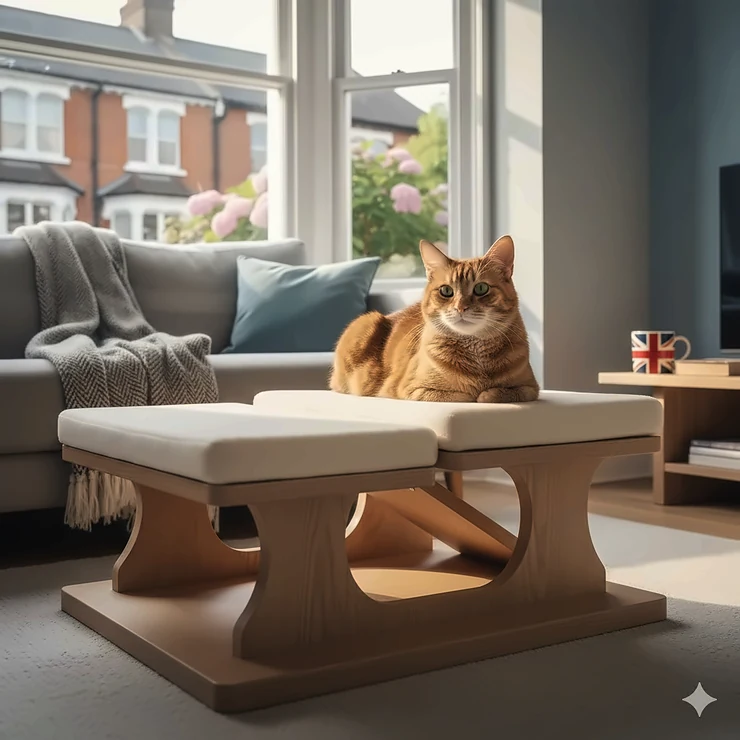
Your beloved moggy isn’t quite the spring-loaded ninja they used to be, are they? As cats age, their once-effortless leaps become more cautious, their landings less graceful. Research from Cats Protection indicates that arthritis affects up to 80% of cats over the age of 12, making traditional cat trees with high jumps genuinely uncomfortable or even painful for senior felines.
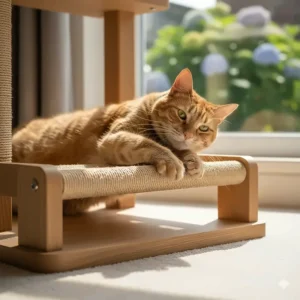
But here’s the thing: older cats still crave those elevated perches where they can survey their kingdom. They still need scratching posts to maintain their claws (even if they’re not sharpened as frequently). They still desire that cosy hideaway for afternoon kips. What they need is furniture designed with their ageing joints in mind—cat trees for older cats that prioritise accessibility over acrobatics.
I’ve spent countless hours researching and evaluating senior-friendly cat furniture, speaking with UK cat owners, and analysing products available on Amazon.co.uk. The difference between a standard cat tree and one designed for older cats boils down to thoughtful features: gradual steps instead of gaps, lower overall heights, gentler angles, and extra padding. This guide presents seven carefully selected options that transform climbing from a painful challenge into an enjoyable experience for your senior companion.
Whether your cat is managing arthritis, has reduced mobility from age, or simply prefers a more leisurely ascent these days, you’ll find the perfect solution here. Let’s ensure those golden years remain comfortable and enriching.
Quick Comparison Table
| Product | Height | Key Feature | Price Range | Best For |
|---|---|---|---|---|
| Feandrea PCT51WV1 | 96 cm | Wide perch & ramp | £36-£45 | Large senior cats |
| Trixie Emil Senior | 96 cm | 4 climbing steps | £55-£75 | Step-by-step climbers |
| Trixie Baza Senior | 70 cm | Low hammock design | £45-£60 | Hammock lovers |
| PawHut 4-Step Ladder | 59-64 cm | Stair-style access | £29-£40 | Budget-conscious owners |
| Feandrea PCT86W | 86 cm | Compact & stable | £31-£38 | Small spaces |
| Amazon Basics Tower | 80 cm | Simple & affordable | £28-£35 | Minimalist needs |
| Vesper V-Base | 62 cm | Modern design | £65-£85 | Style-conscious homes |
💬 Just one click – help others make better buying decisions too! 😊
Top 7 Cat Trees for Older Cats: Expert Analysis
1. Feandrea Cat Tree PCT51WV1 – Best for Large Senior Cats
The Feandrea PCT51WV1 stands out as an exceptional choice for older cats who still appreciate a bit of height but struggle with traditional jumps. This 96 cm tower features a thoughtfully designed ramp that connects the base to mid-level platforms, eliminating the need for sudden leaps.
Key Specifications:
- Dimensions: 48 x 48 x 96 cm
- Wide perch (18.9″ diameter) suitable for cats up to 7 kg
- Integrated scratching ramp covered in sisal
UK buyers consistently praise this model’s sturdy construction. “My 14-year-old British Shorthair took to it immediately,” notes one Amazon.co.uk reviewer. “The ramp makes all the difference—she can reach the top without any distress.”
✅ Pros:
- Generous platform sizes accommodate larger breeds
- Ramp provides gentle alternative to jumping
- Soft plush covering throughout
❌ Cons:
- Footprint requires decent floor space
- Assembly takes approximately 30-40 minutes
Price: £36.99-£44.99
The Feandrea brand has earned FSC certification, meaning the particleboard comes from responsibly managed forests—a nice eco-conscious bonus for environmentally aware cat parents.
2. Trixie Emil Senior Cat Tree – Best Step-by-Step Design
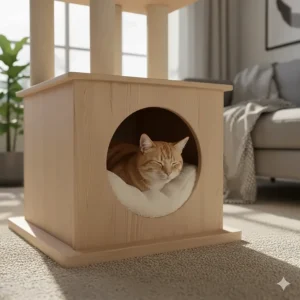
Specifically engineered for senior felines, the Trixie Emil showcases four distinct climbing aids that create a genuine staircase effect. Each step features adorable paw print embroidery and sits at comfortable intervals, allowing your cat to ascend level by level without strain.
Key Specifications:
- Dimensions: 69 x 59 x 96 cm
- Four graduated stepping platforms
- Cosy cave at base level with reversible cushion
One Zooplus reviewer shared: “My 18-year-old tomcat initially avoided it, but after a sprinkle of valerian spray, he now uses it regularly. Though I must say, he completely ignores the steps and jumps straight up!” This amusing anecdote highlights an important point—some cats remain surprisingly agile despite their age, whilst others genuinely benefit from the assisted climbing.
✅ Pros:
- Purpose-built for elderly cats
- Multiple rest points during ascent
- High-edge top bed provides security
❌ Cons:
- Some cats may bypass steps entirely
- Slightly higher price point
Price: £55.99-£74.99
The brown plush coating creates a warm, inviting atmosphere, and the sisal scratching surfaces help maintain claw health even when your cat’s scratching frequency decreases with age.
3. Trixie Baza Senior – Best Low-Profile Hammock Design
For cats who’ve developed a preference for staying closer to ground level, the Trixie Baza Senior offers an ideal solution. At just 70 cm tall, this compact structure features a supportive metal-rimmed hammock as its centrepiece—perfect for cats who love that gently swaying sensation.
Key Specifications:
- Height: 70 cm (27.6 inches)
- Hammock dimensions: 13″ x 11″
- Two platforms spaced just 8 inches apart
“The hammock supports my Maine Coon mix beautifully,” reports one UK buyer. “He’s a medium-to-large cat, and it holds his frame without any sagging or wobbling.” The close spacing between platforms means even cats with significant mobility challenges can navigate the structure confidently.
✅ Pros:
- Minimal height reduces fall risk
- Metal-rimmed hammock provides excellent support
- Quick 5-minute assembly
❌ Cons:
- Attached toy falls off easily
- Slight chemical smell initially (dissipates within days)
Price: £45.00-£59.99
The long-haired plush covering invites extended lounging sessions, and the jute scratching posts remain durable enough for regular use. This model particularly suits cats recovering from surgery or managing chronic conditions like hip dysplasia.
4. PawHut 4-Step Cat Ladder – Best Budget-Friendly Option
Sometimes simplicity wins, and the PawHut 4-Step Ladder proves that senior-friendly design needn’t break the bank. This clever stair-style structure doubles as both an independent cat tree and a helpful aid for reaching sofas or beds.
Key Specifications:
- Overall dimensions: 60L x 40W x 59-64H cm
- Weight capacity: Up to 5 kg
- Scratch posts integrated into each step
“Perfect for my elderly cats,” writes one satisfied customer. “Easily assembled with tools from my tool box, and they look rather cute too.” The compact design makes it incredibly versatile—pop it beside your bed, next to the sofa, or against a windowsill.
✅ Pros:
- Exceptional value (£29-£40)
- Lightweight and portable
- Each step lined with soft flannel
❌ Cons:
- Lower weight limit unsuitable for larger cats
- Basic aesthetics may not suit all décor
Price: £29.99-£39.99
The sisal-wrapped posts on each level give cats scratching opportunities at multiple heights, accommodating those who can no longer comfortably reach traditional vertical scratchers. For owners on a budget or those wanting to trial senior-friendly furniture before investing in something more substantial, the PawHut ladder represents an intelligent starting point.
5. Feandrea Cat Tower PCT86W – Best Compact Solution
When floor space comes at a premium but you still want to provide quality climbing opportunities, the Feandrea PCT86W delivers. This 86 cm tower manages to pack in a hammock, perch, and cave within a surprisingly modest footprint.
Key Specifications:
- Base dimensions: 40 x 40 cm
- Height: 86 cm
- Three distinct resting areas
“Excellent stability despite the compact size,” notes one reviewer. “Two cats playing and chasing each other on it, and it doesn’t budge a millimetre.” That stability proves crucial for senior cats, who often develop balance issues and need furniture that won’t shift beneath them.
✅ Pros:
- Space-efficient design
- Three scratching posts
- Soft perches throughout
❌ Cons:
- Surfaces may feel narrow for very large cats
- Hammock weight limit around 8-10 kg
Price: £31.44-£37.99
The light grey colour scheme blends seamlessly with contemporary interiors, and the plush covering encourages face-rubbing and nuzzling—behaviours that senior cats often increase as scent-marking becomes more important to their sense of security.
6. Amazon Basics Cat Tower – Best Minimalist Design
The Amazon Basics range has earned a reputation for no-nonsense functionality at accessible prices, and their medium cat tower upholds that tradition. Measuring 80 cm tall with a beige finish, this straightforward structure provides essential features without overwhelming extras.
Key Specifications:
- Dimensions: 40L x 40W x 80H cm
- Two platforms with sisal posts
- Simple two-tier design
UK customers appreciate the honest value proposition: “Does exactly what it claims without any fancy bells and whistles,” reads one typical review. For senior cats who’ve never been particularly adventurous climbers, this pared-back approach often proves more appealing than complex multi-level towers.
✅ Pros:
- Straightforward assembly
- Affordable maintenance
- Neutral colour suits any room
❌ Cons:
- Lacks specialty features like ramps or steps
- Platform gaps may still challenge very mobility-impaired cats
Price: £28.25-£34.99
Whilst not specifically designed for elderly cats, the moderate height and stable base make it workable for many seniors, particularly those in the early stages of age-related mobility changes. Consider adding cushioned mats beneath it to soften landings.
7. Vesper V-Base – Best Premium Design
For those who refuse to compromise on aesthetics, the Vesper V-Base brings Scandinavian-inspired design to senior cat furniture. The 62 cm height keeps things accessible whilst the walnut veneer and modern lines complement upscale interiors beautifully.
Key Specifications:
- Height: 62 cm
- Real wood veneer construction
- Removable, machine-washable cushions
“Finally, a cat tree that doesn’t look like cat furniture,” exclaims one delighted owner. The V-shaped base provides excellent stability, crucial for cats who’ve become more cautious about climbing. The cushioned platforms offer proper orthopaedic support for ageing joints.
✅ Pros:
- Furniture-grade appearance
- Easy-clean cushions
- Substantial build quality
❌ Cons:
- Premium pricing (£65-£85)
- Limited colour options
Price: £65.00-£84.99
The investment pays dividends in longevity and style. Unlike traditional carpeted towers that show wear quickly, the Vesper maintains its appearance for years. The lower height specifically accommodates senior cats whilst the solid construction means it’ll last well into your cat’s twilight years.
Understanding Your Senior Cat’s Changing Needs
When Does a Cat Become “Senior”?
According to veterinary classifications, cats enter their senior years between 11-14 years old, with those over 15 considered geriatric. However, these are just numbers—individual cats age at different rates depending on breed, lifestyle, and health history.
You might notice your previously acrobatic feline taking more considered approaches to jumping. Perhaps they’re pausing before leaping onto the sofa, or they’ve stopped using their favourite high perch. These subtle changes signal that it’s time to reassess their furniture needs.
The Impact of Arthritis on Mobility
Research from PDSA veterinary services reveals that over 90% of cats over 12 years old show signs of arthritis on X-rays, even when symptoms aren’t immediately obvious. This degenerative joint disease makes movement uncomfortable, particularly:
- Jumping up to elevated surfaces
- Landing from heights
- Navigating narrow or unstable platforms
- Extended periods of standing
Traditional cat trees, with their wide gaps between levels and emphasis on vertical height, essentially become obstacle courses for arthritic cats. They still desire the mental stimulation and territorial advantages of elevated spaces, but they need gentler access methods.
Beyond Arthritis: Other Age-Related Changes
Arthritis isn’t the only concern. Senior cats often experience:
Reduced muscle mass: Years of activity can’t entirely prevent age-related muscle loss, affecting balance and strength.
Decreased flexibility: The spine becomes less supple, making tight turns and contortions difficult.
Vision changes: Reduced night vision or developing cataracts make depth perception trickier.
Cognitive changes: Some elderly cats develop feline cognitive dysfunction, similar to dementia in humans, affecting spatial awareness.
All these factors combine to make traditional cat furniture increasingly unsuitable as your companion ages.
Essential Features of Senior-Friendly Cat Trees
Gradual Access Methods
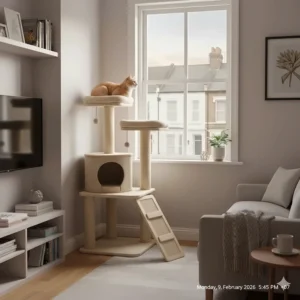
The hallmark of an excellent cat tree for older cats is its approach to vertical movement. Look for:
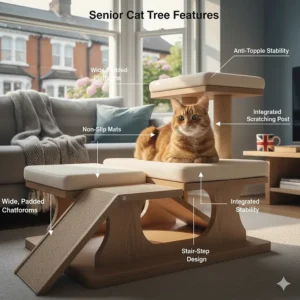
Built-in ramps: Gentle inclines that eliminate jumping entirely.
Close-spaced platforms: Steps positioned no more than 20-25 cm apart, allowing cats to climb level-by-level.
Wide landings: Generous platform sizes (minimum 30 cm diameter) that provide secure footing.
Think of it like the difference between a ladder and a staircase—both reach the same destination, but one demands far less physical effort and coordination.
Stability and Safety
Senior cats become more cautious with age, and rightfully so—their recovery from falls takes longer. Premium cat trees for older cats feature:
- Heavy bases that prevent tipping
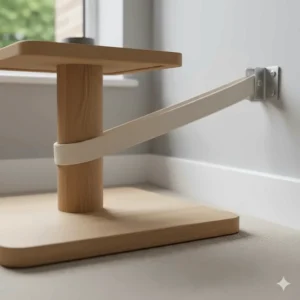
- Wall-attachment options for extra security
- Non-slip surfaces on platforms
- Rounded edges to prevent injury
I cannot overstate the importance of stability. A wobbly structure will deter even a confident senior cat, whilst a rock-solid tower encourages exploration.
Comfort Considerations
Elderly joints appreciate extra padding. Seek out:
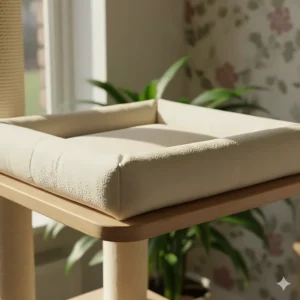
- Thick cushioning on all resting surfaces
- Soft plush or faux-fur coverings
- Supportive edges on beds (helps arthritic cats feel secure)
- Temperature-appropriate materials (senior cats often feel cold more easily)
Some higher-end models include memory foam cushions—not essential, but genuinely beneficial for cats with pronounced arthritis or hip dysplasia.
Appropriate Height
Whilst cats instinctively seek height, a senior-friendly tree needn’t tower to the ceiling. The sweet spot sits between 60-100 cm tall—high enough to satisfy territorial instincts, low enough to limit fall danger. Consider your individual cat’s capabilities; a tree that’s 70 cm tall offers all the benefits without the risks of taller structures.
Material Matters: What to Look For
Scratching Surfaces
Even senior cats need to scratch, though perhaps less vigorously than their younger counterparts. Quality cat trees incorporate:
Sisal rope: Durable, long-lasting, and satisfying for cats to dig claws into.
Jute: Similar to sisal but slightly softer—easier on older, potentially brittle claws.
Carpet: Provides good texture but wears faster than natural fibres.
Look for posts wrapped completely in scratching material rather than just small sections. This accommodates cats who can no longer comfortably reach high up traditional scratchers.
Structural Materials
Particleboard with E1 certification: Standard construction material that’s safe and stable when properly manufactured. E1 certification ensures low formaldehyde emissions.
Solid wood: Premium option offering superior durability and aesthetic appeal (see Vesper range).
MDF: Medium-density fibreboard—sturdy but heavier than particleboard.
Avoid overly lightweight construction. A cat tree for older cats should feel substantial underfoot, not flimsy or prone to wobbling.
Covering Fabrics
Plush/faux fur: Soft, warm, inviting—excellent for senior cats who spend extended periods lounging.
Cotton/linen blends: More breathable, suitable for cats who run warm or during summer months.
Removable covers: Ideal for hygiene and maintenance, particularly relevant as older cats may have occasional litter box accidents.
The covering should be easy to spot-clean or ideally machine-washable. Senior cats sometimes struggle with grooming, leading to matted fur that transfers to their furniture.
Positioning Your Cat Tree for Maximum Benefit
Strategic Placement Considerations
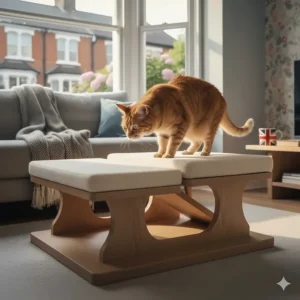
Where you position the tree matters as much as which one you choose. Senior cats benefit from:
Proximity to favourite spots: Place near a window they enjoy watching, close to their preferred sleeping areas, or along regular patrol routes.
Temperature-controlled zones: Avoid draughty areas or direct radiator heat. Arthritis symptoms worsen in cold conditions, so maintaining a comfortable ambient temperature proves crucial.
Low-traffic areas: Whilst cats enjoy observing household activity, they also need quiet retreat spaces. Senior cats particularly value peaceful locations away from young children or boisterous dogs.
Stable flooring: Carpet provides natural grip and prevents the structure from sliding. On hardwood or tile floors, use non-slip mats beneath the base.
Multi-Tree Households
If space and budget allow, consider multiple smaller structures rather than one large tower. This approach:
- Reduces the need for extensive climbing
- Provides options throughout your home
- Accommodates varying energy levels throughout the day
- Offers backup if one location becomes uncomfortable (cold draughts, increased household traffic, etc.)
Some owners report success with a “stepping stone” approach—a low platform near the sofa, another by the window, creating a gentle pathway between favourite perches without demanding significant vertical movement.
Top 7 vs Traditional Cat Trees: Key Differences
| Feature | Senior-Friendly Trees | Traditional Trees |
|---|---|---|
| Platform spacing | 8-20 cm apart | 30-50 cm gaps |
| Access method | Ramps, steps, close platforms | Large jumps required |
| Typical height | 60-100 cm | 120-200+ cm |
| Base stability | Extra-wide, heavy | Standard weight |
| Cushioning | Enhanced padding | Basic carpet |
| Price range | £29-£85 | £25-£150+ |
Budget Breakdown: Finding Value at Every Price Point
| Price Range | What to Expect | Recommended Options |
|---|---|---|
| £25-£40 | Basic construction, essential features, limited aesthetics | PawHut 4-Step, Amazon Basics Tower |
| £40-£60 | Mid-range quality, senior-specific features, decent durability | Feandrea PCT86W, Trixie Baza Senior |
| £60-£85 | Premium materials, excellent stability, furniture-grade appearance | Vesper V-Base, Trixie Emil Senior |
Remember: the cheapest option isn’t always the most economical long-term. A well-constructed tree that lasts 5-7 years represents better value than a budget model requiring replacement every 18 months. Factor in your cat’s weight, activity level, and how many years you anticipate needing senior-appropriate furniture when making your decision.
✨ Don’t Miss These Exclusive Deals!
🔍 Take your senior cat’s comfort to the next level with these carefully selected products. Click on any highlighted item to check current pricing and availability on Amazon.co.uk. These specially designed trees will help create an accessible environment your elderly feline will genuinely enjoy!
Helping Your Cat Adjust to New Furniture
Introduction Strategies
Even cats familiar with climbing structures may approach new furniture cautiously, particularly seniors whose vision or cognitive function has declined. Try these techniques:
Scent familiarisation: Rub a cloth on your cat’s favourite sleeping spot, then transfer that scent to the new tree.
Treats and encouragement: Place high-value treats on the lowest platform initially, gradually moving them higher as confidence builds.
Catnip or valerian: A light sprinkle can make the tree irresistibly attractive to receptive cats.
Patience: Some cats investigate immediately; others need several days of observation before attempting their first climb. Don’t force interaction.
Positive Reinforcement
Reward any engagement with the tree—even just sniffing it warrants praise and a treat. When your cat successfully uses a platform or scratching post, offer verbal encouragement in a calm, pleased tone. Avoid startling them whilst they’re on the tree; senior cats often startle more easily and may associate the structure with the frightening incident rather than the trigger itself.
When to Seek Alternatives
If after two weeks your cat shows zero interest or appears distressed when placed near the tree, reassess. Perhaps the height still intimidates them, or the location isn’t suitable. Sometimes, swapping positions with existing furniture or trying a different style makes all the difference.
Maintenance Tips for Longevity
Regular Cleaning Schedule
Weekly: Vacuum platforms and base to remove accumulated fur and dander. Senior cats often groom less effectively, meaning more loose hair.
Monthly: Spot-clean any soiled areas with pet-safe cleaner. Check all connections and tighten any loosened screws.
Quarterly: Deep-clean removable cushions according to manufacturer instructions. Inspect sisal/jute surfaces for excessive wear.
Replacement Considerations
Quality cat trees can last 5-7 years with proper care, but certain components may need earlier replacement:
Cushions: Available separately for premium brands like Vesper and Trixie. Worth replacing when they lose loft or develop odours that cleaning can’t eliminate.
Scratching surfaces: Some manufacturers sell replacement sisal posts or rope. Alternatively, wrap fresh sisal around worn posts yourself—relatively straightforward DIY if you’re handy.
Toys: Dangly toys inevitably get batted off or chewed apart. Most attach via elastic that’s easily replaced.
Signs It’s Time to Replace
- Significant wobbling despite tightening
- Structural damage (cracks, splits in platforms)
- Persistent odours even after thorough cleaning
- Your cat’s mobility has declined further, requiring an even more accessible design
Complementary Products for Senior Cat Comfort
Orthopaedic Bedding
Even with a perfect cat tree, your senior companion spends considerable time in other locations. Consider adding:
- Memory foam cat beds near the tree base
- Heated pads for arthritic joints (particularly beneficial during UK winters)
- Raised food bowls to reduce neck strain during meals
Supplemental Ramps and Steps
For particularly mobility-impaired cats, standalone ramps provide access to sofas, beds, or windowsills. The PawHut steps work brilliantly in conjunction with a low-profile tree, creating a complete accessibility solution throughout your home.
Joint Support Supplements
Whilst this guide focuses on furniture, many UK veterinarians recommend glucosamine and omega-3 supplements for arthritic cats. Always consult your vet before adding supplements, as some require monitoring of kidney function.
Common Concerns Addressed
“My cat won’t use it”
This ranks as the most frequent worry. Remember: senior cats often take longer to accept changes. Position the tree where your cat already spends time, use scent familiarisation, and resist the urge to force interaction. Some cats need weeks to decide the new structure is trustworthy.
“Will it work for my very large cat?”
Check weight limits carefully. Most mid-range options support cats up to 6-7 kg comfortably, whilst premium models like the Feandrea PCT51WV1 or Vesper V-Base accommodate larger breeds up to 10 kg. When in doubt, contact the manufacturer directly—most UK-based companies respond quickly to product queries.
“How do I know if my cat has arthritis?”
Watch for subtle signs: reduced grooming (particularly the lower back and base of tail), reluctance to jump, stiffness after resting, irritability when handled, or changes in litter box habits. Blue Cross veterinary guidance provides excellent information on recognising feline arthritis. When uncertain, book a check-up—early intervention makes significant differences in quality of life.
“Can’t I just use my existing cat tree?”
If your current tree works, brilliant! However, if you’ve noticed decreased use or your cat avoiding certain levels, it’s likely no longer meeting their needs. Adding cushions beneath for softer landings or placing steps beside it can extend its usefulness, but purpose-built senior furniture typically proves more effective long-term.
✨ Share the Love!
💬 If you’ve found this guide helpful, why not share it with fellow cat parents? Every senior moggy deserves comfort in their golden years—spread the word on your favourite social media platform!
Frequently Asked Questions
❓ What age should I start using a cat tree for older cats?
❓ Are low cat trees better for elderly cats with arthritis?
❓ How much should I spend on a cat tree for my senior cat?
❓ Can I make my existing cat tree more suitable for an older cat?
❓ Do cat trees with ramps work better than those with steps?
Conclusion: Investing in Your Senior Cat’s Quality of Life
Choosing the right cat tree for older cats represents more than purchasing pet furniture—it’s a commitment to maintaining your companion’s dignity and joy throughout their golden years. As we’ve explored, the best options balance accessibility with stimulation, safety with comfort, practicality with aesthetics.
Whether you opt for the budget-friendly PawHut 4-Step Ladder at £29.99, the purpose-built Trixie Emil Senior with its thoughtful climbing aids, or the premium Vesper V-Base at £84.99, you’re addressing a genuine need. Senior cats deserve environments that accommodate their changing bodies without diminishing their quality of life.
Remember: every cat ages differently. The 12-year-old moggy still bouncing about may not yet need assisted climbing, whilst a 10-year-old with early arthritis benefits immediately from senior-friendly furniture. Pay attention to your individual cat’s behaviour and adapt accordingly.
The seven options reviewed here represent the best currently available on Amazon.co.uk, combining real-world performance with thoughtful design and reasonable pricing. Each addresses the core challenges senior cats face: reduced mobility, decreased strength, and the ongoing desire for vertical territory.
Your elderly feline has given you years of companionship, entertainment, and affection. Providing them with comfortable, accessible furniture during their later years seems a small gesture in return—yet it makes an enormous difference to their daily happiness. Choose wisely, introduce patiently, and watch your senior cat rediscover the pleasure of elevated lounging.
Recommended for You
- 7 Best Cat Tree for Kittens in 2026: Expert UK Buyer’s Guide
- 7 Best Indoor Cat Exercise Equipment UK – Expert-Tested 2026
- 7 Best Door Frame Cat Scratchers UK 2026
Disclaimer: This article contains affiliate links. If you purchase products through these links, we may earn a small commission at no additional cost to you. Prices shown are approximate and may vary.
✨ Found this helpful? Share it with your mates! 💬🤗
