
In This Article
Picture this: you’ve just invested in a beautiful new sofa, only to find your beloved moggy has turned it into her personal scratching gallery within a week. Sound familiar? You’re not alone. Thousands of UK cat owners face this daily battle, but there’s a solution that’s both elegant and environmentally conscious.
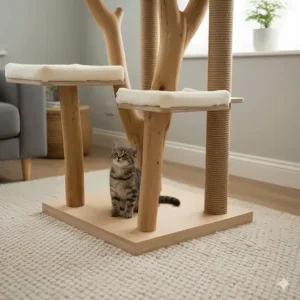
Natural wood cat trees represent the pinnacle of feline furniture, combining aesthetic appeal with functional design. Unlike their carpet-covered cousins that clash with your carefully curated interior, these sophisticated structures actually enhance your home décor whilst satisfying your cat’s primal instincts. Made from sustainable materials like birch, oak, and pine, they’re built to withstand even the most enthusiastic scratching sessions from your furry companion.
According to research published on Wikipedia, scratching is an essential natural behaviour for cats, serving multiple purposes from claw maintenance to territorial marking. A natural wood cat tree provides the perfect outlet for these instincts, protecting your furniture whilst keeping your cat physically and mentally stimulated.
In this comprehensive guide, I’ll walk you through seven exceptional natural wood cat trees available in the UK for 2026, ranging from budget-friendly options to premium artisan pieces. Whether you’re a first-time cat owner or looking to upgrade your current setup, you’ll find detailed specifications, honest customer feedback, and expert insights to help you make an informed decision. Let’s dive in!
Quick Comparison Table
| Product | Material | Height | Price Range (£) | Best For | Rating |
|---|---|---|---|---|---|
| TRIXIE Santo Birch Wood | Real birch wood | 73 cm | £140-£145 | Premium minimalist design | ⭐⭐⭐⭐½ |
| Feandrea PCT190W01V1 | FSC-certified wood | 206 cm | £74-£85 | Large multi-cat households | ⭐⭐⭐⭐⭐ |
| PawHut 131cm Activity Centre | Particle board | 131 cm | £30-£37 | Budget-conscious buyers | ⭐⭐⭐⭐ |
| FUKUMARU Wooden Cat Tower | Natural rubber wood | 136 cm | £80-£95 | Modern aesthetic | ⭐⭐⭐⭐⭐ |
| Natural Paradise Magnolia XL | Baltic birch plywood | 175 cm | £180-£220 | Heavy/large cats | ⭐⭐⭐⭐⭐ |
| Woodside Bespoke Cat Tree | Real oak/tree branches | Custom | £300-£600 | Luxury statement piece | ⭐⭐⭐⭐⭐ |
| Virgin Natural Wood Tree | Polish forest wood | Variable | £150-£250 | Outdoor/indoor versatility | ⭐⭐⭐⭐½ |
💬 Just one click – help others make better buying decisions too! 😊
Top 7 Natural Wood Cat Trees: Expert Analysis
1. TRIXIE Santo 73cm Real Birch Wood Cat Tree
The TRIXIE Santo stands out as a masterclass in minimalist Scandinavian design. Featuring genuine birch wood trunks sourced from sustainable forests, this compact tree offers two levels of feline paradise without overwhelming smaller spaces. The cream-coloured cushions provide soft resting spots, whilst the natural wood posts satisfy your cat’s scratching urges authentically.
Key Specifications:
- Real birch wood construction from sustainable forestry
- Height: 73 cm (perfect for flats and smaller homes)
- Two plush-lined platforms for relaxation
Price: £140.71 on Amazon.co.uk
Customer Feedback: UK buyers particularly appreciate the unusual aesthetic that blends seamlessly with contemporary interiors. One reviewer noted, “Finally, a cat tree that doesn’t look like it belongs in a nursery!” However, some mention it’s better suited for cats under 7kg due to the compact platform sizes.
✅ Pros:
- Authentic birch wood offers superior durability
- Minimalist design complements modern homes
- Eco-friendly materials from responsible sources
❌ Cons:
- Premium price point may not suit all budgets
- Limited height for very active climbers
Best For: Style-conscious cat owners with one or two medium-sized cats who value sustainability and aesthetics.
2. Feandrea PCT190W01V1 Large Cat Tower
If you’re seeking maximum value without compromising on features, the Feandrea PCT190W01V1 delivers spectacularly. This towering 206 cm structure comes with an impressive array of features: 13 scratching posts, two caves, dual perches, a basket, and a hammock. It’s FSC-certified, meaning the wood materials meet stringent environmental standards established by the Forest Stewardship Council UK.
Key Specifications:
- FSC-certified sustainable materials
- Height: 206 cm with 13 scratch posts
- Supports multiple cats comfortably
Price: £74.99-£84.99 on Amazon.co.uk
Customer Feedback: With over 10,000+ verified reviews averaging 4.8 stars, British cat owners rave about its stability and value. Multiple buyers report their Maine Coons and Ragdolls use it daily without any wobbling issues. One Plymouth customer shared, “Assembled in under 40 minutes, and my three cats haven’t stopped using it since. Absolute bargain!”
✅ Pros:
- Exceptional value for a multi-level tower
- FSC certification ensures responsible forestry
- Suitable for heavy/large breed cats
❌ Cons:
- Requires significant vertical space
- Assembly takes 30-45 minutes
Best For: Multi-cat households seeking professional-quality furniture at mid-range prices.
3. PawHut 131cm Multi-Activity Cat Centre
The PawHut 131cm Activity Centre proves you don’t need to break the bank for quality feline furniture. Featuring solid particle board construction wrapped in plush fabric, this beige and white tower includes a cosy condo, three perches, a hammock, and four sisal-wrapped scratching posts. It’s ideal for introducing kittens to vertical territory.
Key Specifications:
- Particle board with plush covering
- Height: 131 cm
- Weight capacity: 15 kg
Price: £30.99-£36.99 on Amazon.co.uk
Customer Feedback: UK buyers consistently praise its easy assembly and sturdy construction. With 4.6/5 stars from hundreds of reviews, customers appreciate the excellent price-to-quality ratio. A Manchester buyer noted, “My two rescue cats took to it immediately. For under £40, I couldn’t ask for better.”
✅ Pros:
- Budget-friendly without sacrificing stability
- Simple assembly process
- Perfect height for most homes
❌ Cons:
- Plush material requires regular hoovering
- May not suit very large or heavy cats
Best For: First-time cat owners or those wanting a reliable starter tree without major investment.
4. FUKUMARU 136cm Wooden Cat Tower
The FUKUMARU Wooden Cat Tower brings Japanese-inspired minimalism to British homes. Constructed from natural rubber wood with a retro-style brown veneer, this tower features a padded plush perch, cosy cave, hammock, and scratching posts. The aesthetic is refreshingly different from traditional cat trees, resembling quality furniture rather than pet accessories.
Key Specifications:
- Natural rubber wood with wood veneer
- Height: 136 cm
- Includes anti-tip safety strip
Price: £80-£95 on Amazon.co.uk
Customer Feedback: British customers love how this tree integrates into their décor. Reviews highlight the easy assembly and impressive build quality. A London reviewer shared, “My quite large tomcat sleeps on top every night. It carries his weight perfectly, and honestly, it’s prettier than some of my actual furniture!”
✅ Pros:
- Sophisticated wooden aesthetic
- Large stable base with anti-slip pads
- Suitable for heavier cats
❌ Cons:
- Wooden platforms can be slippery for some cats
- Mid to upper price bracket
Best For: Design-conscious owners wanting furniture that doesn’t scream “cat tree” whilst providing excellent functionality.
5. Natural Paradise Magnolia XL Plus
The Natural Paradise Magnolia XL Plus represents serious engineering for serious cats. Constructed from Baltic birch plywood from sustainable forestry, this 175 cm giant features extra-thick scratching posts (14.3 cm diameter), wooden slatted dens, and Oeko-Tex® certified cushions. It’s designed specifically for large breeds like Maine Coons and Ragdolls.
Key Specifications:
- Sustainable Baltic birch plywood
- Height: 175 cm with 14.3 cm diameter posts
- Machine-washable cushions at 30°C
Price: £180-£220 on bitiba.co.uk
Customer Feedback: UK owners of large breed cats consistently give this five stars. One Norfolk customer with Maine Coons reported, “I’ve had this for 8 years, and it still looks fantastic. Worth every penny for the quality and durability.” The wooden den walls withstand even the most vigorous scratching sessions.
✅ Pros:
- Exceptional build quality for longevity
- Specifically engineered for large/heavy cats
- Sustainable materials with certifications
❌ Cons:
- Premium pricing
- Requires substantial floor space
Best For: Owners of large breed cats willing to invest in furniture that lasts a decade or more.
6. Woodside Bespoke Cat Tree
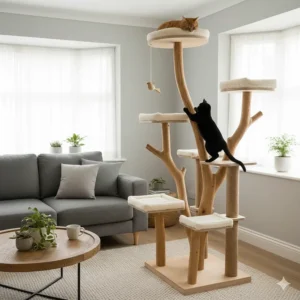
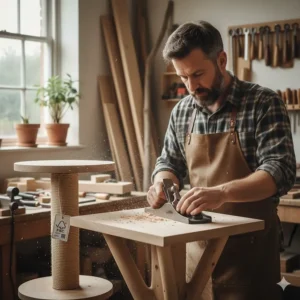
For those seeking truly unique furniture, Woodside Cat Trees offers handcrafted masterpieces using real tree branches, oak, and quality hardwoods. Each piece is custom-designed to fit your space and your cats’ needs, treated with cat-safe waxes to enhance the natural wood beauty. These aren’t just cat trees; they’re conversation-starting sculptures.
Key Specifications:
- Real tree branches and solid oak
- Completely bespoke dimensions
- Cat-safe wax treatments
Price: £300-£600+ depending on specifications
Customer Feedback: British customers describe these as “works of art.” Testimonials highlight the personal service and quality craftsmanship. A Cotswolds customer shared, “Theresa and Ady created something magical that fits perfectly in our cottage. Our boys adore it, and visitors can’t believe it’s a cat tree!”
✅ Pros:
- Completely unique, artisan-crafted furniture
- Made-to-measure for your exact space
- Supports UK small business
❌ Cons:
- Significant investment required
- Lead time for custom orders
Best For: Cat enthusiasts wanting bespoke furniture that doubles as interior art whilst supporting British craftsmanship.
7. Virgin Natural Wood Cat Tree
The Virgin Natural Wood Cat Tree from Cat Tree UK Ltd uses virgin wood from pollution-free forests in Southern Poland. After harvesting, bark is removed and wood is dried using special chamber techniques for exceptional strength. Available in indoor and outdoor versions (with hempex rope for weather resistance), these trees showcase natural wood cracks that prove 100% authenticity.
Key Specifications:
- Virgin Polish forest wood
- Treated for indoor/outdoor use
- Natural appearance with authentic wood cracks
Price: £150-£250 depending on configuration
Customer Feedback: UK buyers on Trustpilot give Cat Tree UK excellent ratings. Customers appreciate the robust construction and fast delivery. A Scottish customer noted, “The quality is outstanding. It’s been in our garden for two years through all weathers, and it’s still perfect.”
✅ Pros:
- Versatile indoor/outdoor capability
- Genuine natural wood appearance
- Excellent UK customer service
❌ Cons:
- Natural variations in wood appearance
- May require treatment refresh after years outdoors
Best For: Owners wanting genuine natural wood with outdoor durability.
Understanding Natural Wood Cat Trees: More Than Just Furniture
Natural wood cat trees aren’t simply prettier alternatives to carpet-covered towers – they’re fundamentally different products designed with both feline welfare and environmental responsibility in mind.
What Defines a Natural Wood Cat Tree?
A genuine natural wood cat tree utilises real wood as its primary structural material rather than plastic or heavily processed particle boards. This might include:
Solid Wood Construction: Trees crafted from oak, birch, pine, or other hardwoods offer unparalleled durability. According to the Woodland Trust’s FSC certification standards, sustainably managed forests ensure these materials come from responsible sources that protect biodiversity.
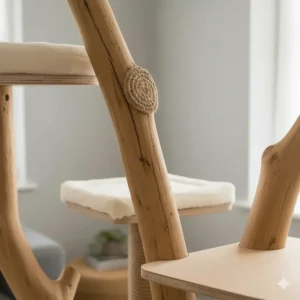
Real Tree Branches: Some premium manufacturers incorporate actual tree branches, providing the most authentic scratching experience possible. These branches often feature natural bark textures that cats instinctively prefer.
FSC-Certified Materials: Products bearing the FSC (Forest Stewardship Council) tick-tree logo guarantee the wood comes from forests managed to strict environmental, social, and economic standards. This certification matters greatly in our climate-conscious era.
The Science Behind Scratching Behaviour
Why do cats need to scratch, and why does natural wood satisfy this urge better than synthetic alternatives? Research from VCA Animal Hospitals explains that scratching serves multiple crucial functions:
Claw Maintenance: Scratching removes the dead outer layer of claws, keeping them sharp and healthy. Natural wood provides ideal resistance – firm enough to be effective but gentle enough not to damage delicate paw pads.
Scent Marking: Cats possess scent glands in their paws. When they scratch, they deposit pheromones that mark territory. Wood’s porous nature holds these scents more effectively than smooth plastics.
Physical Exercise: A good scratching session stretches and flexes muscles from paws to shoulders. Tall natural wood trees encourage full-body stretches, promoting flexibility and muscle tone.
Emotional Wellbeing: Scratching releases endorphins and helps cats manage stress. It’s why you’ll often see cats scratching after waking from a nap or during exciting moments.
Environmental Benefits
Choosing natural wood cat trees supports sustainable forestry practices. Many manufacturers now source materials from FSC-certified forests, ensuring every tree purchased contributes to responsible woodland management rather than deforestation. Additionally, wood is biodegradable, unlike synthetic cat trees that contribute to landfill waste for decades.
Choosing the Right Natural Wood Cat Tree: Complete Buyer’s Guide
Consider Your Cat’s Needs First
Size and Weight: Large breed cats like Maine Coons, Norwegian Forest Cats, or Ragdolls require sturdier construction with wider platforms. Check weight limits carefully – quality natural wood trees should support at least 15-20 kg.
Age and Mobility: Kittens and young cats benefit from multiple levels to climb and explore. Senior cats or those with mobility issues need lower platforms with easy access. Some trees feature ramps or stepped levels specifically for elderly felines.
Personality Type: Is your cat a climber who scales curtains? Opt for tall trees with multiple levels. Does she prefer hiding? Choose designs with enclosed caves or dens. Observe your cat’s behaviour for a few days before purchasing.
Essential Features to Look For
Stability: A wobbly tree is a dangerous tree. Natural wood construction typically offers superior stability compared to lighter alternatives. Look for:
- Wide, heavy bases (minimum 50 x 50 cm for tall trees)
- Anti-topple wall fixings for extra security
- Solid wood posts rather than hollow tubes
Scratching Surfaces: Not all natural wood trees include scratch posts. Ensure your chosen model features:
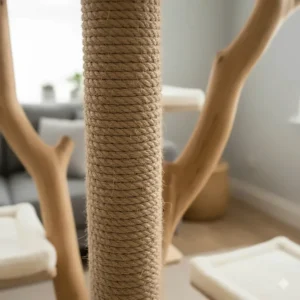
- Sisal rope wrapped posts (natural, durable material cats prefer)
- Bare wood sections for variety
- Minimum post diameter of 8-10 cm for effective scratching
Platform Quality: Examine platform materials carefully. Solid wood platforms last indefinitely but can be slippery. Some designs incorporate:
- Removable, washable cushions
- Non-slip surfaces or mats
- Adequate spacing between levels (30-40 cm)
Space Planning
Measure twice, buy once! Natural wood cat trees command presence in your home, so careful planning prevents buyer’s remorse.
Height Considerations: UK ceiling heights typically range from 2.3 to 2.7 metres. Floor-to-ceiling models offer maximum climbing but require precise measurement. Freestanding trees between 120-180 cm suit most homes comfortably.
Floor Space: Calculate the footprint including a 30 cm safety margin around the tree. Cats need space to jump onto and off platforms without obstacles.
Placement Strategy: Position your tree near windows for entertainment, away from radiators (overheating risk), and in rooms where your cat naturally spends time. Avoid isolated corners – cats prefer social spaces where they can observe household activities.
Budget Planning
Natural wood cat trees span a wide price spectrum:
Budget Range (£30-£80): Particle board with wood veneer, basic features, suitable for small cats or kittens.
Mid-Range (£80-£200): Quality wood construction, FSC certification, multiple features, suitable for most households.
Premium (£200-£600+): Solid hardwood, bespoke designs, exceptional durability, often handcrafted.
Remember: a quality natural wood tree is an investment lasting 5-10+ years. Calculate the cost per year rather than viewing it as a one-time expense.
Materials Explained: What Your Natural Wood Cat Tree Is Really Made From
Understanding the materials in your cat tree helps you make informed decisions about quality, sustainability, and value.
Solid Wood Types
Birch: Light-coloured, fine-grained, and exceptionally strong. Baltic birch plywood (used in premium trees like Natural Paradise) consists of multiple thin layers cross-bonded for extraordinary strength-to-weight ratio.
Oak: Dense, durable, and gorgeous. Oak’s natural grain patterns create stunning visual appeal. It’s heavier than birch, providing excellent stability, though typically more expensive.
Pine: Softer than oak or birch but still robust. Pine offers good value whilst maintaining natural aesthetics. It scratches more easily but develops a lovely patina over time.
Rubber Wood: Increasingly popular in modern designs, rubber wood comes from latex-producing trees at the end of their productive life. It’s sustainable, dense, and resists warping.
Engineered Wood Products
FSC-Certified Particle Board: Made from wood particles bonded with resin, quality particle board is stable and affordable. FSC certification ensures responsible sourcing. Whilst not “solid” wood, it’s wood nonetheless.
MDF with Wood Veneer: Medium-density fibreboard topped with real wood veneer combines affordability with natural aesthetics. Quality varies significantly – check for thick veneers (minimum 1mm) that won’t peel.
Baltic Birch Plywood: Premium plywood made from birch veneers bonded in alternating grain directions. Stronger than many solid woods whilst being lighter, it’s ideal for larger cat tree structures.
Finishing and Treatments
Natural Oils and Waxes: Premium manufacturers use cat-safe wood oils or waxes to enhance wood beauty whilst protecting against moisture. These treatments bring out natural grain patterns beautifully.
Untreated Wood: Some trees feature completely untreated wood, offering the most natural experience. Whilst authentic, untreated wood may dry out over time in centrally heated homes.
Stains and Varnishes: Ensure any stains or varnishes are explicitly pet-safe. Some manufacturers use water-based, non-toxic finishes that protect wood without endangering cats.
Health and Safety Considerations
Toxicity and Chemical Exposure
Cats groom themselves constantly, ingesting anything on their paws. This makes chemical safety paramount:
Formaldehyde: Some particle boards contain formaldehyde-based adhesives. Look for E1 or E0 rated boards (European standards for low formaldehyde emissions) or solid wood alternatives.
VOCs: Volatile Organic Compounds from paints, stains, or adhesives can affect air quality. Choose products advertised as “low-VOC” or “VOC-free.”
Oeko-Tex Certification: This standard tests textiles (cushions, fabrics) for harmful substances. Products like Natural Paradise’s Oeko-Tex certified cushions guarantee safety.
Structural Safety
Tip-Over Prevention: The tragic reality is that poorly designed cat trees can topple. Always:
- Use provided anti-tip brackets with tall trees
- Position trees away from climbing routes to high shelves
- Check stability regularly, especially after moves or cleaning
Sharp Edges: Inspect all edges and corners. Quality natural wood trees feature rounded edges and smooth finishes to prevent injuries.
Weight Distribution: Ensure platforms are properly supported. Watch for sagging or bending, particularly on budget models, which indicates structural weakness.
Hygiene and Maintenance
Wood Cleaning: Wipe wooden surfaces with slightly damp cloths. Avoid harsh chemicals or excessive water, which can damage wood and finishes.
Cushion Care: Remove and wash cushions monthly using pet-safe detergent at 30°C. Many quality trees feature easily removable, machine-washable components.
Parasite Prevention: Check regularly for signs of fleas or other parasites, particularly in crevices and fabric areas. Natural wood’s smooth surfaces make inspection easier than heavily carpeted alternatives.
Maximising Your Investment: Care and Maintenance Tips
Daily and Weekly Maintenance
Quick Inspections: Spend 30 seconds daily checking for:
- Loose screws or bolts (tighten immediately)
- Fraying sisal rope (replace before complete wear)
- Splintering or damaged wood (sand smooth)
Debris Removal: Hoover platforms and crevices weekly to remove fur, litter tracked from paws, and general dust. This prevents buildup that can harbour bacteria or parasites.
Scent Refreshing: Cats mark their territory on trees. Whilst this is normal and desirable, occasionally wiping wooden surfaces with slightly damp cloths prevents excessive oiliness from accumulating.
Seasonal Deep Cleaning
Quarterly Overhaul:
- Remove all cushions and wash according to manufacturer instructions
- Hoover entire structure thoroughly, including underneath
- Check structural integrity – tighten all fixings
- Inspect scratching posts for excessive wear
- Treat wood with appropriate cat-safe oil or wax if needed
Annual Refurbishment: Consider replacing worn sisal rope, refreshing wood treatments, or updating cushions. Many UK suppliers sell replacement parts, extending your tree’s lifespan significantly.
When to Replace Components
Sisal Rope: Replace when more than 50% worn through. Loose, fraying rope is ineffective and can pose ingestion risks.
Cushions: Replace when permanently stained, torn, or flattened beyond comfortable use (typically every 2-3 years).
Entire Tree: Quality natural wood trees should last 10+ years with proper care. Replace only if structurally compromised, excessively damaged, or if your cat’s needs change dramatically (e.g., mobility issues developing).
Enhancing Longevity
Positioning: Keep away from direct sunlight (prevents fading and drying) and radiators (prevents warping). Moderate room humidity (40-60%) maintains optimal wood condition.
Rotate Use: If you have multiple cats, encourage them to use different areas to distribute wear evenly.
Protection: Place mats underneath to protect flooring and make cleaning easier. Use furniture pads on bottom edges to prevent floor scratches when moving.
Natural Wood Cat Trees vs Traditional Carpet Towers
Aesthetic Comparison
Visual Appeal: Let’s be honest – traditional carpet-covered cat towers often resemble carnival rides more than furniture. They clash with contemporary interiors and scream “pet owner” rather than “design enthusiast.” Natural wood trees, conversely, complement modern, traditional, and rustic décor styles. They’re furniture you’ll proudly display rather than hide in spare rooms.
Longevity of Appearance: Carpet cat trees show wear quickly. Matted, stained fabric looks shabby within months. Natural wood develops character, with scratches and patina adding charm rather than detracting from appearance.
Customisation: Wood can be stained, painted, or treated to match your décor. Try doing that with beige carpet without creating a DIY disaster!
Functional Differences
Scratching Satisfaction: Carpet provides decent scratching but doesn’t match the satisfaction of natural wood or sisal-wrapped posts. Wood’s resistance and texture more closely mimic tree bark – what cats evolved to scratch.
Odour Absorption: Carpet absorbs and retains odours from accidents, spills, or just general cat musk. Wood resists absorption, making it easier to keep fresh and hygienic.
Durability: Quality natural wood towers outlast carpet versions by years. Whilst initial investment is higher, cost-per-year often favours wood.
Environmental Impact
Sustainability: Many carpet towers use synthetic materials derived from petroleum. Natural wood, especially FSC-certified, comes from renewable, sustainably managed resources.
End-of-Life: When a carpet tower wears out, it typically ends in landfill. Wood is biodegradable and can often be repurposed or composted.
Manufacturing: Natural wood processing generally has lower environmental impact than synthetic material production.
Suitability for Different Cats
Kittens: Both work well, but natural wood’s smooth surfaces may challenge very young kittens initially. Add textured mats if needed.
Adult Cats: Most adults adapt quickly to either, though many show preference for natural textures.
Senior Cats: Wood’s smooth surfaces can be slippery for cats with mobility issues. Choose designs with cushioned platforms or add non-slip mats.
Large Breeds: Natural wood’s superior strength makes it ideal for heavy cats. Many carpet towers buckle under Maine Coon weight.
FAQs
❓ How often should I replace sisal rope on a natural wood cat tree?
❓ Are natural wood cat trees safe for kittens under six months?
❓ Can I use a natural wood cat tree outdoors in the UK climate?
❓ How do I stop my natural wood cat tree from wobbling?
❓ Which wood type is best for cats with allergies?
Conclusion: Investing in Your Cat’s Happiness and Your Home’s Beauty
Natural wood cat trees represent more than just feline furniture – they’re investments in your cat’s physical health, mental wellbeing, and your home’s aesthetic integrity. After reviewing seven exceptional options available in the UK, from budget-friendly PawHut models to artisan Woodside creations, one truth emerges clearly: there’s a perfect natural wood tree for every cat and every budget.
The benefits extend beyond immediate satisfaction. By choosing FSC-certified or sustainably sourced wood, you’re supporting responsible forestry practices that protect our planet’s precious woodland ecosystems. You’re purchasing furniture designed to last a decade rather than destined for landfill within two years. Most importantly, you’re providing your cat with an environment that honours their natural instincts whilst protecting your own furnishings.
Whether you opt for the minimalist elegance of the TRIXIE Santo, the value-packed Feandrea tower, or a bespoke creation from Woodside Cat Trees, you’re making a decision your cat will appreciate for years to come. Remember to consider your specific cat’s size, age, and personality when choosing. Match the tree’s features to your space constraints and budget, but never compromise on structural safety or quality.
Your cat deserves furniture as special as she is. Natural wood cat trees deliver on this promise whilst elevating your interior design. Take the plunge – your moggy (and your sofa) will thank you!
Setting Up Your Natural Wood Cat Tree: Step-by-Step Success
Pre-Assembly Preparation
Unboxing and Inventory: Open packaging carefully in a clear space. Lay out all components and check against the parts list before starting. This prevents frustration mid-assembly when discovering missing pieces.
Tool Gathering: Most natural wood trees include necessary tools (Allen keys, spanners), but having a Phillips screwdriver, rubber mallet, and adjustable spanner on hand speeds up the process significantly.
Location Selection: Assemble where the tree will permanently reside when possible. Moving large assembled trees risks loosening fixings or damaging surfaces.
Assembly Best Practices
Foundation First: Always start with the base plate. Ensure it’s level before attaching vertical elements. A wobble introduced at the foundation stage multiplies as height increases.
Tighten Gradually: Don’t fully tighten screws until all components are in place. This allows minor adjustments during assembly. Once complete, methodically tighten all fixings in sequence.
Two-Person Jobs: Trees over 150 cm benefit enormously from a second pair of hands. One person stabilises whilst the other fixes components, preventing accidents and frustration.
Safety First: For floor-to-ceiling models, use anti-tip brackets without exception. Attach to wall studs, not just plasterboard, using appropriate fixings for your wall type.
Introducing Your Cat
Patience Pays: Don’t force interactions. Place the tree and let your cat investigate at her own pace. Curiosity typically wins within 24-48 hours.
Strategic Encouragement:
- Sprinkle catnip on platforms and scratch posts
- Place favourite toys on different levels
- Hide treats in caves or crevices for discovery
- Move feeding bowls temporarily near the tree
Positive Reinforcement: When your cat uses the tree, offer praise and treats. Associate the tree with positive experiences rather than viewing it as intimidating furniture.
First Week Monitoring
Watch for Wobbling: Observe your cat using the tree, particularly when jumping on and off higher platforms. Address any instability immediately by tightening fixings or adjusting positioning.
Usage Patterns: Note which areas your cat prefers. This information helps when adding or modifying features, or selecting future furniture.
Behaviour Changes: Most cats embrace new trees eagerly, but some need time. If your cat ignores the tree after a week, reassess placement. Perhaps it’s too isolated, too close to noisy areas, or blocking a favourite window view.
🎯 Call to Action
✨ Don’t Miss These Exclusive Deals!
🔍 Take your feline friend’s happiness to the next level with these carefully selected natural wood cat trees. Click on any highlighted item to check current pricing and availability on Amazon.co.uk. These sustainable, beautifully crafted trees will transform your cat’s daily routine whilst enhancing your home’s aesthetic appeal!
The Environmental Impact: Why Your Choice Matters
Sustainable Forestry Explained
When you purchase an FSC-certified natural wood cat tree, you’re supporting a global movement towards responsible woodland management. The Forest Stewardship Council works with forest managers, businesses, and communities to ensure forests are managed in ways that preserve biodiversity, protect workers’ rights, and maintain economic viability.
What FSC Certification Guarantees:
- No illegal logging or destruction of high conservation value forests
- Protection of Indigenous Peoples’ rights
- Fair wages and safe working conditions for forest workers
- Maintenance of forests’ ecosystem services and biodiversity
- Long-term forest health through sustainable harvesting rates
In the UK, organisations like the Woodland Trust have embraced FSC certification, managing over 23,000 hectares to these exacting standards. When you choose FSC-certified products, you’re voting with your wallet for these practices.
Carbon Footprint Considerations
Natural wood cat trees offer surprising environmental advantages over synthetic alternatives:
Carbon Storage: Wood continues storing carbon even after harvesting. A medium-sized cat tree might lock away 5-10 kg of CO₂ throughout its lifespan – small individually but significant collectively.
Manufacturing Emissions: Processing wood into furniture generates fewer greenhouse gases than manufacturing synthetic materials from petroleum derivatives.
Transport Miles: Many natural wood trees sold in the UK come from European sources (Poland, Scandinavia, Baltic states), reducing transport emissions compared to Far East manufactured synthetic alternatives.
End-of-Life: Biodegradable wood can decompose naturally or be recycled into biomass energy, unlike synthetic cat trees destined for landfills.
Supporting Circular Economy
Premium natural wood cat tree manufacturers increasingly embrace circular economy principles:
Modular Design: Some brands offer replacement parts (platforms, posts, cushions) rather than requiring complete unit replacement when components wear.
Upcycling Programmes: Certain UK retailers accept old cat trees for responsible disposal or refurbishment, keeping materials in use longer.
Sustainable Packaging: Look for brands using recycled cardboard, paper void fill, and minimal plastic in packaging.
Training Your Cat to Use the Natural Wood Cat Tree
Understanding Feline Psychology
Cats are creatures of habit who appreciate predictability. Introducing new furniture disrupts their carefully curated environment. Success requires understanding their perspective and working with, rather than against, natural feline behaviour.
Territorial Confidence: Cats feel secure in spaces marked with their scent. New furniture lacks these familiar markers, making it initially “foreign” territory. Give them time to investigate, rub against, and claim the tree as their own.
Vertical Territory: In the wild, cats naturally seek elevated positions for safety and hunting advantages. A natural wood tree satisfies this deep-seated instinct, but they need to recognise it as theirs first.
Effective Training Techniques
Catnip Magic: High-quality British-grown catnip sprinkled liberally on platforms, posts, and hiding spots triggers irresistible interest in most cats. Refresh every few days during the introduction period.
Treat Trails: Create scavenger hunts by hiding favourite treats at progressively higher levels. Start low, gradually moving treats upward as confidence builds.
Toy Placement: Dangle feather wands from platforms, leave favourite mice toys in caves, or position puzzle feeders on mid-level perches. Interactive play near the tree creates positive associations.
Scratching Demonstrations: Gently place your cat’s front paws on scratch posts and make gentle scratching motions. Never force or create negative associations, but many cats understand the demonstration.
Competing Attractions: If your cat persistently scratches furniture despite having a lovely new tree, make the furniture temporarily less appealing with double-sided tape, aluminium foil, or citrus scents whilst the tree remains alluring.
Addressing Reluctance
Give It Time: Some cats investigate immediately; others take weeks. Patience usually prevails. As long as the tree remains accessible and appealing, curiosity typically wins.
Relocation Consideration: If your cat ignores the tree after two weeks, reassess placement. Move it near favourite lounging spots, sunny window sills, or main thoroughfares through your home.
Multi-Cat Dynamics: In households with multiple cats, dominant individuals may claim the tree, intimidating subordinates. Consider providing multiple trees or creating separate vertical territories.
Special Considerations for Different Cat Breeds
Large Breeds (Maine Coons, Ragdolls, Norwegian Forest Cats)
Weight Requirements: These magnificent breeds can exceed 8-10 kg. Choose trees explicitly rated for heavy cats with:
- Extra-wide platforms (minimum 40 x 40 cm)
- Reinforced bases and thick posts (14+ cm diameter)
- Lower centre of gravity designs
Recommended Models: The Natural Paradise Magnolia XL Plus specifically caters to large breeds, whilst the Feandrea PCT190W01V1 receives consistent praise from Maine Coon owners.
Athletic Breeds (Bengals, Abyssinians, Oriental Shorthairs)
Activity Level: These energetic cats need:
- Maximum height for climbing
- Multiple levels close together for parkour-style jumping
- Varied textures and hiding spots for mental stimulation
Recommended Approach: Choose tall, multi-level trees like the Feandrea 206 cm tower. Consider supplementing with wall-mounted additions for even more vertical space.
Senior and Less Mobile Cats
Accessibility: Older cats or those with arthritis need:
- Lower platforms (under 40 cm)
- Wider spacing for easier jumping
- Ramps or graduated steps between levels
- Soft cushioning to ease joint pressure
Recommended Modifications: Add ramps to existing trees or choose specifically designed senior cat furniture. The TRIXIE Santo’s lower height suits less athletic cats whilst maintaining dignity and interest.
Flat-Faced Breeds (Persians, Exotic Shorthairs)
Breathing Considerations: Brachycephalic breeds can struggle with excessive climbing. Provide:
- Multiple rest stops during climbing routes
- Well-ventilated open platforms rather than enclosed boxes
- Lower overall height to prevent overexertion
Recommended for You
- 7 Best Modern Cat Tree Options UK 2026 | Designer Styles
- 7 Best Floor to Ceiling Cat Tree UK – Ultimate 2026 Guide
- 7 Best Corner Cat Trees UK 2026 | Expert Reviews & Buying Guide
Disclaimer: This article contains affiliate links. If you purchase products through these links, we may earn a small commission at no additional cost to you. Prices shown are approximate and may vary.
✨ Found this helpful? Share it with your mates! 💬🤗
